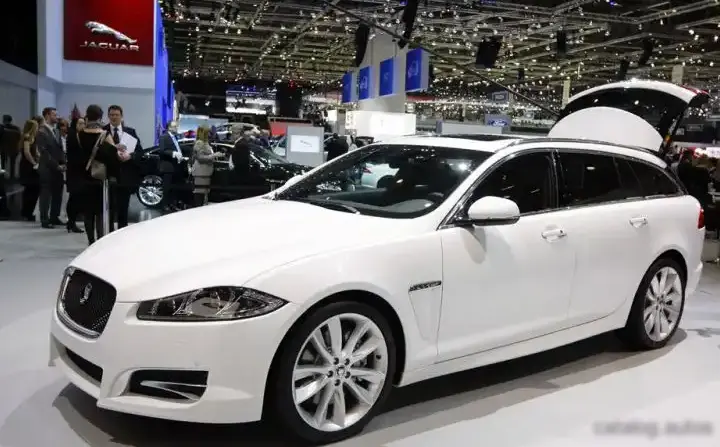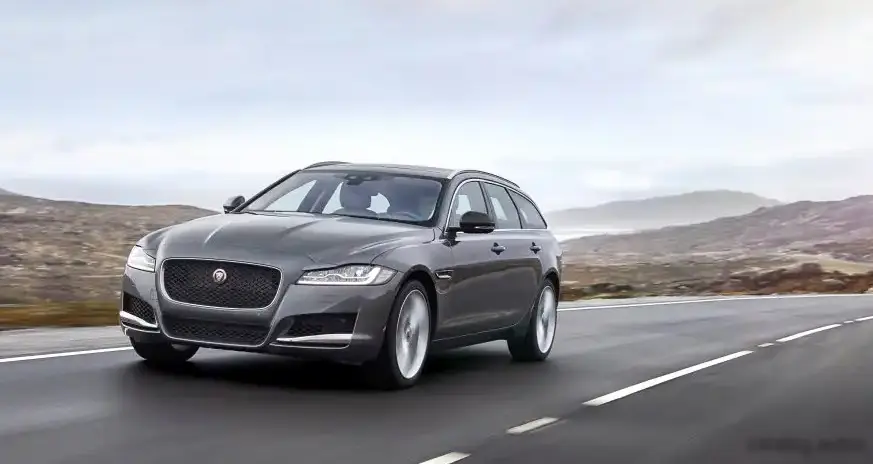
The Jaguar XF Sportbrake (X260) 2.0, produced from 2015 to 2018, represents Jaguar’s entry into the premium, performance-oriented estate (station wagon) market. Positioned as a more practical alternative to the XF sedan, the Sportbrake offered a compelling blend of luxury, driving dynamics, and cargo capacity. This particular variant, powered by the Ingenium 2.0-liter turbocharged four-cylinder engine producing 250 horsepower, and paired with an eight-speed automatic transmission, served as a mid-range offering within the Sportbrake lineup, slotting below the higher-performance supercharged variants and above the diesel options. It aimed to appeal to buyers seeking a refined and capable estate without the outright performance focus of the top-tier models.
Technical Specifications
| Brand | Jaguar |
| Model | XF |
| Generation | XF Sportbrake (X260) |
| Type (Engine) | 2.0 (250 Hp) Automatic |
| Start of production | 2015 |
| End of production | 2018 |
| Powertrain Architecture | Internal Combustion engine |
| Body type | Station wagon (estate) |
| Seats | 5 |
| Doors | 5 |
| Fuel consumption (combined) | 6.8 l/100 km (34.6 US mpg, 41.5 UK mpg, 14.7 km/l) |
| CO2 emissions | 155 g/km |
| Fuel Type | Petrol (Gasoline) |
| Acceleration 0 – 100 km/h | 7.1 sec |
| Acceleration 0 – 62 mph | 7.1 sec |
| Acceleration 0 – 60 mph | 6.7 sec |
| Maximum speed | 241 km/h (149.75 mph) |
| Emission standard | Euro 6 |
| Weight-to-power ratio | 6.8 kg/Hp, 146.6 Hp/tonne |
| Weight-to-torque ratio | 4.7 kg/Nm, 214.1 Nm/tonne |
| Power | 250 Hp @ 5500 rpm |
| Power per litre | 125.2 Hp/l |
| Torque | 365 Nm @ 1200-4500 rpm (269.21 lb.-ft. @ 1200-4500 rpm) |
| Engine layout | Front, Longitudinal |
| Engine Model/Code | Ingenium / PT204 |
| Engine displacement | 1997 cm3 (121.86 cu. in.) |
| Number of cylinders | 4 |
| Engine configuration | Inline |
| Cylinder Bore | 83 mm (3.27 in.) |
| Piston Stroke | 92.3 mm (3.63 in.) |
| Compression ratio | 10.5:1 |
| Number of valves per cylinder | 4 |
| Fuel injection system | Direct injection |
| Engine aspiration | Turbocharger, Intercooler |
| Valvetrain | DOHC |
| Engine oil capacity | 7 l (7.4 US qt | 6.16 UK qt) |
| Kerb Weight | 1705 kg (3758.88 lbs.) |
| Trunk (boot) space – minimum | 565 l (19.95 cu. ft.) |
| Trunk (boot) space – maximum | 1700 l (60.03 cu. ft.) |
| Fuel tank capacity | 74 l (19.55 US gal | 16.28 UK gal) |
| Length | 4955 mm (195.08 in.) |
| Width | 1987 mm (78.23 in.) |
| Width including mirrors | 2091 mm (82.32 in.) |
| Height | 1496 mm (58.9 in.) |
| Wheelbase | 2960 mm (116.54 in.) |
| Front track | 1605 mm (63.19 in.) |
| Rear (Back) track | 1607 mm (63.27 in.) |
| Ride height (ground clearance) | 110 mm (4.33 in.) |
| Drivetrain Architecture | Rear wheel drive |
| Number of gears and type of gearbox | 8 gears, automatic transmission |
| Front suspension | Double wishbone |
| Rear suspension | Independent multi-link suspension, Air suspension |
| Front brakes | Ventilated discs |
| Rear brakes | Ventilated discs |
| Assisting systems | ABS (Anti-lock braking system) |
| Steering type | Steering rack and pinion |
| Power steering | Electric Steering |
| Tires size | 245/45 R18 |
| Wheel rims size | 18 |
Powertrain & Engine Architecture
The heart of the XF Sportbrake 2.0 is Jaguar’s Ingenium engine family. The PT204, a 1.997-liter inline-four cylinder, utilizes direct injection and a single twin-scroll turbocharger. This configuration allows for a broad torque curve, peaking at 365 Nm (269.21 lb-ft) between 1200 and 4500 rpm, providing strong low-end and mid-range acceleration. The engine features a double overhead camshaft (DOHC) valvetrain with four valves per cylinder, contributing to its efficiency and responsiveness. The eight-speed automatic transmission, sourced from ZF, is a crucial component of the powertrain. Known for its smooth and quick shifts, it’s programmed to balance performance and fuel economy. The transmission’s wide gear ratio spread allows the engine to operate efficiently at highway speeds while providing ample gearing for acceleration.
Driving Characteristics
The 250 hp output and the eight-speed automatic transmission deliver a 0-60 mph time of approximately 6.7 seconds. While not as rapid as the supercharged XF Sportbrake variants, the 2.0-liter model offers a more than adequate level of performance for everyday driving and long-distance cruising. The automatic transmission provides seamless gear changes, and the engine’s strong low-end torque makes overtaking maneuvers effortless. Compared to the manual transmission options available in other XF models, the automatic prioritizes comfort and ease of use over outright driver engagement. The rear-wheel-drive configuration contributes to a balanced chassis and predictable handling, although it can be less forgiving in adverse weather conditions than all-wheel-drive alternatives.
Equipment & Trim Levels
The 2.0-liter Sportbrake typically came standard with leather upholstery, power-adjustable front seats, a touchscreen infotainment system with navigation, and a suite of safety features including emergency braking and lane departure warning. Common optional extras included a panoramic sunroof, heated and ventilated front seats, a premium sound system, and adaptive cruise control. Trim levels varied by market, but generally offered increasing levels of luxury and technology. The base trim focused on providing a well-equipped vehicle at a competitive price point, while higher trims added more premium materials and advanced features.
Chassis & Braking
The XF Sportbrake utilizes a double wishbone front suspension and an independent multi-link rear suspension, often incorporating air suspension on higher trim levels. This suspension setup provides a comfortable ride while maintaining good handling characteristics. The 2.0-liter models typically featured ventilated disc brakes on all four wheels, providing ample stopping power. Anti-lock Braking System (ABS) and Electronic Stability Control (ESC) were standard safety features. Stabilizer bars were fitted front and rear to reduce body roll during cornering.
Market Reception & Comparison
Critics generally praised the XF Sportbrake 2.0 for its refined driving experience, spacious interior, and attractive styling. The fuel economy of around 34.6 US mpg combined was considered competitive for its class. However, some reviewers noted that the 2.0-liter engine, while capable, lacked the outright punch of the supercharged variants. Compared to rivals like the BMW 5 Series Touring and Audi A6 Avant, the XF Sportbrake offered a distinctive British character and a focus on driving pleasure. The diesel variants of the XF Sportbrake were often favored by those prioritizing fuel economy, while the supercharged models appealed to buyers seeking maximum performance.
Legacy
The Ingenium engine family has proven to be relatively reliable, although some owners have reported issues with the timing chain tensioners. The eight-speed ZF automatic transmission is known for its durability. On the used car market, the XF Sportbrake 2.0 represents a good value proposition, offering a blend of luxury, practicality, and performance at a reasonable price. Its attractive styling and comfortable interior continue to appeal to buyers seeking a premium estate car. Regular maintenance, including oil changes and fluid checks, is crucial to ensuring the long-term reliability of this powertrain.