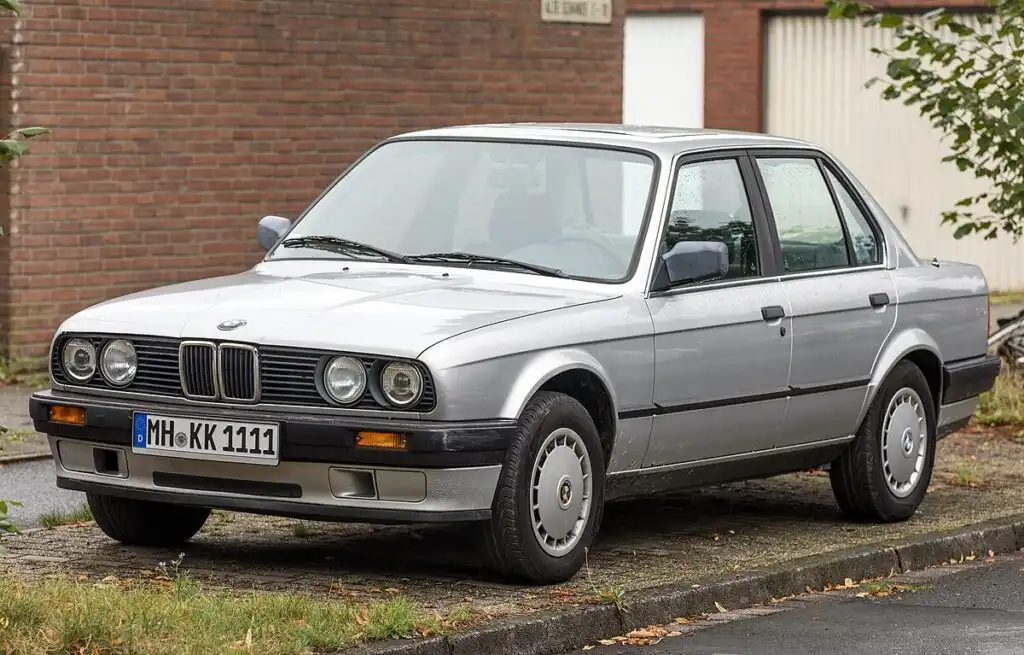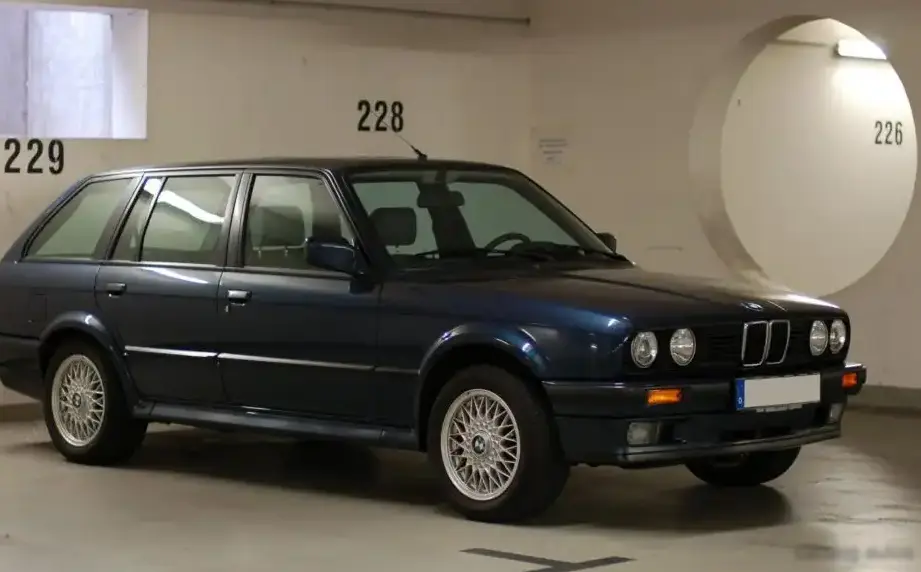
The BMW 3 Series Touring (E30) 324td, produced from 1988 to 1993, represents a unique offering within the E30 generation. As the diesel-powered wagon variant, it catered to a specific segment of the European market seeking practicality and fuel efficiency without sacrificing the BMW driving experience. This model, distinguished by its M21D24 engine, occupied a niche position, offering a blend of touring capability and diesel economy not found in its gasoline-powered siblings. The 324td was part of the E30 facelift introduced in 1987, featuring updated styling and improved refinement.
Technical Specifications
| Brand | BMW |
| Model | 3 Series |
| Generation | 3 Series Touring (E30, facelift 1987) |
| Type (Engine) | 324td (115 Hp) |
| Start of production | 1988 |
| End of production | 1993 |
| Powertrain Architecture | Internal Combustion engine |
| Body type | Station wagon (estate) |
| Seats | 5 |
| Doors | 5 |
| Fuel consumption (urban) | 8.9 l/100 km (26.4 US mpg, 31.7 UK mpg, 11.2 km/l) |
| Fuel consumption (extra urban) | 5.2 l/100 km (45.2 US mpg, 54.3 UK mpg, 19.2 km/l) |
| Fuel consumption (combined) | 6.9 l/100 km (34.1 US mpg, 40.9 UK mpg, 14.5 km/l) |
| Fuel Type | Diesel |
| Acceleration 0 – 100 km/h | 12.3 sec |
| Acceleration 0 – 62 mph | 12.3 sec |
| Acceleration 0 – 60 mph | 11.7 sec |
| Maximum speed | 187 km/h (116.2 mph) |
| Weight-to-power ratio | 11.3 kg/Hp, 88.5 Hp/tonne |
| Weight-to-torque ratio | 5.9 kg/Nm, 170.8 Nm/tonne |
| Power | 115 Hp @ 4800 rpm |
| Power per litre | 47.1 Hp/l |
| Torque | 222 Nm @ 2400 rpm (163.74 lb.-ft. @ 2400 rpm) |
| Engine layout | Front, Longitudinal |
| Engine Model/Code | M21D24 |
| Engine displacement | 2443 cm3 (149.08 cu. in.) |
| Number of cylinders | 6 |
| Engine configuration | Inline |
| Cylinder Bore | 80 mm (3.15 in.) |
| Piston Stroke | 81 mm (3.19 in.) |
| Compression ratio | 22:1 |
| Number of valves per cylinder | 2 |
| Fuel injection system | Precombustion chamber injection |
| Engine aspiration | Turbocharger, Intercooler |
| Engine oil capacity | 5.5 l (5.81 US qt | 4.84 UK qt) |
| Coolant | 12 l (12.68 US qt | 10.56 UK qt) |
| Kerb Weight | 1300 kg (2866.01 lbs.) |
| Max. weight | 1780 kg (3924.23 lbs.) |
| Max load | 480 kg (1058.22 lbs.) |
| Trunk (boot) space – minimum | 370 l (13.07 cu. ft.) |
| Trunk (boot) space – maximum | 1125 l (39.73 cu. ft.) |
| Fuel tank capacity | 55 l (14.53 US gal | 12.1 UK gal) |
| Length | 4325 mm (170.28 in.) |
| Width | 1645 mm (64.76 in.) |
| Height | 1380 mm (54.33 in.) |
| Wheelbase | 2570 mm (101.18 in.) |
| Front track | 1405 mm (55.31 in.) |
| Rear (Back) track | 1415 mm (55.71 in.) |
| Drivetrain Architecture | The Internal combustion engine (ICE) drives the rear wheels of the vehicle. |
| Drive wheel | Rear wheel drive |
| Number of gears and type of gearbox | 5 gears, manual transmission |
| Front suspension | Coil spring |
| Rear suspension | Coil spring |
| Front brakes | Disc |
| Rear brakes | Drum |
| Assisting systems | ABS (Anti-lock braking system) |
| Power steering | Hydraulic Steering |
| Tires size | 195/65 R14 |
| Wheel rims size | 14 |
Powertrain & Engine Architecture
The heart of the 324td is the M21D24 engine, a 2.4-liter inline-six diesel. This engine, a product of BMW’s engineering prowess, utilized precombustion chamber injection, a system common in diesel engines of the era. This system involved injecting fuel into a precombustion chamber connected to the main cylinder, promoting more complete combustion. The addition of a turbocharger and intercooler significantly boosted power output to 115 horsepower and 222 Nm (163.74 lb-ft) of torque. The engine’s longitudinal mounting and rear-wheel-drive configuration were hallmarks of BMW’s traditional layout. The 324td was exclusively offered with a 5-speed manual transmission, optimized for the engine’s torque characteristics.
Driving Characteristics
The 324td offered a distinctly different driving experience compared to its gasoline-powered counterparts. While lacking the outright acceleration of the 325i, the 324td excelled in providing strong low-end torque, making it a capable and relaxed cruiser. The manual transmission, while not sporting, was well-matched to the engine’s powerband. The turbocharger provided a noticeable boost in power, but turbo lag was present, requiring drivers to anticipate acceleration. Compared to the 325i, the 324td prioritized fuel economy and practicality over outright performance. The wagon body style further enhanced its usability, offering a generous cargo capacity.
Equipment & Trim Levels
The 324td typically came with a relatively modest level of standard equipment, reflecting its position as a more economically focused variant. Standard features included power steering, central locking, and a basic stereo system. Interior upholstery was typically cloth, with options for upgraded materials. Optional extras included sunroof, alloy wheels, and upgraded audio systems. The trim level was generally consistent across the 324td models, with limited customization options available.
Chassis & Braking
The 324td shared the E30’s well-regarded chassis, featuring coil spring suspension at both the front and rear. The suspension was tuned for comfort and stability, providing a balanced ride. The braking system consisted of disc brakes at the front and drum brakes at the rear. While adequate for normal driving conditions, the rear drum brakes were a point of criticism compared to the all-disc setups found on higher-spec E30 models. The 324td’s weight, approximately 1300 kg (2866 lbs), was relatively low, contributing to its nimble handling.
Market Reception & Comparison
The 324td was primarily a European market vehicle, catering to drivers who valued fuel efficiency and practicality. It was well-received for its combination of BMW driving dynamics and diesel economy. Critics praised its comfortable ride and spacious interior. Compared to the gasoline-powered 325i, the 324td offered significantly better fuel economy but lacked the same level of performance. Against other diesel-powered competitors, the 324td stood out for its refined engine and BMW badge.
Legacy
The BMW E30 324td has gained a following among enthusiasts for its unique character and robust powertrain. The M21D24 engine, while not known for being a high-revving performer, is generally considered reliable and durable. Well-maintained examples are increasingly sought after by collectors and enthusiasts. The 324td represents a fascinating chapter in BMW’s history, demonstrating the brand’s ability to adapt to changing market demands while maintaining its commitment to driving pleasure. Today, finding a well-preserved 324td is becoming increasingly difficult, making it a desirable and collectible classic.