
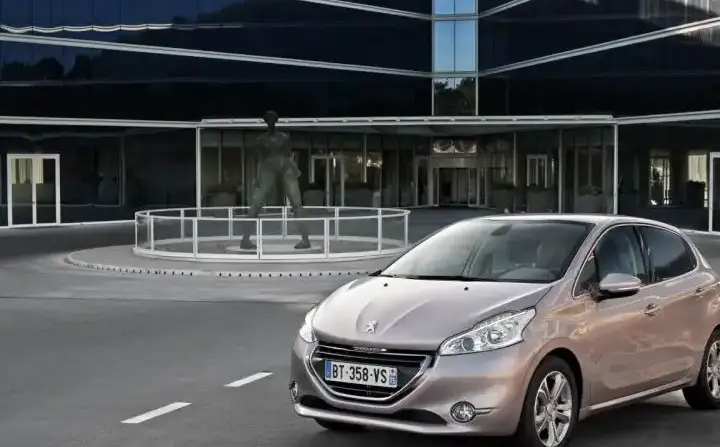
The Peugeot 208 1.6 e-HDi (115 hp) FAP STT was a popular variant of the first-generation 208 (T7/A9 chassis), produced between 2012 and 2015. Positioned as a mid-range offering within the 208 lineup, it aimed to balance fuel efficiency with respectable performance, appealing to buyers seeking a practical and economical hatchback. This model was primarily sold in Europe, where diesel engines held a significant market share, and represented Peugeot’s attempt to offer a modern, efficient diesel option in the subcompact segment. The “e-HDi” designation signified Peugeot’s micro-hybrid technology, combining a diesel engine with Stop-Start functionality to further reduce fuel consumption.
Technical Specifications
| Brand | Peugeot |
| Model | 208 |
| Generation | 208 I (Phase I, 2012) |
| Type (Engine) | 1.6 e-HDi (115 Hp) FAP STT |
| Start of production | 2012 |
| End of production | 2015 |
| Powertrain Architecture | Internal Combustion engine |
| Body type | Hatchback |
| Seats | 5 |
| Doors | 3-5 |
| Fuel consumption (urban) | 4.6 l/100 km (51.1 US mpg, 61.4 UK mpg, 21.7 km/l) |
| Fuel consumption (extra urban) | 3.4 l/100 km (69.2 US mpg, 83.1 UK mpg, 29.4 km/l) |
| Fuel consumption (combined) | 3.8 l/100 km (61.9 US mpg, 74.3 UK mpg, 26.3 km/l) |
| Fuel Type | Diesel |
| Acceleration 0 – 100 km/h | 9.7 sec |
| Acceleration 0 – 62 mph | 9.7 sec |
| Acceleration 0 – 60 mph | 9.2 sec |
| Maximum speed | 190 km/h (118.06 mph) |
| Emission standard | Euro 5 |
| Weight-to-power ratio | 9.5 kg/Hp, 105.5 Hp/tonne |
| Weight-to-torque ratio | 3.8 kg/Nm, 261.5 Nm/tonne |
| Power | 115 Hp @ 3600 rpm |
| Power per litre | 73.7 Hp/l |
| Torque | 285 Nm @ 1750 rpm (210.21 lb.-ft. @ 1750 rpm) |
| Engine layout | Front, Transverse |
| Engine Model/Code | 9HR DV6C |
| Engine displacement | 1560 cm3 (95.2 cu. in.) |
| Number of cylinders | 4 |
| Engine configuration | Inline |
| Number of valves per cylinder | 2 |
| Fuel injection system | Diesel Commonrail |
| Engine aspiration | Turbocharger, Intercooler |
| Engine oil capacity | 3.75 l (3.96 US qt | 3.3 UK qt) |
| Coolant capacity | 6 l (6.34 US qt | 5.28 UK qt) |
| Kerb Weight | 1090 kg (2403.04 lbs.) |
| Max. weight | 1665 kg (3670.7 lbs.) |
| Max load | 575 kg (1267.66 lbs.) |
| Trunk (boot) space – minimum | 285 l (10.06 cu. ft.) |
| Trunk (boot) space – maximum | 1076 l (38 cu. ft.) |
| Fuel tank capacity | 50 l (13.21 US gal | 11 UK gal) |
| Length | 3962 mm (155.98 in.) |
| Width | 1829 mm (72.01 in.) |
| Height | 1460 mm (57.48 in.) |
| Wheelbase | 2538 mm (99.92 in.) |
| Minimum turning circle | 10.6 m (34.78 ft.) |
| Drivetrain Architecture | Front wheel drive |
| Number of gears | 6 |
| Gearbox type | Manual transmission |
| Front suspension | Independent type McPherson |
| Rear suspension | Semi-independent, coil spring |
| Front brakes | Ventilated discs |
| Rear brakes | Disc |
| Assisting systems | ABS (Anti-lock braking system) |
| Steering type | Steering rack and pinion |
INTRODUCTION
The Peugeot 208, launched in 2012, represented a significant departure from its predecessor, the 207. Built on the PSA Peugeot Citroën PF1 platform (also known as 1HX0/A3), the 208 aimed to be a more modern, stylish, and efficient supermini. The 1.6 e-HDi 115 FAP STT variant was introduced as a key part of the engine lineup, offering a compelling blend of fuel economy and performance for European drivers. The “STT” designation refers to the Stop-Start Technology, a feature designed to reduce idling emissions and improve fuel consumption in urban environments. This trim level typically sat in the middle of the 208 range, offering more equipment and power than the base models but remaining more affordable than the higher-performance GT or XY trims.
Powertrain & Engine Architecture
At the heart of the 208 1.6 e-HDi was the PSA DV6C engine family, specifically the 9HR variant. This 1.6-liter, four-cylinder diesel engine featured a common-rail direct injection system, delivering fuel at extremely high pressure for optimized combustion. The engine utilized a turbocharger with an intercooler to boost power and torque. The 9HR engine was known for its relatively robust construction and ability to handle modifications, though it wasn’t without its potential issues (discussed later). The e-HDi system incorporated a starter-generator that allowed for rapid and seamless engine restarts after the Stop-Start system engaged. The six-speed manual transmission was the standard offering for this variant, providing a good balance between fuel efficiency and driver engagement. Gear ratios were tuned for maximizing fuel economy, with a relatively long final drive.
Driving Characteristics
The 1.6 e-HDi 115 hp engine provided a surprisingly lively driving experience for a small diesel hatchback. While not a sports car, the 285 Nm (210 lb-ft) of torque available from 1750 rpm provided ample pulling power for everyday driving and overtaking maneuvers. Acceleration from 0-60 mph took around 9.2 seconds, which was competitive for its class. The manual transmission allowed for precise control, and the gear ratios were well-matched to the engine’s powerband. Compared to the lower-powered 1.4-liter diesel or the petrol-powered variants, the 1.6 e-HDi offered a noticeable performance advantage. However, it didn’t quite match the responsiveness of the more expensive and powerful GT models. The Stop-Start system, while effective at reducing fuel consumption, could sometimes feel slightly intrusive during stop-and-go traffic.
Equipment & Trim Levels
The 1.6 e-HDi 115 FAP STT typically came equipped with features such as air conditioning, power windows, central locking, and a basic audio system with USB connectivity. Higher trim levels within this engine range added features like alloy wheels, a touchscreen infotainment system, Bluetooth connectivity, and parking sensors. Interior upholstery was generally cloth, with options for upgraded materials available. The dashboard layout was modern and functional, with a focus on ergonomics. Optional extras included a panoramic sunroof, leather upholstery, and a navigation system.
Chassis & Braking
The 208 featured a McPherson strut front suspension and a semi-independent coil spring rear suspension. This setup provided a comfortable ride quality while maintaining reasonable handling characteristics. The front brakes were ventilated discs, while the rear brakes were solid discs. ABS (Anti-lock Braking System) was standard. The 208’s relatively lightweight construction contributed to its agility and responsiveness. Stabilizer bars were fitted to both the front and rear axles to reduce body roll during cornering.
Market Reception & Comparison
The Peugeot 208 1.6 e-HDi 115 FAP STT was generally well-received by automotive critics. It was praised for its fuel efficiency, comfortable ride, and refined engine. However, some reviewers noted that the interior plastics felt somewhat low-quality in certain areas. Compared to other diesel-powered superminis of the time, such as the Volkswagen Polo 1.6 TDI and the Ford Fiesta 1.6 TDCi, the 208 offered a competitive combination of performance, economy, and price. The Peugeot often stood out for its stylish design and comfortable interior. Reliability reports were mixed, with some owners experiencing issues with the diesel particulate filter (DPF) and the electronic throttle control.
Legacy
The 1.6 e-HDi engine, while eventually superseded by newer, more efficient diesel engines, proved to be a relatively durable and reliable powertrain when properly maintained. The DPF, however, remained a potential weak point, particularly for drivers who primarily undertook short journeys. Today, used examples of the 208 1.6 e-HDi can be found at affordable prices, making them an attractive option for budget-conscious buyers seeking a fuel-efficient and practical hatchback. Regular servicing, including DPF regeneration, is crucial for maintaining the long-term health of this powertrain. The 208, in general, helped to re-establish Peugeot as a maker of stylish and well-engineered small cars.
