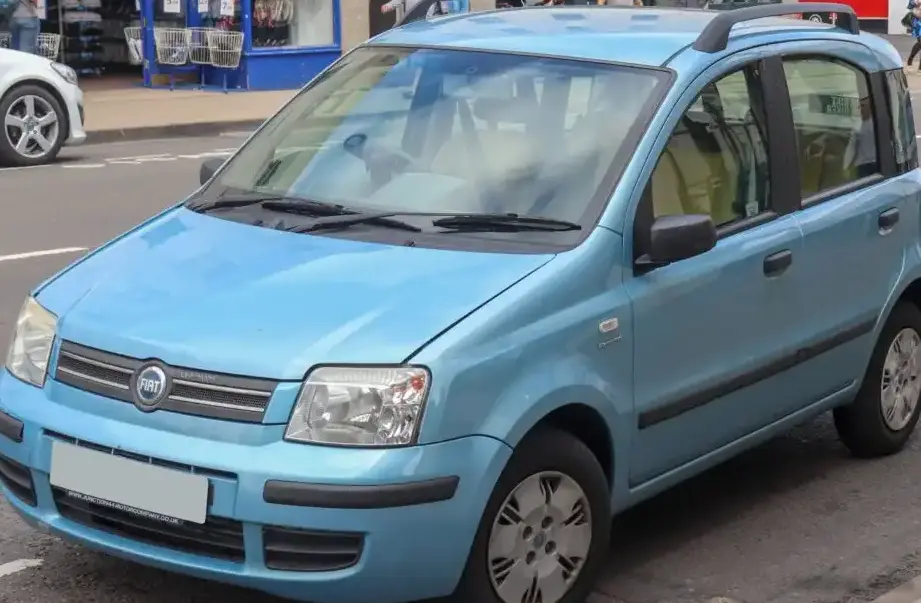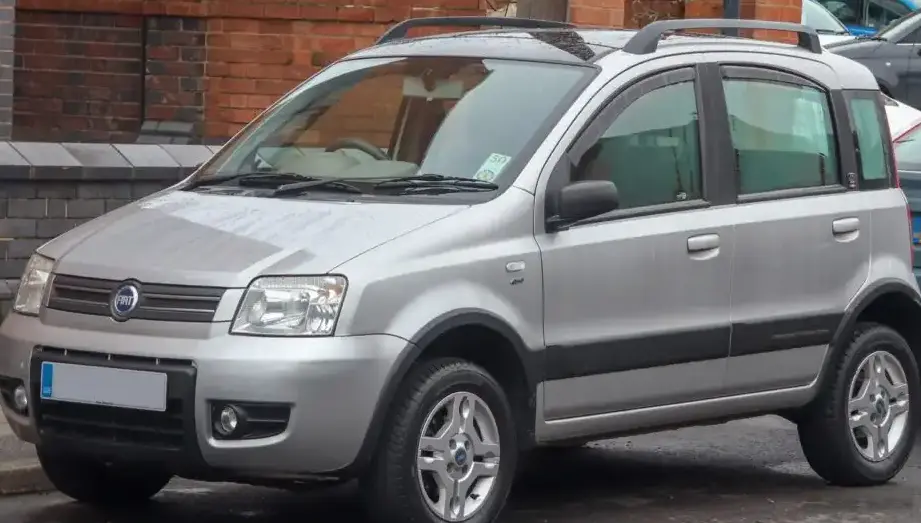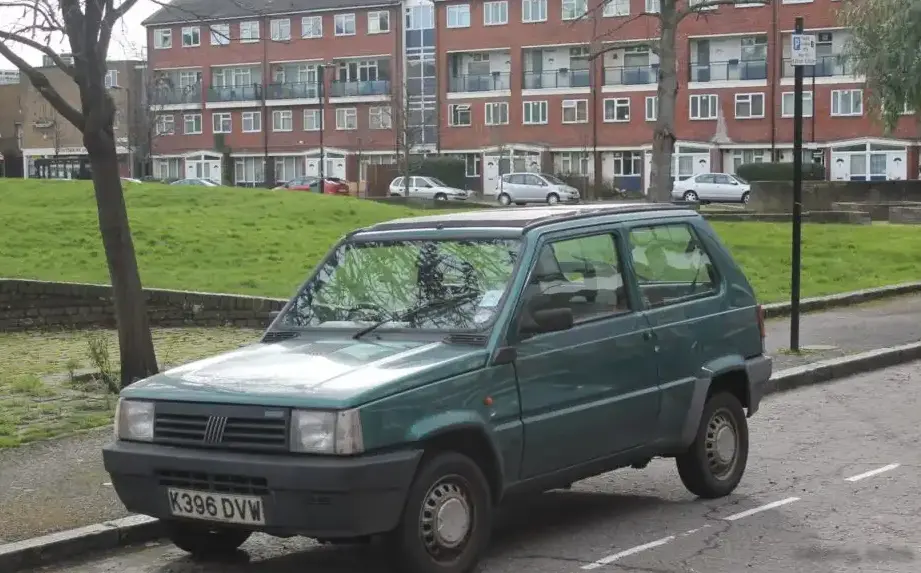
The Fiat Panda 1000 ie CAT (Type ZAF 141, facelifted in 1991) represents a significant iteration of Fiat’s iconic city car. Produced from July 1991 to December 1994, this variant occupied the entry-level position within the Panda range, offering a balance of affordability and practicality. It was a key model in the second generation of the Panda, built on the 141 platform, and aimed at providing basic, reliable transportation for urban dwellers, particularly in Europe. The “ie” designation signified fuel injection, a relatively modern feature for a car in this segment at the time, and the “CAT” indicated the inclusion of a catalytic converter, reflecting growing environmental concerns.
Technical Specifications
| Brand | Fiat |
| Model | Panda |
| Generation | Panda (ZAF 141, facelift 1991) |
| Type (Engine) | 1000 ie CAT (45 Hp) |
| Start of production | July, 1991 |
| End of production | December, 1994 |
| Powertrain Architecture | Internal Combustion engine |
| Body type | Hatchback |
| Seats | 5 |
| Doors | 3 |
| Fuel consumption (urban) | 6.7 l/100 km (35.1 US mpg, 42.2 UK mpg, 14.9 km/l) |
| Fuel consumption (extra urban) | 4.9 l/100 km (48 US mpg, 57.6 UK mpg, 20.4 km/l) |
| Fuel Type | Petrol (Gasoline) |
| Acceleration 0 – 100 km/h | 16 sec |
| Acceleration 0 – 62 mph | 16 sec |
| Acceleration 0 – 60 mph | 15.2 sec |
| Maximum speed | 140 km/h (86.99 mph) |
| Weight-to-power ratio | 15.6 kg/Hp, 64.1 Hp/tonne |
| Weight-to-torque ratio | 9.5 kg/Nm, 105.4 Nm/tonne |
| Power | 45 Hp @ 5250 rpm |
| Power per litre | 45 Hp/l |
| Torque | 74 Nm @ 3250 rpm (54.58 lb.-ft. @ 3250 rpm) |
| Engine layout | Front, Transverse |
| Engine Model/Code | 141 C2.000 |
| Engine displacement | 999 cm3 (60.96 cu. in.) |
| Number of cylinders | 4 |
| Engine configuration | Inline |
| Cylinder Bore | 70 mm (2.76 in.) |
| Piston Stroke | 64.9 mm (2.56 in.) |
| Compression ratio | 9:1 |
| Number of valves per cylinder | 2 |
| Fuel injection system | Single-point injection |
| Engine aspiration | Naturally aspirated engine |
| Valvetrain | OHV |
| Engine oil capacity | 3.8 l (4.02 US qt | 3.34 UK qt) |
| Coolant | 5 l (5.28 US qt | 4.4 UK qt) |
| Kerb Weight | 702 kg (1547.65 lbs.) |
| Max. weight | 1115 kg (2458.15 lbs.) |
| Max load | 413 kg (910.51 lbs.) |
| Trunk (boot) space – minimum | 270 l (9.53 cu. ft.) |
| Trunk (boot) space – maximum | 1088 l (38.42 cu. ft.) |
| Fuel tank capacity | 40 l (10.57 US gal | 8.8 UK gal) |
| Length | 3410 mm (134.25 in.) |
| Width | 1490 mm (58.66 in.) |
| Height | 1420 mm (55.91 in.) |
| Wheelbase | 2159 mm (85 in.) |
| Front track | 1263 mm (49.72 in.) |
| Rear (Back) track | 1265 mm (49.8 in.) |
| Minimum turning circle | 9.45 m (31 ft.) |
| Drivetrain Architecture | The Internal combustion engine (ICE) drives the front wheels of the vehicle. |
| Drive wheel | Front wheel drive |
| Number of gears and type of gearbox | 5 gears, manual transmission |
| Front suspension | Coil spring |
| Rear suspension | Coil spring |
| Front brakes | Disc |
| Rear brakes | Drum |
| Assisting systems | ABS (Anti-lock braking system) |
| Steering type | Steering rack and pinion |
| Tires size | 135/75 R13 |
Powertrain & Engine Architecture
The Panda 1000 ie CAT was powered by the Fiat 141 C2.000 engine, a 999cc inline-four cylinder unit. This engine featured single-point fuel injection, a significant upgrade from the carbureted engines found in earlier Pandas. While not particularly powerful, the fuel injection system improved fuel efficiency and reduced emissions, leading to the inclusion of a catalytic converter. The engine utilized an overhead valve (OHV) valvetrain, a relatively simple and robust design. The 141 C2.000 produced 45 horsepower at 5250 rpm and 54.58 lb-ft of torque at 3250 rpm. The engine was transversely mounted, a common configuration in front-wheel-drive vehicles, and paired with a five-speed manual transmission. This transmission was chosen for its affordability and simplicity, contributing to the Panda’s overall low cost of ownership.
Driving Characteristics
The 1000 ie CAT’s performance was modest, reflecting its low horsepower output. Acceleration from 0 to 60 mph took approximately 15.2 seconds, and the top speed was around 87 mph. However, the engine’s torque delivery was relatively usable at lower speeds, making it suitable for city driving. The five-speed gearbox allowed drivers to keep the engine in its optimal power band, although frequent shifting was often necessary. Compared to higher-spec Panda models with larger engines, such as the 1.5-liter versions, the 1000 ie CAT felt noticeably slower. However, it offered a more economical and forgiving driving experience, particularly for novice drivers.
Equipment & Trim Levels
The Panda 1000 ie CAT was typically equipped with basic but functional features. Standard equipment included cloth upholstery, a simple dashboard layout, and manual windows and door locks. ABS (Anti-lock Braking System) was often included as standard, a notable safety feature for a car in this class. Optional extras were limited, but could include a sunroof, upgraded interior trim, and a radio. The interior was designed for practicality and durability, with hard-wearing materials used throughout. The rear seats could be folded down to increase cargo space, adding to the Panda’s versatility.
Chassis & Braking
The Panda 1000 ie CAT featured a simple but effective chassis design. The front suspension utilized coil springs, while the rear suspension also employed coil springs. The front brakes were discs, providing adequate stopping power, while the rear brakes were drums, a cost-saving measure. The steering was a rack and pinion system, offering reasonably precise control. The car’s relatively light weight (approximately 1548 lbs) contributed to its nimble handling. Tire size was typically 135/75 R13.
Market Reception & Comparison
The Panda 1000 ie CAT was generally well-received by critics as an affordable and practical city car. Its fuel efficiency was a major selling point, and its compact size made it easy to maneuver in urban environments. Compared to other entry-level cars of the time, such as the Citroën AX or Renault 5, the Panda offered a good balance of price, practicality, and reliability. However, its performance was often criticized as being underpowered, and its interior was considered basic. The 1.5-liter Panda models offered significantly more performance but came at a higher price point, appealing to a different segment of the market.
Legacy
The Fiat Panda 1000 ie CAT has proven to be a remarkably durable and reliable car. Many examples are still on the road today, testament to the robustness of its simple design. The 141 C2.000 engine is known for its longevity, and parts availability remains relatively good. In the used car market, these Pandas are often sought after by enthusiasts and collectors, particularly those looking for a classic Italian city car. While not a performance icon, the Panda 1000 ie CAT represents a significant chapter in Fiat’s history and remains a popular choice for those seeking affordable and reliable transportation.