
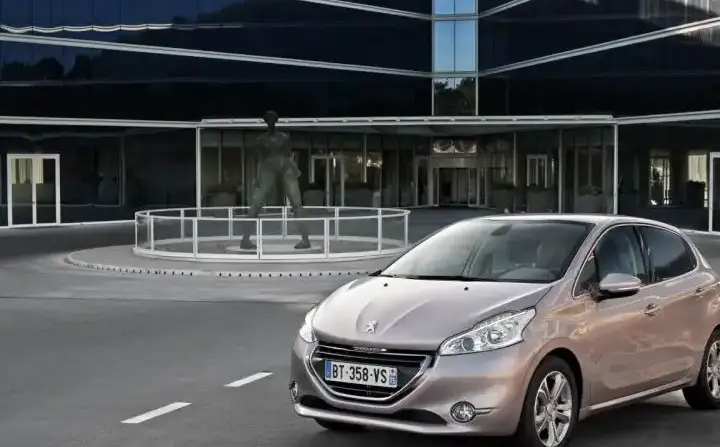
The Peugeot 208 1.6 e-HDi (92 hp) FAP STT, produced between 2012 and 2015, represents a key variant within the first generation (208 I, Phase I) of Peugeot’s popular subcompact hatchback. This model was primarily aimed at the European market, offering a blend of fuel efficiency and practicality. It occupied a mid-range position in the 208 lineup, slotting between the lower-powered diesel options and the more potent gasoline variants. The “e-HDi” designation signifies Peugeot’s micro-hybrid diesel technology, combining a conventional diesel engine with a starter-motor alternator to improve fuel economy and reduce emissions. The “FAP” indicates a particulate filter, crucial for meeting stringent European emission standards, and “STT” denotes the Stop & Start technology.
Technical Specifications
| Brand | Peugeot |
| Model | 208 |
| Generation | 208 I (Phase I, 2012) |
| Type (Engine) | 1.6 e-HDi (92 Hp) FAP STT |
| Start of production | 2012 |
| End of production | 2015 |
| Powertrain Architecture | Internal Combustion engine |
| Body type | Hatchback |
| Seats | 5 |
| Doors | 3-5 |
| Fuel consumption (urban) | 4.5 l/100 km (52.3 US mpg, 62.8 UK mpg, 22.2 km/l) |
| Fuel consumption (extra urban) | 3.4 l/100 km (69.2 US mpg, 83.1 UK mpg, 29.4 km/l) |
| Fuel consumption (combined) | 3.8 l/100 km (61.9 US mpg, 74.3 UK mpg, 26.3 km/l) |
| Fuel Type | Diesel |
| Acceleration 0 – 100 km/h | 10.9 sec |
| Acceleration 0 – 62 mph | 10.9 sec |
| Acceleration 0 – 60 mph | 10.4 sec |
| Maximum speed | 185 km/h (114.95 mph) |
| Emission standard | Euro 5 |
| Weight-to-power ratio | 11.7 kg/Hp, 85.2 Hp/tonne |
| Weight-to-torque ratio | 4.7 kg/Nm, 213 Nm/tonne |
| Power | 92 Hp @ 4000 rpm |
| Power per litre | 59 Hp/l |
| Torque | 230 Nm @ 1750 rpm (169.64 lb.-ft. @ 1750 rpm) |
| Engine layout | Front, Transverse |
| Engine Model/Code | 9HP DV6DTED |
| Engine displacement | 1560 cm3 (95.2 cu. in.) |
| Number of cylinders | 4 |
| Engine configuration | Inline |
| Number of valves per cylinder | 2 |
| Fuel injection system | Diesel Commonrail |
| Engine aspiration | Turbocharger, Intercooler |
| Engine oil capacity | 3.75 l (3.96 US qt | 3.3 UK qt) |
| Coolant capacity | 6 l (6.34 US qt | 5.28 UK qt) |
| Kerb Weight | 1080 kg (2380.99 lbs.) |
| Max. weight | 1625 kg (3582.51 lbs.) |
| Max load | 545 kg (1201.52 lbs.) |
| Trunk (boot) space – minimum | 285 l (10.06 cu. ft.) |
| Trunk (boot) space – maximum | 1076 l (38 cu. ft.) |
| Fuel tank capacity | 50 l (13.21 US gal | 11 UK gal) |
| Length | 3962 mm (155.98 in.) |
| Width | 1829 mm (72.01 in.) |
| Height | 1460 mm (57.48 in.) |
| Wheelbase | 2538 mm (99.92 in.) |
| Minimum turning circle | 10.6 m (34.78 ft.) |
| Drivetrain Architecture | Front wheel drive |
| Number of gears | 5 |
| Gearbox type | Manual transmission |
| Front suspension | Independent type McPherson |
| Rear suspension | Semi-independent, coil spring |
| Front brakes | Ventilated discs |
| Rear brakes | Drum |
| Assisting systems | ABS (Anti-lock braking system) |
| Steering type | Steering rack and pinion |
Powertrain & Engine Architecture
The heart of the 208 1.6 e-HDi is the DV6DTED engine, a 1.6-liter inline-four cylinder diesel. This engine, identified by the code 9HP, is a common design within the PSA Group (Peugeot Société Anonyme) and was widely used across various models. It features a turbocharger with an intercooler to boost power and efficiency. The engine utilizes a diesel common rail direct injection system, delivering fuel directly into the combustion chamber at high pressure for optimized combustion. The e-HDi system incorporates a starter-motor alternator, allowing for engine stop-start functionality at traffic lights and during coasting, further reducing fuel consumption and emissions. The five-speed manual transmission was the standard offering for this variant, providing a balance between fuel economy and driver engagement. The gear ratios were tuned for maximizing fuel efficiency rather than outright performance.
Driving Characteristics
The 92 hp output and 230 Nm (169.64 lb-ft) of torque delivered by the 1.6 e-HDi engine provided adequate, though not exhilarating, performance. Acceleration from 0-60 mph took around 10.4 seconds, making it suitable for everyday driving and urban commutes. The engine’s peak torque, available from 1750 rpm, provided good low-end responsiveness, making it easy to navigate city streets. Compared to the more powerful gasoline versions of the 208, the 1.6 e-HDi felt noticeably slower, particularly during highway overtaking maneuvers. However, it offered significantly better fuel economy. The manual transmission, while not particularly sporty, was precise and easy to use. The gear ratios were spaced to keep the engine within its optimal torque band, contributing to its fuel-efficient nature.
Equipment & Trim Levels
The 1.6 e-HDi variant typically came equipped with a reasonable level of standard features. These included air conditioning, power steering, electric front windows, and a basic audio system with USB connectivity. Safety features such as ABS, ESP (Electronic Stability Program), and multiple airbags were also standard. Interior upholstery was typically cloth, with a functional and durable design. Optional extras included alloy wheels, a touchscreen infotainment system, rear parking sensors, and automatic headlights and wipers. Trim levels varied slightly depending on the market, but generally, this engine was offered in mid-range trims, providing a good balance of features and affordability.
Chassis & Braking
The 208 1.6 e-HDi utilized a McPherson strut front suspension and a semi-independent coil spring rear suspension. This setup provided a comfortable ride quality, well-suited for everyday driving. The front brakes were ventilated discs, offering good stopping power, while the rear brakes were drums, a cost-saving measure common in this segment. The steering was a rack and pinion system, providing precise and responsive handling. The relatively lightweight nature of the 208, with a kerb weight of around 1080 kg (2380.99 lbs), contributed to its nimble handling characteristics.
Market Reception & Comparison
The Peugeot 208 1.6 e-HDi was generally well-received by critics for its fuel efficiency and low running costs. It was praised for its comfortable ride and practical interior. However, some reviewers noted that the engine lacked outright performance and that the interior materials were somewhat basic. Compared to the 1.6 VTi gasoline version, the e-HDi offered significantly better fuel economy but slower acceleration. Against other diesel-powered competitors, such as the Volkswagen Polo 1.6 TDI, the 208 offered a competitive combination of fuel economy, price, and features. The reliability of the DV6 engine was generally good, although some owners reported issues with the diesel particulate filter (DPF) if the vehicle was primarily used for short trips.
Legacy
The Peugeot 208 1.6 e-HDi remains a popular choice in the used car market, particularly for buyers seeking a fuel-efficient and affordable hatchback. The DV6DTED engine is known for its durability, provided it has been properly maintained. Regular servicing, including oil changes and DPF regeneration, is crucial for ensuring long-term reliability. While the technology may now be superseded by newer, more efficient engines, the 208 1.6 e-HDi continues to offer a practical and economical transportation solution.
