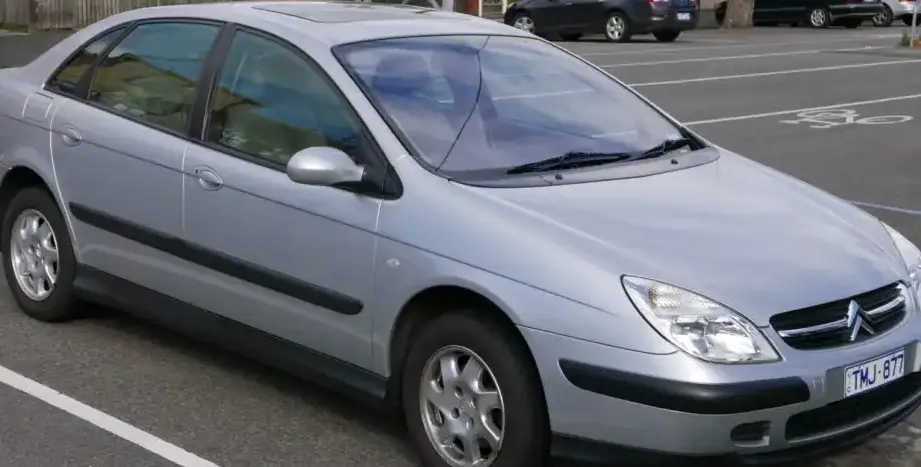
The Citroën C5 I, launched in 2000, represented a significant step forward for the French automaker, aiming to compete directly with established mid-size family cars like the Ford Mondeo and Volkswagen Passat. The first generation C5 (designated X10) offered a blend of comfort, technology, and practicality. Within the C5 I range, the 2.0i 16V variant, producing 136 horsepower, occupied a middle ground in the lineup, positioned as a more accessible alternative to the higher-performance V6 models while offering a step up from the base 1.8-liter engine. Production of this specific configuration ran from 2000 to 2004, coinciding with the Phase I iteration of the C5 I.
Technical Specifications
| Brand | Citroen |
| Model | C5 |
| Generation | C5 I (Phase I, 2000) |
| Type (Engine) | 2.0i 16V (136 Hp) |
| Start of production | 2000 year |
| End of production | 2004 year |
| Powertrain Architecture | Internal Combustion engine |
| Body type | Sedan |
| Seats | 5 |
| Doors | 4 |
| Fuel consumption (urban) | 11.5 l/100 km (20.5 US mpg, 24.6 UK mpg, 8.7 km/l) |
| Fuel consumption (extra urban) | 6.4 l/100 km (36.8 US mpg, 44.1 UK mpg, 15.6 km/l) |
| Fuel consumption (combined) | 8.3 l/100 km (28.3 US mpg, 34 UK mpg, 12 km/l) |
| CO2 emissions | 197 g/km |
| Fuel Type | Petrol (Gasoline) |
| Acceleration 0 – 100 km/h | 10.8 sec |
| Acceleration 0 – 62 mph | 10.8 sec |
| Acceleration 0 – 60 mph | 10.3 sec |
| Maximum speed | 208 km/h (129.25 mph) |
| Emission standard | Euro 3 |
| Weight-to-power ratio | 9.7 kg/Hp, 103.2 Hp/tonne |
| Weight-to-torque ratio | 6.9 kg/Nm, 144.2 Nm/tonne |
| Power | 136 Hp @ 6000 rpm |
| Power per litre | 68.1 Hp/l |
| Torque | 190 Nm @ 4100 rpm (140.14 lb.-ft. @ 4100 rpm) |
| Engine layout | Front, Transverse |
| Engine Model/Code | RFN EW10J4 |
| Engine displacement | 1997 cm3 (121.86 cu. in.) |
| Number of cylinders | 4 |
| Engine configuration | Inline |
| Cylinder Bore | 85 mm (3.35 in.) |
| Piston Stroke | 88 mm (3.46 in.) |
| Compression ratio | 10.8:1 |
| Number of valves per cylinder | 4 |
| Fuel injection system | Multi-port manifold injection |
| Engine aspiration | Naturally aspirated engine |
| Engine oil capacity | 4.3 l (4.54 US qt | 3.78 UK qt) |
| Coolant | 8.8 l (9.3 US qt | 7.74 UK qt) |
| Kerb Weight | 1318 kg (2905.69 lbs.) |
| Max. weight | 1845 kg (4067.53 lbs.) |
| Max load | 527 kg (1161.84 lbs.) |
| Trunk (boot) space – minimum | 456 l (16.1 cu. ft.) |
| Fuel tank capacity | 66 l (17.44 US gal | 14.52 UK gal) |
| Max. roof load | 75 kg (165.35 lbs.) |
| Permitted trailer load with brakes (8%) | 1600 kg (3527.4 lbs.) |
| Permitted trailer load with brakes (12%) | 1500 kg (3306.93 lbs.) |
| Permitted trailer load without brakes | 695 kg (1532.21 lbs.) |
| Permitted towbar download | 75 kg (165.35 lbs.) |
| Length | 4618 mm (181.81 in.) |
| Width | 1770 mm (69.69 in.) |
| Width including mirrors | 2100 mm (82.68 in.) |
| Height | 1476 mm (58.11 in.) |
| Wheelbase | 2750 mm (108.27 in.) |
| Front track | 1544 mm (60.79 in.) |
| Rear (Back) track | 1509 mm (59.41 in.) |
| Front overhang | 971 mm (38.23 in.) |
| Rear overhang | 897 mm (35.31 in.) |
| Minimum turning circle (turning diameter) | 11.39 m (37.37 ft.) |
| Drivetrain Architecture | The Internal combustion engine (ICE) drives the front wheels of the vehicle. |
| Drive wheel | Front wheel drive |
| Number of gears and type of gearbox | 5 gears, manual transmission |
| Front suspension | Independent type McPherson |
| Rear suspension | Semi-independent, coil spring |
| Front brakes | Ventilated discs |
| Rear brakes | Disc |
| Assisting systems | ABS (Anti-lock braking system) |
| Steering type | Steering rack and pinion |
| Power steering | Hydraulic Steering |
| Tires size | 195/65 R15 |
| Wheel rims size | 6J x 15 |
Powertrain & Engine Architecture
The heart of the C5 2.0i 16V is the RFN (or sometimes EW10J4) engine, a 1.997-liter inline-four cylinder gasoline engine. This engine was a common sight in various PSA Group vehicles (Peugeot, Citroën) during the early 2000s. It features a multi-point fuel injection system and a double overhead camshaft (DOHC) design with four valves per cylinder, contributing to its relatively high output for its displacement. The engine’s 16 valves allow for efficient cylinder filling and exhaust scavenging. The engine’s design prioritized refinement and fuel efficiency over outright performance. The 5-speed manual transmission was the standard offering, designed to provide smooth shifts and reasonable acceleration. The transmission was chosen to complement the engine’s torque curve, offering a balance between responsiveness and fuel economy.
Driving Characteristics
The 2.0i 16V C5 offered a comfortable and composed driving experience. With 136 horsepower, acceleration was adequate for everyday driving, achieving 0-60 mph in around 10.3 seconds. However, it wasn’t a particularly sporty car. The engine delivered its peak torque of 190 Nm (140 lb-ft) at 4100 rpm, meaning drivers needed to rev the engine slightly to access its full potential. Compared to the more powerful V6 versions, the 2.0i felt noticeably less responsive, especially during overtaking maneuvers. The manual transmission’s gear ratios were geared towards fuel efficiency, with a relatively long fifth gear for highway cruising. The C5’s renowned hydropneumatic suspension (a Citroën hallmark) provided a remarkably smooth ride, absorbing bumps and imperfections in the road with ease, regardless of engine choice.
Equipment & Trim Levels
The 2.0i 16V trim typically included features such as air conditioning, power windows, central locking, and an RDS radio. Higher trim levels, often denoted by additions like “Exclusive” or “LX,” added features like alloy wheels, a sunroof, automatic climate control, and upgraded interior trim. Interior upholstery was generally cloth, with options for leather available on higher-spec models. Safety features included ABS brakes and driver/passenger airbags as standard equipment. Optional extras included a CD changer, parking sensors, and metallic paint finishes.
Chassis & Braking
The C5 I utilized an independent McPherson strut front suspension and a semi-independent torsion beam rear suspension. This setup prioritized ride comfort and stability. The front suspension provided good handling characteristics, while the rear torsion beam kept the car planted on the road. Braking duties were handled by ventilated discs at the front and solid discs at the rear. ABS (Anti-lock Braking System) was standard, enhancing braking performance and safety. The C5’s hydropneumatic suspension system, regardless of engine choice, played a crucial role in maintaining a level ride height and providing exceptional ride quality.
Market Reception & Comparison
The Citroën C5 I 2.0i 16V was generally well-received by automotive critics as a comfortable and practical family car. It was praised for its ride quality, spacious interior, and refined engine. However, some critics found the engine to be somewhat underpowered, particularly when compared to rivals like the Ford Mondeo and Volkswagen Passat. Fuel economy was considered reasonable for its class, averaging around 28.3 US mpg in combined driving. Compared to the 1.8-liter version, the 2.0i offered a noticeable performance improvement, making it a more appealing option for drivers who frequently carried passengers or drove on highways. Compared to the V6 models, it offered a more affordable price point and lower running costs.
Legacy
The RFN engine, while not known for being exceptionally durable, proved to be reasonably reliable with regular maintenance. Common issues included occasional oil leaks and sensor failures. The C5 I 2.0i 16V remains a relatively affordable used car today. Its comfortable ride and spacious interior continue to appeal to buyers looking for a practical and reliable family vehicle. However, potential buyers should be aware of the age-related issues common to vehicles of this era, such as corrosion and wear and tear on suspension components. The hydropneumatic suspension, while offering exceptional comfort, requires specialized maintenance and can be expensive to repair if neglected. Despite these potential issues, the C5 I 2.0i 16V remains a fondly remembered example of Citroën’s commitment to comfort and innovation.