
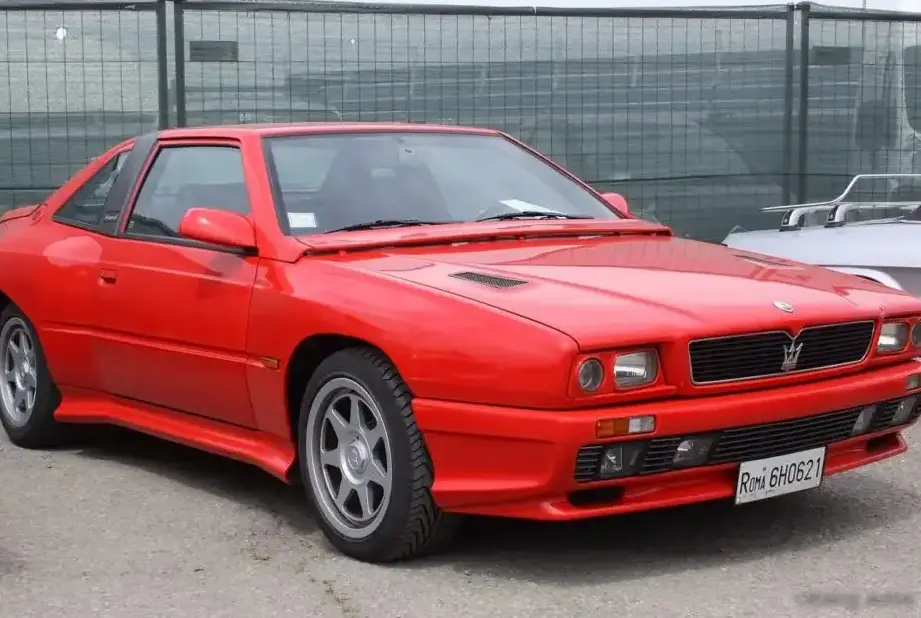
The Maserati Shamal, produced between 1989 and 1995, was a two-door, four-seat coupe representing a bold and somewhat controversial design statement from the Italian manufacturer. Named after a hot, dry wind that blows across the Sahara, the Shamal aimed to blend high performance with luxurious appointments. It was positioned as a more sporting alternative to the contemporary Maserati Biturbo, utilizing a significantly upgraded engine and a more aggressive aesthetic. The Shamal was built on a shortened version of the Biturbo platform, but featured extensive revisions to the bodywork, suspension, and interior. It represents a unique chapter in Maserati’s history, showcasing the company’s engineering prowess during a period of financial instability.
Technical Specifications
| Brand | Maserati |
| Model | Shamal |
| Generation | Shamal |
| Type (Engine) | 3.2 i V8 32V (326 Hp) |
| Start of production | 1989 |
| End of production | 1995 |
| Powertrain Architecture | Internal Combustion engine |
| Body type | Coupe |
| Seats | 4 |
| Doors | 2 |
| Fuel consumption (economy) – urban | 22.2 l/100 km (10.6 US mpg, 12.7 UK mpg, 4.5 km/l) |
| Fuel consumption (economy) – extra urban | 9.1 l/100 km (25.8 US mpg, 31 UK mpg, 11 km/l) |
| Fuel consumption (economy) – combined | 11.5 l/100 km (20.5 US mpg, 24.6 UK mpg, 8.7 km/l) |
| Fuel Type | Petrol (Gasoline) |
| Acceleration 0 – 100 km/h | 5.3 sec |
| Acceleration 0 – 62 mph | 5.3 sec |
| Acceleration 0 – 60 mph | 5.0 sec |
| Maximum speed | 270 km/h (167.77 mph) |
| Weight-to-power ratio | 4.3 kg/Hp, 230.1 Hp/tonne |
| Weight-to-torque ratio | 3.3 kg/Nm, 307.7 Nm/tonne |
| Power | 326 Hp @ 6000 rpm |
| Power per litre | 101.3 Hp/l |
| Torque | 436 Nm @ 2800 rpm (321.58 lb.-ft. @ 2800 rpm) |
| Engine layout | Front, Longitudinal |
| Engine displacement | 3217 cm3 (196.31 cu. in.) |
| Number of cylinders | 8 |
| Engine configuration | V-engine |
| Cylinder Bore | 80 mm (3.15 in.) |
| Piston Stroke | 80 mm (3.15 in.) |
| Compression ratio | 7.5:1 |
| Number of valves per cylinder | 4 |
| Fuel injection system | Multi-port manifold injection |
| Engine aspiration | Turbocharger |
| Valvetrain | DOHC |
| Kerb Weight | 1417 kg (3123.95 lbs.) |
| Max. weight | 1800 kg (3968.32 lbs.) |
| Max load | 383 kg (844.37 lbs.) |
| Trunk (boot) space – minimum | 420 l (14.83 cu. ft.) |
| Fuel tank capacity | 80 l (21.13 US gal | 17.6 UK gal) |
| Length | 4100 mm (161.42 in.) |
| Width | 1850 mm (72.83 in.) |
| Height | 1300 mm (51.18 in.) |
| Wheelbase | 2400 mm (94.49 in.) |
| Front track | 1512 mm (59.53 in.) |
| Rear (Back) track | 1550 mm (61.02 in.) |
| Drivetrain Architecture | The Internal combustion engine (ICE) drives the rear wheels of the vehicle. |
| Drive wheel | Rear wheel drive |
| Number of gears and type of gearbox | 6 gears, manual transmission |
| Front suspension | Spring Strut |
| Rear suspension | Coil spring |
| Front brakes | Ventilated discs |
| Rear brakes | Disc |
| Assisting systems | ABS (Anti-lock braking system), Hydraulic Steering |
| Tires size | 225/45 R16; 245/45 R16 |
| Wheel rims size | 16 |
Powertrain & Engine Architecture
The heart of the Shamal was its 3.2-liter, twin-turbocharged V8 engine. Designated the AM508, this engine was a significant departure from the earlier Biturbo’s smaller, single-turbocharged engines. The V8 featured a 7.5:1 compression ratio, multi-port fuel injection, and dual overhead camshafts (DOHC) with four valves per cylinder. The twin turbochargers, supplied by Garrett, provided a substantial boost in power and torque. The engine produced 326 horsepower at 6,000 rpm and 436 Nm (321.58 lb-ft) of torque at 2,800 rpm. This power was delivered to the rear wheels through a robust six-speed manual transmission, the only transmission option available. The engine’s longitudinal layout contributed to a more balanced weight distribution. The AM508 engine was a complex piece of engineering for its time, requiring careful maintenance to ensure optimal performance and longevity.
Driving Characteristics
The Shamal offered a distinctly sporting driving experience. The twin-turbo V8 provided strong acceleration, with a 0-60 mph time of around 5 seconds and a top speed of 168 mph. While the turbochargers did introduce a degree of lag, the power delivery was generally smooth and progressive. The six-speed manual transmission allowed drivers to keep the engine in its optimal power band. The suspension, while firm, provided a reasonable level of comfort for a performance coupe. The car’s relatively lightweight construction (around 3,124 lbs) contributed to its agility and responsiveness. Compared to the Biturbo, the Shamal felt significantly more powerful and refined, offering a more engaging and rewarding driving experience. The steering was direct and communicative, providing the driver with a good sense of feel for the road. However, the turbo lag could be noticeable during quick overtaking maneuvers.
Equipment & Trim Levels
The Shamal was positioned as a premium offering within the Maserati lineup, and as such, came standard with a comprehensive list of features. The interior was lavishly appointed with leather upholstery, wood trim, and power-adjustable seats. Standard equipment included air conditioning, power windows, central locking, and an advanced sound system. Optional extras included a sunroof, upgraded leather, and a custom paint finish. The dashboard layout was typical of Italian sports cars of the era, with a focus on driver ergonomics. While not overly complex by modern standards, the interior exuded a sense of luxury and craftsmanship. The level of customization available allowed buyers to personalize their Shamal to a significant degree.
Chassis & Braking
The Shamal’s chassis was based on a shortened version of the Biturbo platform, but featured significant modifications to improve handling and rigidity. The suspension utilized independent spring struts at the front and a coil spring setup at the rear. Ventilated disc brakes were fitted to all four wheels, providing ample stopping power. An anti-lock braking system (ABS) was standard. The car’s relatively wide track and well-tuned suspension contributed to its stable and predictable handling characteristics. The steering was hydraulically assisted, providing a responsive and precise feel. The braking system, while effective, could feel somewhat heavy under hard use.
Market Reception & Comparison
The Maserati Shamal received mixed reviews from automotive critics. While praised for its powerful engine, striking design, and luxurious interior, it was also criticized for its relatively high price and occasional reliability issues. Fuel economy was also a concern, with combined fuel consumption averaging around 20.5 US mpg. Compared to its rivals, such as the Porsche 911 and Ferrari 348, the Shamal offered a unique blend of Italian style and performance, but often fell short in terms of overall refinement and long-term dependability. The Shamal was a niche product, appealing to buyers who desired a distinctive and exclusive grand tourer. Its price point placed it firmly in competition with established sports car manufacturers, making it a challenging sell for some potential customers.
Legacy
The Maserati Shamal, despite its limited production run, remains a significant vehicle in the company’s history. It represents a bold attempt to revitalize the Maserati brand and showcase its engineering capabilities. While the Shamal’s reliability record is not without its flaws, the engine itself is generally considered to be robust and durable when properly maintained. Today, the Shamal is a sought-after collectible, appealing to enthusiasts who appreciate its unique design, powerful engine, and Italian heritage. Values have been steadily increasing in recent years, reflecting the car’s growing desirability and rarity. The Shamal serves as a reminder of a time when Maserati was willing to take risks and push the boundaries of automotive design and performance. It’s a testament to Italian automotive passion and a unique piece of automotive history.
