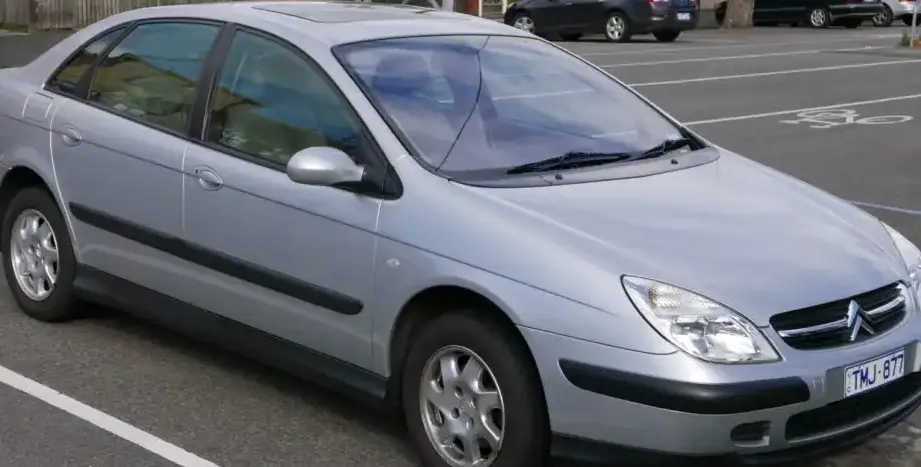
The Citroën C5 I, launched in 2000, represented a significant step forward for the French automaker, aiming to compete directly with established mid-size family cars like the Ford Mondeo and Volkswagen Passat. The Phase I models, produced from 2000 to 2004, offered a range of engine and transmission options. The 2.0i 16V (136 hp) variant paired with a four-speed automatic transmission was positioned as a comfortable, mid-range offering, prioritizing ease of use and refinement over outright performance. It appealed to buyers seeking a smooth driving experience and the convenience of an automatic gearbox, particularly in urban environments.
Technical Specifications
| Brand | Citroën |
| Model | C5 |
| Generation | C5 I (Phase I, 2000) |
| Type (Engine) | 2.0i 16V (136 Hp) Automatic |
| Start of production | 2000 |
| End of production | 2004 |
| Powertrain Architecture | Internal Combustion engine |
| Body type | Sedan |
| Seats | 5 |
| Doors | 4 |
| Fuel consumption (urban) | 12.3 l/100 km (19.1 US mpg, 23 UK mpg, 8.1 km/l) |
| Fuel consumption (extra urban) | 6.4 l/100 km (36.8 US mpg, 44.1 UK mpg, 15.6 km/l) |
| Fuel consumption (combined) | 8.6 l/100 km (27.4 US mpg, 32.8 UK mpg, 11.6 km/l) |
| CO2 emissions | 206 g/km |
| Fuel Type | Petrol (Gasoline) |
| Acceleration 0 – 100 km/h | 12.3 sec |
| Acceleration 0 – 62 mph | 12.3 sec |
| Acceleration 0 – 60 mph | 11.7 sec |
| Maximum speed | 201 km/h (124.9 mph) |
| Emission standard | Euro 3 |
| Weight-to-power ratio | 9.7 kg/Hp, 102.6 Hp/tonne |
| Weight-to-torque ratio | 7 kg/Nm, 143.4 Nm/tonne |
| Power | 136 Hp @ 6000 rpm |
| Power per litre | 68.1 Hp/l |
| Torque | 190 Nm @ 4100 rpm (140.14 lb.-ft. @ 4100 rpm) |
| Engine layout | Front, Transverse |
| Engine Model/Code | RFN EW10J4 |
| Engine displacement | 1997 cm3 (121.86 cu. in.) |
| Number of cylinders | 4 |
| Engine configuration | Inline |
| Cylinder Bore | 85 mm (3.35 in.) |
| Piston Stroke | 88 mm (3.46 in.) |
| Compression ratio | 10.8:1 |
| Number of valves per cylinder | 4 |
| Fuel injection system | Multi-port manifold injection |
| Engine aspiration | Naturally aspirated |
| Engine oil capacity | 4.3 l (4.54 US qt, 3.78 UK qt) |
| Coolant capacity | 9.3 l (9.83 US qt, 8.18 UK qt) |
| Kerb Weight | 1325 kg (2921.12 lbs.) |
| Max. weight | 1845 kg (4067.53 lbs.) |
| Max load | 520 kg (1146.4 lbs.) |
| Trunk (boot) space – minimum | 456 l (16.1 cu. ft.) |
| Fuel tank capacity | 66 l (17.44 US gal, 14.52 UK gal) |
| Max. roof load | 75 kg (165.35 lbs.) |
| Permitted trailer load with brakes (8%) | 1600 kg (3527.4 lbs.) |
| Permitted trailer load with brakes (12%) | 1500 kg (3306.93 lbs.) |
| Permitted trailer load without brakes | 700 kg (1543.24 lbs.) |
| Permitted towbar download | 75 kg (165.35 lbs.) |
| Length | 4618 mm (181.81 in.) |
| Width | 1770 mm (69.69 in.) |
| Width including mirrors | 2100 mm (82.68 in.) |
| Height | 1476 mm (58.11 in.) |
| Wheelbase | 2750 mm (108.27 in.) |
| Front track | 1544 mm (60.79 in.) |
| Rear track | 1509 mm (59.41 in.) |
| Front overhang | 971 mm (38.23 in.) |
| Rear overhang | 897 mm (35.31 in.) |
| Minimum turning circle | 11.39 m (37.37 ft.) |
| Drivetrain Architecture | Front wheel drive |
| Number of gears and type of gearbox | 4 gears, automatic transmission |
| Front suspension | Independent type McPherson |
| Rear suspension | Semi-independent, coil spring |
| Front brakes | Ventilated discs |
| Rear brakes | Disc |
| Assisting systems | ABS (Anti-lock braking system) |
| Steering type | Steering rack and pinion |
| Power steering | Hydraulic |
| Tires size | 195/65 R15 |
| Wheel rims size | 6J x 15 |
Powertrain & Engine Architecture
The heart of this C5 variant is the RFN (EW10J4) 2.0-liter inline-four cylinder engine. This engine, a staple in many PSA Group vehicles of the era, features a 16-valve cylinder head and multi-point fuel injection. The EW10J4 engine is known for its relatively smooth operation and decent power output for its displacement. The engine’s 136 horsepower at 6000 rpm and 190 Nm (140 lb-ft) of torque at 4100 rpm were adequate for comfortable cruising and everyday driving. The four-speed automatic transmission, while providing convenience, was a somewhat dated design by the early 2000s. It lacked the refinement and efficiency of more modern automatic gearboxes with more ratios. The transmission’s shift points were programmed for comfort rather than performance, resulting in a relaxed but not particularly sporty driving experience.
Driving Characteristics
The 2.0i 16V automatic C5 offered a comfortable and compliant ride, typical of Citroën’s emphasis on hydropneumatic suspension (though this model used a more conventional suspension setup). Acceleration was adequate for most situations, but the automatic transmission and relatively modest power output meant it wasn’t a particularly quick car. The 0-100 km/h (0-62 mph) time of 12.3 seconds reflects this. Compared to the more powerful 2.2i 16V or the diesel variants, the 2.0i automatic felt noticeably slower. The four-speed automatic’s gear ratios were spaced to prioritize fuel economy and smooth cruising, rather than maximizing acceleration. In real-world driving, overtaking maneuvers required careful planning, and the engine could feel strained when pushed hard.
Equipment & Trim Levels
The 2.0i 16V automatic typically came with a reasonable level of standard equipment. This included power windows, central locking, air conditioning, and an RDS radio. Higher trim levels, such as the Exclusive, added features like leather upholstery, alloy wheels, and a more sophisticated audio system. Optional extras included a sunroof, parking sensors, and upgraded interior trim materials. The interior design was functional and comfortable, with a focus on ergonomics. The dashboard layout was straightforward, and the controls were generally easy to use.
Chassis & Braking
The C5 I utilized a McPherson strut front suspension and a semi-independent coil spring rear suspension. This setup provided a good balance between ride comfort and handling. The front brakes were ventilated discs, while the rear brakes were solid discs. ABS (Anti-lock Braking System) was standard, enhancing safety. The steering was hydraulic power-assisted, providing a light and easy steering feel. The suspension was tuned for comfort, absorbing bumps and imperfections in the road surface effectively. However, this did come at the expense of some body roll during cornering.
Market Reception & Comparison
The 2.0i 16V automatic C5 was generally well-received by critics as a comfortable and practical family car. However, the automatic transmission was often criticized for its lack of responsiveness and dated design. Fuel economy was reasonable, but not class-leading. Compared to the 2.0 HDI diesel variant, the petrol engine offered less torque and significantly lower fuel efficiency. The petrol version appealed to buyers who preferred the smoothness and refinement of a gasoline engine and didn’t prioritize fuel economy. The 2.2i 16V offered more performance but at a higher price point.
Legacy
The RFN EW10J4 engine, while not known for being particularly groundbreaking, proved to be relatively reliable. With proper maintenance, these engines can cover high mileages. The four-speed automatic transmission, however, is a potential weak point, and examples with high mileage may exhibit signs of wear and tear. Today, the 2.0i 16V automatic C5 I represents an affordable and comfortable classic car. It’s a good option for buyers looking for a spacious and well-equipped family car with a touch of French flair. Parts availability is generally good, and maintenance costs are reasonable. However, potential buyers should be aware of the potential issues with the automatic transmission and ensure it has been properly serviced.