
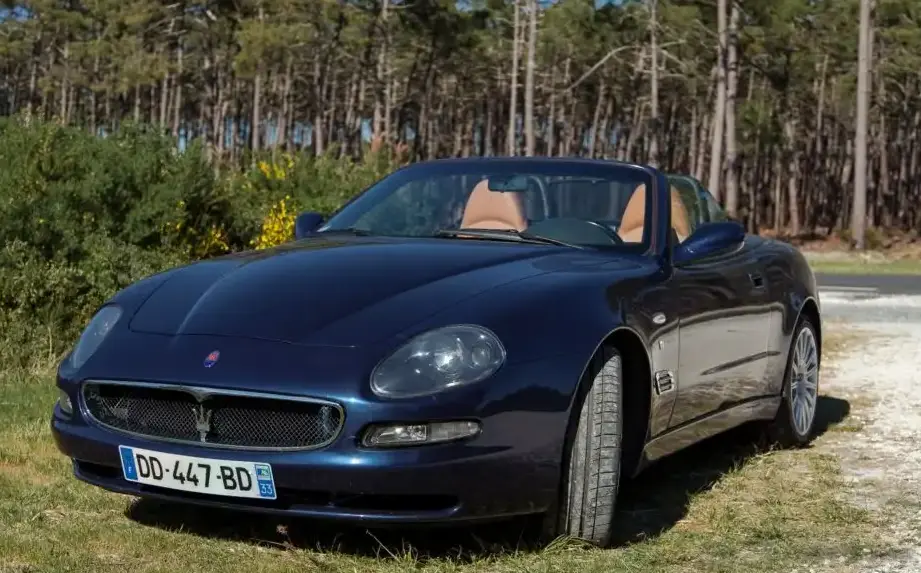
The Maserati Spyder 4.2i, produced between 2001 and 2007, represented a return to open-top motoring for the Italian marque. Positioned as a luxurious and performance-oriented grand tourer, the Spyder aimed to recapture the spirit of classic Maserati roadsters while incorporating modern engineering and design. It was built on a shortened version of the Maserati 3200 GT platform, sharing many components but offering a more focused driving experience due to its lighter weight and open-air configuration. This particular variant, equipped with the 4.2-liter V8 engine producing 390 horsepower, was the primary offering throughout the Spyder’s production run, representing the core of the model’s appeal.
Technical Specifications
| Brand | Maserati |
| Model | Spyder |
| Generation | Spyder |
| Type (Engine) | 4.2 i V8 32V (390 Hp) |
| Start of production | 2001 |
| End of production | 2007 |
| Powertrain Architecture | Internal Combustion engine |
| Body type | Cabriolet |
| Seats | 2 |
| Doors | 2 |
| Fuel consumption (urban) | 25 l/100 km (9.4 US mpg, 11.3 UK mpg, 4 km/l) |
| Fuel consumption (extra urban) | 11 l/100 km (21.4 US mpg, 25.7 UK mpg, 9.1 km/l) |
| Fuel consumption (combined) | 15.9 l/100 km (14.8 US mpg, 17.8 UK mpg, 6.3 km/l) |
| Fuel Type | Petrol (Gasoline) |
| Acceleration 0 – 100 km/h | 5 sec |
| Acceleration 0 – 62 mph | 5 sec |
| Acceleration 0 – 60 mph | 4.8 sec |
| Maximum speed | 283 km/h (175.85 mph) |
| Weight-to-power ratio | 4.4 kg/Hp, 226.7 Hp/tonne |
| Weight-to-torque ratio | 3.8 kg/Nm, 262.2 Nm/tonne |
| Power | 390 Hp @ 7000 rpm |
| Power per litre | 91.9 Hp/l |
| Torque | 451 Nm @ 4500 rpm (332.64 lb.-ft. @ 4500 rpm) |
| Engine layout | Front, Longitudinal |
| Engine Model/Code | M138 |
| Engine displacement | 4244 cm3 (258.98 cu. in.) |
| Number of cylinders | 8 |
| Engine configuration | V-engine |
| Cylinder Bore | 92 mm (3.62 in.) |
| Piston Stroke | 80 mm (3.15 in.) |
| Compression ratio | 11.1:1 |
| Number of valves per cylinder | 4 |
| Fuel injection system | Multi-port manifold injection |
| Engine aspiration | Naturally aspirated engine |
| Engine oil capacity | 7.8 l (8.24 US qt | 6.86 UK qt) |
| Coolant capacity | 11.5 l (12.15 US qt | 10.12 UK qt) |
| Kerb Weight | 1720 kg (3791.95 lbs.) |
| Max. weight | 1980 kg (4365.15 lbs.) |
| Max load | 260 kg (573.2 lbs.) |
| Trunk (boot) space – minimum | 300 l (10.59 cu. ft.) |
| Fuel tank capacity | 88 l (23.25 US gal | 19.36 UK gal) |
| Length | 4303 mm (169.41 in.) |
| Width | 1822 mm (71.73 in.) |
| Height | 1305 mm (51.38 in.) |
| Wheelbase | 2440 mm (96.06 in.) |
| Front track | 1525 mm (60.04 in.) |
| Rear (Back) track | 1538 mm (60.55 in.) |
| Drivetrain Architecture | Rear wheel drive |
| Number of gears and type of gearbox | 6 gears, manual transmission |
| Front suspension | Coil spring |
| Rear suspension | Coil spring |
| Front brakes | Ventilated discs |
| Rear brakes | Ventilated discs |
| Assisting systems | ABS (Anti-lock braking system) |
| Steering type | Steering rack and pinion |
| Power steering | Hydraulic Steering |
| Tires size | 235/40 R18; 265/35 R18 |
| Wheel rims size | 18 |
Powertrain & Engine Architecture
The heart of the Spyder 4.2i is the M138 engine, a 4.2-liter naturally aspirated V8. This engine, developed in collaboration with Ferrari (who also used a similar engine in their models at the time), features a 90-degree V-angle, four valves per cylinder, and a multi-port fuel injection system. The engine’s architecture prioritized smooth power delivery and a distinctive exhaust note, hallmarks of the Maserati brand. The 11.1:1 compression ratio contributed to the engine’s high output. The Spyder exclusively came with a six-speed manual transmission, designed to handle the engine’s torque and provide a more engaging driving experience. The transmission featured a robust design and relatively short throw, enhancing driver control.
Driving Characteristics
The Spyder 4.2i offered a compelling blend of performance and luxury. The 390 horsepower and 332 lb-ft of torque allowed for brisk acceleration – 0 to 60 mph in around 4.8 seconds – and a top speed of 175.85 mph. The manual transmission, while requiring more driver involvement than an automatic, provided precise gear changes and allowed the driver to fully exploit the engine’s powerband. The Spyder’s relatively lightweight construction (around 3792 lbs) contributed to its agile handling. Compared to a hypothetical automatic version (which was never offered), the manual transmission would have provided a more direct connection to the engine and a more rewarding driving experience. The gear ratios were tuned for a balance between acceleration and cruising comfort, making it suitable for both spirited driving and long-distance journeys.
Equipment & Trim Levels
The Spyder 4.2i was well-equipped, reflecting its luxury positioning. Standard features included leather upholstery, power-adjustable seats, climate control, a premium audio system, and alloy wheels. The interior design emphasized Italian craftsmanship and elegance, with a focus on high-quality materials. Optional extras included navigation system, upgraded leather options, and various cosmetic enhancements. The Spyder didn’t offer a wide range of trim levels; it was largely customizable through options packages, allowing buyers to personalize their vehicle to their preferences.
Chassis & Braking
The Spyder’s chassis was based on a shortened version of the 3200 GT platform, utilizing a steel space frame construction. The suspension consisted of independent coil springs all around, providing a comfortable ride while maintaining good handling characteristics. Ventilated disc brakes were fitted to all four wheels, providing ample stopping power. An anti-lock braking system (ABS) was standard. The Spyder’s suspension was tuned to balance comfort and handling, offering a more compliant ride than some of its more track-focused competitors.
Market Reception & Comparison
The Maserati Spyder 4.2i was generally well-received by automotive critics, who praised its performance, styling, and luxurious interior. However, some criticisms were leveled at its relatively high price and occasional quality control issues. Compared to rivals like the Porsche 911 Cabriolet, the Spyder offered a more exotic and emotionally engaging driving experience, but lacked the Porsche’s reputation for reliability and refinement. Fuel economy was typical for a high-performance V8, averaging around 14.8 US mpg combined. The Spyder’s maintenance costs were also higher than those of some competitors, due to the complexity of its engine and the cost of parts.
Legacy
The Maserati Spyder 4.2i remains a desirable modern classic. While not without its quirks, the Spyder offers a unique combination of Italian style, performance, and open-air driving enjoyment. The M138 V8 engine is generally considered to be a robust and reliable unit, although regular maintenance is essential. On the used car market, the Spyder commands a premium price, particularly for well-maintained examples with low mileage. Its relative rarity and distinctive character ensure its continued appeal to enthusiasts and collectors.
