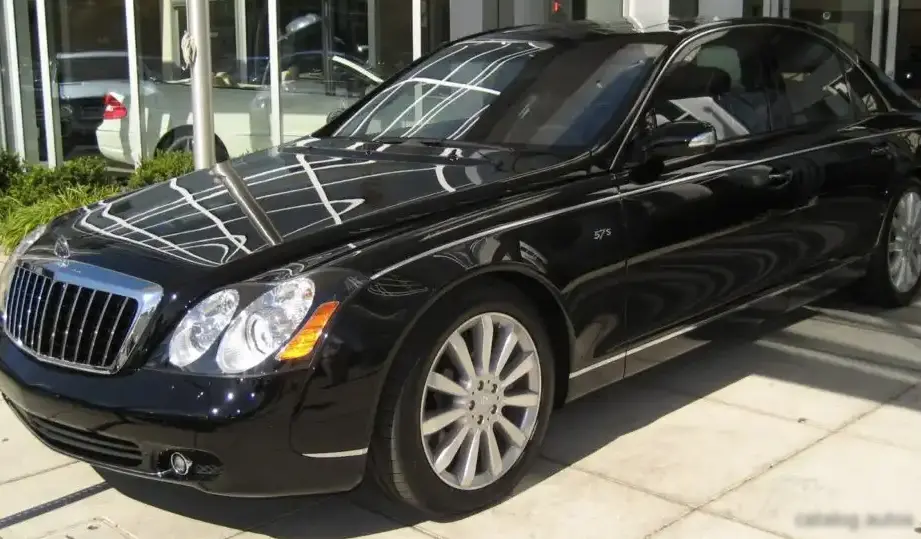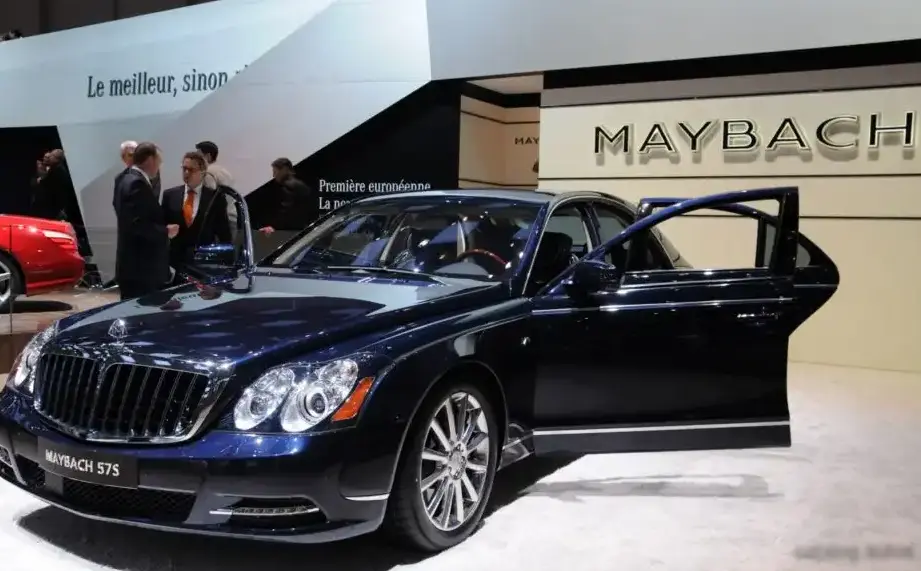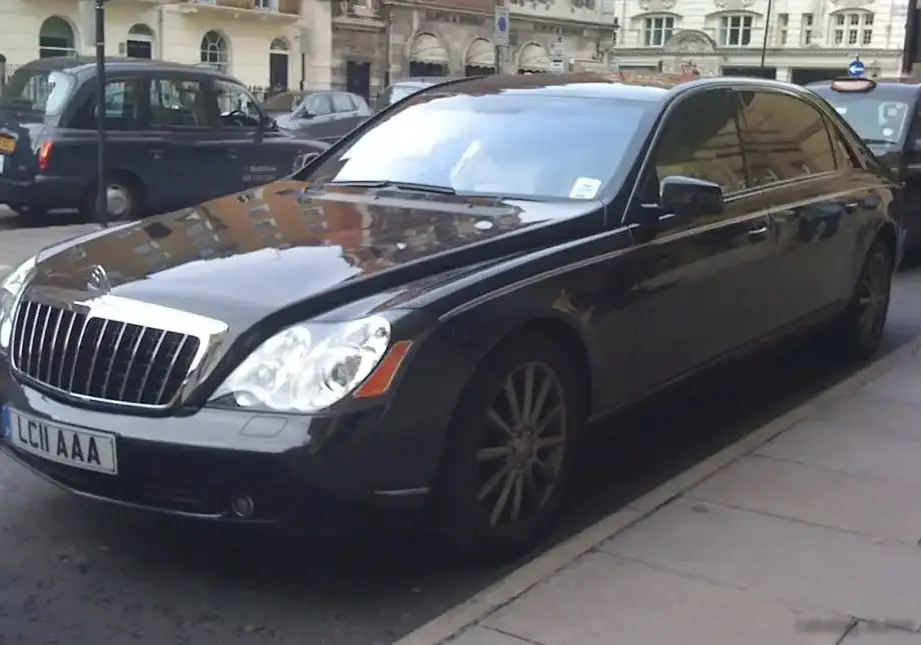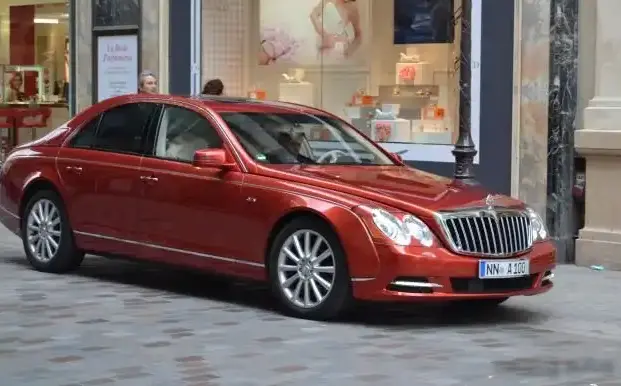
The Maybach 57, specifically the 5.5 V12 variant with an automatic transmission, represented the initial offering from the revived Maybach marque, launched in 2002. Positioned as a direct competitor to the Rolls-Royce Phantom and Bentley Continental, the 57 (W240 chassis code) aimed to recapture the prestige and luxury of the pre-war Maybach automobiles. Production continued until 2013, with the “57” designation referring to the car’s length in decimeters (approximately 18.7 feet). This 550 horsepower version, coupled with the five-speed automatic, served as the flagship model for the early years of the modern Maybach, embodying a blend of traditional craftsmanship and contemporary engineering.
Technical Specifications
| Brand | Maybach |
| Model | 57 |
| Generation | 57 (W240) |
| Type (Engine) | 5.5 V12 (550 Hp) Automatic |
| Start of production | 2002 |
| End of production | 2013 |
| Powertrain Architecture | Internal Combustion engine |
| Body type | Sedan |
| Seats | 4 |
| Doors | 4 |
| Fuel consumption (economy) – urban (NEDC) | 24.5 l/100 km (9.6 US mpg, 11.5 UK mpg, 4.1 km/l) |
| Fuel consumption (economy) – extra urban (NEDC) | 11 l/100 km (21.4 US mpg, 25.7 UK mpg, 9.1 km/l) |
| Fuel consumption (economy) – combined (NEDC) | 15.9 l/100 km (14.8 US mpg, 17.8 UK mpg, 6.3 km/l) |
| CO2 emissions (NEDC) | 383 g/km |
| Fuel Type | Petrol (Gasoline) |
| Acceleration 0 – 100 km/h | 5.2 sec |
| Acceleration 0 – 62 mph | 5.2 sec |
| Acceleration 0 – 60 mph | 4.9 sec |
| Maximum speed | 250 km/h (155.34 mph), Electronically limited |
| Emission standard | Euro 4 |
| Weight-to-power ratio | 4.8 kg/Hp, 206.8 Hp/tonne |
| Weight-to-torque ratio | 3 kg/Nm, 338.3 Nm/tonne |
| Power | 550 Hp @ 5250 rpm |
| Power per litre | 99.8 Hp/l |
| Torque | 900 Nm @ 2300-3000 rpm (663.81 lb.-ft. @ 2300-3000 rpm) |
| Maximum engine speed | 5950 rpm |
| Engine layout | Front, Longitudinal |
| Engine Model/Code | M 285.950 |
| Engine displacement | 5513 cm3 (336.42 cu. in.) |
| Number of cylinders | 12 |
| Engine configuration | V-engine |
| Cylinder Bore | 82 mm (3.23 in.) |
| Piston Stroke | 87 mm (3.43 in.) |
| Compression ratio | 9:1 |
| Number of valves per cylinder | 3 |
| Fuel injection system | Multi-port manifold injection |
| Engine aspiration | BiTurbo, Intercooler |
| Valvetrain | SOHC |
| Engine oil capacity | 10 l (10.57 US qt | 8.8 UK qt) |
| Coolant | 17 l (17.96 US qt | 14.96 UK qt) |
| Kerb Weight | 2660 kg (5864.3 lbs.) |
| Max. weight | 3260 kg (7187.07 lbs.) |
| Max load | 600 kg (1322.77 lbs.) |
| Trunk (boot) space – minimum | 605 l (21.37 cu. ft.) |
| Fuel tank capacity | 110 l (29.06 US gal | 24.2 UK gal) |
| Length | 5728 mm (225.51 in.) |
| Width | 1980 mm (77.95 in.) |
| Width including mirrors | 2134 mm (84.02 in.) |
| Height | 1572 mm (61.89 in.) |
| Wheelbase | 3390 mm (133.46 in.) |
| Front track | 1675 mm (65.94 in.) |
| Rear (Back) track | 1695 mm (66.73 in.) |
| Front overhang | 1014 mm (39.92 in.) |
| Rear overhang | 1324 mm (52.13 in.) |
| Minimum turning circle (turning diameter) | 13.38 m (43.9 ft.) |
| Drivetrain Architecture | The Internal combustion engine (ICE) drives the rear wheels of the vehicle. |
| Drive wheel | Rear wheel drive |
| Number of gears and type of gearbox | 5 gears, automatic transmission |
| Front suspension | Double wishbone, Transverse stabilizer, Air suspension |
| Rear suspension | Independent multi-link suspension, Air suspension, Transverse stabilizer |
| Front brakes | Ventilated discs |
| Rear brakes | Ventilated discs |
| Assisting systems | ABS (Anti-lock braking system) |
| Steering type | Cone worm with recirculation balls |
| Power steering | Hydraulic Steering |
| Tires size | 275/50 R19 |
| Wheel rims size | 8J x 19 |
Powertrain & Engine Architecture
At the heart of the Maybach 57 lay the M285.950 engine, a 5.5-liter V12 derived from the Mercedes-Benz M113 engine family, but extensively modified and hand-built. The engine featured twin turbochargers and a multi-port fuel injection system, producing 550 horsepower at 5250 rpm and a substantial 900 Nm (663.81 lb-ft) of torque between 2300 and 3000 rpm. This power was delivered through a five-speed automatic transmission, specifically designed to handle the engine’s immense output. The transmission was tuned for smooth, almost imperceptible shifts, prioritizing comfort over outright performance. The engine’s architecture included a single overhead camshaft (SOHC) valvetrain and a relatively modest 9:1 compression ratio, balancing power with reliability.
Driving Characteristics
The 5.5-liter V12 automatic powertrain delivered a driving experience focused on effortless power and supreme comfort. While capable of a 0-60 mph sprint in around 4.9 seconds, the Maybach 57 wasn’t designed for aggressive driving. The automatic transmission, while smooth, wasn’t particularly quick to downshift, and the car’s substantial weight (over 5,800 lbs) limited its agility. Compared to potential alternatives with manual transmissions or more performance-oriented tuning, the automatic version prioritized a relaxed and refined driving experience. The emphasis was on providing a serene and isolated cabin, allowing passengers to travel in utmost luxury.
Equipment & Trim Levels
The Maybach 57 came standard with an exceptionally high level of equipment. Interior appointments included premium leather upholstery, wood veneer trim (customers could select from a variety of woods), and a bespoke sound system. Standard features also included rear reclining seats, a champagne cooler, and individual climate control for each passenger. Optional extras were extensive, allowing customers to personalize their vehicles to an almost limitless degree. These included custom paint colors, bespoke interior designs, and even the addition of a rear entertainment system. The automatic transmission was standard on the 57, with no manual option available.
Chassis & Braking
The Maybach 57 utilized a robust chassis with an independent suspension system at all four wheels. The front suspension employed a double wishbone setup with a transverse stabilizer and air suspension, while the rear featured an independent multi-link suspension, also with air suspension and a stabilizer bar. This air suspension system allowed for adjustable ride height and provided a remarkably smooth ride. Braking duties were handled by ventilated disc brakes on all four wheels, assisted by an Anti-lock Braking System (ABS). The car’s substantial weight necessitated a powerful braking system to ensure adequate stopping performance.
Market Reception & Comparison
Critics generally praised the Maybach 57 for its luxurious interior, smooth ride, and powerful engine. However, the car’s high price tag and relatively understated styling were points of contention. Compared to the Rolls-Royce Phantom, the Maybach 57 was often seen as offering a more modern and technologically advanced experience, but lacking the same level of brand cachet. Fuel economy was predictably poor, with combined consumption figures around 15.9 l/100 km (14.8 US mpg). Reliability was generally good, although the complex electronic systems and bespoke components could lead to expensive repairs.
Legacy
The Maybach 57, despite its limited production run, played a crucial role in re-establishing the Maybach brand in the 21st century. While the brand ultimately struggled to gain significant market share, the 57 demonstrated a commitment to luxury and craftsmanship. Today, the 5.5 V12 automatic variant is sought after by collectors and enthusiasts who appreciate its unique blend of power, comfort, and exclusivity. The powertrain, while complex, has proven to be relatively durable when properly maintained, and well-cared-for examples command premium prices in the used car market. The Maybach 57 remains a symbol of a bygone era of automotive opulence and a testament to the enduring appeal of handcrafted luxury.