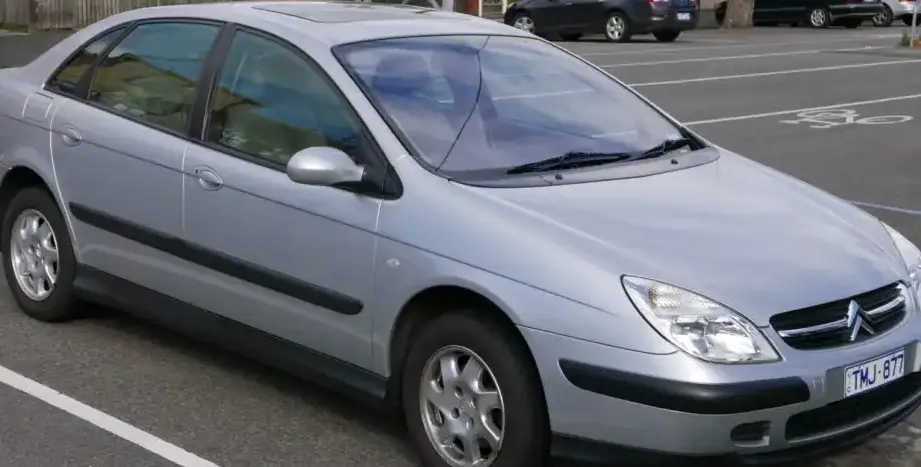
The Citroën C5 I, specifically the 3.0i V6 variant with an automatic transmission, represented a significant step forward for the French automaker when it debuted in 2000. Part of the first generation (XHX/X4) C5 range, produced from 2000 to 2004, this model aimed to blend comfort, technology, and performance in a large family sedan. Positioned as a premium offering within the C5 lineup, it catered to buyers seeking a more refined and powerful alternative to the base engine options. The C5 I sought to replace the aging Xantia and XM models, offering a more modern and technologically advanced package. This particular 3.0i V6 automatic was primarily sold in European markets, where Citroën enjoyed a strong reputation for innovative design and comfortable ride quality.
Technical Specifications
| Brand | Citroën |
| Model | C5 |
| Generation | C5 I (Phase I, 2000) |
| Type (Engine) | 3.0i V6 (207 Hp) Automatic |
| Start of production | 2000 |
| End of production | 2004 |
| Powertrain Architecture | Internal Combustion engine |
| Body type | Sedan |
| Seats | 5 |
| Doors | 4 |
| Fuel consumption (urban) | 14.5 l/100 km (16.2 US mpg, 19.5 UK mpg, 6.9 km/l) |
| Fuel consumption (extra urban) | 7.6 l/100 km (30.9 US mpg, 37.2 UK mpg, 13.2 km/l) |
| Fuel consumption (combined) | 10.2 l/100 km (23.1 US mpg, 27.7 UK mpg, 9.8 km/l) |
| CO2 emissions | 241 g/km |
| Fuel Type | Petrol (Gasoline) |
| Acceleration 0 – 100 km/h | 9.8 sec |
| Acceleration 0 – 62 mph | 9.8 sec |
| Acceleration 0 – 60 mph | 9.3 sec |
| Maximum speed | 232 km/h (144.16 mph) |
| Emission standard | Euro 3 |
| Weight-to-power ratio | 7.3 kg/Hp, 136.2 Hp/tonne |
| Weight-to-torque ratio | 5.3 kg/Nm, 187.5 Nm/tonne |
| Power | 207 Hp @ 6000 rpm |
| Power per litre | 70.3 Hp/l |
| Torque | 285 Nm @ 3750 rpm (210.21 lb.-ft. @ 3750 rpm) |
| Engine layout | Front, Transverse |
| Engine Model/Code | XFX ES9J4S |
| Engine displacement | 2946 cm3 (179.78 cu. in.) |
| Number of cylinders | 6 |
| Engine configuration | V-engine |
| Cylinder Bore | 87 mm (3.43 in.) |
| Piston Stroke | 82.6 mm (3.25 in.) |
| Compression ratio | 10.9:1 |
| Number of valves per cylinder | 4 |
| Fuel injection system | Multi-port manifold injection |
| Engine aspiration | Naturally aspirated engine |
| Valvetrain | DOHC |
| Engine oil capacity | 5.3 l (5.6 US qt | 4.66 UK qt) |
| Coolant | 14 l (14.79 US qt | 12.32 UK qt) |
| Kerb Weight | 1520 kg (3351.03 lbs.) |
| Max. weight | 2020 kg (4453.34 lbs.) |
| Max load | 500 kg (1102.31 lbs.) |
| Trunk (boot) space – minimum | 456 l (16.1 cu. ft.) |
| Fuel tank capacity | 66 l (17.44 US gal | 14.52 UK gal) |
| Max. roof load | 75 kg (165.35 lbs.) |
| Permitted trailer load with brakes (8%) | 1700 kg (3747.86 lbs.) |
| Permitted trailer load with brakes (12%) | 1400 kg (3086.47 lbs.) |
| Permitted trailer load without brakes | 750 kg (1653.47 lbs.) |
| Permitted towbar download | 75 kg (165.35 lbs.) |
| Length | 4618 mm (181.81 in.) |
| Width | 1770 mm (69.69 in.) |
| Width including mirrors | 2100 mm (82.68 in.) |
| Height | 1476 mm (58.11 in.) |
| Wheelbase | 2750 mm (108.27 in.) |
| Front track | 1544 mm (60.79 in.) |
| Rear (Back) track | 1509 mm (59.41 in.) |
| Front overhang | 971 mm (38.23 in.) |
| Rear overhang | 897 mm (35.31 in.) |
| Minimum turning circle | 12.46 m (40.88 ft.) |
| Drivetrain Architecture | The Internal combustion engine (ICE) drives the front wheels. |
| Drive wheel | Front wheel drive |
| Number of gears and type of gearbox | 4 gears, automatic transmission |
| Front suspension | Independent type McPherson |
| Rear suspension | Semi-independent, coil spring |
| Front brakes | Ventilated discs |
| Rear brakes | Disc |
| Assisting systems | ABS (Anti-lock braking system) |
| Steering type | Steering rack and pinion |
| Power steering | Hydraulic Steering |
| Tires size | 215/55 R16 |
| Wheel rims size | 6.5J x 16 |
Powertrain & Engine Architecture
The heart of this C5 variant is the XFX ES9J4S 3.0-liter V6 engine. This naturally aspirated powerplant, part of Citroën/Peugeot’s ES9 family, features a 60-degree V-angle and utilizes a cast iron block with aluminum cylinder heads. It employs multi-port fuel injection and a double overhead camshaft (DOHC) valvetrain with four valves per cylinder. The engine’s 207 horsepower at 6000 rpm and 285 Nm (210 lb-ft) of torque at 3750 rpm provided a noticeable performance boost compared to the four-cylinder options. The engine is transversely mounted in the front of the vehicle. Paired with this engine was a four-speed automatic transmission, designed to provide smooth shifts and ease of driving. While not the most modern transmission by today’s standards, it was well-suited to the engine’s characteristics and the C5’s focus on comfort.
Driving Characteristics
The 3.0i V6 automatic C5 offered a distinctly different driving experience than its lower-powered siblings. Acceleration to 100 km/h (62 mph) took approximately 9.8 seconds, making it reasonably quick for its time and class. The automatic transmission, while smooth, did result in some power loss compared to the available manual transmission. The gear ratios were tuned for comfortable cruising rather than outright performance. The V6 engine delivered a broad torque curve, providing ample power for overtaking and highway driving. However, the C5’s weight (around 1520 kg or 3351 lbs) meant it wasn’t a particularly sporty vehicle. The emphasis was on a relaxed and refined driving experience, with the hydropneumatic suspension contributing to a remarkably smooth ride.
Equipment & Trim Levels
The 3.0i V6 automatic typically came with a higher level of standard equipment than the base C5 models. This included features like air conditioning, power windows, central locking, and an upgraded audio system. Interior upholstery was typically cloth or leather, with wood trim accents. Optional extras included a sunroof, navigation system, and premium sound system. The C5 I offered a range of trim levels, with the V6 variant generally positioned towards the upper end of the spectrum, offering a more luxurious and well-equipped package.
Chassis & Braking
The C5 I featured Citroën’s renowned hydropneumatic suspension system, which provided an exceptionally comfortable ride and allowed the vehicle to self-level. The front suspension utilized an independent McPherson strut design, while the rear suspension was a semi-independent trailing arm setup. Braking duties were handled by ventilated discs at the front and solid discs at the rear. Anti-lock braking system (ABS) was standard, enhancing safety and control. The steering was a rack and pinion system with hydraulic power assistance, providing precise and responsive handling.
Market Reception & Comparison
The 3.0i V6 C5 was generally well-received by automotive critics, who praised its comfortable ride, refined engine, and spacious interior. However, some criticized its relatively high fuel consumption and the somewhat dated four-speed automatic transmission. Compared to the 1.8L and 2.0L four-cylinder models, the V6 offered significantly more performance but at the cost of increased fuel bills and a higher purchase price. The V6 was also seen as a more direct competitor to vehicles like the Peugeot 607 and the Ford Mondeo V6.
Legacy
The Citroën C5 I 3.0i V6 automatic, while not a high-volume seller, remains a desirable classic for enthusiasts seeking a comfortable and refined French sedan. The ES9 V6 engine is generally considered reliable, although regular maintenance is essential. The hydropneumatic suspension system requires specialized knowledge and can be expensive to repair. Today, well-maintained examples of this C5 variant are becoming increasingly collectible, offering a unique blend of French style, comfort, and performance. The four-speed automatic transmission, while not cutting-edge, has proven to be reasonably durable. Finding parts can sometimes be a challenge, but a dedicated community of Citroën enthusiasts helps to keep these vehicles on the road.