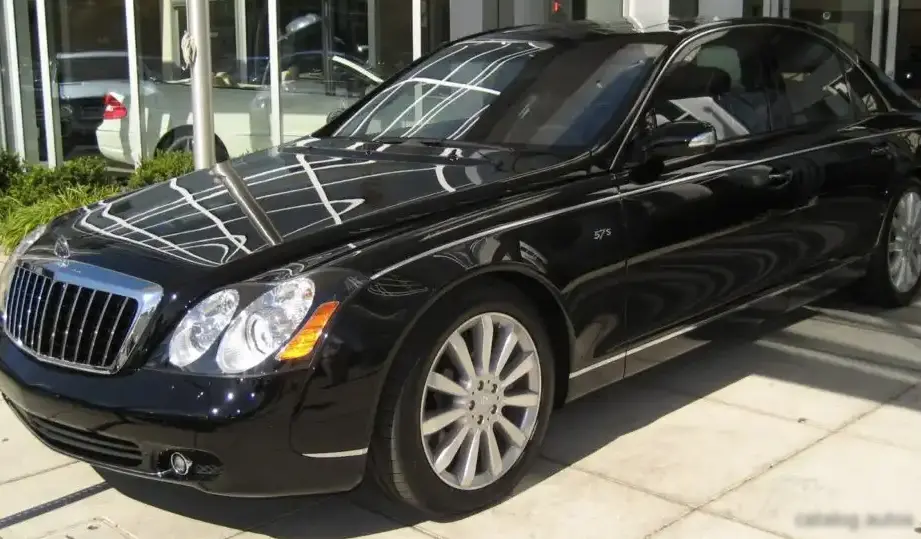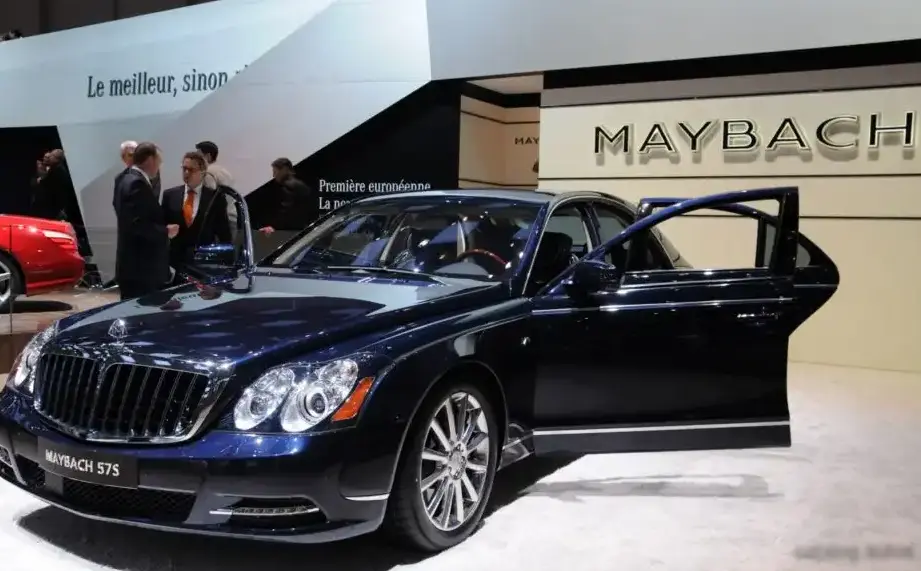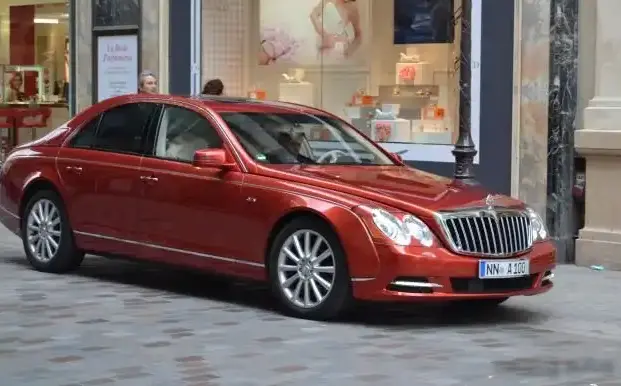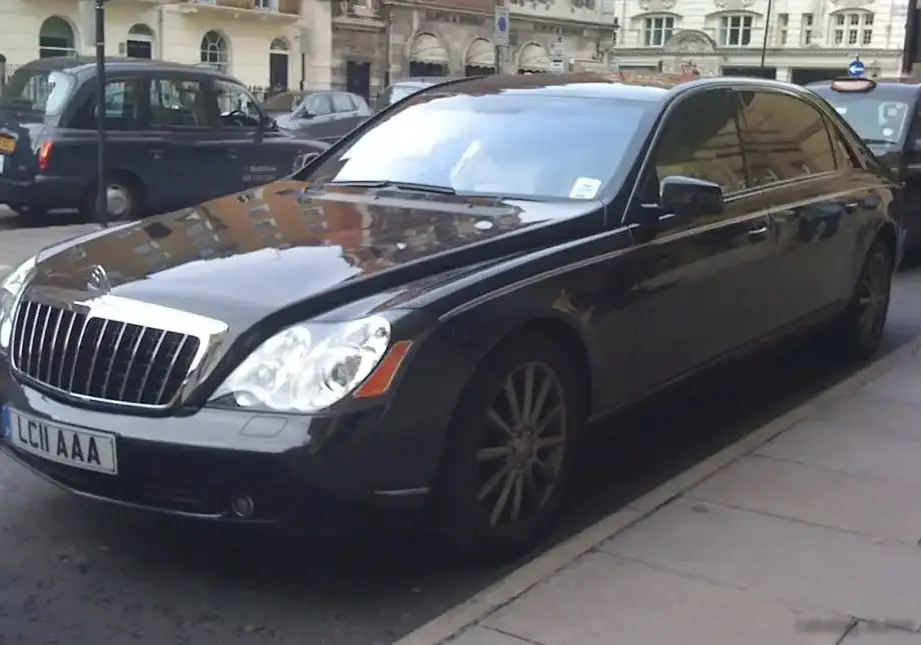
The Maybach 57 Zeppelin (W240), produced for a limited run in 2009, represents the pinnacle of ultra-luxury sedan design and engineering from the German marque. Positioned as the most exclusive variant of the 57 series, the Zeppelin was a final, extravagant expression of Maybach’s commitment to bespoke automotive craftsmanship before the brand underwent restructuring. Built on the W240 platform, the Zeppelin distinguished itself through unique styling cues, an even more opulent interior, and a potent 6.0-liter V12 engine paired exclusively with an automatic transmission. Production was exceptionally limited, making it one of the rarest Maybach models ever created.
Technical Specifications
| Brand | Maybach |
| Model | 57 |
| Generation | 57 Zeppelin (W240) |
| Type (Engine) | 6.0 V12 (640 Hp) Automatic |
| Start of production | 2009 |
| End of production | 2009 |
| Powertrain Architecture | Internal Combustion engine |
| Body type | Sedan |
| Seats | 4 |
| Doors | 4 |
| Fuel consumption (economy) – combined (NEDC) | 16.4 l/100 km |
| Fuel consumption (economy) – combined (US mpg) | 14.3 US mpg |
| Fuel consumption (economy) – combined (UK mpg) | 17.2 UK mpg |
| Fuel consumption (economy) – combined (km/l) | 6.1 km/l |
| CO2 emissions (NEDC) | 390 g/km |
| Fuel Type | Petrol (Gasoline) |
| Acceleration 0 – 100 km/h | 4.9 sec |
| Acceleration 0 – 62 mph | 4.9 sec |
| Acceleration 0 – 60 mph | 4.7 sec |
| Maximum speed | 250 km/h (155.34 mph) |
| Weight-to-power ratio | 4.3 kg/Hp |
| Weight-to-torque ratio | 2.7 kg/Nm |
| Power | 640 Hp @ 4800-5100 rpm |
| Power per litre | 107 Hp/l |
| Torque | 1000 Nm @ 2000-4000 rpm (737.56 lb.-ft. @ 2000-4000 rpm) |
| Engine layout | Front, Longitudinal |
| Engine Model/Code | M 285.980 |
| Engine displacement | 5980 cm3 (364.92 cu. in.) |
| Number of cylinders | 12 |
| Engine configuration | V-engine |
| Cylinder Bore | 82.6 mm (3.25 in.) |
| Piston Stroke | 93 mm (3.66 in.) |
| Compression ratio | 9:1 |
| Number of valves per cylinder | 3 |
| Fuel injection system | Multi-port manifold injection |
| Engine aspiration | BiTurbo, Intercooler |
| Valvetrain | SOHC |
| Engine oil capacity | 10 l (10.57 US qt | 8.8 UK qt) |
| Coolant | 17 l (17.96 US qt | 14.96 UK qt) |
| Kerb Weight | 2735 kg (6029.64 lbs.) |
| Max. weight | 3380 kg (7451.62 lbs.) |
| Max load | 645 kg (1421.98 lbs.) |
| Trunk (boot) space – minimum | 605 l (21.37 cu. ft.) |
| Fuel tank capacity | 110 l (29.06 US gal | 24.2 UK gal) |
| Length | 5734 mm (225.75 in.) |
| Width | 1980 mm (77.95 in.) |
| Height | 1572 mm (61.89 in.) |
| Wheelbase | 3390 mm (133.46 in.) |
| Front track | 1675 mm (65.94 in.) |
| Rear (Back) track | 1695 mm (66.73 in.) |
| Minimum turning circle | 13.38 m (43.9 ft.) |
| Drivetrain Architecture | Rear wheel drive |
| Drive wheel | Rear wheel drive |
| Number of gears and type of gearbox | 5 gears, automatic transmission |
| Front suspension | Double wishbone, Air suspension |
| Rear suspension | Independent multi-link suspension, Air suspension |
| Front brakes | Ventilated discs |
| Rear brakes | Ventilated discs |
| Assisting systems | ABS (Anti-lock braking system) |
| Steering type | Cone worm with recirculation balls |
| Power steering | Hydraulic Steering |
| Tires size | 275/45 R20 |
| Wheel rims size | 8.5J x 20 |
Powertrain & Engine Architecture
The heart of the Maybach 57 Zeppelin is the M285.980 6.0-liter V12 engine. This engine, derived from Mercedes-Benz’s high-performance V12s, features twin turbochargers and intercoolers, boosting output to a formidable 640 horsepower and 1000 Nm (737.56 lb.-ft.) of torque. The engine utilizes multi-port fuel injection and a single overhead camshaft (SOHC) valvetrain. The engine’s longitudinal mounting and rear-wheel-drive configuration contribute to the car’s balanced handling. The sole transmission option was a five-speed automatic, specifically tuned for smooth, effortless shifts befitting the car’s luxury character. While not the most modern transmission by 2009 standards, it prioritized refinement over outright performance.
Driving Characteristics
The 57 Zeppelin delivers a driving experience focused on effortless power and supreme comfort. The substantial torque output, available from just 2000 rpm, provides immediate acceleration. The 0-60 mph sprint takes approximately 4.7 seconds, and the electronically limited top speed of 155 mph is reached with minimal effort. The automatic transmission, while lacking the responsiveness of modern multi-gear units, provides smooth transitions between gears. Compared to other 57 variants, the Zeppelin’s increased power and torque offer a more assertive driving experience, though it remains fundamentally a grand tourer rather than a sports car. The air suspension contributes to a remarkably smooth ride, effectively isolating passengers from road imperfections.
Equipment & Trim Levels
The Zeppelin trim represented the highest level of luxury available on the Maybach 57. Standard features included a bespoke interior crafted from the finest leather, extensive wood trim (often piano black or a customer-specified veneer), and a state-of-the-art entertainment system. Rear passengers enjoyed individual reclining seats with massage functions, along with a champagne cooler. The exterior was distinguished by unique badging, a two-tone paint scheme (typically dark blue and black), and polished chrome accents. Customers could further personalize their Zeppelin with a virtually unlimited range of options, including custom paint colors, bespoke interior materials, and personalized embroidery.
Chassis & Braking
The Maybach 57 Zeppelin’s chassis is built around a robust steel monocoque construction. The suspension utilizes a double wishbone setup at the front and an independent multi-link arrangement at the rear, both incorporating air suspension for adjustable ride height and exceptional comfort. Ventilated disc brakes are fitted to all four wheels, providing ample stopping power. An Anti-lock Braking System (ABS) is standard. The steering system employs a cone worm and recirculation balls mechanism with hydraulic power assistance, offering a smooth and precise feel.
Market Reception & Comparison
The Maybach 57 Zeppelin was met with critical acclaim for its opulent interior, powerful engine, and refined driving experience. However, its extremely high price tag (well over $450,000 when new) limited its appeal to a very small segment of the market. Compared to other 57 variants, such as the standard 57 and the 57S, the Zeppelin offered a more exclusive and luxurious experience, justifying its higher cost for discerning buyers. Fuel economy, unsurprisingly, was poor, with a combined consumption of 16.4 l/100 km (14.3 US mpg). Reliability was generally good, benefiting from Mercedes-Benz engineering, but maintenance costs were substantial due to the car’s complexity and the need for specialized parts.
Legacy
The Maybach 57 Zeppelin remains a highly sought-after collector’s item. Its rarity, combined with its exceptional build quality and luxurious features, ensures its continued desirability in the used car market. The 6.0-liter V12 engine, while thirsty, is known for its durability and smooth operation. The Zeppelin represents a unique chapter in automotive history, embodying a time when no expense was spared in the pursuit of ultimate luxury. Despite the Maybach brand’s subsequent challenges, the 57 Zeppelin stands as a testament to its former glory and a symbol of automotive extravagance.