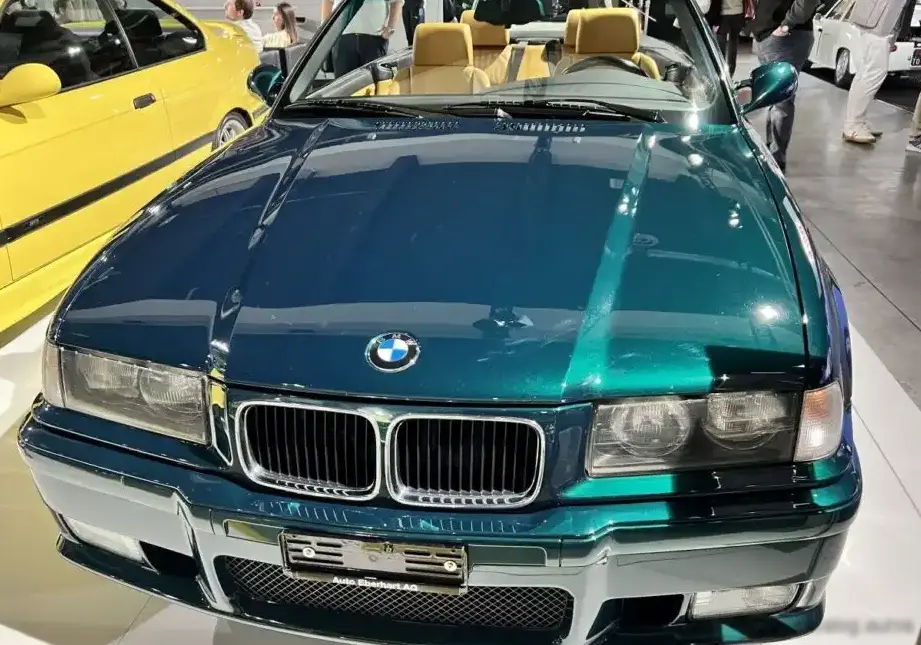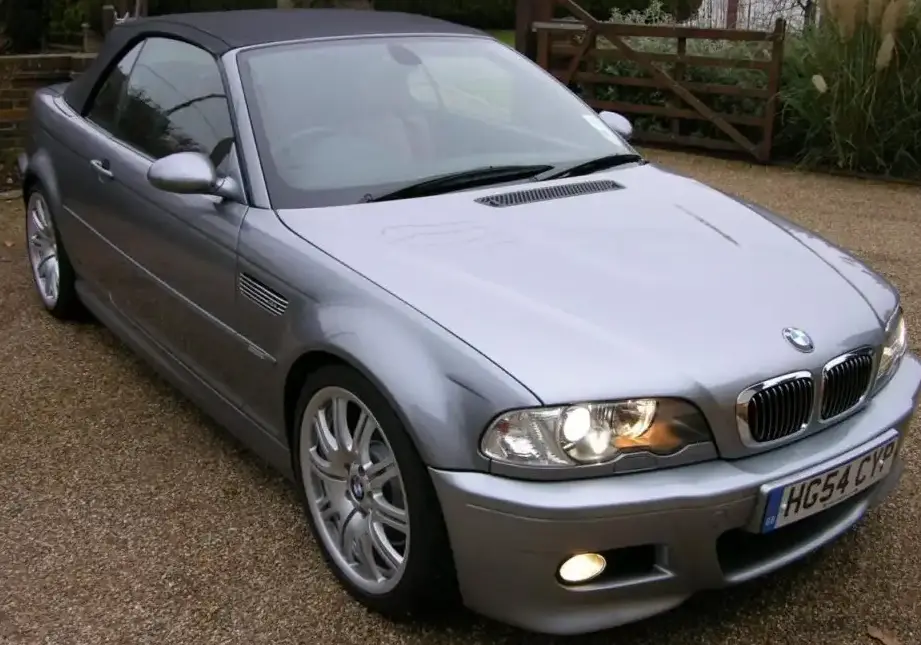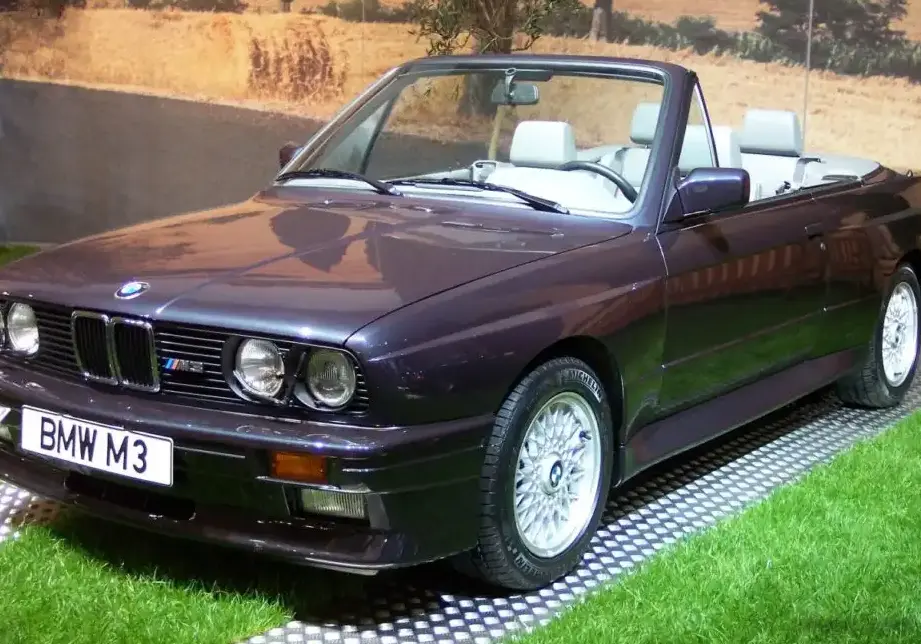
The BMW M3 Convertible (E30) 2.3, produced between 1988 and 1991, represents a unique and highly sought-after iteration of the iconic E30 M3. Positioned as the open-top variant of the groundbreaking first-generation M3, it combined the performance pedigree of the coupe with the added enjoyment of convertible motoring. This model, equipped with the 2.3-liter S14 engine and catalytic converter (“CAT” designation), was primarily sold in markets requiring emissions compliance, including the United States and Japan. It was built on the E30 chassis, specifically adapted to accommodate the M3’s wider track and reinforced structure, and shared the same platform as the 3-Series convertible of the time (E30/A5).
Technical Specifications
| Brand | BMW |
| Model | M3 |
| Generation | M3 Convertible (E30) |
| Type (Engine) | 2.3 (195 Hp) CAT |
| Start of production | 1988 |
| End of production | 1991 |
| Powertrain Architecture | Internal Combustion engine |
| Body type | Cabriolet |
| Seats | 4 |
| Doors | 2 |
| Fuel consumption (urban) | 12.5 l/100 km (18.8 US mpg, 22.6 UK mpg, 8 km/l) |
| Fuel consumption (extra urban) | 8 l/100 km (29.4 US mpg, 35.3 UK mpg, 12.5 km/l) |
| Fuel consumption (combined) | 9 l/100 km (26.1 US mpg, 31.4 UK mpg, 11.1 km/l) |
| Fuel Type | Petrol (Gasoline) |
| Acceleration 0 – 100 km/h | 7.5 sec |
| Acceleration 0 – 62 mph | 7.5 sec |
| Acceleration 0 – 60 mph | 7.1 sec |
| Maximum speed | 228 km/h (141.67 mph) |
| Weight-to-power ratio | 7 kg/Hp, 143.4 Hp/tonne |
| Weight-to-torque ratio | 5.9 kg/Nm, 169.1 Nm/tonne |
| Power | 195 Hp @ 6750 rpm |
| Power per litre | 84.7 Hp/l |
| Torque | 230 Nm @ 4750 rpm (169.64 lb.-ft. @ 4750 rpm) |
| Engine layout | Front, Longitudinal |
| Engine Model/Code | S14Z |
| Engine displacement | 2302 cm3 (140.48 cu. in.) |
| Number of cylinders | 4 |
| Engine configuration | Inline |
| Cylinder Bore | 93.4 mm (3.68 in.) |
| Piston Stroke | 84 mm (3.31 in.) |
| Compression ratio | 10.5:1 |
| Number of valves per cylinder | 4 |
| Fuel injection system | Multi-port manifold injection |
| Engine aspiration | Naturally aspirated engine |
| Engine oil capacity | 4.4 l (4.65 US qt | 3.87 UK qt) |
| Coolant capacity | 11 l (11.62 US qt | 9.68 UK qt) |
| Kerb Weight | 1360 kg (2998.29 lbs.) |
| Max. weight | 1720 kg (3791.95 lbs.) |
| Max load | 360 kg (793.66 lbs.) |
| Trunk (boot) space – minimum | 303 l (10.7 cu. ft.) |
| Fuel tank capacity | 62 l (16.38 US gal | 13.64 UK gal) |
| Length | 4345 mm (171.06 in.) |
| Width | 1680 mm (66.14 in.) |
| Height | 1370 mm (53.94 in.) |
| Wheelbase | 2565 mm (100.98 in.) |
| Front track | 1414 mm (55.67 in.) |
| Rear (Back) track | 1435 mm (56.5 in.) |
| Drag coefficient (Cd) | 0.36 |
| Minimum turning circle | 11.1 m (36.42 ft.) |
| Drivetrain Architecture | Rear wheel drive |
| Number of gears | 5 gears, manual transmission |
| Front brakes | Ventilated discs |
| Rear brakes | Disc |
| Assisting systems | ABS (Anti-lock braking system) |
| Steering type | Steering rack and pinion |
| Power steering | Hydraulic Steering |
| Tires size | 205/55 R15 |
| Wheel rims size | 15 |
Powertrain & Engine Architecture
The heart of the E30 M3 Convertible 2.3 is the S14 engine, a high-revving, naturally aspirated inline-four cylinder. The “Z” suffix in the S14Z designation indicates the presence of a catalytic converter, essential for meeting emissions regulations in key markets. This 2.3-liter engine, derived from the earlier M10 block, featured a lightweight alloy cylinder head with four valves per cylinder, dual overhead camshafts, and individual throttle bodies. The fuel injection system was a Bosch Motronic system, providing precise fuel metering for optimal performance and efficiency. The engine produced 195 horsepower at 6750 rpm and 230 Nm (169.64 lb-ft) of torque at 4750 rpm. The engine’s robust bottom end and carefully tuned valvetrain allowed it to rev freely and deliver a thrilling driving experience. The transmission was a Getrag 265 five-speed manual, known for its precise shifts and durability.
Driving Characteristics
The 2.3-liter M3 Convertible offered a compelling blend of performance and open-air enjoyment. While not as raw or visceral as the earlier, non-CAT versions, the 195 hp engine still provided brisk acceleration – 0 to 60 mph in approximately 7.1 seconds – and a top speed of 141.67 mph. The five-speed manual transmission allowed drivers to fully exploit the engine’s powerband, while the rear-wheel drive configuration ensured engaging handling. Compared to the later 3.0-liter and 3.2-liter M3s, the 2.3-liter felt more nimble and responsive, particularly on winding roads. The convertible top, while adding some weight, did not significantly compromise the car’s handling balance. The gear ratios were well-matched to the engine’s characteristics, providing strong acceleration in each gear.
Equipment & Trim Levels
The M3 Convertible 2.3 was relatively well-equipped, though options were available to further enhance the driving experience and comfort. Standard features included sport seats, a leather-wrapped steering wheel, power windows, and central locking. The interior trim was typically finished in a combination of cloth and leather. Popular options included a limited-slip differential, which significantly improved traction and cornering performance, and a sunroof. The exterior was typically finished in BMW’s signature metallic paint colors, such as Alpine White, Macao Blue, and Misano Red.
Chassis & Braking
The E30 M3 Convertible featured a reinforced chassis compared to the standard E30 convertible, necessary to handle the increased power and stresses of the M3’s performance-oriented setup. The suspension consisted of MacPherson struts in the front and semi-trailing arms in the rear, with stiffer springs and dampers than the standard 3-Series. The car was equipped with ventilated disc brakes at the front and solid discs at the rear, providing ample stopping power. An Anti-lock Braking System (ABS) was standard, enhancing safety and control. The wider track compared to the standard E30 improved stability and cornering grip.
Market Reception & Comparison
The M3 Convertible 2.3 was generally well-received by automotive critics, who praised its performance, handling, and overall driving experience. However, some critics noted that the catalytic converter slightly reduced engine output compared to the earlier, non-CAT versions. Compared to the 325i convertible, the M3 offered a significant performance advantage, thanks to its more powerful engine, upgraded suspension, and limited-slip differential (when equipped). Fuel economy was reasonable for a high-performance sports car, averaging around 26.1 US mpg in combined driving. Reliability was generally good, though the S14 engine required regular maintenance, including valve adjustments.
Legacy
The BMW M3 Convertible (E30) 2.3 remains a highly collectible and desirable classic car. Its combination of performance, handling, and open-air enjoyment has cemented its place in automotive history. Well-maintained examples command high prices in the used car market. The S14 engine, while requiring regular maintenance, is known for its durability and tunability. The E30 M3 Convertible continues to be enjoyed by enthusiasts around the world, serving as a reminder of a golden era of sports car design and engineering. The car’s influence can still be seen in modern BMW convertibles, which continue to prioritize performance and driving dynamics.