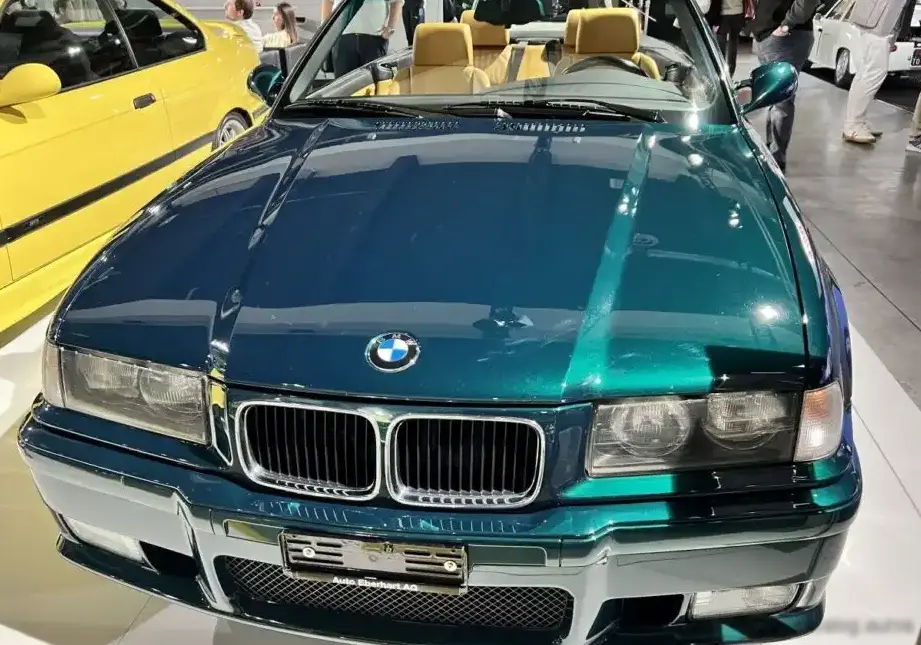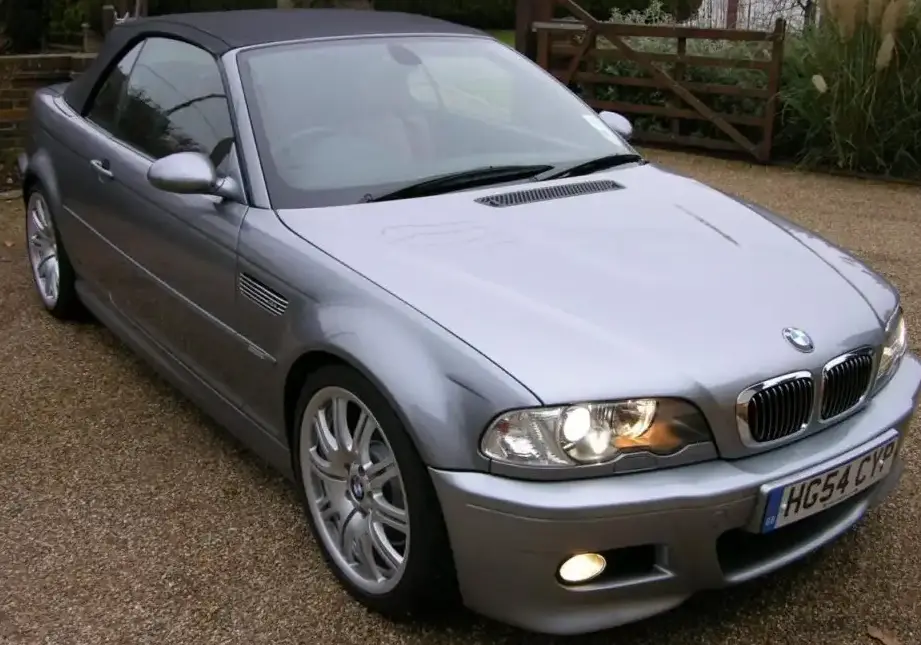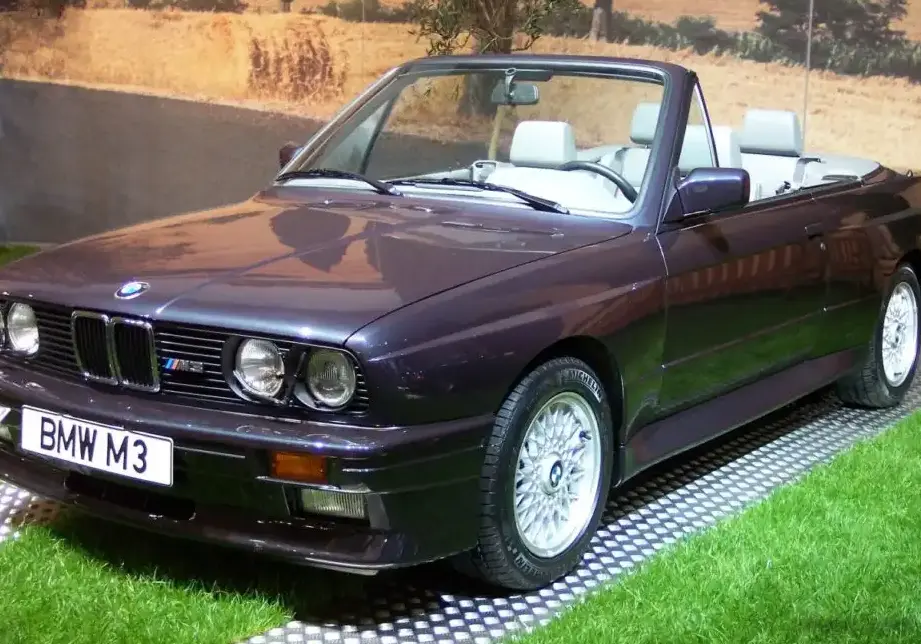
The BMW M3 Convertible (E30) 2.3, produced between 1989 and 1991, represents a unique and highly sought-after iteration of the iconic E30 M3. Positioned as the open-top variant of the celebrated performance coupe, it combined the M3’s renowned handling and engine with the added enjoyment of convertible motoring. This model, equipped with the 2.3-liter S14B23 engine and catalytic converter (“CAT” designation), was primarily sold in markets requiring emissions compliance, including the United States and Japan. It was a relatively short-lived production run, adding to its collectibility today. The E30 M3, in all its forms, was born from BMW’s desire to homologate a vehicle for Group A touring car racing, resulting in a road car that was exceptionally capable and driver-focused.
Technical Specifications
| Brand | BMW |
| Model | M3 |
| Generation | M3 Convertible (E30) |
| Type (Engine) | 2.3 (215 Hp) CAT |
| Start of production | 1989 |
| End of production | 1991 |
| Powertrain Architecture | Internal Combustion engine |
| Body type | Cabriolet |
| Seats | 4 |
| Doors | 2 |
| Fuel consumption (urban) | 12.5 l/100 km (18.8 US mpg) |
| Fuel consumption (extra urban) | 6.6 l/100 km (35.6 US mpg) |
| Fuel consumption (combined) | 8 l/100 km (29.4 US mpg) |
| Fuel Type | Petrol (Gasoline) |
| Acceleration 0 – 100 km/h | 7.3 sec |
| Acceleration 0 – 62 mph | 7.3 sec |
| Acceleration 0 – 60 mph | 6.9 sec |
| Maximum speed | 239 km/h (148.51 mph) |
| Weight-to-power ratio | 6.3 kg/Hp |
| Weight-to-torque ratio | 5.9 kg/Nm |
| Power | 215 Hp @ 6750 rpm |
| Torque | 230 Nm @ 4600 rpm (169.64 lb.-ft. @ 4600 rpm) |
| Engine layout | Front, Longitudinal |
| Engine Model/Code | S14B23 |
| Engine displacement | 2302 cm3 (140.48 cu. in.) |
| Number of cylinders | 4 |
| Engine configuration | Inline |
| Cylinder Bore | 93.4 mm (3.68 in.) |
| Piston Stroke | 84 mm (3.31 in.) |
| Compression ratio | 10.5:1 |
| Number of valves per cylinder | 4 |
| Fuel injection system | Multi-port manifold injection |
| Engine aspiration | Naturally aspirated |
| Engine oil capacity | 4.4 l (4.65 US qt | 3.87 UK qt) |
| Coolant capacity | 11 l (11.62 US qt | 9.68 UK qt) |
| Kerb Weight | 1360 kg (2998.29 lbs.) |
| Max. weight | 1720 kg (3791.95 lbs.) |
| Max load | 360 kg (793.66 lbs.) |
| Trunk (boot) space – minimum | 303 l (10.7 cu. ft.) |
| Fuel tank capacity | 62 l (16.38 US gal | 13.64 UK gal) |
| Length | 4345 mm (171.06 in.) |
| Width | 1680 mm (66.14 in.) |
| Height | 1370 mm (53.94 in.) |
| Wheelbase | 2565 mm (100.98 in.) |
| Front track | 1414 mm (55.67 in.) |
| Rear track | 1435 mm (56.5 in.) |
| Drag coefficient (Cd) | 0.36 |
| Minimum turning circle | 11.1 m (36.42 ft.) |
| Drivetrain Architecture | Rear wheel drive |
| Number of gears | 5 gears, manual transmission |
| Front suspension | Coil spring |
| Rear suspension | Coil spring |
| Front brakes | Ventilated discs |
| Rear brakes | Disc |
| Assisting systems | ABS (Anti-lock braking system), Hydraulic Power Steering |
| Tires size | 205/55 R15 |
| Wheel rims size | 15 |
INTRODUCTION
The E30 M3 Convertible 2.3 CAT was produced for a limited time, representing the final iteration of the E30 M3 convertible before the introduction of the E36 generation. It was designed to meet increasingly stringent emissions regulations, particularly in North America, hence the inclusion of the catalytic converter. The E30 M3, in general, quickly became a benchmark for performance and handling in its class, and the convertible version offered an open-air experience without significantly compromising the driving dynamics. It sat at the top of the E30 convertible range, offering a substantial performance upgrade over the standard 3-Series convertibles.
Powertrain & Engine Architecture
At the heart of the M3 Convertible 2.3 CAT lies the S14B23 engine, a 2.3-liter inline-four cylinder powerplant. This engine is a highly modified version of the standard BMW M10 block, featuring a lightweight crankshaft, forged pistons, and a revised cylinder head with four valves per cylinder. The “B23” designation refers to the engine’s displacement. The catalytic converter was a key addition for emissions compliance, but it also slightly reduced peak horsepower compared to earlier, non-CAT versions. Fuel delivery is managed by Bosch Motronic fuel injection, providing precise control over the air-fuel mixture. The S14 engine is renowned for its responsive throttle response and willingness to rev. The transmission is a Getrag 265 five-speed manual, known for its robust construction and precise shift feel. The gear ratios were optimized for both acceleration and highway cruising, though some reviewers noted that the fifth gear was relatively tall, prioritizing fuel economy over outright performance.
Driving Characteristics
The M3 Convertible 2.3 CAT delivers a driving experience that is both engaging and rewarding. While the convertible body shell adds some weight compared to the coupe, the car still feels nimble and balanced. The suspension, featuring coil springs and anti-roll bars, provides a firm but controlled ride. The steering is precise and communicative, offering excellent feedback to the driver. Acceleration from 0-60 mph takes approximately 6.9 seconds, which was respectable for the late 1980s/early 1990s. The engine produces a distinctive exhaust note, particularly as it approaches its 6750 rpm redline. Compared to the higher-output 2.5-liter M3 engines, the 2.3-liter version offers a slightly more accessible powerband, making it easier to drive on the street. However, it lacks the ultimate punch of its larger-displacement sibling. The manual transmission encourages driver involvement, and the well-chosen gear ratios allow for spirited driving on winding roads.
Equipment & Trim Levels
The M3 Convertible 2.3 CAT came standard with a generous array of features, reflecting its position as the flagship E30 convertible. Standard equipment included leather upholstery, power windows, power locks, and a premium sound system. The interior featured sport seats with enhanced bolstering to provide additional support during cornering. Optional extras included a limited-slip differential, which further enhanced handling, and a sunroof. The exterior was distinguished by M-specific aerodynamic enhancements, including a front air dam, rear spoiler, and wider wheel arches. Paint options were varied, with popular choices including Alpine White, Diamond Black, and Macao Blue.
Chassis & Braking
The E30 M3 Convertible utilizes a reinforced chassis compared to the standard 3-Series, providing increased rigidity and improved handling. The suspension features stiffer springs and dampers, along with thicker anti-roll bars. The braking system consists of ventilated discs at the front and solid discs at the rear. ABS (Anti-lock Braking System) was standard, enhancing safety and stability during hard braking. The car rides on 15-inch alloy wheels, typically fitted with 205/55 R15 tires. The suspension setup was carefully tuned to balance performance and comfort, providing a rewarding driving experience on a variety of road surfaces.
Market Reception & Comparison
The E30 M3 Convertible 2.3 CAT was generally well-received by automotive critics, who praised its handling, performance, and overall driving experience. However, some reviewers noted that the catalytic converter slightly reduced engine output compared to earlier versions. Compared to the 2.5-liter M3, the 2.3-liter version offered a more affordable entry point into the M3 world, but it lacked the ultimate performance of its larger-displacement sibling. Fuel economy was reasonable for a performance car of its era, averaging around 29.4 US mpg in combined driving. Reliability was generally good, although the S14 engine requires regular maintenance, including valve adjustments, to ensure optimal performance.
Legacy
The E30 M3 Convertible 2.3 CAT has become a highly collectible car, appreciated by enthusiasts for its combination of performance, handling, and classic styling. The limited production run and its status as the final iteration of the E30 M3 convertible have contributed to its increasing value in the used car market. The S14 engine, while requiring regular maintenance, is known for its durability and responsiveness. Today, these cars are often seen at classic car shows and track days, a testament to their enduring appeal and performance capabilities. Finding a well-maintained example can be challenging, but the rewards are significant for those seeking a truly special and engaging driving experience.