
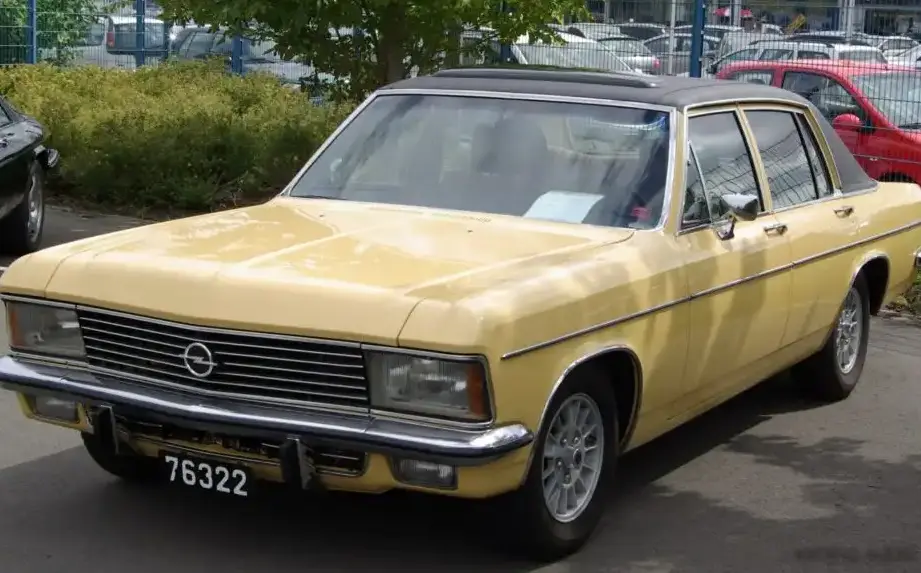
The Opel Admiral B 2.8 S, produced between 1975 and 1978, represented a refined iteration of Opel’s flagship sedan. Positioned as a premium offering within the Admiral B range, the 2.8 S variant aimed to deliver a balance of performance and luxury. It was part of the larger Admiral B generation (1968-1977), which sought to re-establish Opel as a maker of sophisticated, large automobiles. The 2.8 S was a step up from the base Admiral models, offering increased horsepower and a more sporting character, though it remained firmly rooted in the tradition of comfortable, rear-wheel-drive luxury sedans popular in Europe during the era.
Technical Specifications
| Brand | Opel |
| Model | Admiral |
| Generation | Admiral B |
| Type (Engine) | 2.8 S (129 Hp) |
| Start of production | 1975 |
| End of production | 1978 |
| Powertrain Architecture | Internal Combustion engine |
| Body type | Sedan |
| Seats | 5 |
| Doors | 4 |
| Fuel Type | Petrol (Gasoline) |
| Maximum speed | 175 km/h (108.74 mph) |
| Weight-to-power ratio | 11.4 kg/Hp, 87.5 Hp/tonne |
| Weight-to-torque ratio | 7.2 kg/Nm, 138.3 Nm/tonne |
| Power | 129 Hp @ 5000 rpm |
| Power per litre | 46.3 Hp/l |
| Torque | 204 Nm @ 3800 rpm (150.46 lb.-ft. @ 3800 rpm) |
| Engine Model/Code | 28S |
| Engine displacement | 2784 cm3 (169.89 cu. in.) |
| Number of cylinders | 6 |
| Engine configuration | Inline |
| Cylinder Bore | 92 mm (3.62 in.) |
| Piston Stroke | 69.8 mm (2.75 in.) |
| Compression ratio | 9:1 |
| Fuel injection system | Carburettor |
| Engine aspiration | Naturally aspirated engine |
| Valvetrain | SOHC |
| Engine oil capacity | 4.5 l (4.76 US qt | 3.96 UK qt) |
| Kerb Weight | 1475 kg (3251.82 lbs.) |
| Max. weight | 1980 kg (4365.15 lbs.) |
| Max load | 505 kg (1113.33 lbs.) |
| Trunk (boot) space – maximum | 475 l (16.77 cu. ft.) |
| Fuel tank capacity | 80 l (21.13 US gal | 17.6 UK gal) |
| Permitted trailer load with brakes (12%) | 1900 kg (4188.78 lbs.) |
| Permitted trailer load without brakes | 750 kg (1653.47 lbs.) |
| Length | 4907 mm (193.19 in.) |
| Width | 1852 mm (72.91 in.) |
| Height | 1450 mm (57.09 in.) |
| Wheelbase | 2845 mm (112.01 in.) |
| Front track | 1505 mm (59.25 in.) |
| Rear (Back) track | 1505 mm (59.25 in.) |
| Ride height (ground clearance) | 150 mm (5.91 in.) |
| Drag coefficient (Cd) | 0.45 |
| Minimum turning circle (turning diameter) | 11.8 m (38.71 ft.) |
| Drivetrain Architecture | The Internal combustion engine (ICE) drives the rear wheels of the vehicle. |
| Drive wheel | Rear wheel drive |
| Number of gears and type of gearbox | 4 gears, manual transmission |
| Front brakes | Ventilated discs |
| Rear brakes | Drum |
Powertrain & Engine Architecture
The heart of the Admiral B 2.8 S was its 2.8-liter inline-six cylinder engine, designated the 28S. This engine, while sharing a basic architecture with smaller Opel sixes, featured a larger displacement achieved through increased bore and stroke. It utilized a single overhead camshaft (SOHC) valvetrain, a common configuration for the time, operating two valves per cylinder. Fuel delivery was managed by a carburetor, a technology that was becoming increasingly common as fuel injection systems were still relatively expensive. The 28S engine produced 129 horsepower at 5000 rpm and 204 Nm (150.46 lb-ft) of torque at 3800 rpm. The engine’s relatively low compression ratio of 9:1 allowed it to run on the gasoline available in European markets at the time. The engine was paired with a four-speed manual transmission as standard, providing a direct connection to the rear wheels.
Driving Characteristics
The 2.8 S offered a noticeable step up in performance compared to the lower-spec Admiral models. While not a sports car by any means, the increased horsepower and torque provided more effortless cruising and improved acceleration. The four-speed manual transmission allowed drivers to effectively utilize the engine’s powerband. The rear-wheel-drive configuration contributed to a balanced feel, although the car’s considerable weight (1475 kg / 3251.82 lbs) meant it wasn’t particularly agile. Compared to a hypothetical fuel-injected version, the carbureted engine could exhibit some throttle lag and wasn’t as responsive. The manual transmission, while providing more driver engagement than an automatic, required more effort in city driving.
Equipment & Trim Levels
The Admiral B 2.8 S was positioned as a well-equipped vehicle. Standard features typically included comfortable cloth upholstery, woodgrain interior trim, and a comprehensive instrument panel. Power steering and power-assisted brakes were often included. Optional extras could include a sunroof, upgraded audio systems, and more luxurious upholstery materials like leather. The 2.8 S trim generally featured more exterior brightwork than the base models, signifying its higher status. The interior layout was typical of the era, with a focus on comfort and practicality rather than cutting-edge design.
Chassis & Braking
The Admiral B utilized a traditional body-on-frame construction, providing a robust and durable chassis. The suspension consisted of independent front suspension with coil springs and a live axle rear suspension with leaf springs. The 2.8 S variant typically featured a thicker stabilizer bar at the front to reduce body roll during cornering. Braking was accomplished via ventilated disc brakes at the front and drum brakes at the rear. While adequate for the car’s weight and performance, the drum brakes on the rear were a limitation compared to all-disc setups found on some contemporary vehicles. The steering was a recirculating ball system, providing a relatively heavy but precise feel.
Market Reception & Comparison
The Opel Admiral B 2.8 S was generally well-received by automotive critics as a comfortable and refined luxury sedan. However, it faced competition from established players in the European market, such as Mercedes-Benz and BMW. Critics noted the car’s spacious interior, smooth ride, and relatively strong performance. The carbureted engine was sometimes criticized for its lack of responsiveness compared to fuel-injected alternatives. Fuel economy was typical for a large, naturally aspirated six-cylinder engine of the era – respectable but not exceptional. Compared to the base Admiral models, the 2.8 S offered a significant performance upgrade, justifying its higher price point. It was often seen as a more sensible alternative to the more expensive German luxury brands.
Legacy
The Opel Admiral B 2.8 S, while not a groundbreaking vehicle, represents a significant chapter in Opel’s history. The 28S engine proved to be a relatively durable and reliable powertrain when properly maintained. Today, the Admiral B 2.8 S is a sought-after classic car, particularly among enthusiasts of 1970s European automobiles. Parts availability can be a challenge, but a dedicated community of owners and restorers exists. The car’s combination of classic styling, comfortable interior, and relatively strong performance continues to appeal to collectors and those seeking a nostalgic driving experience. Well-maintained examples command respectable prices in the used car market, reflecting their growing desirability as a piece of automotive history.
