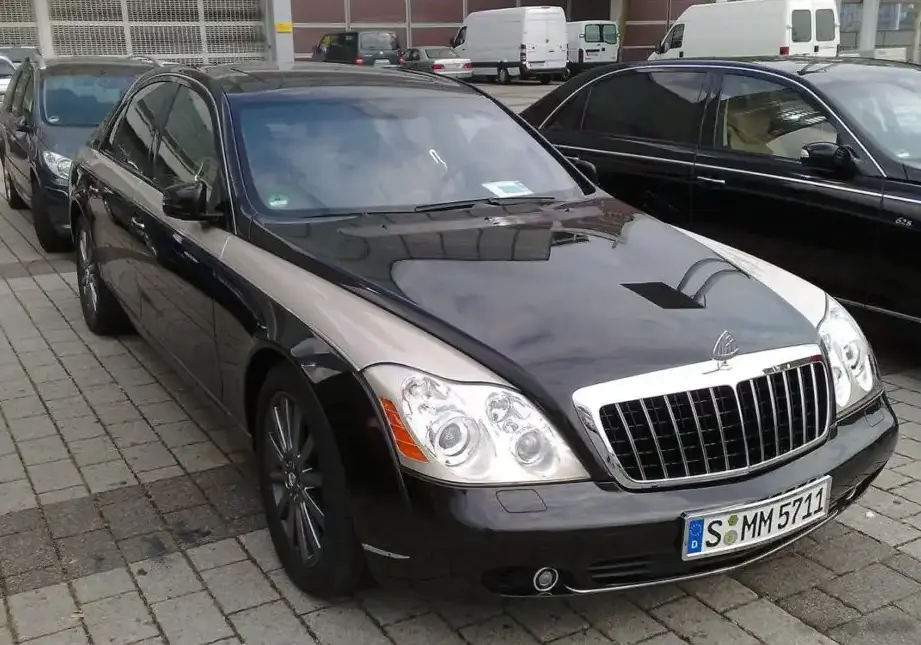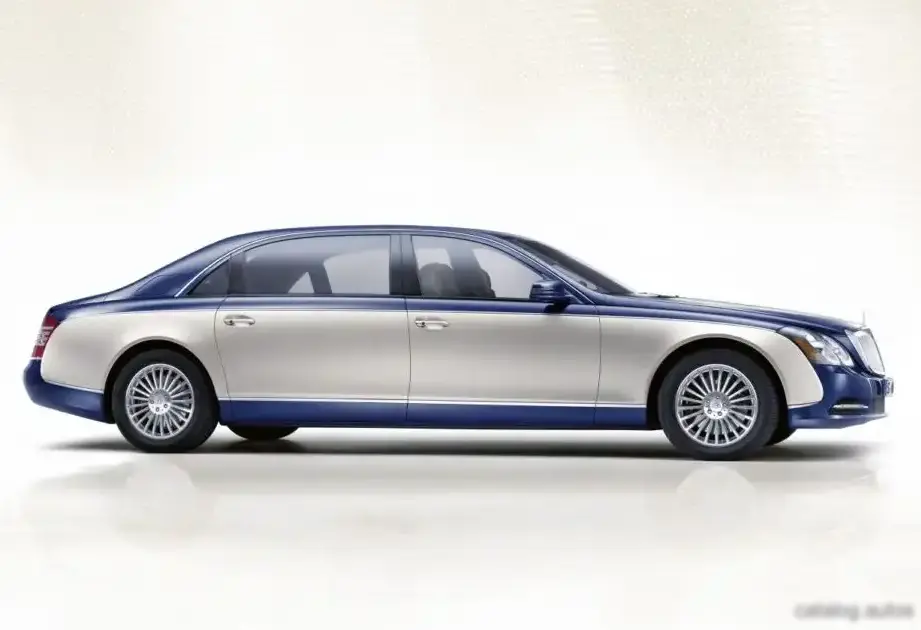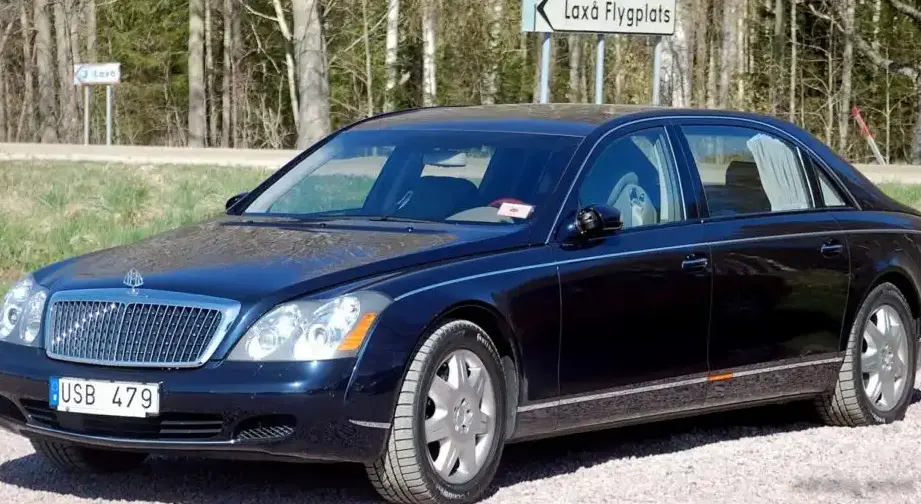
The Maybach 62 (V240), specifically the 5.5 V12 variant producing 550 horsepower, represented the pinnacle of ultra-luxury sedan design and engineering from 2002 to 2012. Positioned as a direct competitor to the Rolls-Royce Phantom, the 62 aimed to revive the prestigious Maybach nameplate, historically known for its bespoke automobiles. This model, built on a lengthened version of the W220 Mercedes-Benz S-Class platform, offered an unparalleled level of refinement, space, and performance for its discerning clientele. The “62” designation referred to the vehicle’s overall length in decimeters (6.2 meters or approximately 243 inches). This particular configuration, with the 5.5-liter V12 and automatic transmission, was the flagship offering, embodying the brand’s commitment to uncompromising luxury.
Technical Specifications
| Brand | Maybach |
| Model | 62 |
| Generation | 62 (V240) |
| Type (Engine) | 5.5 V12 (550 Hp) Automatic |
| Start of production | 2002 |
| End of production | 2012 |
| Powertrain Architecture | Internal Combustion engine |
| Body type | Sedan |
| Seats | 4 |
| Doors | 4 |
| Fuel consumption (economy) – urban (NEDC) | 24.5 l/100 km (9.6 US mpg, 11.5 UK mpg, 4.1 km/l) |
| Fuel consumption (economy) – extra urban (NEDC) | 11 l/100 km (21.4 US mpg, 25.7 UK mpg, 9.1 km/l) |
| Fuel consumption (economy) – combined (NEDC) | 15.9 l/100 km (14.8 US mpg, 17.8 UK mpg, 6.3 km/l) |
| CO2 emissions (NEDC) | 383 g/km |
| Fuel Type | Petrol (Gasoline) |
| Acceleration 0 – 100 km/h | 5.4 sec |
| Acceleration 0 – 62 mph | 5.4 sec |
| Acceleration 0 – 60 mph | 5.1 sec |
| Maximum speed | 250 km/h (155.34 mph), Electronically limited |
| Emission standard | Euro 4 |
| Weight-to-power ratio | 5.1 kg/Hp, 197.8 Hp/tonne |
| Weight-to-torque ratio | 3.1 kg/Nm, 323.7 Nm/tonne |
| Power | 550 Hp @ 5250 rpm |
| Power per litre | 99.8 Hp/l |
| Torque | 900 Nm @ 2300-3000 rpm (663.81 lb.-ft. @ 2300-3000 rpm) |
| Maximum engine speed | 5950 rpm |
| Engine layout | Front, Longitudinal |
| Engine Model/Code | M 285.950 |
| Engine displacement | 5513 cm3 (336.42 cu. in.) |
| Number of cylinders | 12 |
| Engine configuration | V-engine |
| Cylinder Bore | 82 mm (3.23 in.) |
| Piston Stroke | 87 mm (3.43 in.) |
| Compression ratio | 9:1 |
| Number of valves per cylinder | 3 |
| Fuel injection system | Multi-port manifold injection |
| Engine aspiration | BiTurbo, Intercooler |
| Valvetrain | SOHC |
| Engine oil capacity | 10 l (10.57 US qt | 8.8 UK qt) |
| Coolant | 17 l (17.96 US qt | 14.96 UK qt) |
| Kerb Weight | 2780 kg (6128.85 lbs.) |
| Max. weight | 3380 kg (7451.62 lbs.) |
| Max load | 600 kg (1322.77 lbs.) |
| Trunk (boot) space – minimum | 605 l (21.37 cu. ft.) |
| Fuel tank capacity | 110 l (29.06 US gal | 24.2 UK gal) |
| Length | 6165 mm (242.72 in.) |
| Width | 1980 mm (77.95 in.) |
| Width including mirrors | 2134 mm (84.02 in.) |
| Height | 1573 mm (61.93 in.) |
| Wheelbase | 3827 mm (150.67 in.) |
| Front track | 1675 mm (65.94 in.) |
| Rear (Back) track | 1695 mm (66.73 in.) |
| Minimum turning circle | 14.8 m (48.56 ft.) |
| Drivetrain Architecture | The Internal combustion engine (ICE) drives the rear wheels of the vehicle. |
| Drive wheel | Rear wheel drive |
| Number of gears and type of gearbox | 5 gears, automatic transmission |
| Front suspension | Double wishbone, Transverse stabilizer, Air suspension |
| Rear suspension | Independent multi-link suspension, Air suspension, Transverse stabilizer |
| Front brakes | Ventilated discs |
| Rear brakes | Ventilated discs |
| Assisting systems | ABS (Anti-lock braking system) |
| Steering type | Cone worm with recirculation balls |
| Power steering | Hydraulic Steering |
| Tires size | 275/50 R19 |
| Wheel rims size | 8J x 19 |
Powertrain & Engine Architecture
At the heart of the Maybach 62 lay the M285.950 5.5-liter V12 engine, derived from the Mercedes-Benz M113 engine family but extensively modified for increased power and refinement. This engine featured twin turbochargers and intercoolers, boosting output to 550 horsepower and a substantial 900 Newton-meters (663.81 lb-ft) of torque. The engine utilized a multi-port fuel injection system and a single overhead camshaft (SOHC) valvetrain. The engine was mounted longitudinally in the front of the vehicle. The transmission was a five-speed automatic, specifically tuned for smooth and effortless shifts, prioritizing comfort over outright performance. This transmission was designed to handle the immense torque output of the V12 engine without strain.
Driving Characteristics
The 5.5-liter V12 and automatic transmission combination delivered a driving experience focused on effortless power and supreme comfort. While capable of accelerating from 0 to 60 mph in approximately 5.1 seconds, the emphasis wasn’t on sporty handling. The long wheelbase and air suspension provided a remarkably smooth ride, isolating passengers from road imperfections. The automatic transmission, while not offering manual control, was programmed to provide seamless gear changes, ensuring a relaxed and refined driving experience. Compared to hypothetical higher-output versions, this configuration prioritized luxury and ease of use over outright speed. The gear ratios were optimized for relaxed cruising at highway speeds, rather than aggressive acceleration.
Equipment & Trim Levels
The Maybach 62 came standard with an extensive list of luxury features. Interior appointments included premium leather upholstery, wood veneer trim (available in a variety of finishes), and individually adjustable rear seats with massage and reclining functions. Standard equipment also included a high-end audio system, climate control, and a comprehensive suite of safety features. Optional extras were plentiful, allowing customers to personalize their vehicles to an extraordinary degree. These included a rear entertainment system, a champagne cooler, and bespoke interior finishes. The dashboard layout was similar to that of the contemporary Mercedes-Benz S-Class, but with unique Maybach-specific detailing and materials.
Chassis & Braking
The Maybach 62’s chassis was based on a lengthened S-Class platform, but significantly reinforced to accommodate the increased weight and provide a more stable ride. The suspension utilized an air suspension system, offering adjustable ride height and damping. Both the front and rear suspensions featured double wishbones and transverse stabilizers. Braking duties were handled by ventilated disc brakes on all four wheels, coupled with an Anti-lock Braking System (ABS). The steering system was a cone worm with recirculation balls and hydraulic power assistance.
Market Reception & Comparison
The Maybach 62 received mixed reviews upon its launch. Critics praised the vehicle’s luxurious interior, smooth ride, and powerful engine. However, some found the styling to be understated and the price tag (well over $380,000 at launch) to be excessive. Compared to the standard Mercedes-Benz S-Class, the 62 offered a significantly more spacious and luxurious interior, along with a more powerful engine and a more refined driving experience. Fuel economy was predictably poor, reflecting the vehicle’s size and engine displacement. Reliability was generally good, benefiting from Mercedes-Benz engineering, but maintenance costs were substantial.
Legacy
The Maybach 62, despite its limited production run and ultimately unsuccessful attempt to fully revive the brand, remains a significant vehicle in automotive history. It represented a bold attempt to create a truly ultra-luxury sedan that could compete with the best in the world. Today, the 5.5 V12 variant is highly sought after by collectors and enthusiasts, representing the pinnacle of Maybach’s engineering and design capabilities during that era. The powertrain, while complex, has proven to be relatively reliable when properly maintained, and the vehicle’s unique blend of luxury, performance, and exclusivity continues to appeal to a select clientele in the used car market.