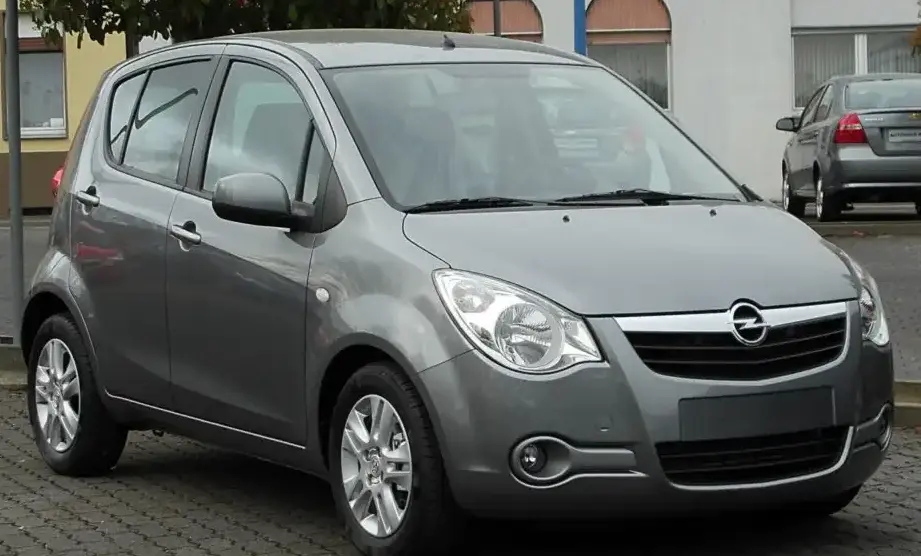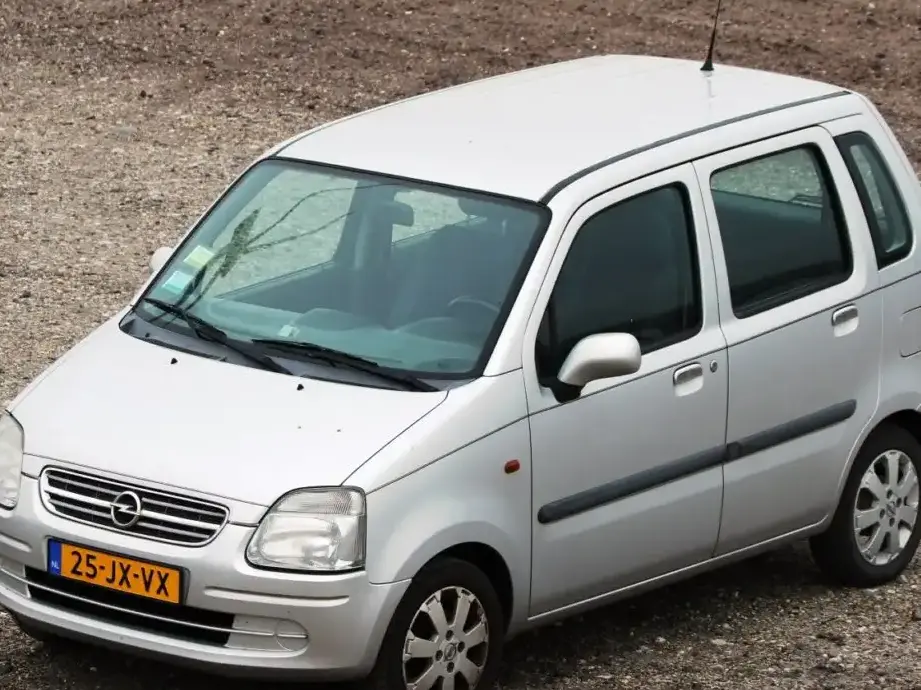
The Opel Agila I 1.0 12V, produced between 2000 and 2004, represented the entry point into the first generation of Opel’s supermini MPV. Positioned as an affordable and practical city car, the Agila aimed to maximize interior space within a compact footprint. This variant, powered by a small-displacement three-cylinder engine and typically paired with a five-speed manual transmission, was a common sight in European cities, offering a budget-friendly alternative to larger, more expensive vehicles. It was built on the GM/Opel’s 1HX0 platform, shared with the Suzuki Wagon R+, a result of a joint venture between the two manufacturers.
Technical Specifications
| Brand | Opel |
| Model | Agila |
| Generation | Agila I |
| Type (Engine) | 1.0 12V (58 Hp) |
| Start of production | 2000 year |
| End of production | 2004 year |
| Powertrain Architecture | Internal Combustion engine |
| Body type | Minivan |
| Seats | 4 |
| Doors | 5 |
| Fuel consumption (urban) | 7.5 l/100 km (31.4 US mpg) |
| Fuel consumption (extra urban) | 5.6 l/100 km (42 US mpg) |
| Fuel consumption (combined) | 6 l/100 km (39.2 US mpg) |
| Fuel Type | Petrol (Gasoline) |
| Acceleration 0 – 100 km/h | 18 sec |
| Acceleration 0 – 62 mph | 18 sec |
| Acceleration 0 – 60 mph | 17.1 sec |
| Maximum speed | 142 km/h (88.23 mph) |
| Weight-to-power ratio | 16.2 kg/Hp |
| Weight-to-torque ratio | 11.1 kg/Nm |
| Power | 58 Hp @ 5600 rpm |
| Torque | 85 Nm @ 3800 rpm (62.69 lb.-ft. @ 3800 rpm) |
| Engine layout | Front, Transverse |
| Engine Model/Code | Z10XE |
| Engine displacement | 973 cm3 (59.38 cu. in.) |
| Number of cylinders | 3 |
| Engine configuration | Inline |
| Cylinder Bore | 72.5 mm (2.85 in.) |
| Piston Stroke | 78.6 mm (3.09 in.) |
| Compression ratio | 10:1 |
| Number of valves per cylinder | 4 |
| Fuel injection system | Multi-port manifold injection |
| Engine aspiration | Naturally aspirated engine |
| Valvetrain | DOHC |
| Engine oil capacity | 3 l (3.17 US qt | 2.64 UK qt) |
| Coolant capacity | 4.3 l (4.54 US qt | 3.78 UK qt) |
| Kerb Weight | 940 kg (2072.35 lbs.) |
| Max. weight | 1325 kg (2921.12 lbs.) |
| Max load | 385 kg (848.78 lbs.) |
| Trunk (boot) space – minimum | 250 l (8.83 cu. ft.) |
| Trunk (boot) space – maximum | 595 l (21.01 cu. ft.) |
| Fuel tank capacity | 41 l (10.83 US gal | 9.02 UK gal) |
| Length | 3500 mm (137.8 in.) |
| Width | 1620 mm (63.78 in.) |
| Height | 1700 mm (66.93 in.) |
| Wheelbase | 2360 mm (92.91 in.) |
| Front track | 1420 mm (55.91 in.) |
| Rear track | 1390 mm (54.72 in.) |
| Drivetrain Architecture | Front wheel drive |
| Number of gears | 5 gears, manual transmission |
| Front suspension | Coil spring |
| Rear suspension | Coil spring |
| Front brakes | Disc |
| Rear brakes | Drum |
| Assisting systems | ABS (Anti-lock braking system) |
| Steering type | Steering rack and pinion |
| Power steering | Hydraulic Steering |
| Tires size | 155/55 R14 |
| Wheel rims size | 4.5J X 14 |
Powertrain & Engine Architecture
The heart of the Agila I 1.0 12V is the Z10XE engine, a 973cc inline three-cylinder unit. This engine, part of Opel’s ‘Ecotec’ family, featured a double overhead camshaft (DOHC) valvetrain with four valves per cylinder. The multi-port fuel injection system, while relatively simple by modern standards, provided adequate fuel delivery for the engine’s modest power output. The Z10XE was known for its relatively smooth operation for a three-cylinder engine, though it wasn’t particularly refined. The five-speed manual transmission was the most common pairing, offering gear ratios geared towards fuel efficiency and urban driving. The transmission itself was a standard configuration for small European cars of the era, prioritizing durability and ease of maintenance over sporty performance.
Driving Characteristics
The 1.0 12V Agila was never intended to be a performance car. With only 58 horsepower, acceleration was leisurely, taking approximately 18 seconds to reach 62 mph. However, the Agila’s light weight (around 940 kg or 2072 lbs) meant it felt reasonably sprightly in city traffic. The gear ratios were optimized for low-speed maneuverability and fuel economy, rather than rapid acceleration. The engine needed to be revved to extract the most performance, and the lack of power was particularly noticeable when carrying passengers or luggage. Compared to the more powerful 1.2 or 1.4-liter versions of the Agila, the 1.0 felt significantly underpowered, especially on highway journeys. The manual transmission offered a more engaging driving experience than the optional automated manual transmission (Easytronic) available on some models.
Equipment & Trim Levels
The base-level Agila 1.0 12V was typically equipped with basic features, reflecting its position as the entry-level model. Standard equipment generally included power steering, central locking, and front airbags. Interior upholstery was typically a simple cloth material. Optional extras included air conditioning, electric windows, and a radio/CD player. Higher trim levels, such as the ‘Enjoy’ or ‘Sport’ variants, added features like alloy wheels, upgraded interior trim, and body-colored bumpers. The dashboard layout was functional and straightforward, prioritizing usability over aesthetics.
Chassis & Braking
The Agila I featured a simple but effective chassis design. Front suspension utilized coil springs, while the rear employed a non-independent coil spring setup. The front brakes were discs, providing adequate stopping power, while the rear brakes were drums, a cost-saving measure common in this segment. ABS (Anti-lock Braking System) was often included as standard equipment, enhancing safety. The relatively narrow track width contributed to the Agila’s nimble handling in urban environments, but it also meant that body roll was noticeable during cornering. Stabilizer bars were typically omitted on the base model to keep costs down.
Market Reception & Comparison
The Opel Agila I 1.0 12V was generally well-received as an affordable and practical city car. Critics praised its spacious interior, good fuel economy (around 39.2 US mpg combined), and ease of parking. However, the engine’s lack of power was a common criticism. Compared to rivals like the Fiat Panda and Renault Twingo, the Agila offered a slightly more refined interior and a more comfortable ride. The 1.0-liter engine was significantly less powerful than the 1.2 and 1.4-liter options available in the Agila lineup, making those versions more appealing to drivers who frequently traveled on highways or carried passengers. Reliability was generally good, although the three-cylinder engine could be prone to occasional oil leaks.
Legacy
The Opel Agila I 1.0 12V remains a relatively common sight on European roads today, testament to its durability and affordability. The Z10XE engine, while not known for its performance, proved to be a reliable unit when properly maintained. In the used car market, these Agilas are typically very inexpensive to purchase, making them attractive to first-time car buyers or those seeking a cheap and cheerful runabout. Parts availability is generally good, and maintenance costs are relatively low. While not a particularly exciting car, the Agila I 1.0 12V served its purpose as a practical and economical mode of transportation for many years.