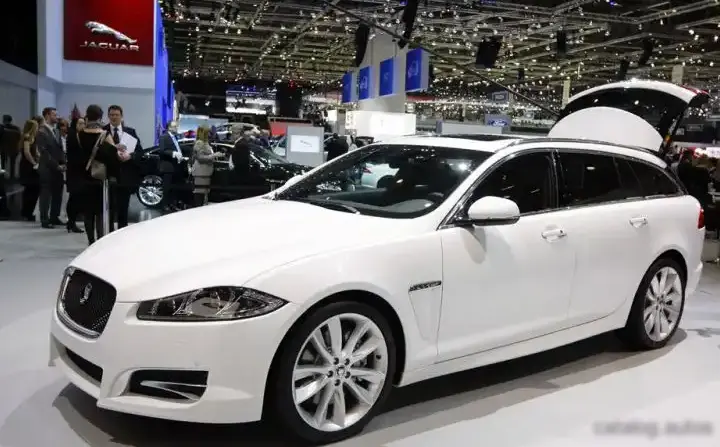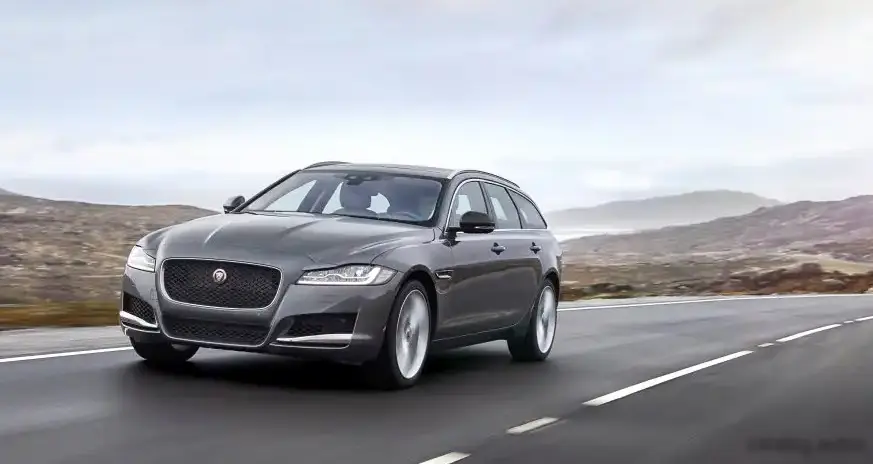
The Jaguar XF Sportbrake (X260) E-Performance 2.0d, produced from 2019 to October 2020, represents a compelling entry point into the Jaguar estate car lineup. Positioned as a more fuel-efficient alternative to the higher-powered XF Sportbrake variants, this model combined a 2.0-liter four-cylinder diesel engine with an eight-speed automatic transmission, offering a balance of performance, economy, and practicality. It was part of the X260 generation, which brought a more modern design and improved technology to the XF family, competing with premium estate cars from Audi, BMW, and Mercedes-Benz.
Technical Specifications
| Brand | Jaguar |
| Model | XF |
| Generation | XF Sportbrake (X260) |
| Type (Engine) | E-Performance 2.0d (163 Hp) Automatic |
| Start of production | 2019 |
| End of production | October, 2020 |
| Powertrain Architecture | Internal Combustion engine |
| Body type | Station wagon (estate) |
| Seats | 5 |
| Doors | 5 |
| Fuel consumption (urban) | 6.7 l/100 km (35.1 US mpg, 42.2 UK mpg, 14.9 km/l) |
| Fuel consumption (extra urban) | 4.5 l/100 km (52.3 US mpg, 62.8 UK mpg, 22.2 km/l) |
| Fuel consumption (combined) | 5.3 l/100 km (44.4 US mpg, 53.3 UK mpg, 18.9 km/l) |
| CO2 emissions | 139 g/km |
| Fuel Type | Diesel |
| Acceleration 0 – 100 km/h | 9.3 sec |
| Acceleration 0 – 62 mph | 9.3 sec |
| Acceleration 0 – 60 mph | 8.8 sec |
| Maximum speed | 219 km/h (136.08 mph) |
| Emission standard | Euro 6d-Temp |
| Weight-to-power ratio | 10.3 kg/Hp, 97.1 Hp/tonne |
| Weight-to-torque ratio | 4.4 kg/Nm, 226.5 Nm/tonne |
| Power | 163 Hp @ 4000 rpm |
| Power per litre | 81.5 Hp/l |
| Torque | 380 Nm @ 1750-2500 rpm (280.27 lb.-ft. @ 1750-2500 rpm) |
| Engine layout | Front, Longitudinal |
| Engine Model/Code | Ingenium / 204DTD |
| Engine displacement | 1999 cm3 (121.99 cu. in.) |
| Number of cylinders | 4 |
| Engine configuration | Inline |
| Cylinder Bore | 83 mm (3.27 in.) |
| Piston Stroke | 92.4 mm (3.64 in.) |
| Compression ratio | 15.5:1 |
| Number of valves per cylinder | 4 |
| Fuel injection system | Diesel Commonrail |
| Engine aspiration | Turbocharger, Intercooler |
| Engine oil capacity | 6.5 l (6.87 US qt | 5.72 UK qt) |
| Kerb Weight | 1678 kg (3699.36 lbs.) |
| Max. weight | 2260 kg (4982.45 lbs.) |
| Max load | 582 kg (1283.09 lbs.) |
| Fuel tank capacity | 55 l (14.53 US gal | 12.1 UK gal) |
| Permitted trailer load with brakes (12%) | 2000 kg (4409.25 lbs.) |
| Permitted trailer load without brakes | 750 kg (1653.47 lbs.) |
| Length | 4955 mm (195.08 in.) |
| Width | 1987 mm (78.23 in.) |
| Width including mirrors | 2091 mm (82.32 in.) |
| Height | 1496 mm (58.9 in.) |
| Wheelbase | 2960 mm (116.54 in.) |
| Front track | 1605 mm (63.19 in.) |
| Rear (Back) track | 1607 mm (63.27 in.) |
| Minimum turning circle | 11.94 m (39.17 ft.) |
| Drivetrain Architecture | Rear wheel drive |
| Number of gears and type of gearbox | 8 gears, automatic transmission |
| Front brakes | Disc |
| Rear brakes | Disc |
| Tires size | 225/55 R17; 245/45 R18 |
| Wheel rims size | 7.5J x 17; 8J x 18 |
INTRODUCTION
The Jaguar XF Sportbrake E-Performance 2.0d, launched in 2019, was a key component of Jaguar’s strategy to broaden the appeal of the XF range. The Sportbrake, Jaguar’s designation for its station wagon models, offered increased practicality without sacrificing the brand’s signature blend of luxury and sporting dynamics. This particular variant, powered by the Ingenium 2.0-liter diesel engine and paired with an eight-speed automatic transmission, aimed to deliver competitive fuel economy and acceptable performance for everyday driving. It occupied the entry-level position within the XF Sportbrake lineup, serving as a more accessible alternative to the more powerful six-cylinder and petrol options.
Powertrain & Engine Architecture
At the heart of the XF Sportbrake E-Performance 2.0d lies Jaguar Land Rover’s Ingenium engine family. The 204DTD engine is a 2.0-liter inline-four cylinder diesel, utilizing a sophisticated turbocharger and direct injection system. The engine produces 163 horsepower at 4000 rpm and a substantial 380 Nm (280 lb-ft) of torque between 1750 and 2500 rpm. This torque output is a key characteristic of the engine, providing strong pulling power at lower engine speeds. The engine employs a common-rail direct injection system, operating at a high compression ratio of 15.5:1 to maximize efficiency. The eight-speed automatic transmission, sourced from ZF, is a crucial element of the powertrain. It provides smooth and responsive gear changes, contributing to both fuel economy and driving comfort. The transmission is programmed with a focus on efficiency, with taller gear ratios in the higher gears to reduce engine speed at cruising speeds.
Driving Characteristics
The 163 hp 2.0d automatic XF Sportbrake delivers a composed and comfortable driving experience. While not overtly sporty, the engine provides sufficient power for everyday driving and highway cruising. Acceleration from 0-60 mph takes approximately 8.8 seconds, and the car has a top speed of 136 mph. The eight-speed automatic transmission is well-matched to the engine, providing smooth gear changes and helping to keep the engine in its optimal torque band. Compared to the more powerful XF Sportbrake variants (like the 3.0d), this version feels less urgent in its acceleration, but it offers a more relaxed and refined driving experience. The rear-wheel-drive configuration contributes to balanced handling, although it doesn’t offer the all-weather capability of all-wheel-drive models. The steering is precise and well-weighted, providing a good connection to the road.
Equipment & Trim Levels
The XF Sportbrake E-Performance 2.0d typically came equipped with a generous level of standard features. These included leather upholstery, dual-zone climate control, a touchscreen infotainment system with navigation, and a suite of safety features such as autonomous emergency braking and lane departure warning. Optional extras included a panoramic sunroof, premium sound system, heated and ventilated front seats, and adaptive cruise control. Trim levels varied depending on the market, but generally offered progressively more luxurious appointments and technology features. Interior materials were of a high quality, reflecting Jaguar’s commitment to luxury. The dashboard layout was clean and modern, with a focus on user-friendliness.
Chassis & Braking
The XF Sportbrake utilizes a sophisticated chassis design, featuring an aluminum-intensive construction to reduce weight and improve rigidity. The suspension system consists of double wishbones at the front and a multi-link setup at the rear. This configuration provides a good balance of ride comfort and handling precision. Braking duties are handled by disc brakes on all four wheels, providing ample stopping power. Anti-lock Braking System (ABS) and Electronic Stability Control (ESC) are standard features, enhancing safety and stability. The suspension tuning was generally softer on the 2.0d models compared to the higher-performance variants, prioritizing ride comfort over outright handling sharpness.
Market Reception & Comparison
The XF Sportbrake E-Performance 2.0d was generally well-received by automotive critics. It was praised for its fuel efficiency, comfortable ride, and spacious interior. However, some reviewers noted that the engine lacked the outright performance of the higher-powered options. Compared to its rivals, such as the Audi A6 Avant and BMW 5 Series Touring, the XF Sportbrake offered a compelling combination of luxury, practicality, and value. The 2.0d variant typically offered better fuel economy than its competitors with comparable engines, making it an attractive option for drivers who prioritize efficiency. Reliability reports have been generally positive, with the Ingenium engine proving to be a robust and dependable unit.
Legacy
The Jaguar XF Sportbrake E-Performance 2.0d represents a significant step forward in Jaguar’s efforts to offer a more fuel-efficient and accessible range of vehicles. The Ingenium engine has proven to be a reliable and capable powerplant, and the XF Sportbrake continues to be a popular choice in the used car market. While the XF line has been discontinued, the Sportbrake 2.0d remains a desirable option for buyers seeking a stylish, practical, and refined estate car. Its blend of luxury, economy, and practicality ensures its continued appeal for years to come.