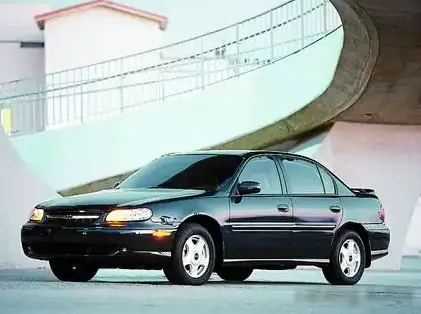
The Chevrolet Malibu V 2.4i 16V Automatic, produced between 1997 and 1999, represented a significant step forward for Chevrolet’s mid-size sedan. Falling within the fifth generation of the Malibu (1997-2003), this variant occupied a middle ground in the lineup, offering a balance between affordability and performance. It was positioned above the base 2.3L engine option and below the more powerful, though less commonly available, supercharged variants. The Malibu V aimed to recapture market share in a segment increasingly competitive with Japanese imports, offering a more modern design and improved features compared to its predecessors.
Technical Specifications
| Brand | Chevrolet |
| Model | Malibu |
| Generation | Malibu V |
| Type (Engine) | 2.4i 16V (150 Hp) Automatic |
| Start of production | 1997 |
| End of production | 1999 |
| Powertrain Architecture | Internal Combustion engine |
| Body type | Sedan |
| Seats | 5 |
| Doors | 4 |
| Fuel consumption (urban) | 10.2 l/100 km (23.1 US mpg, 27.7 UK mpg, 9.8 km/l) |
| Fuel consumption (extra urban) | 7.4 l/100 km (31.8 US mpg, 38.2 UK mpg, 13.5 km/l) |
| Fuel consumption (combined) | 9 l/100 km (26.1 US mpg, 31.4 UK mpg, 11.1 km/l) |
| Fuel Type | Petrol (Gasoline) |
| Weight-to-power ratio | 9.2 kg/Hp, 108.4 Hp/tonne |
| Weight-to-torque ratio | 6.6 kg/Nm, 151.7 Nm/tonne |
| Power | 150 Hp @ 5600 rpm |
| Power per litre | 62.7 Hp/l |
| Torque | 210 Nm @ 4400 rpm (154.89 lb.-ft. @ 4400 rpm) |
| Maximum engine speed | 6500 rpm |
| Engine layout | Front, Transverse |
| Engine Model/Code | LD9 Twin Cam |
| Engine displacement | 2392 cm3 (145.97 cu. in.) |
| Number of cylinders | 4 |
| Engine configuration | Inline |
| Cylinder Bore | 90 mm (3.54 in.) |
| Piston Stroke | 94 mm (3.7 in.) |
| Compression ratio | 9.5:1 |
| Number of valves per cylinder | 4 |
| Fuel injection system | Multi-port manifold injection |
| Engine aspiration | Naturally aspirated engine |
| Valvetrain | DOHC |
| Engine oil capacity | 3.8 l (4.02 US qt | 3.34 UK qt) |
| Coolant capacity | 10.7 l (11.31 US qt | 9.41 UK qt) |
| Kerb Weight | 1384 kg (3051.2 lbs.) |
| Trunk (boot) space – maximum | 464 l (16.39 cu. ft.) |
| Fuel tank capacity | 57 l (15.06 US gal | 12.54 UK gal) |
| Length | 4836 mm (190.39 in.) |
| Width | 1763 mm (69.41 in.) |
| Height | 1433 mm (56.42 in.) |
| Wheelbase | 2718 mm (107.01 in.) |
| Front track | 1501 mm (59.09 in.) |
| Rear track | 1506 mm (59.29 in.) |
| Minimum turning circle | 11.1 m (36.42 ft.) |
| Drivetrain Architecture | Front wheel drive, Internal Combustion engine |
| Number of gears | 4 |
| Gearbox type | Automatic transmission |
| Front suspension | Independent, McPherson with coil spring and anti-roll bar |
| Rear suspension | Independent multi-link suspension |
| Front brakes | Ventilated discs |
| Rear brakes | Drum |
| Assisting systems | ABS (Anti-lock braking system) |
| Steering type | Steering rack and pinion |
| Power steering | Hydraulic |
| Tires size | 215/60 R15 |
| Wheel rims size | 6.0J x 15 |
Powertrain & Engine Architecture
The heart of the Malibu V 2.4i Automatic was the LD9 2.4-liter inline-four cylinder engine. This engine featured a dual overhead camshaft (DOHC) valvetrain with four valves per cylinder, contributing to its relatively high output for its displacement. The LD9 utilized multi-port fuel injection, a common technology at the time, for precise fuel delivery. The engine’s 9.5:1 compression ratio was a compromise between performance and the ability to run on readily available 87 octane gasoline. Paired with the engine was a four-speed automatic transmission, a 4T40-E unit, chosen for its smooth operation and suitability for everyday driving. This transmission was known for its reliability, though it wasn’t particularly sporty in its shift characteristics.
Driving Characteristics
The 150 horsepower and 210 Nm (154.89 lb-ft) of torque produced by the 2.4L engine and automatic transmission combination provided adequate, but not exhilarating, performance. Acceleration from 0 to 60 mph was typically in the 9-10 second range. The automatic transmission’s gear ratios were geared towards fuel efficiency and comfortable cruising rather than aggressive acceleration. Compared to the available manual transmission, the automatic resulted in a noticeable decrease in responsiveness. The 2.4L engine offered a smoother and quieter driving experience than the base 2.3L engine, making it a popular choice for drivers prioritizing comfort. However, it lacked the punch of the optional supercharged engines.
Equipment & Trim Levels
The 2.4i Automatic trim typically included standard features such as air conditioning, power windows and locks, an AM/FM stereo with cassette player, and cloth upholstery. Optional extras included a power sunroof, upgraded sound system, cruise control, and alloy wheels. Interior trim was generally functional and durable, though not particularly luxurious. The dashboard layout was straightforward and easy to use, prioritizing practicality over aesthetic flair. The base model offered a relatively spartan interior, while higher trim levels added features like leather upholstery and woodgrain accents.
Chassis & Braking
The Malibu V utilized an independent front suspension with McPherson struts and a multi-link independent rear suspension. This setup provided a comfortable ride quality, absorbing bumps and irregularities in the road effectively. Front brakes were ventilated discs, offering good stopping power, while rear brakes were drums, a cost-saving measure common in this class of vehicle. Anti-lock braking system (ABS) was standard, enhancing safety by preventing wheel lockup during hard braking. The steering was rack and pinion with hydraulic power assist, providing a reasonably responsive and easy-to-use steering feel.
Market Reception & Comparison
The Malibu V 2.4i Automatic was generally well-received by critics as a competent and comfortable mid-size sedan. Fuel economy was considered respectable for the time, averaging around 26 mpg combined. However, some reviewers noted that the automatic transmission could feel sluggish, and the overall driving experience lacked the refinement of some Japanese competitors. Compared to the base 2.3L Malibu, the 2.4i offered a noticeable improvement in performance and refinement. Compared to the supercharged Malibu, it was significantly less powerful but also more affordable and fuel-efficient. Reliability was generally good, though the automatic transmission could occasionally experience issues with the torque converter.
Legacy
The Chevrolet Malibu V 2.4i Automatic, while not a standout performer, remains a relatively affordable and reliable used car option today. The LD9 engine is known for its durability, and parts availability is generally good. However, age-related issues such as corrosion and wear on suspension components are common. The four-speed automatic transmission, while reliable, is showing its age and may require maintenance or rebuilding in higher-mileage examples. The Malibu V represents a transitional period for Chevrolet, moving away from its traditionally boxy designs and embracing a more modern aesthetic. It served as a stepping stone towards the more refined and competitive Malibu models that followed.