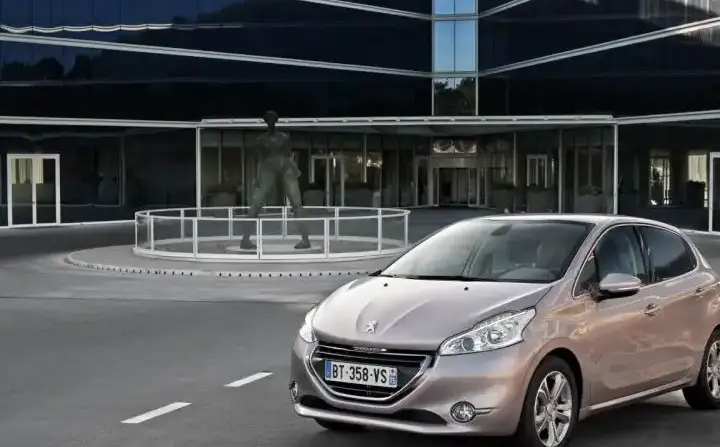
The Peugeot 208 I (Phase II), specifically the 1.2 PureTech 68 horsepower variant, represents an entry-level offering within the refreshed first generation of Peugeot’s popular supermini. Introduced in November 2016 as part of the Phase II update, this model continued in production through 2019. It was positioned as the most economical and accessible version of the 208, targeting buyers prioritizing fuel efficiency and affordability over outright performance. This variant played a significant role in maintaining the 208’s market presence in Europe, where small, fuel-efficient hatchbacks are highly sought after.
Technical Specifications
| Brand | Peugeot |
| Model | 208 |
| Generation | 208 I (Phase II, 2015) |
| Type (Engine) | 1.2 PureTech (68 Hp) |
| Start of production | November, 2016 |
| End of production | 2019 |
| Powertrain Architecture | Internal Combustion engine |
| Body type | Hatchback |
| Seats | 5 |
| Doors | 3-5 |
| Fuel consumption (urban) | 5.7 l/100 km (41.3 US mpg, 49.6 UK mpg, 17.5 km/l) |
| Fuel consumption (extra urban) | 4.1 l/100 km (57.4 US mpg, 68.9 UK mpg, 24.4 km/l) |
| Fuel consumption (combined) | 4.7 l/100 km (50 US mpg, 60.1 UK mpg, 21.3 km/l) |
| CO2 emissions | 108 g/km |
| Fuel Type | Petrol (Gasoline) |
| Acceleration 0 – 100 km/h | 13.8 sec |
| Acceleration 0 – 62 mph | 13.8 sec |
| Acceleration 0 – 60 mph | 13.1 sec |
| Maximum speed | 166 km/h (103.15 mph) |
| Emission standard | Euro 6 |
| Weight-to-power ratio | 14.1 kg/Hp, 70.8 Hp/tonne |
| Weight-to-torque ratio | 9.1 kg/Nm, 110.4 Nm/tonne |
| Power | 68 Hp @ 5750 rpm |
| Power per litre | 56.7 Hp/l |
| Torque | 106 Nm @ 2750 rpm (78.18 lb.-ft. @ 2750 rpm) |
| Engine layout | Front, Transverse |
| Engine Model/Code | HMP EB2FB |
| Engine displacement | 1199 cm3 (73.17 cu. in.) |
| Number of cylinders | 3 |
| Engine configuration | Inline |
| Number of valves per cylinder | 4 |
| Fuel injection system | Multi-port manifold injection |
| Engine aspiration | Naturally aspirated engine |
| Engine oil capacity | 3.25 l (3.43 US qt | 2.86 UK qt) |
| Kerb Weight | 960 kg (2116.44 lbs.) |
| Max. weight | 1520 kg (3351.03 lbs.) |
| Max load | 560 kg (1234.59 lbs.) |
| Trunk (boot) space – minimum | 285 l (10.06 cu. ft.) |
| Trunk (boot) space – maximum | 1076 l (38 cu. ft.) |
| Fuel tank capacity | 50 l (13.21 US gal | 11 UK gal) |
| Permitted trailer load with brakes (12%) | 760 kg (1675.51 lbs.) |
| Length | 3973 mm (156.42 in.) |
| Width | 1829 mm (72.01 in.) |
| Width including mirrors | 2004 mm (78.9 in.) |
| Height | 1460 mm (57.48 in.) |
| Wheelbase | 2538 mm (99.92 in.) |
| Front track | 1470 mm (57.87 in.) |
| Rear (Back) track | 1472 mm (57.95 in.) |
| Drivetrain Architecture | The Internal combustion engine (ICE) drives the front wheels of the vehicle. |
| Drive wheel | Front wheel drive |
| Number of gears and type of gearbox | 5 gears, manual transmission |
| Front suspension | Independent type McPherson |
| Rear suspension | Elastic beam |
| Front brakes | Ventilated discs |
| Rear brakes | Drum |
| Assisting systems | ABS (Anti-lock braking system) |
| Steering type | Steering rack and pinion |
| Tires size | 185/65 R15 |
| Wheel rims size | 15 |
Powertrain & Engine Architecture
The heart of this 208 variant is the Peugeot-Citroën (PSA) Group’s EB2FB 1.2-liter three-cylinder petrol engine. This engine is a member of the “PureTech” family, known for its focus on efficiency and reduced emissions. The 68 horsepower output is achieved through a naturally aspirated configuration, utilizing multi-point fuel injection and four valves per cylinder. The engine’s compact size and lightweight construction contribute to the 208’s overall efficiency. The engine code, HMP EB2FB, is crucial for identifying specific parts and service information. The engine is transversely mounted at the front of the vehicle, driving the front wheels. The engine is paired with a five-speed manual transmission, chosen for its simplicity and cost-effectiveness in this entry-level model. While an automatic transmission was available on other 208 trims, it wasn’t offered with this specific engine and power output.
Driving Characteristics
The 1.2 PureTech 68 hp/manual transmission combination delivers modest performance. Acceleration is leisurely, taking approximately 13.8 seconds to reach 62 mph (100 km/h). Real-world driving emphasizes fuel economy over spirited acceleration. The five-speed gearbox is well-matched to the engine’s characteristics, providing adequate ratios for everyday driving. However, overtaking maneuvers require careful planning. Compared to the more powerful 1.2 PureTech 110 hp or the diesel variants, this version feels significantly less responsive. The lighter weight of the vehicle, however, does help to mitigate some of the power deficit. The steering is light and precise, typical of Peugeot’s offerings, making it easy to maneuver in urban environments.
Equipment & Trim Levels
The 1.2 PureTech 68 hp model typically represented the base trim level. Standard equipment generally included power steering, central locking, electric front windows, and an audio system with USB connectivity. Safety features such as ABS, ESP (Electronic Stability Program), and multiple airbags were also standard. Interior upholstery was typically cloth, with a functional but basic dashboard layout. Optional extras included air conditioning, alloy wheels, and a touchscreen infotainment system. The trim level was often designated as “Access” or a similar entry-level moniker, emphasizing its affordability.
Chassis & Braking
The 208 I utilizes a McPherson strut front suspension and an elastic beam rear suspension. This setup provides a good balance between ride comfort and handling. The front brakes are ventilated discs, while the rear brakes are drums, a cost-saving measure common in entry-level models. The steering is a rack and pinion system, offering precise control. The relatively light weight of the vehicle contributes to its nimble handling characteristics. Stabilizer bars were typically fitted to both the front and rear axles, helping to reduce body roll during cornering.
Market Reception & Comparison
The 1.2 PureTech 68 hp variant was generally well-received by critics as a practical and economical city car. Its low running costs and fuel efficiency were highlighted as key strengths. However, its lack of outright performance was often noted. Compared to the 1.2 PureTech 110 hp version, the 68 hp model offered significantly less power but at a lower price point. The diesel variants, such as the 1.6 BlueHDi, provided better fuel economy and torque but came with a higher initial cost and potential maintenance concerns associated with diesel particulate filters. The 68 hp model appealed to buyers prioritizing affordability and fuel efficiency over driving excitement.
Legacy
The 1.2 PureTech engine, in its various iterations, has proven to be a reliable and durable powertrain. While some early versions of the engine experienced issues with timing chain wear, these were largely addressed in later revisions. The 68 hp variant, being a naturally aspirated version, is generally considered less prone to these issues than the turbocharged variants. In the used car market, this 208 variant remains an attractive option for budget-conscious buyers seeking a reliable and economical supermini. Its simplicity and relatively low maintenance costs contribute to its ongoing appeal.