Technical Specifications
| Brand | Jaguar |
| Model | XF |
| Generation | XF Sportbrake (X260, facelift 2020) |
| Type (Engine) | 2.0d (204 Hp) Mild Hybrid Automatic |
| Start of production | October, 2020 |
| End of production | 2024 |
| Powertrain Architecture | MHEV (Mild Hybrid Electric Vehicle) |
| Body type | Station wagon (estate) |
| Seats | 5 |
| Doors | 5 |
| Combined fuel consumption (WLTP) | 5.2-5.8 l/100 km (45.2 – 40.6 US mpg, 54.3 – 48.7 UK mpg, 19.2 – 17.2 km/l) |
| CO2 emissions (WLTP) | 137-151 g/km |
| Fuel Type | Diesel |
| Acceleration 0 – 100 km/h | 7.8 sec |
| Acceleration 0 – 62 mph | 7.8 sec |
| Acceleration 0 – 60 mph | 7.3 sec |
| Maximum speed | 230 km/h (142.92 mph) |
| Emission standard | Euro 6d |
| Weight-to-power ratio | 8.8 kg/Hp, 113.6 Hp/tonne |
| Weight-to-torque ratio | 4.2 kg/Nm, 239.6 Nm/tonne |
| Power | 204 Hp @ 4250 rpm |
| Power per litre | 102.2 Hp/l |
| Torque | 430 Nm @ 1750-2500 rpm (317.15 lb.-ft. @ 1750-2500 rpm) |
| Engine layout | Front, Longitudinal |
| Engine Model/Code | AJ21D4 |
| Engine displacement | 1997 cm3 (121.86 cu. in.) |
| Number of cylinders | 4 |
| Engine configuration | Inline |
| Cylinder Bore | 83 mm (3.27 in.) |
| Piston Stroke | 92.31 mm (3.63 in.) |
| Compression ratio | 16.5:1 |
| Number of valves per cylinder | 4 |
| Fuel injection system | Diesel Commonrail |
| Engine aspiration | Turbocharger, Intercooler |
| Engine oil capacity | 6.5 l (6.87 US qt | 5.72 UK qt) |
| Kerb Weight | 1795 kg (3957.3 lbs.) |
| Trunk (boot) space – minimum | 716 l (25.29 cu. ft.) |
| Trunk (boot) space – maximum | 1695 l (59.86 cu. ft.) |
| Fuel tank capacity | 66 l (17.44 US gal | 14.52 UK gal) |
| Permitted trailer load with brakes (12%) | 2000 kg (4409.25 lbs.) |
| Permitted trailer load without brakes | 750 kg (1653.47 lbs.) |
| Length | 4964 mm (195.43 in.) |
| Width with mirrors folded | 1982 mm (78.03 in.) |
| Width including mirrors | 2089 mm (82.24 in.) |
| Height | 1494 mm (58.82 in.) |
| Wheelbase | 2960 mm (116.54 in.) |
| Front track | 1602 mm (63.07 in.) |
| Rear (Back) track | 1604 mm (63.15 in.) |
| Front overhang | 847 mm (33.35 in.) |
| Rear overhang | 1157 mm (45.55 in.) |
| Drag coefficient (Cd) | 0.29 |
| Minimum turning circle (turning diameter) | 11.56 m (37.93 ft.) |
| Drivetrain Architecture | Rear wheel drive, MHEV |
| Drive wheel | Rear wheel drive |
| Number of gears and type of gearbox | 8 gears, automatic transmission ZF |
| Front suspension | Double wishbone |
| Rear suspension | Independent coil spring |
| Front brakes | Ventilated discs, 325 mm |
| Rear brakes | Ventilated discs, 325 mm |
| Assisting systems | ABS (Anti-lock braking system) |
| Steering type | Steering rack and pinion |
| Power steering | Electric Steering |
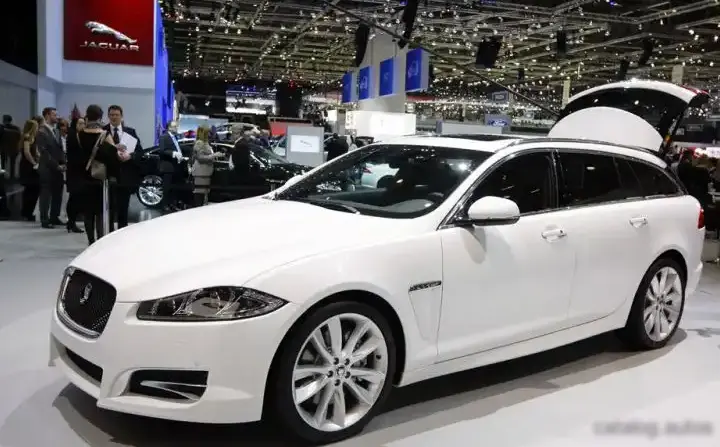
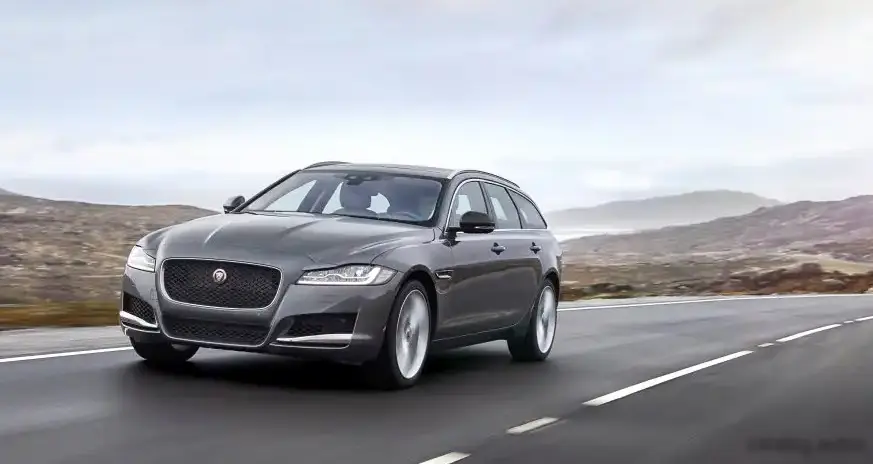
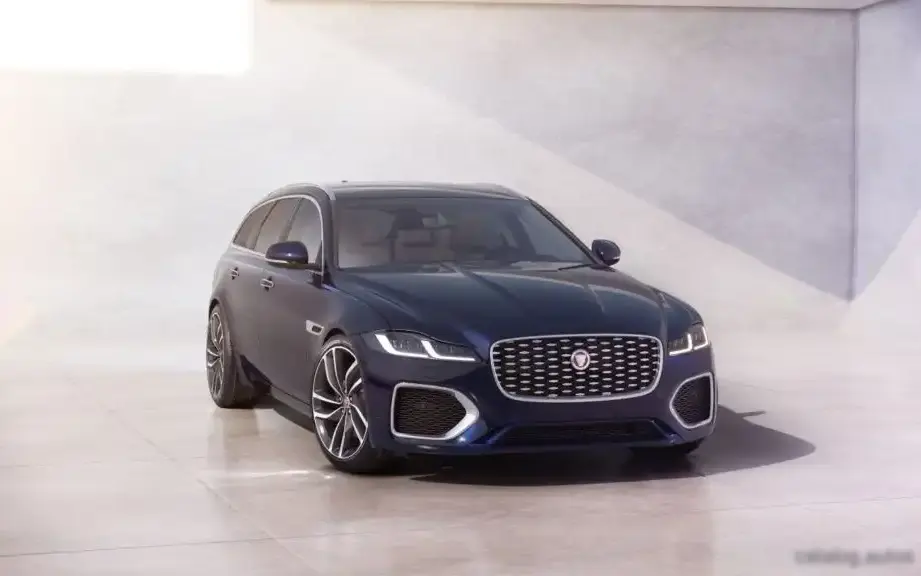
The Jaguar XF Sportbrake (X260, facelift 2020) 2.0d represents a significant offering in the premium wagon segment. Built on the X260 platform, which underpinned the second-generation XF, this variant was introduced as part of a mid-life refresh in October 2020. The facelift brought styling updates, interior enhancements, and crucially, the integration of mild hybrid technology into the 2.0-liter diesel engine. Positioned as a more accessible entry point to the XF Sportbrake range, the 2.0d aimed to broaden the model’s appeal by offering a balance of performance, efficiency, and practicality. It directly competed with rivals like the BMW 5 Series Touring, Audi A6 Avant, and Mercedes-Benz E-Class Estate.
Powertrain & Engine Architecture
At the heart of the XF Sportbrake 2.0d lies the AJ21D4 engine, a 2.0-liter inline-four cylinder diesel. This engine benefits from a sophisticated mild hybrid system (MHEV), utilizing a 48V electrical architecture. The system incorporates a Belt-integrated Starter Generator (BiSG) which assists the engine during acceleration, allowing for smoother starts and improved fuel economy. The engine employs a diesel commonrail fuel injection system, delivering precise fuel metering for optimal combustion. A turbocharger with an intercooler further enhances performance, boosting power output to 204 horsepower at 4250 rpm and 430 Nm (317 lb-ft) of torque between 1750 and 2500 rpm. The engine’s high compression ratio of 16.5:1 contributes to its efficiency. Power is delivered to the rear wheels via a smooth-shifting eight-speed automatic transmission sourced from ZF, known for its responsiveness and efficiency.
Driving Characteristics
The 2.0d automatic configuration delivers a refined and comfortable driving experience. While not as overtly sporty as higher-powered XF variants, it provides ample performance for everyday driving and long-distance cruising. The mild hybrid system contributes to a surprisingly responsive feel, particularly during initial acceleration. The eight-speed automatic transmission is well-tuned, offering seamless gear changes and contributing to relaxed highway cruising. The gear ratios are optimized for both fuel efficiency and usable power. Compared to the more powerful six-cylinder XF models, the 2.0d prioritizes fuel economy and lower running costs, making it a more sensible choice for drivers covering high mileage. The rear-wheel-drive configuration provides a balanced handling characteristic, typical of Jaguar vehicles.
Equipment & Trim Levels
The XF Sportbrake 2.0d typically came well-equipped as standard, reflecting Jaguar’s commitment to luxury. Standard features generally included leather upholstery, a touchscreen infotainment system with navigation, Apple CarPlay and Android Auto compatibility, automatic climate control, and a suite of driver-assistance systems such as emergency braking and lane keep assist. Optional extras included a panoramic sunroof, premium audio systems, adaptive cruise control, and upgraded interior trim materials. Trim levels varied depending on the market, but generally offered progressive enhancements in terms of luxury and technology. The 2.0d often served as the base for higher-spec trims, allowing buyers to add optional features to tailor the vehicle to their preferences.
Chassis & Braking
The XF Sportbrake utilizes a sophisticated chassis design, featuring double wishbone suspension at the front and an independent coil spring setup at the rear. This configuration provides a comfortable ride quality while maintaining good handling characteristics. The 2.0d variant, being lighter than its more powerful siblings, benefits from slightly more agile handling. Braking is handled by ventilated discs on all four wheels, measuring 325mm in diameter. The inclusion of ABS (Anti-lock Braking System) and electronic stability control ensures safe and controlled braking performance. The steering system is a rack and pinion setup with electric power assistance, providing precise and responsive steering feel.
Market Reception & Comparison
The Jaguar XF Sportbrake 2.0d was generally well-received by automotive critics. It was praised for its refined driving experience, comfortable ride, and practical wagon body style. The mild hybrid technology was seen as a positive step towards improved fuel efficiency and reduced emissions. Compared to the higher-powered XF variants, the 2.0d offered a more affordable entry point into the XF range, making it a more attractive option for a wider range of buyers. Fuel economy figures of 5.2-5.8 l/100km (45.2-40.6 US mpg) were competitive within its segment. Reliability reports have been generally positive, although, as with any complex vehicle, preventative maintenance is crucial.
Legacy
The Jaguar XF Sportbrake 2.0d (X260, facelift 2020) represents a well-rounded and practical luxury wagon. Its combination of a refined diesel engine, mild hybrid technology, and comfortable ride quality has ensured its continued appeal in the used car market. The AJ21D4 engine, when properly maintained, has proven to be a reliable unit. As a used vehicle, the XF Sportbrake 2.0d offers a compelling value proposition, providing a luxurious and capable estate car at a more accessible price point. Its blend of practicality, performance, and efficiency ensures it remains a desirable option for buyers seeking a premium wagon experience.