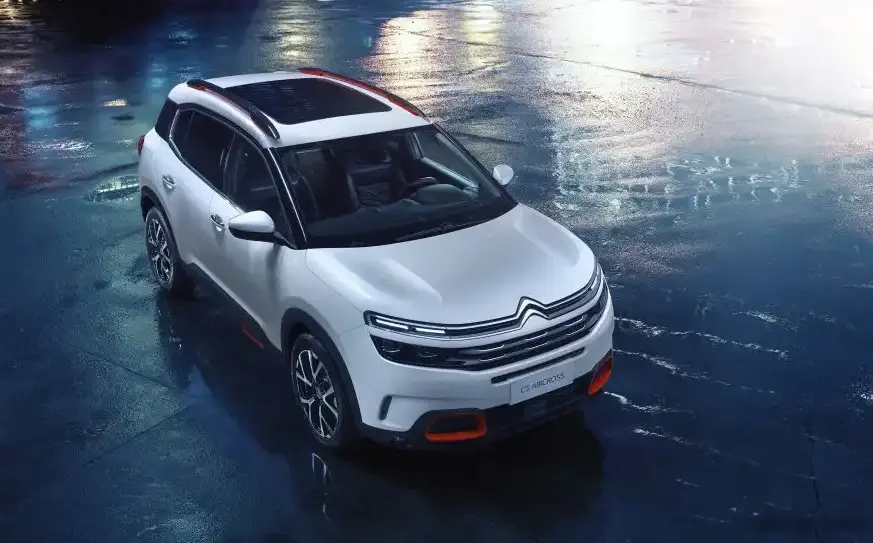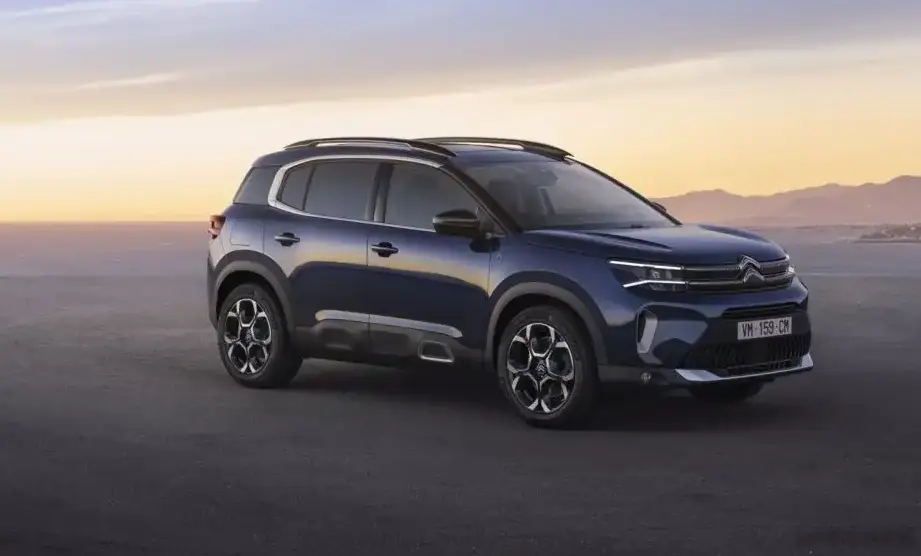
The Citroën C5 I (Phase II), specifically the 2.0i 16V variant introduced in 2004, represented a refinement of Citroën’s large family car offering. Produced from 2004 to 2008, this version of the C5 aimed to balance performance and comfort within the broader C5 I range (produced from 2001-2008). Positioned as a mid-range option, it slotted between the lower-powered 1.8-liter and the more potent 3.0-liter V6 models. The Phase II update brought styling revisions and improvements to the interior, solidifying the C5’s reputation as a technologically advanced and comfortable cruiser. It was primarily marketed in Europe, where large sedans and wagons remained popular, offering a distinctive alternative to German and domestic competitors.
Technical Specifications
| Brand | Citroen |
| Model | C5 |
| Generation | C5 I (Phase II, 2004) |
| Type (Engine) | 2.0i 16V (140 Hp) |
| Start of production | 2004 |
| End of production | 2008 |
| Powertrain Architecture | Internal Combustion engine |
| Body type | Sedan |
| Seats | 5 |
| Doors | 4 |
| Fuel consumption (urban) | 11.1 l/100 km (21.2 US mpg) |
| Fuel consumption (extra urban) | 6.3 l/100 km (37.3 US mpg) |
| Fuel consumption (combined) | 8 l/100 km (29.4 US mpg) |
| CO2 emissions | 190 g/km |
| Fuel Type | Petrol (Gasoline) |
| Acceleration 0 – 100 km/h | 9.1 sec |
| Acceleration 0 – 62 mph | 9.1 sec |
| Acceleration 0 – 60 mph | 8.6 sec |
| Maximum speed | 210 km/h (130.49 mph) |
| Emission standard | Euro 4 |
| Weight-to-power ratio | 10 kg/Hp |
| Weight-to-torque ratio | 7 kg/Nm |
| Power | 140 Hp @ 6000 rpm |
| Torque | 200 Nm @ 4000 rpm (147.51 lb.-ft. @ 4000 rpm) |
| Engine layout | Front, Transverse |
| Engine Model/Code | RFJ EW10A |
| Engine displacement | 1997 cm3 (121.86 cu. in.) |
| Number of cylinders | 4 |
| Engine configuration | Inline |
| Cylinder Bore | 85 mm (3.35 in.) |
| Piston Stroke | 88 mm (3.46 in.) |
| Compression ratio | 10.8:1 |
| Number of valves per cylinder | 4 |
| Fuel injection system | Multi-port manifold injection |
| Engine aspiration | Naturally aspirated |
| Engine oil capacity | 5 l (5.28 US qt | 4.4 UK qt) |
| Coolant | 8.8 l (9.3 US qt | 7.74 UK qt) |
| Kerb Weight | 1394 kg (3073.24 lbs.) |
| Max. weight | 1914 kg (4219.65 lbs.) |
| Max load | 520 kg (1146.4 lbs.) |
| Trunk (boot) space – minimum | 471 l (16.63 cu. ft.) |
| Trunk (boot) space – maximum | 1315 l (46.44 cu. ft.) |
| Fuel tank capacity | 66 l (17.44 US gal | 14.52 UK gal) |
| Max. roof load | 75 kg (165.35 lbs.) |
| Permitted trailer load with brakes (12%) | 1500 kg (3306.93 lbs.) |
| Permitted trailer load without brakes | 695 kg (1532.21 lbs.) |
| Permitted towbar download | 75 kg (165.35 lbs.) |
| Length | 4745 mm (186.81 in.) |
| Width | 1780 mm (70.08 in.) |
| Height | 1476 mm (58.11 in.) |
| Wheelbase | 2750 mm (108.27 in.) |
| Front track | 1528 mm (60.16 in.) |
| Rear track | 1495 mm (58.86 in.) |
| Front overhang | 1033 mm (40.67 in.) |
| Rear overhang | 962 mm (37.87 in.) |
| Minimum turning circle | 12.43 m (40.78 ft.) |
| Drivetrain Architecture | Front wheel drive |
| Drive wheel | Front wheel drive |
| Number of gears | 5 gears, manual transmission |
| Front suspension | Independent, type McPherson with coil spring and anti-roll bar |
| Rear suspension | Semi-independent, coil spring |
| Front brakes | Ventilated discs |
| Rear brakes | Disc |
| Assisting systems | ABS (Anti-lock braking system) |
| Tires size | 215/55 R16 |
| Wheel rims size | 16 |
Powertrain & Engine Architecture
The heart of the C5 2.0i 16V is the RFJ (or sometimes EW10A) engine, a 1.997-liter inline-four cylinder gasoline engine. This engine was a common sight in various PSA Peugeot Citroën vehicles of the era. It features a cast iron block with an aluminum cylinder head, incorporating four valves per cylinder (hence the “16V” designation) and a dual overhead camshaft design. Fuel delivery is managed by a multi-point fuel injection system, providing precise fuel metering for optimal combustion. The engine’s 140 horsepower output at 6000 rpm and 200 Nm (147.51 lb-ft) of torque at 4000 rpm were considered adequate for comfortable cruising and everyday driving. The engine’s design prioritized refinement and fuel efficiency over outright performance. The transmission paired with this engine was typically a five-speed manual, although a four-speed automatic transmission was also available, impacting performance and fuel economy.
Driving Characteristics
The 2.0i 16V C5 offered a balanced driving experience. While not particularly sporty, it provided sufficient power for overtaking and maintaining highway speeds. The five-speed manual transmission allowed drivers to keep the engine in its optimal power band, while the optional automatic, though less engaging, offered convenience. Acceleration from 0 to 60 mph took around 8.6-9.1 seconds, depending on the transmission and testing conditions. The C5’s renowned hydropneumatic suspension (a Citroën hallmark) provided a remarkably smooth and comfortable ride, absorbing bumps and imperfections in the road with ease. Compared to the 1.8-liter version, the 2.0i offered noticeably more power and torque, resulting in improved acceleration and a more relaxed driving experience, especially when fully loaded. However, it wasn’t as responsive as the more powerful V6 models.
Equipment & Trim Levels
The 2.0i 16V C5 typically came equipped with a respectable level of standard features. These included power windows, central locking, air conditioning, and an RDS stereo system. Higher trim levels, such as the Exclusive, added features like leather upholstery, automatic climate control, alloy wheels, and a trip computer. Optional extras included a navigation system, parking sensors, and a premium sound system. Interior materials were generally of good quality, and the cabin was spacious and well-designed, prioritizing comfort for both driver and passengers.
Chassis & Braking
The C5 I featured a McPherson strut front suspension and a semi-independent torsion beam rear suspension. This setup, combined with the hydropneumatic suspension, provided excellent ride quality and handling. The braking system consisted of ventilated discs on the front wheels and solid discs on the rear, providing adequate stopping power. Anti-lock Braking System (ABS) was standard, enhancing safety. The C5’s suspension was tuned for comfort rather than outright sportiness, resulting in a stable and predictable ride.
Market Reception & Comparison
The Citroën C5 2.0i 16V was generally well-received by automotive critics. It was praised for its comfortable ride, spacious interior, and refined engine. However, some critics noted that the engine lacked the excitement of its competitors and that the styling was somewhat conservative. Compared to the 1.8-liter version, the 2.0i offered a significant performance upgrade, making it a more appealing option for drivers who frequently traveled long distances or carried passengers. Fuel economy was reasonable for a car of its size and class, averaging around 29.4 US mpg in combined driving. The 2.0i also proved to be more reliable than some of the more complex V6 models.
Legacy
The Citroën C5 I 2.0i 16V has proven to be a relatively reliable and durable vehicle. The RFJ engine is known for its longevity, provided it is properly maintained. Today, these cars are readily available on the used car market at affordable prices. While they may require some maintenance due to their age, they offer a comfortable and practical driving experience. The hydropneumatic suspension, while requiring occasional attention, remains a key selling point for enthusiasts who appreciate its unique ride quality. The C5 I 2.0i 16V represents a solid and dependable choice for those seeking a comfortable and spacious family car with a touch of French flair.