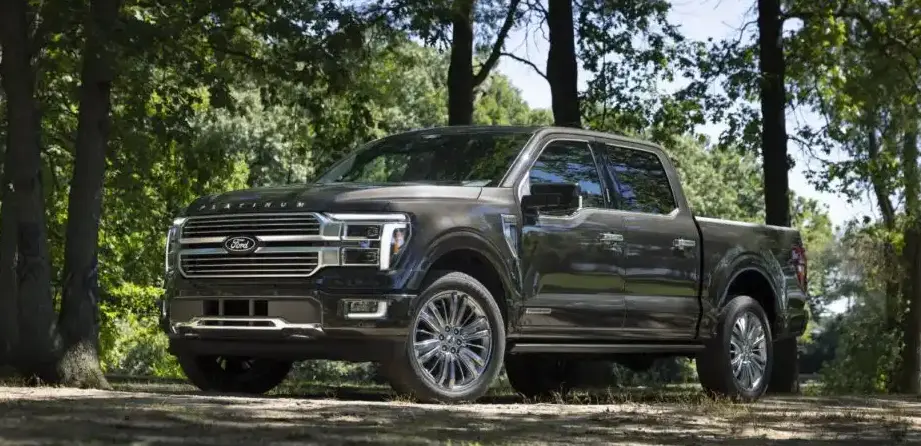
The Ford F-150 XIV SuperCrew, specifically the 3.5 PowerBoost V6 (430 Hp) Full Hybrid 4×4 MHT variant, represents a significant evolution in the American pickup truck landscape. Introduced in September 2023 as part of the F-150’s fourteenth generation (XIV) facelift, this model combines a powerful gasoline engine with an electric motor to deliver both substantial performance and improved fuel efficiency. Positioned as a premium offering within the F-150 lineup, it caters to buyers seeking a capable workhorse with advanced technology and a reduced environmental footprint. This variant builds upon the established reputation of the F-Series, America’s best-selling truck for over four decades, while pushing the boundaries of what a full-size pickup can achieve.
Technical Specifications
| Brand | Ford |
| Model | F-Series F-150 |
| Generation | F-Series F-150 XIV SuperCrew (facelift 2023) |
| Type (Engine) | 3.5 PowerBoost V6 (430 Hp) Full Hybrid 4×4 MHT |
| Start of production | September, 2023 |
| Powertrain Architecture | FHEV (Full Hybrid Electric Vehicle) |
| Body type | Pick-up |
| Seats | 5-6 |
| Doors | 4 |
| Fuel consumption (urban) | 10.7 l/100 km (22 US mpg, 26.4 UK mpg, 9.3 km/l) |
| Fuel consumption (extra urban) | 9.8 l/100 km (24 US mpg, 28.8 UK mpg, 10.2 km/l) |
| Fuel consumption (combined) | 10.2 l/100 km (23.1 US mpg, 27.7 UK mpg, 9.8 km/l) |
| Fuel Type | Petrol (Gasoline) |
| Weight-to-power ratio | 5.9 kg/Hp, 169.8 Hp/tonne |
| Weight-to-torque ratio | 3.3 kg/Nm, 305.2 Nm/tonne |
| Electric motor location | Between the combustion engine and the transmission |
| System power | 430 Hp @ 6000 rpm |
| System torque | 773 Nm @ 3000 rpm (570.14 lb.-ft. @ 3000 rpm) |
| Engine layout | Front, Longitudinal |
| Engine displacement | 3497 cm3 (213.4 cu. in.) |
| Number of cylinders | 6 |
| Engine configuration | V-engine |
| Cylinder Bore | 92.5 mm (3.64 in.) |
| Piston Stroke | 86.7 mm (3.41 in.) |
| Compression ratio | 10.5:1 |
| Number of valves per cylinder | 4 |
| Fuel injection system | Direct injection and Multi-port manifold injection |
| Engine aspiration | Twin-Turbo, Intercooler |
| Valvetrain | DOHC, Ti-VCT |
| Engine oil capacity | 5.7 l (6.02 US qt | 5.02 UK qt) |
| Kerb Weight | 2533 kg (5584.31 lbs.) |
| Max. weight | 3357 kg (7400.92 lbs.) |
| Max load | 824 kg (1816.61 lbs.) |
| Trunk (boot) space (minimum) | 1495 l (52.8 cu. ft.) |
| Fuel tank capacity | 116 l (30.64 US gal | 25.52 UK gal) |
| Permitted trailer load with brakes (12%) | 5080 kg (11199.48 lbs.) |
| Length | 5893 mm (232.01 in.) |
| Width | 2029 mm (79.88 in.) |
| Width with mirrors folded | 2123 mm (83.58 in.) |
| Width including mirrors | 2431 mm (95.71 in.) |
| Height | 1958 mm (77.09 in.) |
| Wheelbase | 3693 mm (145.39 in.) |
| Front track | 1725 mm (67.91 in.) |
| Rear (Back) track | 1735 mm (68.31 in.) |
| Front overhang | 950 mm (37.4 in.) |
| Rear overhang | 1250 mm (49.21 in.) |
| Ride height (ground clearance) | 249 mm (9.8 in.) |
| Minimum turning circle | 14.6 m (47.9 ft.) |
| Approach angle | 24.2° |
| Departure angle | 21° |
| Ramp-over (brakeover) angle | 19.8° |
| Drivetrain Architecture | ICE and electric motor drive rear wheels, with on-demand front wheel drive. |
| Drive wheel | All wheel drive (4×4) |
| Number of gears and type of gearbox | 10 gears, automatic transmission Modular Hybrid Transmission |
| Front suspension | Double wishbone, Independent coil spring |
| Rear suspension | Rigid axle suspension, Leaf spring |
| Front brakes | Ventilated discs, 350×34 mm |
| Rear brakes | Ventilated discs, 336×20 mm |
| Steering type | Steering rack and pinion |
| Power steering | Electric Steering |
| Tires size | 245/70 R17; 265/70 R17; 265/60 R18; 265/70 R18; 275/65 R18; 275/60 R20; 275/50 R22 |
| Wheel rims size | 17; 18; 20; 22 |
Powertrain & Engine Architecture
At the heart of the F-150 PowerBoost lies the 3.5-liter EcoBoost V6 engine, designated as part of the third generation of Ford’s EcoBoost family. This engine utilizes a twin-turbocharged configuration with an intercooler, direct fuel injection, and multi-port fuel injection, optimizing both power and efficiency. The engine produces 430 horsepower at 6000 rpm and 570 lb.-ft. of torque at 3000 rpm when combined with the electric motor. The electric motor, positioned between the engine and the 10-speed automatic transmission, adds significant low-end torque and allows for limited all-electric driving. The hybrid system incorporates a 1.5 kWh lithium-ion battery pack. The transmission, a modular hybrid transmission, is specifically designed to handle the combined output of the engine and motor, providing smooth and efficient power delivery.
Driving Characteristics
The 3.5 PowerBoost delivers a unique driving experience. The instant torque from the electric motor provides brisk acceleration, particularly from a standstill. The 10-speed automatic transmission is well-tuned, offering seamless gear changes and keeping the engine in its optimal power band. While not as overtly sporty as some performance-oriented trucks, the PowerBoost offers a refined and capable driving experience. The hybrid system allows for quiet operation in electric-only mode at lower speeds, enhancing comfort in urban environments. Compared to the standard gasoline F-150 engines, the PowerBoost offers a noticeable improvement in low-end torque and responsiveness. It also provides a smoother and quieter ride.
Equipment & Trim Levels
The 3.5 PowerBoost was typically offered on higher trim levels of the F-150, such as the Lariat, King Ranch, Platinum, and Limited. Standard features included a large touchscreen infotainment system with Apple CarPlay and Android Auto compatibility, a premium sound system, leather upholstery, heated and ventilated front seats, and a suite of advanced driver-assistance systems like adaptive cruise control and lane-keeping assist. Optional extras included a panoramic sunroof, a power tailgate, and various off-road packages. The interior design emphasized comfort and technology, with high-quality materials and a user-friendly interface.
Chassis & Braking
The F-150 XIV SuperCrew utilizes a high-strength steel frame and an aluminum-alloy body, contributing to its robust yet relatively lightweight construction. The suspension system features independent front suspension with coil springs and a solid rear axle with leaf springs. The braking system consists of ventilated discs on all four wheels, providing ample stopping power. The 4×4 system offers various drive modes, including normal, sport, tow/haul, snow/wet, and off-road, allowing drivers to optimize performance for different conditions.
Market Reception & Comparison
The F-150 PowerBoost received generally positive reviews from automotive critics. It was praised for its strong performance, improved fuel economy compared to traditional gasoline engines, and advanced technology. However, some reviewers noted the higher price tag compared to other F-150 trims. Compared to the 5.0-liter V8 engine, the PowerBoost offered similar horsepower but significantly more torque. Against the 3.5-liter EcoBoost without the hybrid system, the PowerBoost provided a noticeable boost in low-end torque and improved fuel efficiency. The diesel-powered F-150 offered even better fuel economy but at a higher initial cost.
Legacy
The Ford F-150 PowerBoost represents a pivotal step in the electrification of the full-size pickup truck segment. Its combination of gasoline and electric power provides a compelling alternative to traditional internal combustion engines, offering both performance and efficiency. While long-term reliability data is still emerging, the EcoBoost engine family has proven to be generally durable. The hybrid system adds complexity, but Ford has backed it with a comprehensive warranty. On the used car market, the PowerBoost models command a premium due to their advanced technology and fuel-saving capabilities, and are expected to remain desirable for years to come.