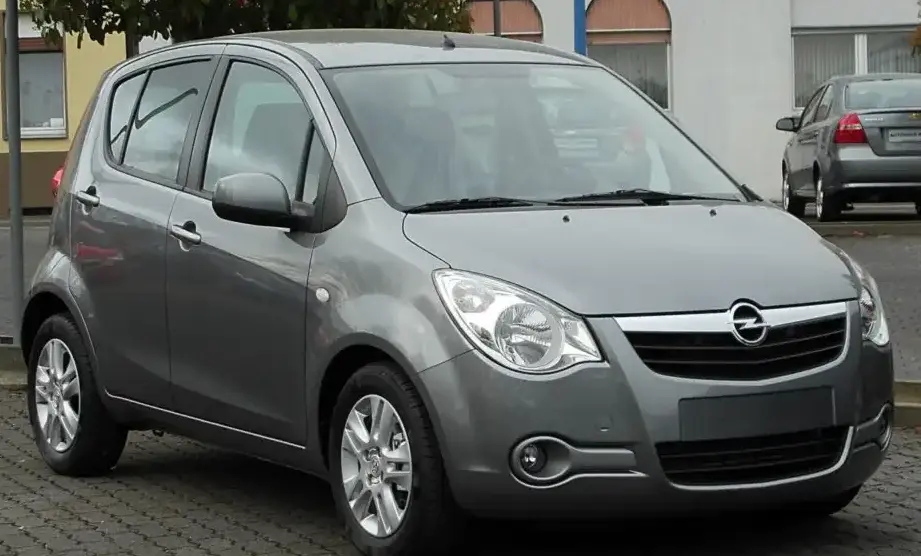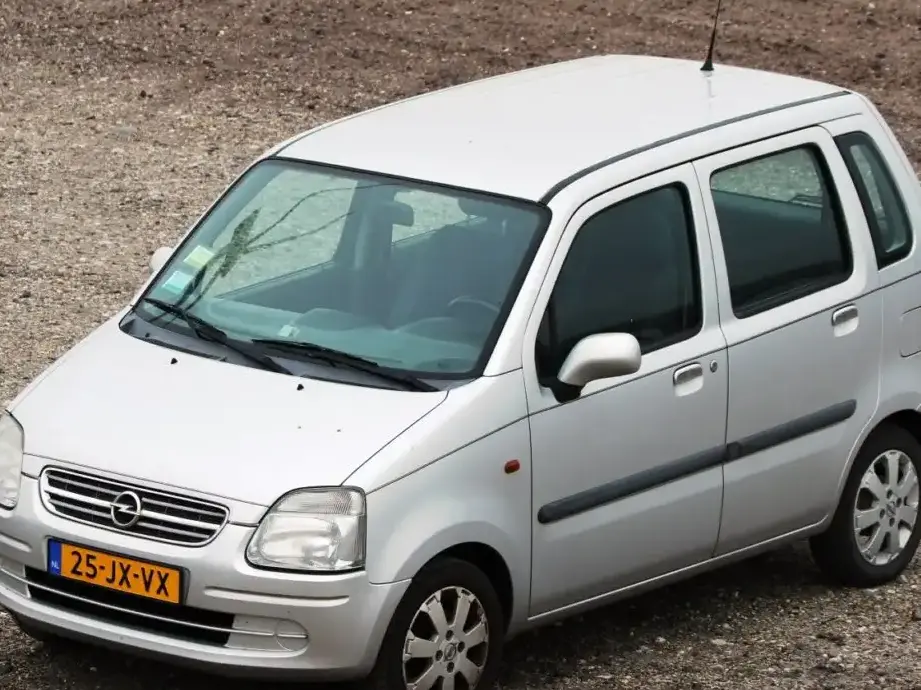
The Opel Agila I 1.3 CDTI, produced from 2003 to 2005, represents a significant entry in the subcompact MPV (Multi-Purpose Vehicle) segment, particularly within the European market. This variant, powered by a 1.3-liter common-rail diesel engine producing 70 horsepower, was positioned as the fuel-efficient and economical choice within the Agila I range. It shared its platform (the S-TEC) with the Suzuki Wagon R+, a result of a joint venture between General Motors (Opel’s parent company) and Suzuki. The Agila I aimed to provide practical, affordable transportation for small families and urban drivers, prioritizing interior space and ease of use over outright performance.
Technical Specifications
| Brand | Opel |
| Model | Agila |
| Generation | Agila I |
| Type (Engine) | 1.3 CDTI (70 Hp) |
| Start of production | 2003 |
| End of production | 2005 |
| Powertrain Architecture | Internal Combustion engine |
| Body type | Minivan |
| Seats | 4 |
| Doors | 5 |
| Fuel consumption (urban) | 6.6 l/100 km (35.6 US mpg, 42.8 UK mpg, 15.2 km/l) |
| Fuel consumption (extra urban) | 4.4 l/100 km (53.5 US mpg, 64.2 UK mpg, 22.7 km/l) |
| Fuel consumption (combined) | 5.2 l/100 km (45.2 US mpg, 54.3 UK mpg, 19.2 km/l) |
| Fuel Type | Diesel |
| Acceleration 0 – 100 km/h | 15 sec |
| Acceleration 0 – 62 mph | 15 sec |
| Acceleration 0 – 60 mph | 14.3 sec |
| Maximum speed | 153 km/h (95.07 mph) |
| Weight-to-power ratio | 15.1 kg/Hp |
| Weight-to-torque ratio | 6.2 kg/Nm |
| Power | 70 Hp @ 4000 rpm |
| Power per litre | 56.1 Hp/l |
| Torque | 170 Nm @ 1750 rpm (125.39 lb.-ft. @ 1750 rpm) |
| Engine layout | Front, Transverse |
| Engine Model/Code | Z13DT |
| Engine displacement | 1248 cm3 (76.16 cu. in.) |
| Number of cylinders | 4 |
| Engine configuration | Inline |
| Cylinder Bore | 69.6 mm (2.74 in.) |
| Piston Stroke | 82 mm (3.23 in.) |
| Compression ratio | 18:1 |
| Number of valves per cylinder | 4 |
| Fuel injection system | Diesel Commonrail |
| Engine aspiration | Turbocharger, Intercooler |
| Valvetrain | DOHC |
| Engine oil capacity | 3.3 l (3.49 US qt | 2.9 UK qt) |
| Coolant capacity | 4.7 l (4.97 US qt | 4.14 UK qt) |
| Kerb Weight | 1055 kg (2325.88 lbs.) |
| Max. weight | 1500 kg (3306.93 lbs.) |
| Max load | 445 kg (981.06 lbs.) |
| Trunk (boot) space – minimum | 250 l (8.83 cu. ft.) |
| Trunk (boot) space – maximum | 595 l (21.01 cu. ft.) |
| Fuel tank capacity | 41 l (10.83 US gal | 9.02 UK gal) |
| Length | 3500 mm (137.8 in.) |
| Width | 1620 mm (63.78 in.) |
| Height | 1700 mm (66.93 in.) |
| Wheelbase | 2360 mm (92.91 in.) |
| Front track | 1420 mm (55.91 in.) |
| Rear track | 1390 mm (54.72 in.) |
| Drivetrain Architecture | Front wheel drive |
| Number of gears | 5 |
| Gearbox type | Manual transmission |
| Front suspension | Coil spring |
| Rear suspension | Coil spring |
| Front brakes | Disc |
| Rear brakes | Drum |
| Steering type | Steering rack and pinion |
| Power steering | Hydraulic |
| Tires size | 165/60 R14 |
| Wheel rims size | 4.5J X 14 |
Powertrain & Engine Architecture
The heart of the Agila I 1.3 CDTI is the Z13DT engine, a 1.3-liter inline-four cylinder diesel. This engine is a member of Opel/Fiat’s joint diesel engine family, known for its compact size and relatively efficient operation. It utilizes a common-rail direct injection system, delivering fuel directly into the combustion chamber at extremely high pressure. This technology, coupled with a turbocharger and intercooler, allows the small displacement engine to produce a respectable 70 horsepower and 170 Nm (125 lb-ft) of torque. The engine features a double overhead camshaft (DOHC) valvetrain with four valves per cylinder, optimizing gas flow for improved performance. The five-speed manual transmission was the standard offering for this variant, chosen for its simplicity and contribution to fuel economy. The transmission’s gear ratios were tuned to maximize the engine’s torque output, providing adequate acceleration for everyday driving.
Driving Characteristics
The 1.3 CDTI Agila, with its 70 horsepower and relatively light weight, offered a practical but not particularly sporty driving experience. Acceleration was modest, taking around 15 seconds to reach 62 mph (100 km/h). However, the engine’s strong low-end torque made it feel more responsive in urban environments and during overtaking maneuvers at lower speeds. The five-speed manual transmission allowed drivers to keep the engine in its optimal power band. Compared to the gasoline-powered Agila variants, the 1.3 CDTI provided significantly better fuel economy, making it an attractive option for drivers covering long distances or prioritizing running costs. It wasn’t as refined or quick as higher-powered Agila models, but it excelled in providing economical and functional transportation.
Equipment & Trim Levels
The Agila I 1.3 CDTI typically came with a fairly basic level of equipment, reflecting its position as an entry-level model. Standard features generally included power steering, central locking, and an adjustable steering column. Interior upholstery was typically cloth, and the dashboard featured a simple, functional design. Optional extras included air conditioning, electric windows, and a radio/CD player. Higher trim levels, if selected, might have added features like alloy wheels, upgraded interior trim, and a more comprehensive audio system. The focus was on providing essential features at an affordable price point.
Chassis & Braking
The Agila I utilized a relatively simple chassis design, featuring coil spring suspension at both the front and rear. The front suspension employed MacPherson struts, while the rear used a twist beam setup. This configuration provided a comfortable ride quality, although handling was not particularly sharp. The braking system consisted of disc brakes on the front wheels and drum brakes on the rear. This configuration was common for vehicles in this weight class and price range. The Agila I did not feature advanced braking technologies like ABS as standard, although it was sometimes offered as an optional extra.
Market Reception & Comparison
The Opel Agila I 1.3 CDTI was generally well-received by critics as a practical and economical city car. Its fuel efficiency was a major selling point, and its compact size made it easy to maneuver in urban traffic. However, some reviewers criticized its lack of power and refinement compared to other vehicles in the segment. Compared to the gasoline-powered Agila variants, the 1.3 CDTI offered superior fuel economy but less overall performance. It competed with other subcompact MPVs like the Renault Modus and the Fiat Idea, offering a similar blend of practicality and affordability.
Legacy
The Opel Agila I 1.3 CDTI, while not a performance icon, has proven to be a relatively reliable and durable vehicle. The Z13DT engine, when properly maintained, is known for its longevity. In the used car market, these Agilas are often sought after by buyers looking for an affordable and fuel-efficient runabout. Maintenance costs are generally low, and parts availability is reasonable. While not a collector’s item, the Agila I 1.3 CDTI remains a viable option for those seeking a practical and economical mode of transportation.