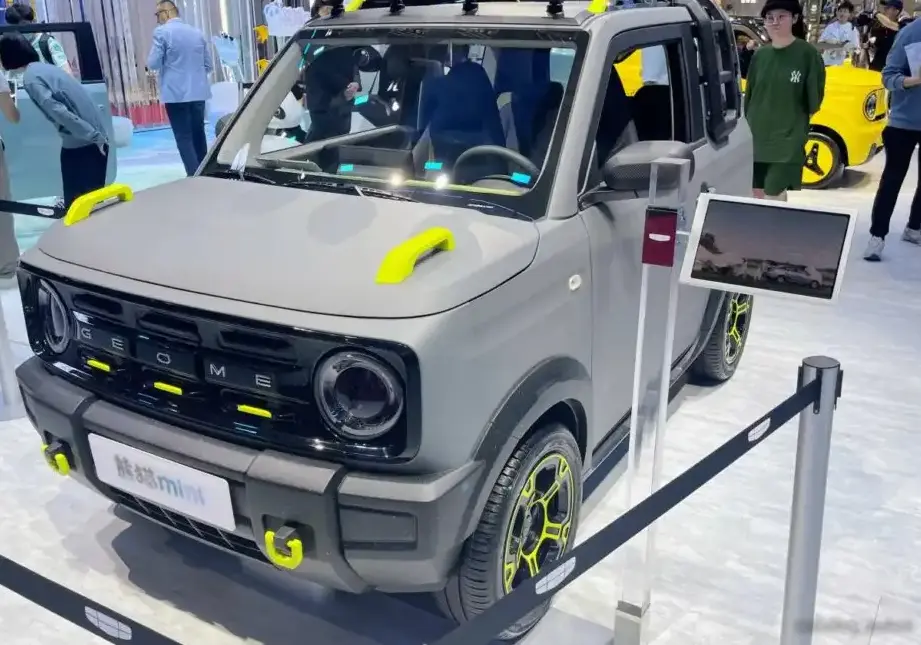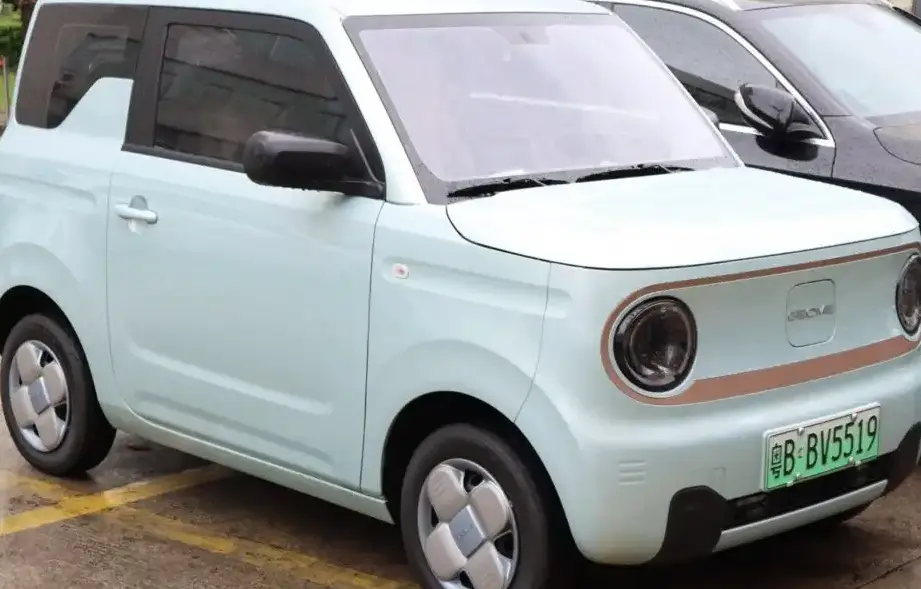
The Geometry Panda Mini 9.61 kWh (27 hp) Electric is a city-focused battery electric vehicle (BEV) produced by Geometry, a sub-brand of the Chinese manufacturer Zeekr (owned by Geely). Introduced in December 2022, the Panda Mini is designed as an affordable and compact electric car primarily targeted at urban commuters and first-time EV buyers. It represents a significant entry into the micro-EV segment, particularly within the Chinese domestic market, and has begun to see limited export to select regions. The Panda Mini is built on a dedicated electric vehicle platform, emphasizing space efficiency and low running costs. It’s positioned as the entry-level model in Geometry’s lineup, offering a basic but functional transportation solution.
Technical Specifications
| Brand | Geometry |
| Model | Panda Mini |
| Generation | Panda Mini |
| Type (Engine) | 9.61 kWh (27 Hp) Electric |
| Start of production | December, 2022 |
| Powertrain Architecture | BEV (Electric Vehicle) |
| Body type | Hatchback |
| Seats | 4 |
| Doors | 3 |
| Fuel Type | Electricity |
| Maximum speed | 100 km/h (62.14 mph) |
| Weight-to-power ratio | 26.5 kg/Hp, 37.8 Hp/tonne |
| Weight-to-torque ratio | 8.4 kg/Nm, 118.9 Nm/tonne |
| Gross battery capacity | 9.61 kWh |
| Battery technology | Lithium iron phosphate (LiFePO4) |
| Battery location | Below the floor |
| All-electric range (CLTC) | 120 km (74.56 mi) |
| Electric motor power | 27 Hp |
| Electric motor Torque | 85 Nm (62.69 lb.-ft.) |
| Electric motor location | Rear axle, Transverse |
| Electric motor type | Synchronous |
| System power | 27 Hp |
| System torque | 85 Nm (62.69 lb.-ft.) |
| Kerb Weight | 715 kg (1576.31 lbs.) |
| Length | 3065 mm (120.67 in.) |
| Width | 1522 mm (59.92 in.) |
| Height | 1600 mm (62.99 in.) |
| Wheelbase | 2015 mm (79.33 in.) |
| Front track | 1315 mm (51.77 in.) |
| Rear (Back) track | 1311 mm (51.61 in.) |
| Ride height (ground clearance) | 170 mm (6.69 in.) |
| Minimum turning circle (turning diameter) | 8 m (26.25 ft.) |
| Drivetrain Architecture | One electric motor drives the rear wheels. |
| Drive wheel | Rear wheel drive |
| Number of gears and type of gearbox | 1 gears, automatic transmission |
| Front suspension | Independent type McPherson |
| Rear suspension | Independent multi-link suspension |
| Front brakes | Disc |
| Rear brakes | Drum |
| Assisting systems | ABS (Anti-lock braking system) |
| Steering type | Steering rack and pinion |
| Power steering | Electric Steering |
| Tires size | 155/70 R13 |
| Wheel rims size | 13 |
Powertrain & Engine Architecture
The Geometry Panda Mini utilizes a single, rear-mounted synchronous electric motor producing 27 horsepower and 85 Nm (62.69 lb.-ft.) of torque. This motor is powered by a 9.61 kWh Lithium Iron Phosphate (LiFePO4) battery pack, positioned under the vehicle floor to maximize interior space. LiFePO4 chemistry is favored for its improved thermal stability and longer cycle life compared to other lithium-ion battery types, although it generally offers a lower energy density. The vehicle employs a single-speed automatic transmission, simplifying the driving experience and focusing on ease of use. The powertrain is designed for efficiency rather than outright performance, prioritizing range and low running costs within a city environment. The motor controller manages power delivery and regenerative braking, capturing energy during deceleration to extend the vehicle’s range.
Driving Characteristics
The Panda Mini’s driving experience is geared towards urban practicality. With only 27 hp, acceleration is modest, and the vehicle is best suited for city streets and low-speed environments. The single-speed transmission provides seamless power delivery, but lacks the flexibility of multiple gears. Top speed is limited to 100 km/h (62.14 mph). The rear-wheel-drive configuration contributes to a surprisingly nimble feel in tight corners, although the limited tire size and basic suspension setup don’t encourage spirited driving. The regenerative braking system is noticeable, providing a degree of one-pedal driving capability. Compared to potential future higher-powered variants, this base model prioritizes affordability and efficiency over performance.
Equipment & Trim Levels
The Panda Mini is offered with a relatively basic level of standard equipment, reflecting its position as an entry-level EV. Standard features typically include air conditioning, power windows, a basic infotainment system with Bluetooth connectivity, and ABS brakes. Interior upholstery is typically a durable, easy-to-clean fabric. Optional extras may include a rearview camera, upgraded audio system, and different exterior color options. The dashboard layout is simple and functional, prioritizing ease of use. Higher trim levels, if available, may add features like alloy wheels and a larger touchscreen display.
Chassis & Braking
The Panda Mini features a lightweight chassis designed to maximize efficiency. The front suspension utilizes an independent McPherson strut setup, while the rear employs an independent multi-link suspension. This configuration aims to provide a comfortable ride despite the vehicle’s compact size. The front brakes are disc brakes, while the rear brakes are drum brakes – a cost-saving measure common in this segment. The electric power steering system provides light and easy steering, ideal for maneuvering in urban traffic. The vehicle’s relatively low curb weight of 715 kg (1576.31 lbs.) contributes to its agility and efficiency.
Market Reception & Comparison
The Geometry Panda Mini has been well-received in the Chinese market, particularly among young urban dwellers and those seeking an affordable and practical EV for short commutes. Critics have praised its compact size, ease of parking, and low running costs. However, the limited range and modest performance have also been noted. Compared to other micro-EVs in China, such as the Wuling Hongguang Mini EV, the Panda Mini offers a slightly more refined interior and a more modern design. Its LiFePO4 battery pack is also seen as a positive attribute, offering improved safety and longevity. Fuel economy, expressed as electricity consumption, is competitive within its class.
Legacy
The Geometry Panda Mini represents a growing trend towards affordable and accessible electric vehicles. While its long-term reliability is still being established, the use of a LiFePO4 battery pack suggests a potentially long service life. In the used car market, the Panda Mini is expected to hold its value reasonably well, particularly as demand for EVs continues to increase. The vehicle’s simple design and robust powertrain should contribute to relatively low maintenance costs. The Panda Mini’s success could pave the way for further development of micro-EVs, making electric mobility more accessible to a wider range of consumers.