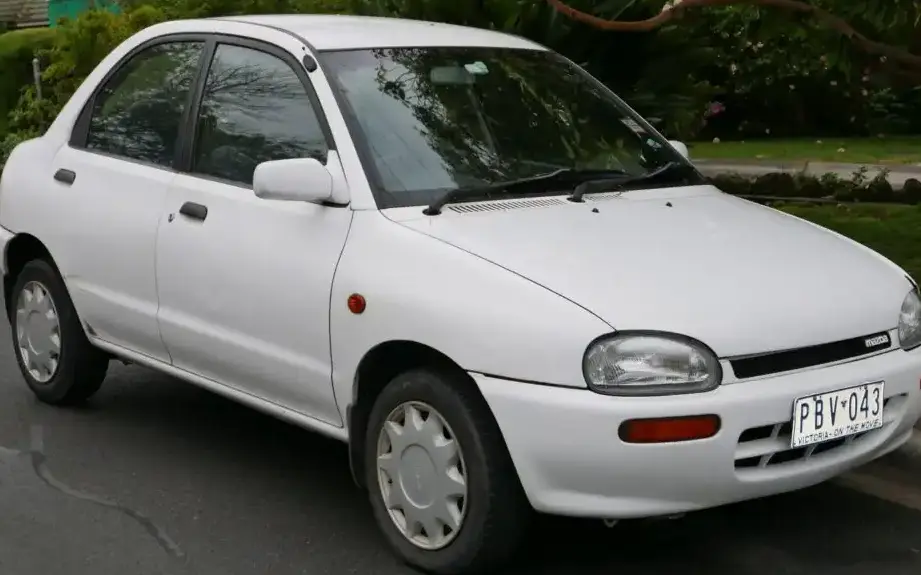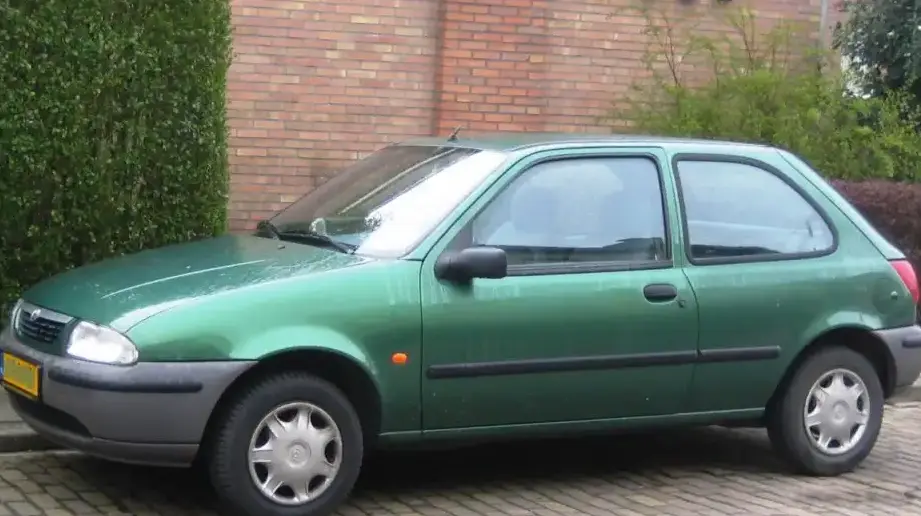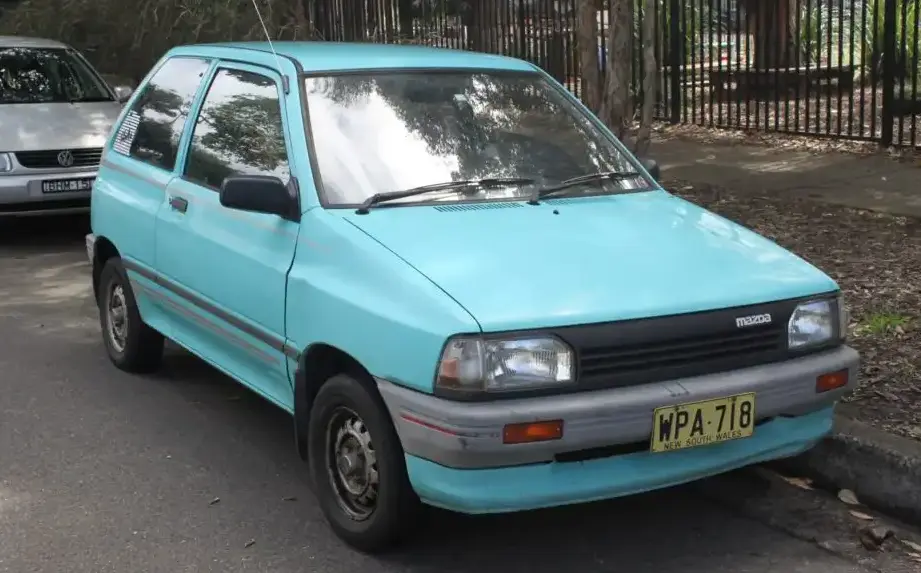
The Mazda 121, known as the Mazda 121 I (DA) in its first generation, was a supermini produced by Mazda between 1989 and 1990. This initial iteration of the 121 was a significant model for Mazda, representing their entry into the increasingly competitive European small car market. The DA series was essentially a rebadged version of the Ford Fiesta Mk II, a result of the joint venture between Mazda and Ford at the time. The 1.3-liter, 55 horsepower variant occupied the entry-level position in the 121 lineup, aimed at buyers prioritizing affordability and fuel efficiency over outright performance. Production spanned a relatively short period, giving way to a redesigned model in subsequent years.
Technical Specifications
| Brand | Mazda |
| Model | 121 |
| Generation | 121 I (DA) |
| Type (Engine) | 1.3 (55 Hp) |
| Start of production | 1989 |
| End of production | 1990 |
| Powertrain Architecture | Internal Combustion engine |
| Body type | Hatchback |
| Seats | 5 |
| Fuel consumption (urban) | 8 l/100 km (29.4 US mpg) |
| Fuel consumption (extra urban) | 5.5 l/100 km (42.8 US mpg) |
| Fuel consumption (combined) | 6.5 l/100 km (36.2 US mpg) |
| Fuel Type | Petrol (Gasoline) |
| Power | 55 Hp |
| Engine aspiration | Naturally aspirated |
| Fuel tank capacity | 43 l (11.36 US gal) |
Powertrain & Engine Architecture
The Mazda 121 I (DA) 1.3 utilized a 1.3-liter, naturally aspirated inline-four cylinder engine. While specific engine codes varied depending on the market, the engine was fundamentally based on Ford’s CVH (Compound Valve Hemispherical) engine design. This engine, though simple in its construction, was known for its durability and relatively easy maintenance. The 55 horsepower output was achieved through a modest compression ratio and a two-barrel carburetor fuel delivery system. The engine featured a single overhead camshaft (SOHC) valvetrain, operating two valves per cylinder. The transmission paired with this engine was typically a four-speed automatic, although a five-speed manual was also available. The automatic transmission was designed for smooth, economical operation rather than sporty performance, with relatively wide gear ratios prioritizing fuel efficiency.
Driving Characteristics
The 1.3-liter, automatic transmission combination in the Mazda 121 I (DA) delivered a driving experience focused on practicality and ease of use. Acceleration was modest, with 0 to 60 mph times estimated around 14-16 seconds. The automatic transmission, while providing convenience, did detract from the engine’s limited power, resulting in noticeable hesitation during overtaking maneuvers. The gear ratios were spaced to maximize fuel economy, meaning the engine often operated at higher RPMs during highway cruising. Compared to the five-speed manual version, the automatic offered less driver engagement and a slightly lower fuel economy, but it was significantly easier to drive in congested urban environments. The suspension, tuned for comfort, provided a reasonably smooth ride, although it wasn’t particularly sporty or responsive.
Equipment & Trim Levels
The 1.3-liter Mazda 121 I (DA) typically represented the base trim level. Standard equipment was relatively sparse, reflecting its position as an affordable entry-level vehicle. Features generally included cloth upholstery, basic instrumentation (speedometer, fuel gauge, temperature gauge), and a simple AM/FM radio. Power steering was not always standard, and air conditioning was typically an optional extra. Interior plastics were durable but utilitarian. Optional extras could include upgraded audio systems, central locking, and electric front windows. The dashboard layout was functional and straightforward, prioritizing ease of use over aesthetic appeal. The exterior trim was also basic, with steel wheels and black plastic bumpers being common features.
Chassis & Braking
The Mazda 121 I (DA) utilized a front-wheel-drive chassis derived from the Ford Fiesta Mk II. The suspension consisted of MacPherson struts at the front and a twist-beam axle at the rear. The braking system was typically comprised of disc brakes at the front and drum brakes at the rear. The braking performance was adequate for the vehicle’s weight and power, but it wasn’t particularly powerful or sophisticated. Stabilizer bars were often omitted on the base trim level, contributing to a slightly more pronounced body roll during cornering. The steering was rack-and-pinion, providing reasonable precision and feedback, although it lacked the assistance found in higher-spec models.
Market Reception & Comparison
The Mazda 121 I (DA) 1.3 Automatic was generally well-received as an affordable and economical small car. Critics praised its fuel efficiency and ease of driving, but noted its lack of performance and relatively basic interior. Compared to other superminis of the era, such as the Peugeot 205 and the Renault 5, the 121 offered a more practical and less sporty driving experience. Within the Mazda lineup, the 1.3-liter automatic was positioned below the more powerful and engaging versions equipped with the five-speed manual transmission. Fuel economy was a key selling point, with the 121 consistently achieving respectable figures in independent tests. Reliability was generally good, although the carburetor-based fuel system required periodic maintenance.
Legacy
The Mazda 121 I (DA) 1.3 Automatic, while not a particularly memorable or groundbreaking vehicle, played an important role in establishing Mazda’s presence in the European small car market. The powertrain, while simple, proved to be reasonably durable and reliable. Today, these cars are relatively rare and are primarily found in the hands of enthusiasts or as affordable transportation in some regions. The 1.3-liter engine and automatic transmission combination, while not known for its performance, is generally considered to be relatively easy to maintain and repair. Parts availability can be a challenge, but many components are interchangeable with those from the Ford Fiesta Mk II. The 121 I (DA) serves as a reminder of a period of collaboration between Mazda and Ford, and its legacy lies in its affordability, fuel efficiency, and practicality.