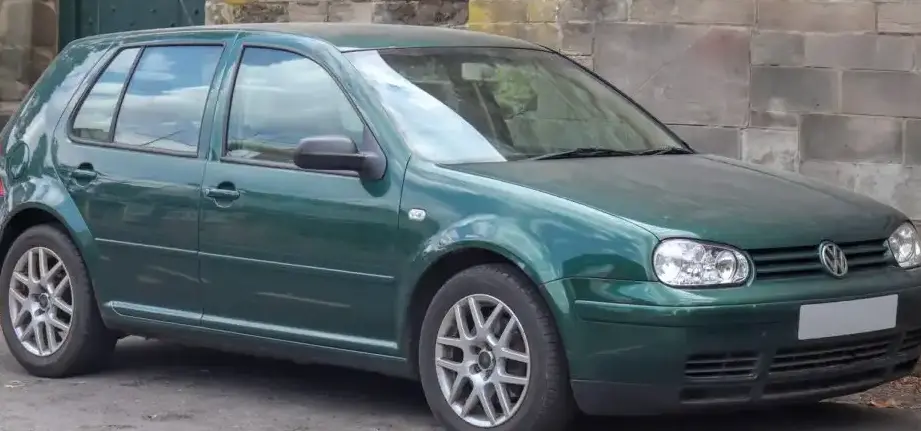
The Volkswagen Golf IV 1.9 TDI, produced from 2001 to 2003, represents a significant evolution in the Golf lineage, building upon the success of the Mk III while introducing a more refined driving experience and advanced technology for its time. This particular variant, equipped with the 1.9-liter turbocharged direct injection diesel engine producing 150 horsepower, was a popular choice in European markets where diesel fuel was more readily available and economically advantageous. It occupied a mid-range position within the Golf IV lineup, offering a balance between performance, fuel efficiency, and affordability. The Golf IV chassis, known internally as the 1HX0/A3 platform, provided a solid foundation for this potent diesel powerplant.
Technical Specifications
| Brand | Volkswagen |
| Model | Golf |
| Generation | Golf IV |
| Type (Engine) | 1.9 TDI (150 Hp) |
| Start of production | 2001 |
| End of production | 2003 |
| Powertrain Architecture | Internal Combustion engine |
| Body type | Hatchback |
| Seats | 5 |
| Doors | 3-5 |
| Fuel consumption (urban) | 7.1 l/100 km (33.1 US mpg, 39.8 UK mpg, 14.1 km/l) |
| Fuel consumption (extra urban) | 4.3 l/100 km (54.7 US mpg, 65.7 UK mpg, 23.3 km/l) |
| Fuel consumption (combined) | 5.3 l/100 km (44.4 US mpg, 53.3 UK mpg, 18.9 km/l) |
| Fuel Type | Diesel |
| Acceleration 0 – 100 km/h | 8.6 sec |
| Acceleration 0 – 62 mph | 8.6 sec |
| Acceleration 0 – 60 mph | 8.2 sec |
| Maximum speed | 216 km/h (134.22 mph) |
| Weight-to-power ratio | 8.4 kg/Hp, 118.8 Hp/tonne |
| Weight-to-torque ratio | 3.9 kg/Nm, 253.4 Nm/tonne |
| Power | 150 Hp @ 4000 rpm |
| Power per litre | 79.1 Hp/l |
| Torque | 320 Nm @ 1900 rpm (236.02 lb.-ft. @ 1900 rpm) |
| Engine layout | Front, Transverse |
| Engine Model/Code | ARL |
| Engine displacement | 1896 cm3 (115.7 cu. in.) |
| Number of cylinders | 4 |
| Engine configuration | Inline |
| Cylinder Bore | 79.5 mm (3.13 in.) |
| Piston Stroke | 95.5 mm (3.76 in.) |
| Compression ratio | 18.5:1 |
| Number of valves per cylinder | 2 |
| Fuel injection system | Pump-nozzle (Unit Injector) |
| Engine aspiration | Turbocharger, Intercooler |
| Valvetrain | OHC |
| Engine oil capacity | 4.5 l (4.76 US qt | 3.96 UK qt) |
| Coolant | 6 l (6.34 US qt | 5.28 UK qt) |
| Kerb Weight | 1263 kg (2784.44 lbs.) |
| Max. weight | 1775 kg (3913.21 lbs.) |
| Max load | 512 kg (1128.77 lbs.) |
| Trunk (boot) space – minimum | 330 l (11.65 cu. ft.) |
| Trunk (boot) space – maximum | 1184 l (41.81 cu. ft.) |
| Fuel tank capacity | 55 l (14.53 US gal | 12.1 UK gal) |
| Length | 4149 mm (163.35 in.) |
| Width | 1735 mm (68.31 in.) |
| Height | 1440 mm (56.69 in.) |
| Wheelbase | 2511 mm (98.86 in.) |
| Front track | 1513 mm (59.57 in.) |
| Rear (Back) track | 1494 mm (58.82 in.) |
| Drivetrain Architecture | The Internal combustion engine (ICE) drives the front wheels of the vehicle. |
| Drive wheel | Front wheel drive |
| Number of gears and type of gearbox | 6 gears, manual transmission |
| Front suspension | Wishbone |
| Rear suspension | Coil spring |
| Front brakes | Ventilated discs |
| Rear brakes | Disc |
| Assisting systems | ABS (Anti-lock braking system) |
| Steering type | Steering rack and pinion |
| Power steering | Hydraulic Steering |
| Tires size | 195/65 R15 V |
| Wheel rims size | 15 |
Powertrain & Engine Architecture
The heart of the Golf IV 1.9 TDI is the ARL engine code, a 1.9-liter inline-four cylinder diesel engine. This engine utilizes a pump-nozzle (unit injector) fuel injection system, a technology that allowed for precise fuel delivery and contributed to the engine’s efficiency and power output. The turbocharger, coupled with an intercooler, significantly boosted performance by forcing more air into the cylinders. The engine featured an overhead camshaft (OHC) valvetrain with two valves per cylinder. The 18.5:1 compression ratio was typical for direct injection diesels of the era, contributing to thermal efficiency. The engine’s transverse mounting within the front-wheel-drive configuration was a standard layout for Volkswagen vehicles.
Driving Characteristics
The 150 hp 1.9 TDI offered a noticeable step up in performance compared to lower-powered diesel Golf IV variants. While not as overtly sporty as the gasoline-powered GTI models, the TDI provided ample torque – 320 Nm (236 lb-ft) – from low engine speeds, making it a capable and relaxed cruiser. The six-speed manual transmission allowed drivers to keep the engine in its optimal power band. Acceleration to 60 mph took approximately 8.2 seconds, and the car could reach a top speed of 134 mph. The power delivery was linear and predictable, making it easy to drive in various conditions. Compared to the 1.8L gasoline engines, the TDI offered significantly better fuel economy and a more robust low-end torque curve, but lacked the high-revving character of the petrol engines.
Equipment & Trim Levels
The Golf IV 1.9 TDI typically came equipped with features such as power windows, central locking, and an anti-lock braking system (ABS). Interior upholstery was generally cloth, with options for upgraded materials. Trim levels varied by market, but commonly included features like alloy wheels, air conditioning, and a radio/cassette player. Optional extras included a sunroof, upgraded sound systems, and leather upholstery. The specific trim level influenced the exterior detailing, such as the style of the alloy wheels and the presence of body-colored bumpers and side moldings.
Chassis & Braking
The Golf IV’s chassis featured independent wishbone suspension at the front and a coil spring rear suspension. This setup provided a comfortable ride and predictable handling. The 1.9 TDI models typically used ventilated disc brakes at the front and solid disc brakes at the rear. The ABS system enhanced braking performance and stability, particularly on slippery surfaces. Stabilizer bars were fitted to both the front and rear axles to reduce body roll during cornering.
Market Reception & Comparison
The Golf IV 1.9 TDI was well-received by automotive critics and consumers alike. It was praised for its fuel efficiency, strong performance, and comfortable ride. Compared to the gasoline-powered Golf IV models, the TDI offered superior fuel economy and torque, making it an ideal choice for long-distance driving. However, the TDI was generally more expensive to purchase than the equivalent gasoline model. Compared to other diesel hatchbacks of the time, the Golf IV TDI stood out for its refinement and build quality. The 1.8L gasoline versions were often seen as more affordable, but lacked the low-end grunt and fuel economy of the TDI.
Legacy
The Volkswagen Golf IV 1.9 TDI, particularly the 150 hp variant, has proven to be a durable and reliable vehicle. The ARL engine is known for its longevity, provided it is properly maintained. Today, these cars are increasingly sought after by enthusiasts and collectors. While age and mileage can present challenges, the Golf IV TDI remains a popular choice for those seeking a practical, fuel-efficient, and enjoyable driving experience. Parts availability is generally good, and the car’s relatively simple mechanical design makes it accessible to home mechanics. The Golf IV 1.9 TDI cemented Volkswagen’s reputation for producing high-quality diesel vehicles and continues to be a respected name in the automotive world.