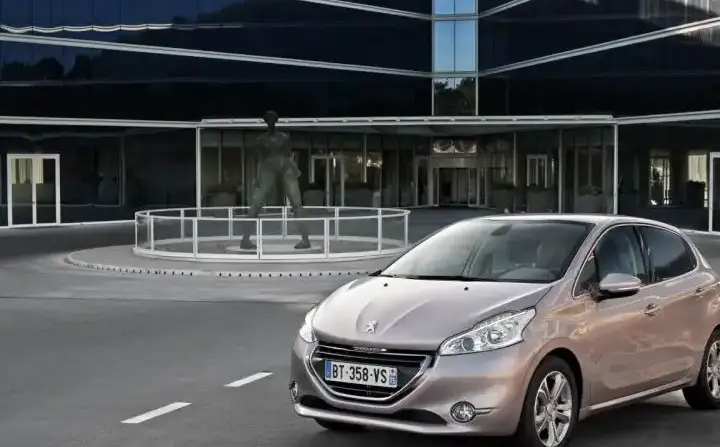
The Peugeot 208 I (Phase II, 2015) 1.2 PureTech 83 hp model represents an entry-level offering within the refreshed first generation of Peugeot’s popular subcompact hatchback. Introduced in 2018 and continuing through 2019, this variant played a crucial role in attracting budget-conscious buyers in the European market, where the 208 competed fiercely with rivals like the Renault Clio, Volkswagen Polo, and Ford Fiesta. Positioned as the base engine option, it provided a balance between affordability and acceptable performance for everyday driving. The Phase II update brought styling revisions and updated technology to the 208 range, enhancing its appeal.
Technical Specifications
| Brand | Peugeot |
| Model | 208 |
| Generation | 208 I (Phase II, 2015) |
| Type (Engine) | 1.2 PureTech (83 Hp) |
| Start of production | 2018 |
| End of production | 2019 |
| Powertrain Architecture | Internal Combustion engine |
| Body type | Hatchback |
| Seats | 5 |
| Doors | 5 |
| Fuel consumption (combined) | 5.5-6.1 l/100 km (42.8 – 38.6 US mpg, 51.4 – 46.3 UK mpg, 18.2 – 16.4 km/l) |
| CO2 emissions | 108-110 g/km |
| Fuel Type | Petrol (Gasoline) |
| Acceleration 0 – 100 km/h | 13.5 sec |
| Acceleration 0 – 62 mph | 13.5 sec |
| Acceleration 0 – 60 mph | 12.8 sec |
| Maximum speed | 175 km/h (108.74 mph) |
| Emission standard | Euro 6d-TEMP |
| Weight-to-power ratio | 13 kg/Hp, 76.9 Hp/tonne |
| Weight-to-torque ratio | 9.2 kg/Nm, 109.3 Nm/tonne |
| Power | 83 Hp @ 5750 rpm |
| Power per litre | 69.2 Hp/l |
| Torque | 118 Nm @ 2750 rpm (87.03 lb.-ft. @ 2750 rpm) |
| Engine layout | Front, Transverse |
| Engine Model/Code | HMR EB2FA |
| Engine displacement | 1199 cm3 (73.17 cu. in.) |
| Number of cylinders | 3 |
| Engine configuration | Inline |
| Number of valves per cylinder | 4 |
| Fuel injection system | Multi-port manifold injection |
| Engine aspiration | Naturally aspirated engine |
| Engine oil capacity | 3.25 l (3.43 US qt | 2.86 UK qt) |
| Coolant capacity | 6 l (6.34 US qt | 5.28 UK qt) |
| Kerb Weight | 1080 kg (2380.99 lbs.) |
| Max. weight | 1550 kg (3417.17 lbs.) |
| Max load | 470 kg (1036.17 lbs.) |
| Permitted trailer load with brakes (12%) | 1150 kg (2535.32 lbs.) |
| Permitted towbar download | 46 kg (101.41 lbs.) |
| Length | 3973 mm (156.42 in.) |
| Width | 1739 mm (68.46 in.) |
| Width including mirrors | 2004 mm (78.9 in.) |
| Height | 1460 mm (57.48 in.) |
| Wheelbase | 2538 mm (99.92 in.) |
| Front track | 1470 mm (57.87 in.) |
| Rear track | 1472 mm (57.95 in.) |
| Front overhang | 783 mm (30.83 in.) |
| Rear overhang | 652 mm (25.67 in.) |
| Drivetrain Architecture | Front wheel drive |
| Number of gears and type of gearbox | 5 gears, manual transmission |
| Front suspension | Independent type McPherson |
| Rear suspension | Elastic beam |
| Front brakes | Disc |
| Rear brakes | Disc |
| Assisting systems | ABS (Anti-lock braking system) |
| Steering type | Steering rack and pinion |
| Tires size | 195/55 R16; 205/45 R17 |
| Wheel rims size | 16; 17 |
Powertrain & Engine Architecture
The heart of this 208 variant is the Peugeot-Citroën (PSA) Group’s 1.2 PureTech engine, specifically the EB2FA code. This is a three-cylinder, naturally aspirated gasoline engine displacing 1199 cc. The engine utilizes multi-point fuel injection and features four valves per cylinder. The EB2FA is known for its relatively lightweight construction, contributing to the 208’s overall efficiency. It’s paired with a five-speed manual transmission, chosen for its cost-effectiveness and suitability for the engine’s power output. While a more modern six-speed manual and an automatic transmission were available on other 208 trims, the 83 hp model was exclusively offered with the five-speed. The engine’s design prioritizes fuel economy and reduced emissions, aligning with European regulations.
Driving Characteristics
The 1.2 PureTech 83 hp engine delivers modest performance. Acceleration from 0-60 mph takes around 12.8 seconds, and top speed is limited to 175 km/h (108.74 mph). The five-speed manual transmission is geared to maximize fuel efficiency rather than outright acceleration. Gear ratios are relatively long, requiring frequent downshifts when overtaking or climbing hills. Compared to the more powerful 1.2 PureTech 110 hp or the diesel variants, this version feels noticeably slower. However, it provides adequate power for urban driving and shorter commutes. The engine is reasonably refined for a three-cylinder unit, but some vibration is noticeable at idle. The steering is light and precise, typical of Peugeot’s, making it easy to maneuver in tight spaces.
Equipment & Trim Levels
The 1.2 PureTech 83 hp model typically served as the entry point to the 208 range. Standard equipment generally included air conditioning, power steering, electric front windows, a basic audio system with USB connectivity, and ABS brakes. Safety features like ESP (Electronic Stability Program) were also standard. Interior upholstery was typically cloth, and the dashboard featured a functional but relatively basic design. Optional extras included alloy wheels, a touchscreen infotainment system, rear parking sensors, and cruise control. Higher trim levels, such as Active and Allure, added more features and cosmetic enhancements.
Chassis & Braking
The 208 I utilizes a McPherson strut front suspension and an elastic beam rear suspension. This setup provides a good balance between ride comfort and handling. The front brakes are discs, while the rear brakes are also discs on most versions, providing adequate stopping power for the vehicle’s weight and performance. ABS (Anti-lock Braking System) is standard. The 208’s chassis is relatively lightweight, contributing to its agility. Stabilizer bars are fitted to both the front and rear axles to reduce body roll during cornering.
Market Reception & Comparison
The 1.2 PureTech 83 hp variant was generally well-received as an affordable and economical option. Critics praised its fuel efficiency and low running costs, but noted its lack of outright performance. Compared to the 1.2 PureTech 110 hp, the 83 hp version offered significantly less power, resulting in slower acceleration and reduced flexibility. The diesel variants, while more expensive to purchase, provided better fuel economy and torque. However, the 83 hp model appealed to buyers who prioritized affordability and simplicity over performance.
Legacy
The 1.2 PureTech engine family has proven to be relatively reliable, although some early versions experienced issues with timing chain wear. The 83 hp variant, being a naturally aspirated engine, is generally considered less prone to these issues than the turbocharged versions. In the used car market, these 208s represent a budget-friendly option for those seeking a small, economical hatchback. Maintenance costs are generally reasonable, and parts availability is good. While not the most exciting version of the 208, the 1.2 PureTech 83 hp model remains a practical and dependable choice for everyday transportation.