
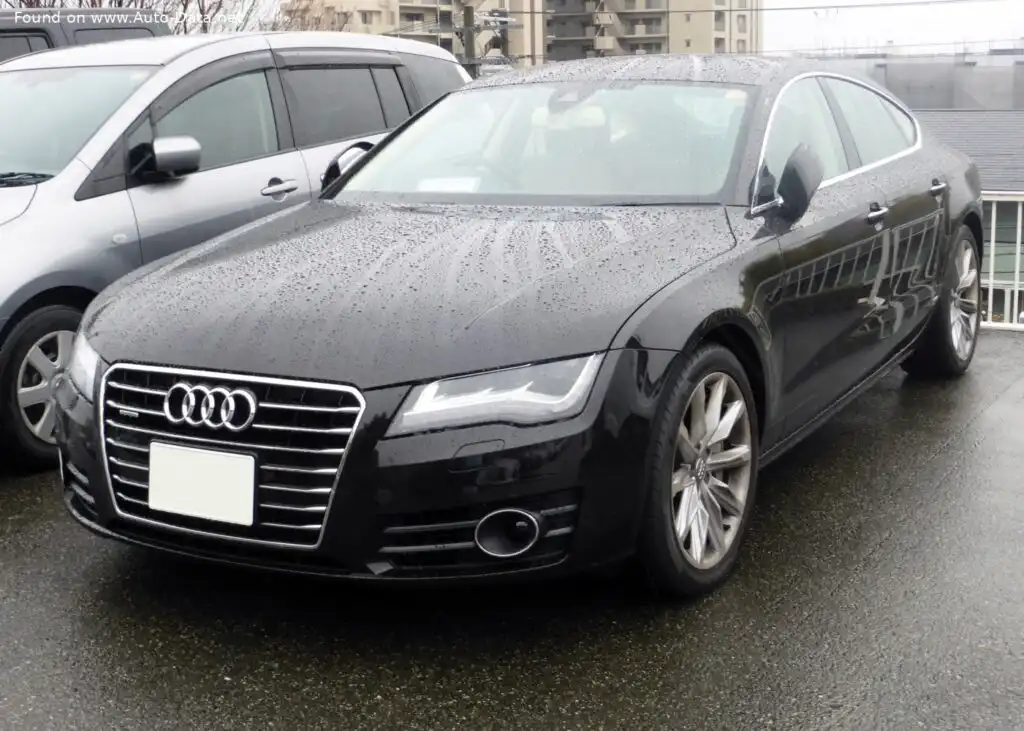
The Audi A7 Sportback (C7) 3.0 TDI V6 with the 204 horsepower Multitronic transmission represents a compelling blend of luxury, performance, and efficiency within the Audi A7 range. Produced from November 2010 to 2014, this variant occupied a significant position in the lineup, offering a balance between the more powerful engine options and the entry-level models. It was primarily marketed in Europe and other regions where diesel engines were favored, capitalizing on the A7’s sophisticated design and advanced technology. The C7 generation A7 Sportback, built on the Audi A6 (4F/C7) platform, aimed to redefine the four-door coupe segment with its sleek, liftback design and premium interior.
Technical Specifications
| Brand | Audi |
| Model | A7 |
| Generation | A7 Sportback (C7) |
| Type (Engine) | 3.0 TDI V6 (204 Hp) Multitronic |
| Start of production | November, 2010 |
| End of production | 2014 |
| Powertrain Architecture | Internal Combustion engine |
| Body type | Liftback |
| Seats | 5 |
| Doors | 5 |
| Fuel consumption (urban) | 6.1 l/100 km (38.6 US mpg, 46.3 UK mpg, 16.4 km/l) |
| Fuel consumption (extra urban) | 4.8 l/100 km (49 US mpg, 58.9 UK mpg, 20.8 km/l) |
| Fuel consumption (combined) | 5.3 l/100 km (44.4 US mpg, 53.3 UK mpg, 18.9 km/l) |
| CO2 emissions | 139 g/km |
| Fuel Type | Diesel |
| Acceleration 0 – 100 km/h | 7.4 sec |
| Acceleration 0 – 62 mph | 7.4 sec |
| Acceleration 0 – 60 mph | 7 sec (Calculated) |
| Maximum speed | 235 km/h (146.02 mph) |
| Emission standard | Euro 5 |
| Weight-to-power ratio | 8.3 kg/Hp, 120.4 Hp/tonne |
| Weight-to-torque ratio | 4.2 kg/Nm, 236 Nm/tonne |
| Power | 204 Hp @ 3750-4500 rpm |
| Power per litre | 68.8 Hp/l |
| Torque | 400 Nm @ 1250-3500 rpm (295.02 lb.-ft. @ 1250-3500 rpm) |
| Engine layout | Front, Longitudinal |
| Engine Model/Code | CLAA, CLAB |
| Engine displacement | 2967 cm3 (181.06 cu. in.) |
| Number of cylinders | 6 |
| Engine configuration | V-engine |
| Cylinder Bore | 83 mm (3.27 in.) |
| Piston Stroke | 91.4 mm (3.6 in.) |
| Compression ratio | 16.8:1 |
| Number of valves per cylinder | 4 |
| Fuel injection system | Diesel Commonrail |
| Engine aspiration | Turbocharger, Intercooler |
| Valvetrain | DOHC |
| Engine oil capacity | 6.4 l (6.76 US qt | 5.63 UK qt) |
| Kerb Weight | 1695 kg (3736.84 lbs.) |
| Max. weight | 2245 kg (4949.38 lbs.) |
| Max load | 550 kg (1212.54 lbs.) |
| Trunk (boot) space – minimum | 535 l (18.89 cu. ft.) |
| Trunk (boot) space – maximum | 1390 l (49.09 cu. ft.) |
| Fuel tank capacity | 65 l (17.17 US gal | 14.3 UK gal) |
| Max. roof load | 100 kg (220.46 lbs.) |
| Permitted trailer load with brakes (8%) | 1900 kg (4188.78 lbs.) |
| Permitted trailer load with brakes (12%) | 1800 kg (3968.32 lbs.) |
| Permitted trailer load without brakes | 750 kg (1653.47 lbs.) |
| Permitted towbar download | 85 kg (187.39 lbs.) |
| Length | 4969 mm (195.63 in.) |
| Width | 1911 mm (75.24 in.) |
| Height | 1420 mm (55.91 in.) |
| Wheelbase | 2914 mm (114.72 in.) |
| Front track | 1644 mm (64.72 in.) |
| Rear (Back) track | 1635 mm (64.37 in.) |
| Drag coefficient (Cd) | 0.29 |
| Minimum turning circle | 11.9 m (39.04 ft.) |
| Drivetrain Architecture | Front wheel drive |
| Number of gears and type of gearbox | automatic transmission Multitronic |
| Front suspension | Independent multi-link suspension |
| Rear suspension | Independent on trapezoidal lever |
| Front brakes | Ventilated discs |
| Rear brakes | Disc |
| Assisting systems | ABS (Anti-lock braking system) |
| Steering type | Steering rack and pinion |
| Power steering | Electric Steering |
| Tires size | 255/45 R18 |
| Wheel rims size | 8.5J x 18 |
Powertrain & Engine Architecture
The heart of the A7 3.0 TDI is the 3.0-liter V6 diesel engine, specifically the CLAA or CLAB engine codes. This engine is a longitudinally mounted, turbocharged common rail diesel. The engine utilizes a single turbocharger with an intercooler to boost power and efficiency. The common rail direct injection system, operating at extremely high pressures, ensures precise fuel delivery and optimized combustion. The engine features a Double Overhead Camshaft (DOHC) valvetrain with four valves per cylinder, contributing to its responsive nature. The Multitronic continuously variable transmission (CVT) was paired with this engine. This transmission, known for its smooth and seamless gear changes, prioritized fuel efficiency and comfort over outright performance. It operates by using a chain and a series of cones to create an infinite number of gear ratios within its range.
Driving Characteristics
The 204 horsepower and 400 Nm (295 lb-ft) of torque delivered by the 3.0 TDI engine provided the A7 Sportback with respectable, though not blistering, performance. Acceleration from 0 to 60 mph took around 7 seconds, and the car could reach a top speed of 235 km/h (146 mph). The Multitronic transmission, while smooth, could sometimes feel less engaging than a traditional automatic or manual gearbox. The emphasis was on effortless cruising and fuel economy. The gear ratios were optimized for relaxed highway driving, and the transmission would readily downshift to provide adequate power for overtaking maneuvers. Compared to the more powerful 245 hp or 313 hp versions of the 3.0 TDI, this variant offered a more economical and refined driving experience, sacrificing some outright speed.
Equipment & Trim Levels
The A7 3.0 TDI 204 hp typically came well-equipped, reflecting Audi’s commitment to luxury. Standard features included leather upholstery, tri-zone automatic climate control, a multi-function steering wheel, and the Audi MMI infotainment system with a central display screen. Optional extras included features like adaptive cruise control, a Bang & Olufsen sound system, and various driver assistance systems. Trim levels varied by market, but generally, this engine output was offered in the base or mid-range A7 trims. Interior color options were plentiful, allowing for a degree of personalization. The dashboard layout was characterized by Audi’s clean and minimalist design aesthetic.
Chassis & Braking
The A7 Sportback featured an independent suspension system on both the front and rear axles. The front suspension utilized a multi-link setup, while the rear employed a trapezoidal link design. This configuration provided a comfortable ride and good handling characteristics. The braking system consisted of ventilated discs at the front and solid discs at the rear. Anti-lock Braking System (ABS) was standard, enhancing safety and control. The car’s weight distribution was carefully balanced to optimize handling. Stabilizer bars were fitted to both axles to reduce body roll during cornering.
Market Reception & Comparison
The Audi A7 3.0 TDI 204 hp was generally well-received by automotive critics. It was praised for its stylish design, luxurious interior, and refined driving experience. The fuel economy was a significant selling point, particularly in Europe where diesel fuel was more affordable than gasoline. Compared to the higher-output TDI variants, this version offered a more accessible price point and lower running costs. However, some critics noted that the Multitronic transmission could feel somewhat detached and that the performance, while adequate, wasn’t as exhilarating as that of the more powerful models. Against competitors like the BMW 5 Series Gran Turismo and Mercedes-Benz CLS, the A7 distinguished itself with its distinctive liftback design and advanced technology.
Legacy
The 3.0 TDI engine, in various iterations, proved to be a reliable and durable powertrain. The Multitronic transmission, however, has been known to require more frequent maintenance and can be prone to issues if not properly serviced. Today, the A7 3.0 TDI (204 hp) represents a good value proposition in the used car market. It offers a blend of luxury, comfort, and efficiency at a relatively affordable price. Proper maintenance records are crucial when considering a used example, particularly regarding the Multitronic transmission. The engine’s robust construction and readily available parts contribute to its continued appeal among discerning buyers.
