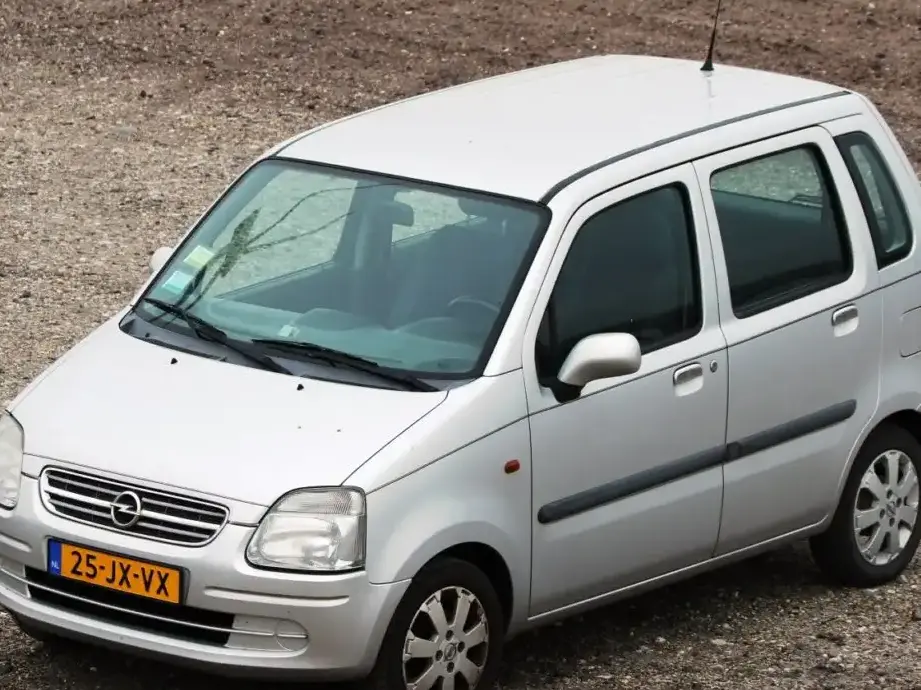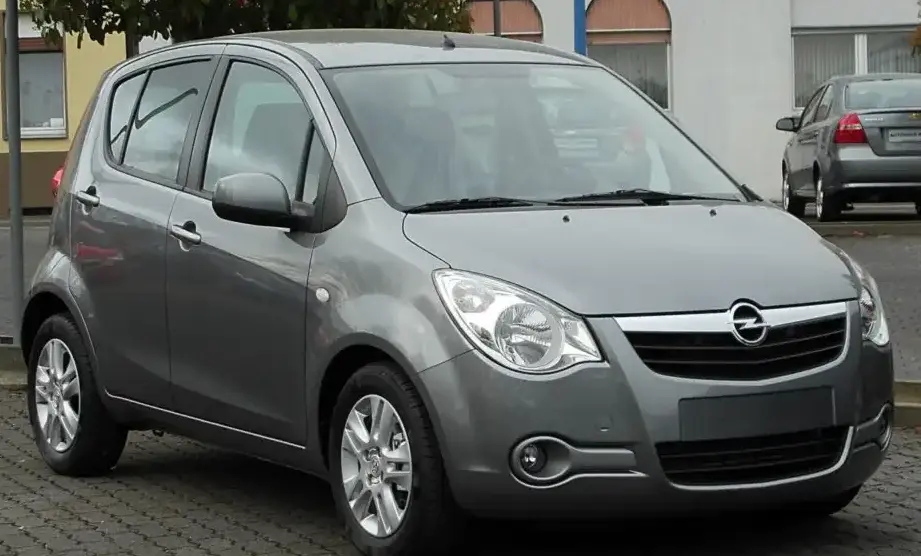
The Opel Agila II 1.0 (68 hp) ecoFLEX, produced from 2008 to 2014, served as the entry point into the second generation of Opel’s city car range. Positioned as a fuel-efficient and affordable option, it held a significant role in the European microcar segment, competing with vehicles such as the Fiat Panda and Renault Twingo. Built in collaboration with Suzuki, the Agila II shared its platform with the Suzuki Splash, offering a practical and compact solution for urban driving. This specific 1.0-liter variant was designed to appeal to buyers prioritizing economy and low running costs over outright performance, making it a popular choice for first-time car buyers and city commuters.
Technical Specifications
| Brand | Opel |
| Model | Agila |
| Generation | Agila II |
| Type (Engine) | 1.0 (68 Hp) ecoFLEX |
| Start of production | 2008 |
| End of production | 2014 |
| Powertrain Architecture | Internal Combustion engine |
| Body type | Hatchback |
| Seats | 5 |
| Doors | 5 |
| Fuel consumption (urban) | 5.6 l/100 km (42 US mpg, 50.4 UK mpg) |
| Fuel consumption (extra urban) | 4.2 l/100 km (56 US mpg, 67.3 UK mpg) |
| Fuel consumption (combined) | 4.7 l/100 km (50 US mpg, 60.1 UK mpg) |
| CO2 emissions | 109 g/km |
| Fuel Type | Petrol (Gasoline) |
| Emission standard | Euro 5 |
| Power | 68 Hp @ 6000 rpm |
| Power per litre | 68.3 Hp/l |
| Torque | 90 Nm @ 4800 rpm (66.38 lb.-ft. @ 4800 rpm) |
| Engine layout | Front, Transverse |
| Engine Model/Code | K10B |
| Engine displacement | 996 cm3 (60.78 cu. in.) |
| Number of cylinders | 3 |
| Engine configuration | Inline |
| Compression ratio | 11:1 |
| Fuel injection system | Multi-port manifold injection |
| Engine aspiration | Naturally aspirated engine |
| Engine oil capacity | 2.9 l (3.06 US qt, 2.55 UK qt) |
| Coolant capacity | 4.4 l (4.65 US qt, 3.87 UK qt) |
| Length | 3740 mm (147.24 in.) |
| Width | 1680 mm (66.14 in.) |
| Height | 1590 mm (62.6 in.) |
| Wheelbase | 2360 mm (92.91 in.) |
| Front track | 1470 mm (57.87 in.) |
| Rear track | 1480 mm (58.27 in.) |
| Minimum turning circle | 10 m (32.81 ft.) |
| Drivetrain | Front wheel drive |
| Number of gears | 5 |
| Gearbox type | Manual transmission |
| Assisting systems | ABS (Anti-lock braking system) |
| Steering type | Steering rack and pinion |
Powertrain & Engine Architecture
The Opel Agila II 1.0 ecoFLEX is powered by the K10B engine, a 996cc inline three-cylinder petrol engine. Developed in collaboration with Suzuki, this engine is recognized for its simplicity and efficiency. It employs a multi-point fuel injection system to deliver fuel to the cylinders and features a single overhead camshaft (SOHC) valvetrain with two valves per cylinder. The engine’s compression ratio of 11:1 allows it to operate effectively on standard 95 octane gasoline. The ‘ecoFLEX’ designation signifies the inclusion of fuel-saving technologies, such as optimized engine management and lightweight components. The engine is mounted transversely at the front of the vehicle, powering the front wheels. A five-speed manual transmission was the standard offering for this variant, providing a balance between fuel economy and usability. The engine’s design prioritized minimizing friction and weight to maximize fuel efficiency.
Driving Characteristics
The 68 hp output of the 1.0-liter engine delivers modest performance, best suited for city driving. Acceleration from 0 to 60 mph is estimated to take around 14-15 seconds. The engine’s torque peak of 90 Nm (66.38 lb-ft) at 4800 rpm requires relatively high engine speeds to maintain momentum, especially when carrying passengers or traveling uphill. The five-speed gearbox is well-matched to the engine’s characteristics, with gear ratios optimized for fuel efficiency. Compared to the Agila II models equipped with the 1.2-liter engine, the 1.0-liter feels noticeably less powerful but offers superior fuel economy. The manual transmission provides a more engaging driving experience than the optional automated manual transmission available on some models. The light steering and compact dimensions make it easy to maneuver in urban environments.
Equipment & Trim Levels
The Agila II 1.0 ecoFLEX typically came with a basic but functional equipment list. Standard features included central locking, power steering, driver and passenger airbags, and an ABS anti-lock braking system. Interior trim was typically utilitarian, featuring durable cloth upholstery and a simple dashboard layout. Air conditioning was often an optional extra, as were electric windows and a radio/CD player. The ecoFLEX trim level often included specific aerodynamic enhancements, such as a lower ride height and optimized underbody panels, to further improve fuel efficiency. The target audience for this trim was budget-conscious buyers seeking a reliable and economical city car. Higher trim levels offered additional features like alloy wheels and upgraded interior materials, but the 1.0 ecoFLEX remained the most affordable option.
Chassis & Braking
The Agila II utilizes a MacPherson strut front suspension and a torsion beam rear suspension. This setup provides a comfortable ride quality, particularly on smooth urban roads. The torsion beam rear suspension is a cost-effective solution that minimizes complexity and weight. Braking is handled by disc brakes at the front and drum brakes at the rear. While adequate for the vehicle’s weight and performance, the braking system lacks the stopping power of higher-spec models equipped with all-round disc brakes. The steering is light and responsive, making it easy to maneuver in tight spaces. The suspension is tuned for comfort rather than sporty handling, prioritizing a smooth ride over dynamic cornering.
Market Reception & Comparison
The Opel Agila II 1.0 ecoFLEX was generally well-received by critics for its fuel efficiency and affordability. However, its limited power output was often noted as a drawback. Compared to the 1.2-liter Agila II, the 1.0-liter offered significantly better fuel economy but at the expense of performance. The 1.0-liter was also considered a more sensible choice than the diesel variants for drivers who primarily cover short distances. In terms of reliability, the K10B engine proved to be generally robust, although regular maintenance is essential to prevent potential issues. The Agila II’s compact size and practicality made it a popular choice for city dwellers and first-time car buyers, offering a practical and economical alternative to larger vehicles.
Legacy
The Opel Agila II 1.0 ecoFLEX remains a relatively common sight on European roads today. Its simple mechanical design and robust engine contribute to its longevity. While not a performance-oriented vehicle, it provides a reliable and economical mode of transportation. In the used car market, these models are typically priced affordably, making them an attractive option for buyers on a tight budget. The K10B engine, while not known for its refinement, is relatively easy to maintain and repair, and spare parts are readily available. The Agila II 1.0 ecoFLEX represents a practical and sensible choice for those seeking a no-frills city car, and its fuel efficiency continues to be a significant selling point even today.