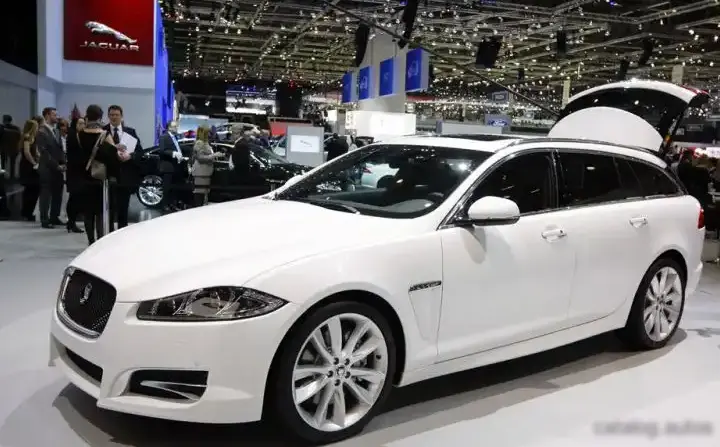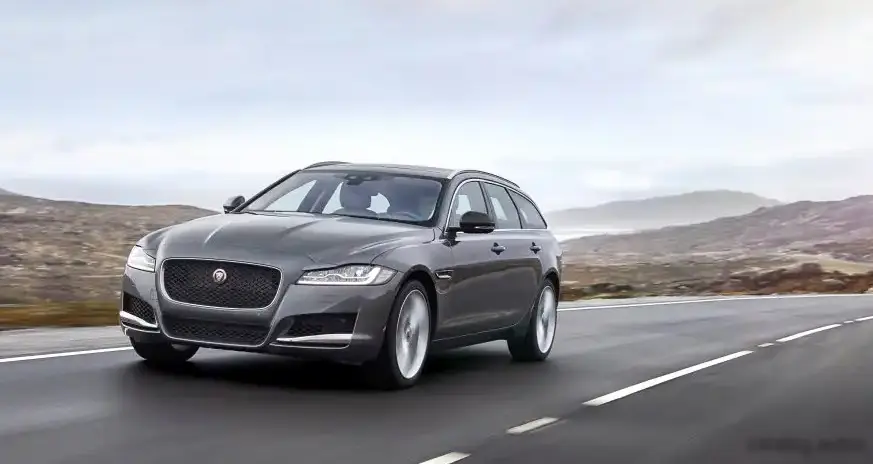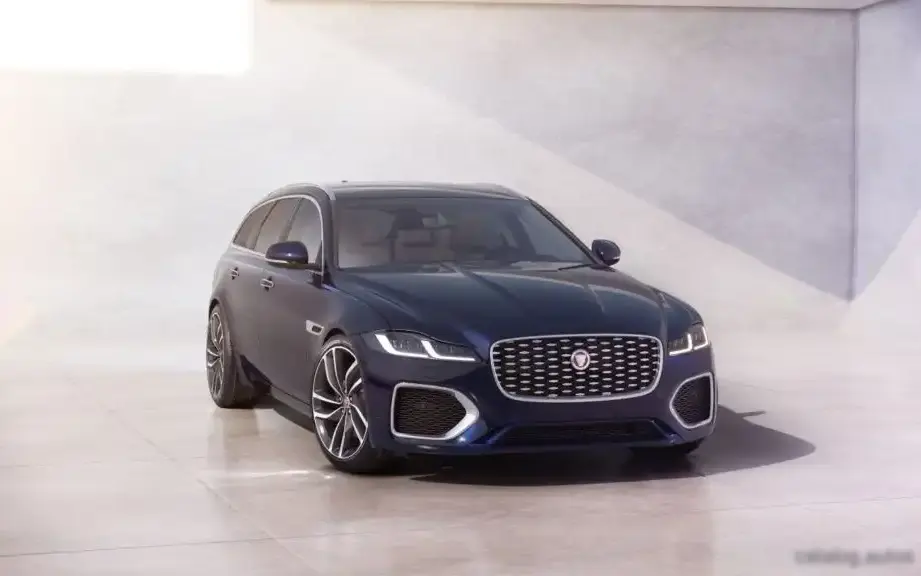
The Jaguar XF Sportbrake (X260, facelift 2020) 2.0i (300 Hp) AWD Automatic represents a compelling blend of performance, practicality, and luxury within the Jaguar lineup. Introduced in October 2020 as part of the X260’s mid-life refresh, this variant combined the sleek styling of the Sportbrake (estate) body style with a potent turbocharged four-cylinder engine and all-wheel drive. Production continued through 2024, positioning it as a key offering in the premium, mid-size wagon segment, primarily targeting buyers in Europe and other markets where wagons remain popular. This specific configuration aimed to deliver a balance between spirited driving and everyday usability, appealing to those seeking a more engaging alternative to traditional SUVs.
Technical Specifications
| Brand | Jaguar |
| Model | XF |
| Generation | XF Sportbrake (X260, facelift 2020) |
| Type (Engine) | 2.0i (300 Hp) AWD Automatic |
| Start of production | October, 2020 |
| End of production | 2024 |
| Powertrain Architecture | Internal Combustion engine |
| Body type | Station wagon (estate) |
| Seats | 5 |
| Doors | 5 |
| Combined fuel consumption (WLTP) | 9-9.7 l/100 km (26.1 – 24.2 US mpg, 31.4 – 29.1 UK mpg, 11.1 – 10.3 km/l) |
| CO2 emissions (WLTP) | 204-218 g/km |
| Fuel Type | Petrol (Gasoline) |
| Acceleration 0 – 100 km/h | 6.2 sec |
| Acceleration 0 – 62 mph | 6.2 sec |
| Acceleration 0 – 60 mph | 5.9 sec |
| Maximum speed | 250 km/h (155.34 mph) |
| Emission standard | Euro 6d |
| Weight-to-power ratio | 6 kg/Hp, 166.2 Hp/tonne |
| Weight-to-torque ratio | 4.5 kg/Nm, 221.6 Nm/tonne |
| Power | 300 Hp @ 5500 rpm |
| Power per litre | 150.2 Hp/l |
| Torque | 400 Nm @ 1500-4500 rpm (295.02 lb.-ft. @ 1500-4500 rpm) |
| Engine layout | Front, Longitudinal |
| Engine Model/Code | Ingenium / PT204 |
| Engine displacement | 1997 cm3 (121.86 cu. in.) |
| Number of cylinders | 4 |
| Engine configuration | Inline |
| Cylinder Bore | 83 mm (3.27 in.) |
| Piston Stroke | 92.29 mm (3.63 in.) |
| Compression ratio | 9.5:1 |
| Number of valves per cylinder | 4 |
| Fuel injection system | Direct injection |
| Engine aspiration | Turbocharger, Intercooler |
| Engine oil capacity | 7 l (7.4 US qt | 6.16 UK qt) |
| Kerb Weight | 1805 kg (3979.34 lbs.) |
| Trunk (boot) space – minimum | 745 l (26.31 cu. ft.) |
| Trunk (boot) space – maximum | 1724 l (60.88 cu. ft.) |
| Fuel tank capacity | 74 l (19.55 US gal | 16.28 UK gal) |
| Permitted trailer load with brakes (12%) | 1900 kg (4188.78 lbs.) |
| Permitted trailer load without brakes | 750 kg (1653.47 lbs.) |
| Length | 4964 mm (195.43 in.) |
| Width with mirrors folded | 1982 mm (78.03 in.) |
| Width including mirrors | 2089 mm (82.24 in.) |
| Height | 1494 mm (58.82 in.) |
| Wheelbase | 2960 mm (116.54 in.) |
| Front track | 1602 mm (63.07 in.) |
| Rear (Back) track | 1604 mm (63.15 in.) |
| Front overhang | 847 mm (33.35 in.) |
| Rear overhang | 1157 mm (45.55 in.) |
| Drag coefficient (Cd) | 0.30 |
| Minimum turning circle (turning diameter) | 11.56 m (37.93 ft.) |
| Drivetrain Architecture | All wheel drive (4×4). ICE drives rear wheels, front wheels engaged via clutch. |
| Number of gears and type of gearbox | 8 gears, automatic transmission ZF |
| Front suspension | Double wishbone |
| Rear suspension | Independent coil spring |
| Front brakes | Ventilated discs, 350 mm |
| Rear brakes | Ventilated discs, 325 mm |
| Steering type | Steering rack and pinion |
| Power steering | Electric Steering |
| Wheel rims size | 18 |
INTRODUCTION
The Jaguar XF Sportbrake (X260) received a significant facelift in 2020, bringing updated styling, enhanced technology, and refined powertrain options. The 2.0i (300 Hp) AWD Automatic variant, introduced with this refresh, occupied a middle ground within the Sportbrake range. It sat above the entry-level diesel models and below the more potent six-cylinder options, offering a balance of performance and efficiency. Built on the X260 platform, which shared its underpinnings with the XE sedan, the Sportbrake aimed to provide Jaguar’s signature blend of luxury and driving dynamics in a practical wagon format. This model was primarily aimed at the European market, where estate cars are highly valued, but was also available in select other regions.
Powertrain & Engine Architecture
At the heart of the XF Sportbrake 2.0i AWD Automatic lies Jaguar’s Ingenium engine family, specifically the PT204 2.0-liter turbocharged inline-four. This engine, a cornerstone of Jaguar Land Rover’s modular engine strategy, features direct injection and a single twin-scroll turbocharger. The engine produces 300 horsepower at 5500 rpm and 400 Nm (295 lb-ft) of torque between 1500 and 4500 rpm. The Ingenium engine is known for its relatively lightweight construction, utilizing aluminum components to minimize weight. The engine is paired with an eight-speed automatic transmission sourced from ZF, renowned for its smooth and responsive shifts. This transmission is calibrated to provide a balance between fuel efficiency and performance, with adaptive shift patterns that adjust to driving conditions. The all-wheel-drive system employs a multi-plate clutch to distribute torque between the front and rear axles, enhancing traction and stability, particularly in adverse weather conditions.
Driving Characteristics
The 2.0i AWD Automatic XF Sportbrake delivers a refined and capable driving experience. While not as overtly sporty as the higher-powered six-cylinder variants, the 300 hp engine provides ample power for everyday driving and confident overtaking. Acceleration from 0-60 mph takes approximately 5.9 seconds. The ZF eight-speed automatic transmission contributes to smooth and seamless gear changes, enhancing the overall driving comfort. The all-wheel-drive system provides excellent grip and stability, particularly on slippery surfaces. Compared to the manual transmission options (not widely available in this configuration), the automatic offers greater convenience and ease of use, especially in urban environments. However, some driving enthusiasts might find the automatic slightly less engaging than a manual gearbox. The gear ratios are tuned for a balance of acceleration and fuel economy, with taller gearing in higher gears to reduce engine speed at cruising speeds.
Equipment & Trim Levels
The XF Sportbrake 2.0i AWD Automatic typically came well-equipped as standard. Common features included leather upholstery, a touchscreen infotainment system with navigation, Apple CarPlay and Android Auto compatibility, a premium sound system, and a suite of driver-assistance technologies such as lane departure warning, automatic emergency braking, and adaptive cruise control. Optional extras included a panoramic sunroof, heated and ventilated front seats, a head-up display, and upgraded interior trim materials. Trim levels varied by market, but generally offered increasing levels of luxury and technology. The interior design featured a minimalist aesthetic with high-quality materials and a focus on driver ergonomics.
Chassis & Braking
The XF Sportbrake utilizes a double wishbone front suspension and an independent coil spring rear suspension, providing a comfortable yet controlled ride. The suspension is tuned to balance handling and ride quality, offering a good compromise between sportiness and comfort. Braking duties are handled by ventilated discs on all four wheels, with larger discs at the front for increased stopping power. The XF Sportbrake also incorporates an anti-lock braking system (ABS), electronic stability control (ESC), and traction control to enhance safety. The steering is electrically assisted, providing precise and responsive steering feel.
Market Reception & Comparison
The Jaguar XF Sportbrake 2.0i AWD Automatic was generally well-received by automotive critics. It was praised for its stylish design, comfortable interior, and refined driving experience. However, some reviewers noted that the 2.0-liter engine, while capable, lacked the outright performance of the six-cylinder options. Fuel economy was considered respectable for a vehicle of its size and performance, averaging around 26-29 mpg in real-world driving. Compared to rivals such as the Audi A6 Avant and BMW 5 Series Touring, the XF Sportbrake offered a more distinctive design and a more luxurious interior, but often came at a slightly higher price point. The 2.0i variant offered a more affordable entry point into the XF Sportbrake range, making it a more accessible option for buyers.
Legacy
The Ingenium engine family has proven to be relatively reliable, although some early examples experienced minor issues with oil leaks and timing chain tensioners. The ZF eight-speed automatic transmission is known for its durability and smooth operation. The XF Sportbrake 2.0i AWD Automatic has maintained a reasonable level of residual value in the used car market, appealing to buyers seeking a stylish and practical premium wagon. Its blend of performance, luxury, and practicality continues to make it a desirable option for those looking for an alternative to traditional SUVs.