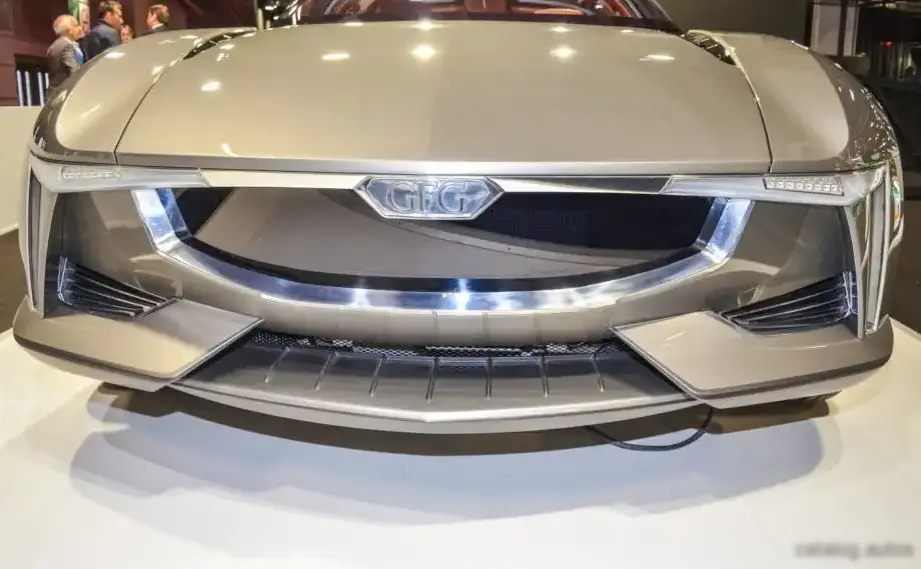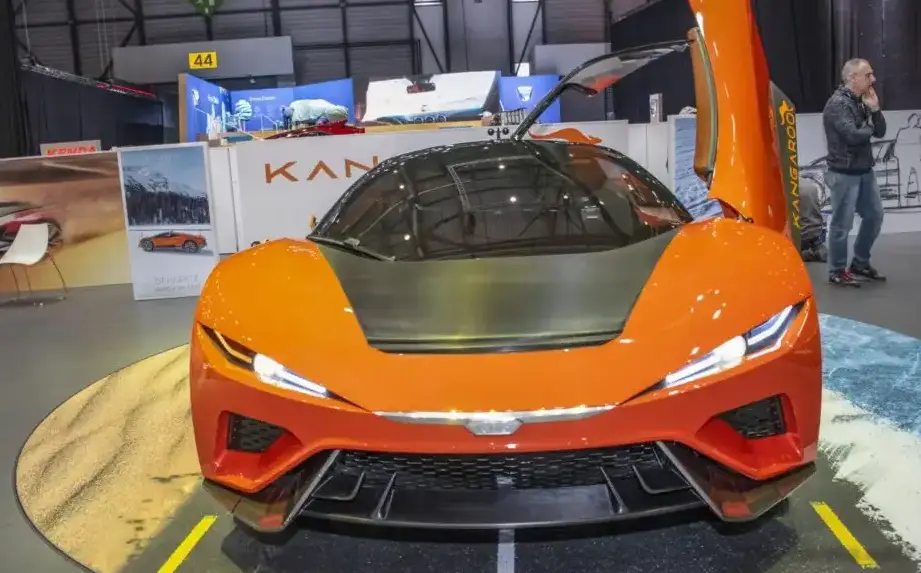
The GFG Style Kangaroo Concept, unveiled in 2019, represents a bold vision for a luxury all-terrain electric vehicle. This two-door, two-seat SUV, powered by a 90 kWh battery delivering 490 horsepower, aimed to blend high performance with off-road capability. The Kangaroo was not intended for mass production in the traditional sense, but rather as a demonstration of GFG Style’s design and engineering prowess, and a platform for potential bespoke commissions. It showcased a unique approach to electric vehicle design, prioritizing a rugged aesthetic and adjustable ride height over conventional SUV practicality.
Technical Specifications
| Brand | GFG Style |
| Model | Kangaroo |
| Generation | Kangaroo Concept |
| Type (Engine) | 90 kWh (490 Hp) AWD Automatic |
| Start of production | 2019 |
| Powertrain Architecture | BEV (Electric Vehicle) |
| Body type | SUV |
| Seats | 2 |
| Doors | 2 |
| Fuel Type | Electricity |
| Acceleration 0 – 100 km/h | 3.8 sec |
| Acceleration 0 – 62 mph | 3.8 sec |
| Acceleration 0 – 60 mph | 3.6 sec |
| Maximum speed | 250 km/h (155.34 mph) |
| Gross battery capacity | 90 kWh |
| All-electric range | >450 km (279.62 mi) |
| Electric motor power | 490 Hp |
| Electric motor Torque | 680 Nm (501.54 lb.-ft.) |
| System power | 490 Hp |
| Length | 4600 mm (181.1 in.) |
| Width | 2000 mm (78.74 in.) |
| Height | 1290-1410 mm (50.79 – 55.51 in.) |
| Wheelbase | 2760 mm (108.66 in.) |
| Ride height (ground clearance) | 140-260 mm (5.51 – 10.24 in.) |
| Drive wheel | All wheel drive (4×4) |
| Tires size | 285/45 R22 |
| Wheel rims size | 22 |
Powertrain & Engine Architecture
The GFG Style Kangaroo Concept is built around a fully electric powertrain. The core of the system is a 90 kWh battery pack, providing a substantial energy reserve for extended range. The vehicle employs a single electric motor, generating 490 horsepower and 680 Nm (501.54 lb.-ft.) of torque. This power is delivered to all four wheels via an automatic transmission, though specific details regarding the transmission’s gear ratios and internal construction are limited, as the Kangaroo remained a concept vehicle. The battery pack’s chemistry and cooling system details were not fully disclosed by GFG Style, but were designed to support rapid charging and sustained high-performance operation. The vehicle’s architecture is a BEV (Battery Electric Vehicle), meaning it relies entirely on electricity for propulsion, with no internal combustion engine component.
Driving Characteristics
With 490 horsepower and all-wheel drive, the Kangaroo Concept boasts impressive performance figures. The 0-60 mph acceleration time of 3.6 seconds and a top speed of 155.34 mph (250 km/h) place it firmly in the performance SUV category. The all-wheel-drive system, coupled with the instant torque delivery characteristic of electric motors, provides excellent traction and responsiveness. A key feature of the Kangaroo is its adjustable ride height, ranging from 140mm to 260mm, allowing it to adapt to various terrains. In its lowered setting, the vehicle prioritizes on-road handling and stability, while the raised setting enhances off-road capability. The absence of traditional engine noise contributes to a quiet and refined driving experience, typical of electric vehicles.
Equipment & Trim Levels
As a concept vehicle, the Kangaroo’s interior focused on showcasing innovative design and materials rather than offering a comprehensive trim level structure. The two-seat cabin features a minimalist aesthetic, with a focus on high-quality materials and advanced technology. The interior is characterized by a blend of leather, carbon fiber, and aluminum accents. A large central touchscreen display serves as the primary interface for vehicle controls and infotainment. Specific features included advanced driver-assistance systems (ADAS), though the exact suite of technologies was not fully detailed. The exterior design incorporates robust styling cues, including prominent wheel arches, skid plates, and a reinforced chassis, emphasizing its off-road intentions. The vehicle’s exterior lighting utilizes LED technology for enhanced visibility and a modern appearance.
Chassis & Braking
The Kangaroo Concept’s chassis is designed to withstand the stresses of both on-road performance and off-road exploration. The suspension system is fully independent, featuring advanced dampers and springs to provide a comfortable ride and precise handling. The adjustable ride height is achieved through an electronically controlled air suspension system. Braking duties are handled by high-performance disc brakes on all four wheels, equipped with anti-lock braking system (ABS) and electronic brake-force distribution (EBD). The vehicle’s tires, size 285/45 R22, are designed to provide optimal grip on a variety of surfaces. The chassis construction incorporates lightweight materials, such as aluminum and carbon fiber, to minimize weight and maximize efficiency.
Market Reception & Comparison
The GFG Style Kangaroo Concept received generally positive attention from the automotive press, praised for its bold design, innovative features, and impressive performance. However, it was largely viewed as a design exercise rather than a production-ready vehicle. Comparisons to other electric SUVs, such as the Porsche Taycan Cross Turismo or the Tesla Model X, highlighted the Kangaroo’s unique focus on off-road capability and rugged styling. Unlike many electric SUVs that prioritize range and practicality, the Kangaroo emphasized performance and a distinctive aesthetic. The concept’s limited seating capacity and lack of a traditional rear cargo area were noted as potential drawbacks for everyday usability.
Legacy
The GFG Style Kangaroo Concept, while not entering mass production, serves as a testament to the design and engineering capabilities of GFG Style. It demonstrated a willingness to explore unconventional approaches to electric vehicle design, blending luxury, performance, and off-road capability. The concept’s adjustable ride height and robust styling influenced subsequent design studies from GFG Style. The Kangaroo’s legacy lies in its contribution to the evolving landscape of electric vehicle design, pushing the boundaries of what’s possible and inspiring further innovation in the industry. Its impact on the used car market is, of course, nonexistent, given its status as a one-off concept vehicle.