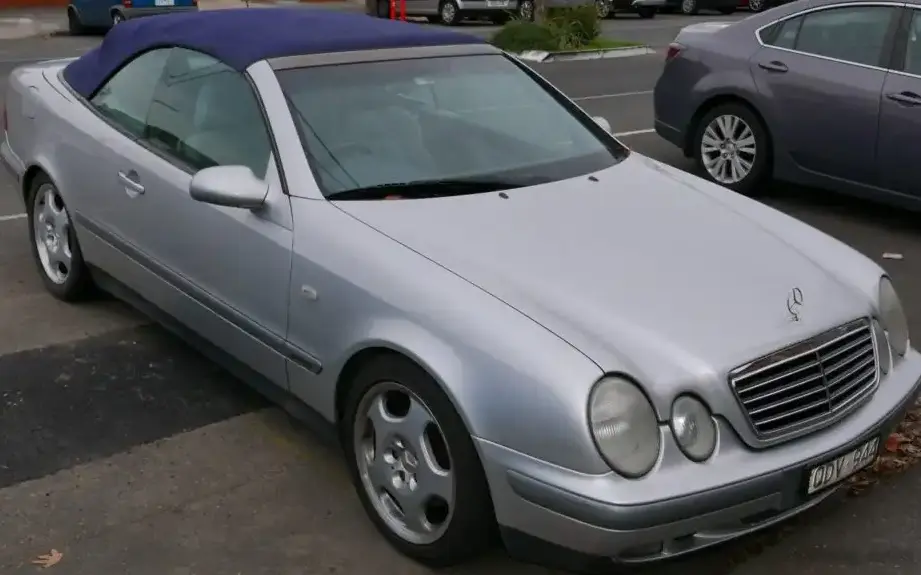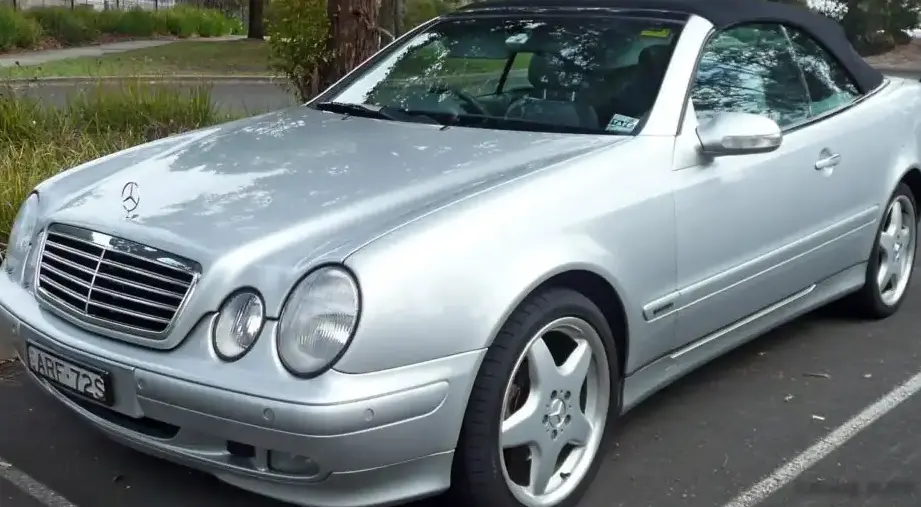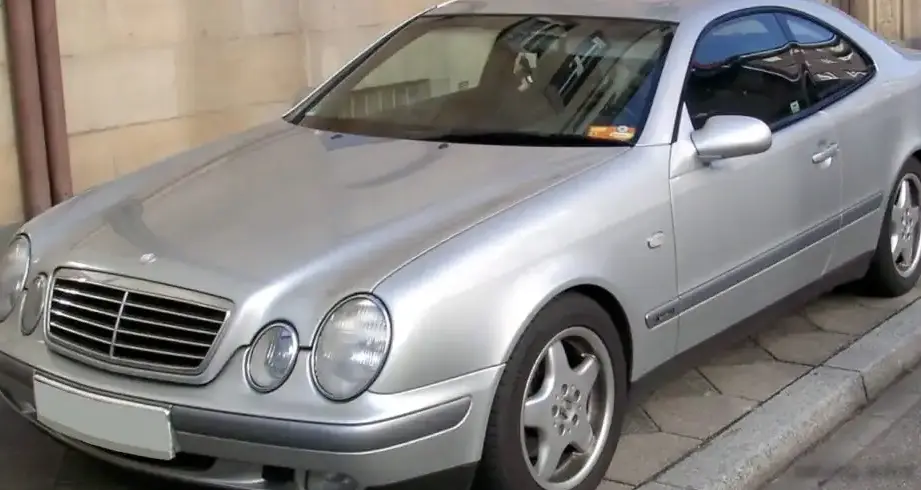
The Mercedes-Benz CLK 320 V6, produced between May 1997 and August 1999, represents a compelling blend of luxury and performance within the C208 CLK generation. Positioned as a mid-range offering, it slotted between the entry-level CLK 200 Kompressor and the higher-performance CLK 430. This coupe, built on the W202 C-Class platform, aimed to deliver a more sporting and stylish alternative to the traditional sedan, appealing to buyers seeking a refined grand tourer experience. The CLK 320 V6 was primarily marketed in Europe and North America, offering a sophisticated alternative to BMW’s 3 Series Coupe and Audi’s A4 Cabriolet.
Technical Specifications
| Brand | Mercedes-Benz |
| Model | CLK |
| Generation | CLK (C208) |
| Type (Engine) | CLK 320 V6 (218 Hp) 5G-TRONIC |
| Start of production | May, 1997 |
| End of production | August, 1999 |
| Powertrain Architecture | Internal Combustion engine |
| Body type | Coupe |
| Seats | 4 |
| Doors | 2 |
| Fuel consumption (economy) – urban (NEDC) | 15 l/100 km (15.7 US mpg, 18.8 UK mpg, 6.7 km/l) |
| Fuel consumption (economy) – extra urban (NEDC) | 7.2 l/100 km (32.7 US mpg, 39.2 UK mpg, 13.9 km/l) |
| Fuel consumption (economy) – combined (NEDC) | 10.1 l/100 km (23.3 US mpg, 28 UK mpg, 9.9 km/l) |
| CO2 emissions (NEDC) | 242 g/km |
| Fuel Type | Petrol (Gasoline) |
| Acceleration 0 – 100 km/h | 7.4 sec |
| Acceleration 0 – 62 mph | 7.4 sec |
| Acceleration 0 – 60 mph | 7 sec |
| Maximum speed | 240 km/h (149.13 mph) |
| Emission standard | Euro 3 |
| Weight-to-power ratio | 6.5 kg/Hp, 153.5 Hp/tonne |
| Weight-to-torque ratio | 4.6 kg/Nm, 218.3 Nm/tonne |
| Power | 218 Hp @ 5700 rpm |
| Power per litre | 68.1 Hp/l |
| Torque | 310 Nm @ 3000-4600 rpm (228.64 lb.-ft. @ 3000-4600 rpm) |
| Engine layout | Front, Longitudinal |
| Engine Model/Code | M 112.940 |
| Engine displacement | 3199 cm3 (195.21 cu. in.) |
| Number of cylinders | 6 |
| Engine configuration | V-engine |
| Cylinder Bore | 89.9 mm (3.54 in.) |
| Piston Stroke | 84 mm (3.31 in.) |
| Compression ratio | 10:1 |
| Number of valves per cylinder | 3 |
| Fuel injection system | Multi-port manifold injection |
| Engine aspiration | Naturally aspirated engine |
| Valvetrain | SOHC |
| Engine oil capacity | 8 l (8.45 US qt | 7.04 UK qt) |
| Coolant | 9 l (9.51 US qt | 7.92 UK qt) |
| Kerb Weight | 1420 kg (3130.56 lbs.) |
| Max. weight | 1920 kg (4232.88 lbs.) |
| Max load | 500 kg (1102.31 lbs.) |
| Trunk (boot) space – minimum | 420 l (14.83 cu. ft.) |
| Fuel tank capacity | 62 l (16.38 US gal | 13.64 UK gal) |
| Max. roof load | 100 kg (220.46 lbs.) |
| Permitted trailer load with brakes (12%) | 1500 kg (3306.93 lbs.) |
| Permitted trailer load without brakes | 745 kg (1642.44 lbs.) |
| Length | 4567 mm (179.8 in.) |
| Width | 1722 mm (67.8 in.) |
| Width including mirrors | 1960 mm (77.17 in.) |
| Height | 1371 mm (53.98 in.) |
| Wheelbase | 2690 mm (105.91 in.) |
| Front track | 1505 mm (59.25 in.) |
| Rear (Back) track | 1474 mm (58.03 in.) |
| Front overhang | 860 mm (33.86 in.) |
| Rear overhang | 1017 mm (40.04 in.) |
| Drag coefficient (Cd) | 0.31 |
| Minimum turning circle (turning diameter) | 10.7 m (35.1 ft.) |
| Drivetrain Architecture | The Internal combustion engine (ICE) drives the rear wheels of the vehicle. |
| Drive wheel | Rear wheel drive |
| Number of gears and type of gearbox | 5 gears, automatic transmission G-TRONIC |
| Front suspension | Coil spring, Double wishbone, Transverse stabilizer |
| Rear suspension | Independent multi-link suspension, Transverse stabilizer |
| Front brakes | Ventilated discs |
| Rear brakes | Disc |
| Assisting systems | ABS (Anti-lock braking system) |
| Steering type | Cone worm with recirculation balls |
| Power steering | Hydraulic Steering |
| Tires size | 205/55 R 16 |
| Wheel rims size | 7 J x 16 |
Powertrain & Engine Architecture
The CLK 320 V6 is powered by Mercedes-Benz’s M112.940 engine, a 3.2-liter naturally aspirated V6. This engine is notable for its all-aluminum construction, a relatively modern feature for the late 1990s, contributing to reduced weight and improved thermal management. The M112 featured a SOHC (Single Overhead Cam) valvetrain per cylinder bank, with three valves per cylinder (two intake, one exhaust). Fuel delivery is handled by a multi-port fuel injection system, providing precise fuel metering for optimal combustion. The engine produces 218 horsepower at 5700 rpm and 310 Nm (228.64 lb-ft) of torque between 3000 and 4600 rpm. The engine is longitudinally mounted, driving the rear wheels. Paired with the engine is the 5G-TRONIC automatic transmission, a five-speed unit known for its smooth shifting characteristics. This transmission was a significant upgrade over older Mercedes-Benz automatic gearboxes, offering more refined operation and improved fuel efficiency.
Driving Characteristics
The CLK 320 V6 offers a comfortable and refined driving experience. While not overtly sporty, the 3.2-liter V6 provides ample power for confident cruising and overtaking. Acceleration from 0 to 60 mph takes approximately 7 seconds, and the car reaches a top speed of 149 mph. The 5G-TRONIC transmission contributes to smooth gear changes, although it lacks the responsiveness of a manual gearbox. Compared to the CLK 200 Kompressor, the 320 offers significantly more power and torque, resulting in a more relaxed driving experience, especially on the highway. However, it doesn’t possess the sharper handling characteristics of the more focused CLK 430. The gear ratios are tuned for comfort and fuel economy rather than outright performance.
Equipment & Trim Levels
The CLK 320 V6 came standard with a respectable level of equipment, including automatic climate control, power windows and locks, a premium sound system, and leather upholstery. Optional extras included a sunroof, heated seats, upgraded audio systems, and various cosmetic enhancements. Interior trim options typically included wood veneer accents and a choice of leather colors. The dashboard layout is typical of Mercedes-Benz of the era, with a focus on functionality and understated elegance.
Chassis & Braking
The CLK 320 V6 utilizes a coil spring and double wishbone suspension setup at the front, with an independent multi-link suspension at the rear. This configuration provides a good balance between ride comfort and handling. The car is equipped with ventilated disc brakes at the front and solid discs at the rear. ABS (Anti-lock Braking System) is standard. The steering is a hydraulic power-assisted system, offering a reasonably direct feel. Stabilizer bars are fitted to both the front and rear axles to reduce body roll during cornering.
Market Reception & Comparison
The CLK 320 V6 was generally well-received by automotive critics. It was praised for its comfortable ride, refined engine, and luxurious interior. However, some reviewers noted that it lacked the sporting edge of its rivals, such as the BMW 3 Series Coupe. Fuel economy was considered average for a vehicle in its class, with combined consumption around 23.3 US mpg. Compared to the CLK 200 Kompressor, the 320 offered a significant performance upgrade, but at a higher price point. The CLK 430, with its larger V8 engine, provided even more power but was considerably more expensive and less fuel-efficient.
Legacy
The M112 engine family, including the 3.2-liter variant found in the CLK 320 V6, is generally considered to be a reliable and durable powerplant. With proper maintenance, these engines can accumulate high mileage without major issues. The 5G-TRONIC transmission is also known for its longevity, although regular fluid changes are essential. Today, the CLK 320 V6 represents an affordable entry point into Mercedes-Benz ownership, offering a stylish and comfortable coupe experience. However, potential buyers should be aware of the age-related issues common to vehicles of this era, such as worn suspension components and potential electrical problems. Well-maintained examples are becoming increasingly sought after by enthusiasts and collectors.