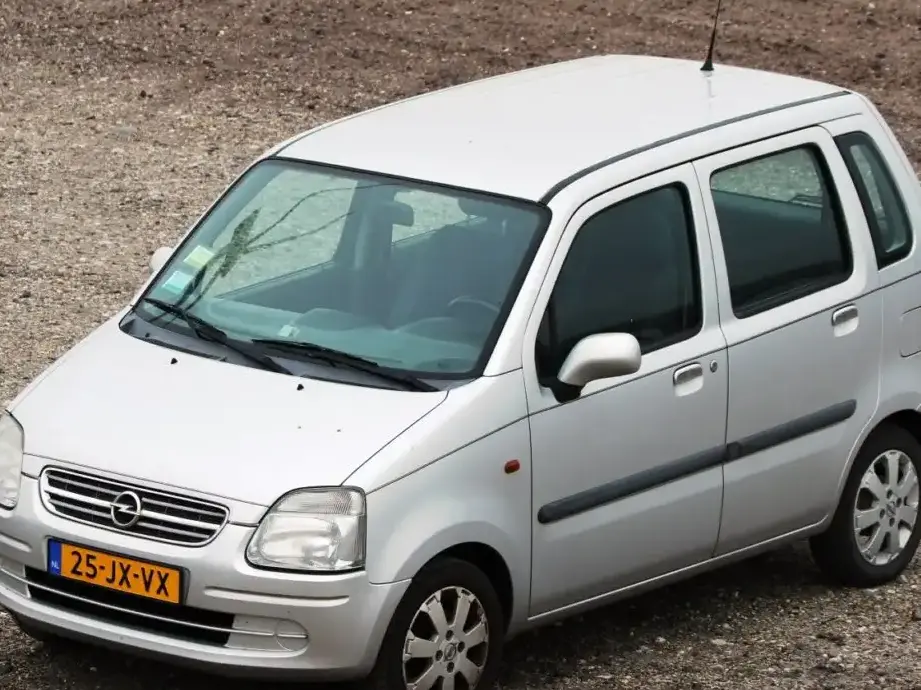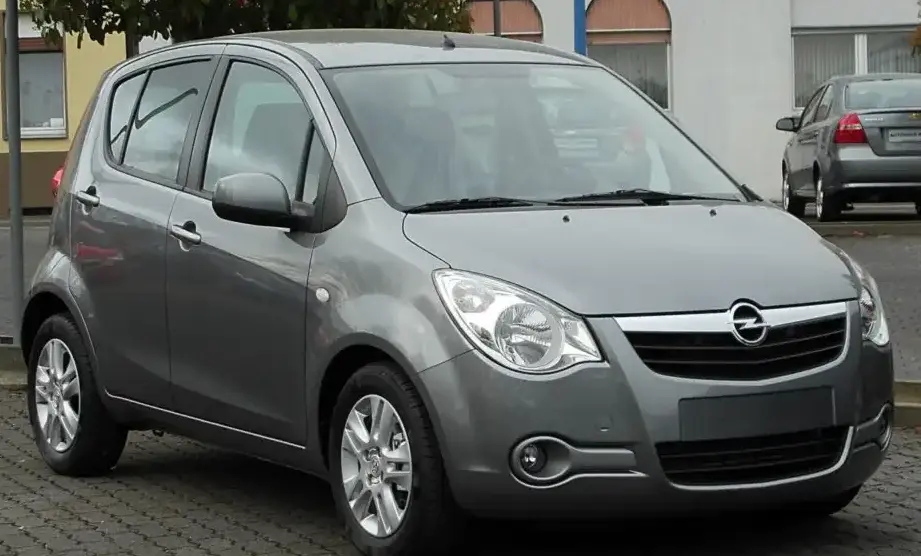
The Opel Agila II 1.2 (94 hp) was a popular subcompact hatchback produced from 2008 to 2014. Positioned as an entry-level offering within the Agila II range, it served as a practical and economical city car, particularly in European markets. The Agila II, built on the GM Gamma platform (shared with the Fiat Panda and Suzuki Wagon R+), aimed to provide affordable transportation with a focus on fuel efficiency and ease of use. This specific 1.2-liter variant represented a balance between cost and usability, appealing to buyers seeking a no-frills, reliable vehicle for daily commuting and urban driving.
Technical Specifications
| Brand | Opel |
| Model | Agila |
| Generation | Agila II |
| Type (Engine) | 1.2 (94 Hp) |
| Start of production | 2008 |
| End of production | 2014 |
| Powertrain Architecture | Internal Combustion engine |
| Body type | Hatchback |
| Seats | 5 |
| Doors | 5 |
| Fuel consumption (urban) | 6.1 l/100 km (38.6 US mpg, 46.3 UK mpg, 16.4 km/l) |
| Fuel consumption (extra urban) | 4.5 l/100 km (52.3 US mpg, 62.8 UK mpg, 22.2 km/l) |
| Fuel consumption (combined) | 5.1 l/100 km (46.1 US mpg, 55.4 UK mpg, 19.6 km/l) |
| CO2 emissions | 118 g/km |
| Fuel Type | Petrol (Gasoline) |
| Emission standard | Euro 5 |
| Power | 94 Hp @ 6000 rpm |
| Power per litre | 75.7 Hp/l |
| Torque | 118 Nm @ 4800 rpm (87.03 lb.-ft. @ 4800 rpm) |
| Engine layout | Front, Transverse |
| Engine Model/Code | K12B |
| Engine displacement | 1242 cm3 (75.79 cu. in.) |
| Number of cylinders | 4 |
| Engine configuration | Inline |
| Compression ratio | 11:1 |
| Fuel injection system | Multi-port manifold injection |
| Engine aspiration | Naturally aspirated engine |
| Engine oil capacity | 3.1 l (3.28 US qt, 2.73 UK qt) |
| Coolant capacity | 4.4 l (4.65 US qt, 3.87 UK qt) |
| Length | 3740 mm (147.24 in.) |
| Width | 1680 mm (66.14 in.) |
| Height | 1590 mm (62.6 in.) |
| Wheelbase | 2360 mm (92.91 in.) |
| Front track | 1470 mm (57.87 in.) |
| Rear track | 1480 mm (58.27 in.) |
| Minimum turning circle | 10 m (32.81 ft.) |
| Drivetrain | Front wheel drive |
| Number of gears | 5 |
| Gearbox type | Manual transmission |
| Assisting systems | ABS (Anti-lock braking system) |
| Steering type | Steering rack and pinion |
Powertrain & Engine Architecture
The heart of the Agila II 1.2 was the Opel/Fiat K12B engine, a 1.2-liter (1242 cc) inline-four cylinder petrol engine. This engine, developed jointly by Opel and Fiat, featured a naturally aspirated configuration and a multi-port fuel injection system. The K12B engine produced 94 horsepower at 6000 rpm and 118 Nm (87 lb-ft) of torque at 4800 rpm. It utilized a single overhead camshaft (SOHC) valvetrain with two valves per cylinder. The engine’s relatively simple design contributed to its reliability and ease of maintenance. The five-speed manual transmission was the standard offering for this variant, providing a straightforward driving experience. The transmission’s gear ratios were tuned for fuel efficiency and urban usability, rather than outright performance.
Driving Characteristics
The Agila II 1.2 with the manual transmission offered modest performance. Acceleration was adequate for city driving, but highway overtaking required careful planning. The 0-60 mph time was estimated to be around 13-14 seconds. The engine’s torque peak at 4800 rpm meant that drivers needed to rev the engine to access its power. The five-speed gearbox allowed for reasonable control, but the shift quality was not particularly sporty. Compared to higher-spec Agila II models with larger engines, the 1.2-liter version felt noticeably slower. However, its lighter weight and efficient engine contributed to better fuel economy. The steering was light and easy, making it ideal for maneuvering in tight urban spaces.
Equipment & Trim Levels
The Agila II 1.2 typically came with a basic level of equipment. Standard features generally included power steering, central locking, electric front windows, and an ABS anti-lock braking system. The interior was functional and durable, with cloth upholstery and a simple dashboard layout. Air conditioning was often an optional extra, as were features like a CD player and alloy wheels. Higher trim levels, if available, might have added features like body-colored bumpers, a more sophisticated audio system, and upgraded interior trim. The focus was on providing essential features at an affordable price point.
Chassis & Braking
The Agila II utilized a MacPherson strut front suspension and a torsion beam rear suspension. This setup provided a comfortable ride quality, particularly on smooth roads. The torsion beam rear suspension was a cost-effective solution that minimized complexity. The braking system consisted of disc brakes on the front wheels and drum brakes on the rear wheels. ABS was standard, enhancing braking performance and safety. The Agila II’s relatively lightweight construction helped to compensate for the less powerful engine and basic braking setup.
Market Reception & Comparison
The Opel Agila II 1.2 was generally well-received as an affordable and practical city car. Critics praised its fuel efficiency, ease of driving, and compact size. However, some reviewers noted its lack of power and basic interior. Compared to other subcompact hatchbacks available at the time, such as the Fiat Panda, Renault Twingo, and Volkswagen Fox, the Agila II offered a competitive combination of price, fuel economy, and practicality. The 1.2-liter engine was considered a good choice for drivers who primarily used the car for urban commuting, while those who frequently drove on highways or carried heavy loads might have preferred a more powerful engine option.
Legacy
The Opel Agila II 1.2 has proven to be a relatively reliable vehicle in the used car market. The K12B engine is known for its durability and low maintenance costs. Common issues are typically limited to wear-and-tear items such as brakes, suspension components, and exhaust systems. The Agila II’s simple design and readily available parts contribute to its affordability and ease of repair. Today, the Agila II 1.2 remains a popular choice for budget-conscious buyers seeking a practical and economical city car. Its fuel efficiency and compact size continue to make it a relevant option in the used car market.