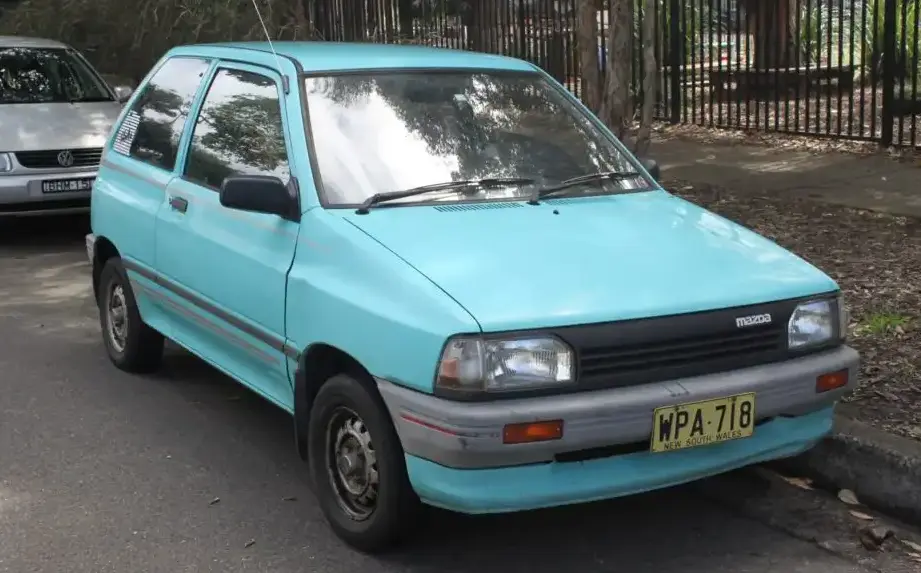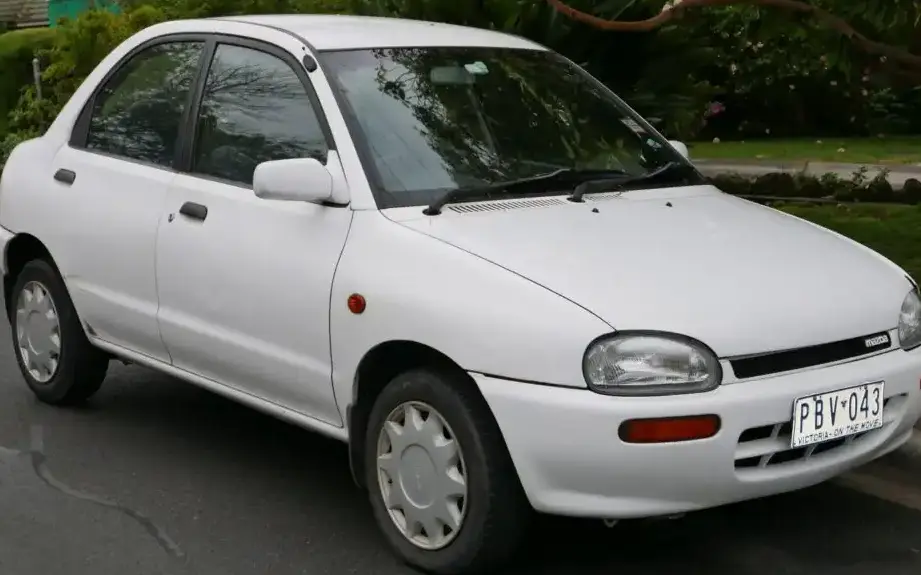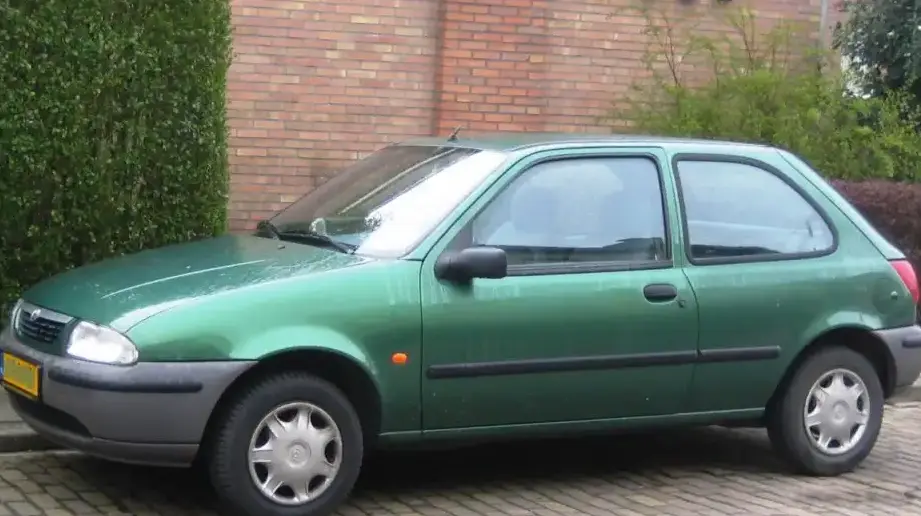
The Mazda 121 III, known as the Mazda Metro in some markets, was a supermini produced by Mazda between 1996 and 2000. Representing the third generation of the 121 (also known as the Mazda 121), this iteration (chassis codes JASM and JBSM) was a significant departure from its predecessors, adopting a more modern design and engineering approach. It was primarily aimed at the European market, where it competed with vehicles like the Ford Fiesta, Opel Corsa, and Volkswagen Polo. The 1.2-liter, 75 horsepower variant occupied the entry-level position in the 121 III lineup, offering an affordable and economical option for budget-conscious buyers.
Technical Specifications
| Brand | Mazda |
| Model | 121 |
| Generation | 121 III (JASM, JBSM) |
| Type (Engine) | 1.2 (75 Hp) |
| Start of production | 1996 |
| End of production | 2000 |
| Powertrain Architecture | Internal Combustion engine |
| Body type | Hatchback |
| Seats | 5 |
| Doors | 3/5 |
| Fuel consumption (urban) | 7.5 l/100 km (31.4 US mpg) |
| Fuel consumption (extra urban) | 4.6 l/100 km (51.1 US mpg) |
| Fuel consumption (combined) | 6.6 l/100 km (35.6 US mpg) |
| Fuel Type | Petrol (Gasoline) |
| Acceleration 0 – 100 km/h | 12.7 sec |
| Acceleration 0 – 62 mph | 12.7 sec |
| Acceleration 0 – 60 mph | 12.1 sec |
| Maximum speed | 170 km/h (105.63 mph) |
| Weight-to-power ratio | 12.2 kg/Hp |
| Weight-to-torque ratio | 8.3 kg/Nm |
| Power | 75 Hp @ 6000 rpm |
| Torque | 110 Nm @ 4000 rpm (81.13 lb.-ft. @ 4000 rpm) |
| Engine layout | Front, Transverse |
| Engine displacement | 1242 cm3 (75.79 cu. in.) |
| Number of cylinders | 4 |
| Engine configuration | Inline |
| Cylinder Bore | 71.9 mm (2.83 in.) |
| Piston Stroke | 76.5 mm (3.01 in.) |
| Compression ratio | 10.1:1 |
| Number of valves per cylinder | 4 |
| Fuel injection system | Multi-port manifold injection |
| Engine aspiration | Naturally aspirated |
| Valvetrain | DOHC |
| Kerb Weight | 915 kg (2017.23 lbs.) |
| Max. weight | 1435 kg (3163.63 lbs.) |
| Max load | 520 kg (1146.4 lbs.) |
| Trunk (boot) space – minimum | 250 l (8.83 cu. ft.) |
| Fuel tank capacity | 42 l (11.1 US gal) |
| Length | 3828 mm (150.71 in.) |
| Width | 1634 mm (64.33 in.) |
| Height | 1330 mm (52.36 in.) |
| Wheelbase | 2446 mm (96.3 in.) |
| Front track | 1429 mm (56.26 in.) |
| Rear track | 1384 mm (54.49 in.) |
| Drivetrain Architecture | Front wheel drive |
| Number of gears | 5 |
| Gearbox type | Manual transmission |
| Front suspension | Spring Strut |
| Rear suspension | Coil spring |
| Front brakes | Disc |
| Rear brakes | Drum |
| Assisting systems | ABS (Anti-lock braking system) |
| Steering type | Steering rack and pinion |
| Power steering | Hydraulic |
| Tires size | 185/55 R14 |
| Wheel rims size | 14 |
Powertrain & Engine Architecture
The heart of the 121 III 1.2 was the Mazda B series engine, specifically the B12B variant. This 1.242-liter inline-four cylinder engine utilized a single overhead camshaft (SOHC) design, although later versions adopted a dual overhead camshaft (DOHC) configuration. The 75 horsepower output was achieved at 6000 rpm, with a torque figure of 110 Nm (81.13 lb-ft) delivered at 4000 rpm. The engine featured multi-port fuel injection, contributing to relatively smooth operation and acceptable fuel economy for the time. The 121 III 1.2 was exclusively offered with a five-speed manual transmission. This transmission was chosen for its simplicity and cost-effectiveness, aligning with the entry-level positioning of the variant. The engine’s design prioritized fuel efficiency and reliability over outright performance.
Driving Characteristics
The 1.2-liter engine in the 121 III provided adequate, but not exhilarating, performance. Acceleration from 0 to 60 mph took approximately 12.1 seconds, and the top speed was around 105.63 mph. The five-speed manual transmission helped to keep the engine in its optimal power band, but drivers often needed to downshift to maintain momentum when overtaking or climbing hills. Compared to the more powerful 1.6-liter and 1.8-liter variants, the 1.2 felt noticeably slower. However, the lighter weight of the 1.2-liter model did contribute to a more nimble and responsive feel in city driving. The gear ratios were tuned for economy, resulting in a relatively high fifth gear for efficient cruising on motorways.
Equipment & Trim Levels
The 1.2-liter 121 III typically came with a basic level of equipment. Standard features generally included power steering, central locking, and an AM/FM radio. Interior upholstery was typically cloth, and the dashboard featured a simple, functional design. Optional extras included air conditioning, electric windows, and alloy wheels. The trim level for the 1.2 was generally the base model, focusing on providing essential transportation at an affordable price. It was often marketed towards first-time car buyers, students, and those seeking a reliable and economical city car.
Chassis & Braking
The 121 III utilized a relatively simple chassis design. Front suspension consisted of MacPherson strut coil springs, while the rear employed a torsion beam setup. This configuration provided a reasonable balance between ride comfort and handling. Brakes were disc brakes on the front wheels and drum brakes on the rear, which was typical for vehicles in this class at the time. Anti-lock Braking System (ABS) was available as an option, enhancing safety. The relatively lightweight construction of the 1.2-liter model contributed to its agility and ease of handling.
Market Reception & Comparison
The Mazda 121 III 1.2 was generally well-received as an affordable and reliable city car. Critics praised its fuel economy and ease of driving, but noted its lack of outright performance. Compared to other superminis in its class, the 1.2-liter 121 offered a competitive price point and a decent level of standard equipment. The 1.6 and 1.8-liter variants offered more power and refinement, but came at a higher cost. The 1.2’s fuel economy was a strong selling point, consistently achieving around 35.6 US mpg in combined driving conditions. Reliability was also a key strength, with the Mazda 121 III generally proving to be a durable and dependable vehicle.
Legacy
The Mazda 121 III, particularly the 1.2-liter variant, has developed a reputation for being a reliable and affordable used car. The B series engine is known for its durability, and parts availability remains relatively good. While not a particularly exciting vehicle to drive, the 1.2-liter 121 III provides a practical and economical transportation solution. Today, these cars are often sought after by those looking for a cheap and cheerful runabout, or as a first car for a young driver. The simplicity of the design and the robustness of the engine contribute to its continued appeal in the used car market.