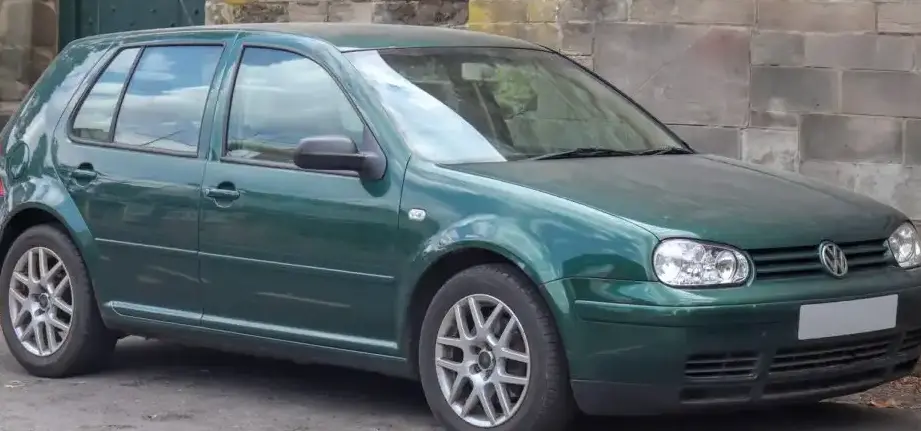
The Volkswagen Golf IV 2.0, producing 115 horsepower, was a mainstay of the fourth-generation Golf lineup produced between 1998 and 2003. Positioned as a mid-range offering, it bridged the gap between the more economical base models and the performance-oriented GTI and VR6 variants. This model played a significant role in solidifying the Golf’s reputation as a practical, reliable, and versatile hatchback in the European market, and gained increasing traction in North America as Volkswagen expanded its presence. The Golf IV, built on the 1HX0/A3 platform, represented a substantial leap forward in refinement and technology compared to its predecessor.
Technical Specifications
| Brand | Volkswagen |
| Model | Golf |
| Generation | Golf IV |
| Type (Engine) | 2.0 (115 Hp) |
| Start of production | 1998 |
| End of production | 2003 |
| Powertrain Architecture | Internal Combustion engine |
| Body type | Hatchback |
| Seats | 5 |
| Doors | 3-5 |
| Fuel consumption (urban) | 10.9 l/100 km (21.6 US mpg) |
| Fuel consumption (extra urban) | 6.1 l/100 km (38.6 US mpg) |
| Fuel consumption (combined) | 7.9 l/100 km (29.8 US mpg) |
| Fuel Type | Petrol (Gasoline) |
| Acceleration 0 – 100 km/h | 10 sec |
| Acceleration 0 – 62 mph | 10 sec |
| Acceleration 0 – 60 mph | 9.5 sec |
| Maximum speed | 195 km/h (121.17 mph) |
| Weight-to-power ratio | 10.2 kg/Hp |
| Weight-to-torque ratio | 6.9 kg/Nm |
| Power | 115 Hp @ 5200 rpm |
| Torque | 170 Nm @ 2400 rpm (125.39 lb.-ft. @ 2400 rpm) |
| Engine layout | Front, Transverse |
| Engine Model/Code | APK, AQY, AZJ |
| Engine displacement | 1984 cm3 (121.07 cu. in.) |
| Number of cylinders | 4 |
| Engine configuration | Inline |
| Cylinder Bore | 82.5 mm (3.25 in.) |
| Piston Stroke | 92.8 mm (3.65 in.) |
| Compression ratio | 10:1 |
| Number of valves per cylinder | 2 |
| Fuel injection system | Multi-port manifold injection |
| Engine aspiration | Naturally aspirated engine |
| Valvetrain | OHC |
| Engine oil capacity | 4 l (4.23 US qt | 3.52 UK qt) |
| Coolant capacity | 5.5 l (5.81 US qt | 4.84 UK qt) |
| Kerb Weight | 1170 kg (2579.41 lbs.) |
| Max. weight | 1715 kg (3780.93 lbs.) |
| Max load | 545 kg (1201.52 lbs.) |
| Trunk (boot) space – minimum | 330 l (11.65 cu. ft.) |
| Trunk (boot) space – maximum | 1185 l (41.85 cu. ft.) |
| Fuel tank capacity | 55 l (14.53 US gal | 12.1 UK gal) |
| Length | 4149 mm (163.35 in.) |
| Width | 1735 mm (68.31 in.) |
| Height | 1439 mm (56.65 in.) |
| Wheelbase | 2511 mm (98.86 in.) |
| Front track | 1513 mm (59.57 in.) |
| Rear track | 1494 mm (58.82 in.) |
| Drivetrain Architecture | Front wheel drive |
| Number of gears | 5 |
| Gearbox type | Manual transmission |
| Front suspension | Wishbone |
| Rear suspension | Coil spring |
| Front brakes | Ventilated discs |
| Rear brakes | Disc |
| Assisting systems | ABS (Anti-lock braking system) |
| Steering type | Steering rack and pinion |
| Power steering | Hydraulic Steering |
| Tires size | 195/65 R15 |
| Wheel rims size | 6J x 15 |
Powertrain & Engine Architecture
The heart of the Golf IV 2.0 was the 1.8 to 2.0-liter inline-four cylinder engine, depending on the market and specific year. The engine codes commonly associated with this variant are APK, AQY, and AZJ. These engines utilized a multi-port fuel injection system, providing a balance between efficiency and performance. The engine featured a single overhead camshaft (OHC) valvetrain, operating two valves per cylinder. This configuration was a cost-effective and reliable design. The 115 hp output was achieved through careful tuning of the engine management system and intake/exhaust design. The five-speed manual transmission was the most common pairing, although a four-speed automatic transmission was also available, albeit less popular due to its impact on performance and fuel economy. The automatic transmission, while offering convenience, added noticeable weight and reduced responsiveness compared to the manual.
Driving Characteristics
The Golf IV 2.0 with the manual transmission offered a reasonably engaging driving experience. Acceleration from 0-60 mph took around 9.5 seconds, making it competitive within its class. The engine provided adequate torque for everyday driving, with peak torque of 170 Nm (125 lb-ft) available at 2400 rpm. The automatic transmission version, however, felt noticeably slower, with 0-60 mph times closer to 11 seconds. The gear ratios in the automatic were optimized for fuel economy rather than performance. Handling was typical of the Golf IV – composed and predictable, with a slight tendency towards understeer. The suspension provided a comfortable ride, absorbing most road imperfections without excessive body roll.
Equipment & Trim Levels
The Golf IV 2.0 typically came equipped with features such as power windows, central locking, and an AM/FM radio. Higher trim levels, often denoted by designations like “GL” or “Comfortline,” added features like alloy wheels, air conditioning, and upgraded interior upholstery. Optional extras included a sunroof, a CD player, and side airbags. Interior materials were generally durable and well-assembled, reflecting Volkswagen’s commitment to quality. The dashboard layout was functional and ergonomic, with easy-to-read gauges and intuitive controls.
Chassis & Braking
The Golf IV 2.0 utilized a front independent suspension with wishbones and a rear coil spring suspension. This setup provided a good balance between ride comfort and handling. Braking duties were handled by ventilated discs on the front wheels and solid discs on the rear. Anti-lock Braking System (ABS) was standard equipment, enhancing safety and control during emergency braking situations. The chassis was robust and well-engineered, contributing to the Golf’s reputation for durability. Stabilizer bars were fitted to both the front and rear axles to reduce body roll during cornering.
Market Reception & Comparison
The Golf IV 2.0 was generally well-received by automotive critics. It was praised for its build quality, comfortable ride, and practical interior. However, the automatic transmission version was often criticized for its sluggish performance and reduced fuel economy compared to the manual. Compared to the more powerful GTI and VR6 models, the 2.0 offered a more affordable entry point into the Golf IV range, appealing to buyers who prioritized fuel efficiency and practicality over outright performance. The 1.8L engine was often seen as a sweet spot, offering a good balance of power and economy, while the 2.0 provided a bit more grunt for those who frequently carried passengers or cargo.
Legacy
The Golf IV 2.0 has proven to be a remarkably durable and reliable vehicle. Many examples are still on the road today, a testament to Volkswagen’s engineering and build quality. The 115 hp engine, while not particularly powerful by modern standards, is known for its longevity and relatively low maintenance costs. Common issues include wear and tear on suspension components and occasional problems with the central locking system. However, parts availability remains good, and the Golf IV 2.0 continues to be a popular choice among budget-conscious buyers looking for a practical and reliable hatchback. Its enduring popularity in the used car market reflects its status as a well-rounded and dependable vehicle.