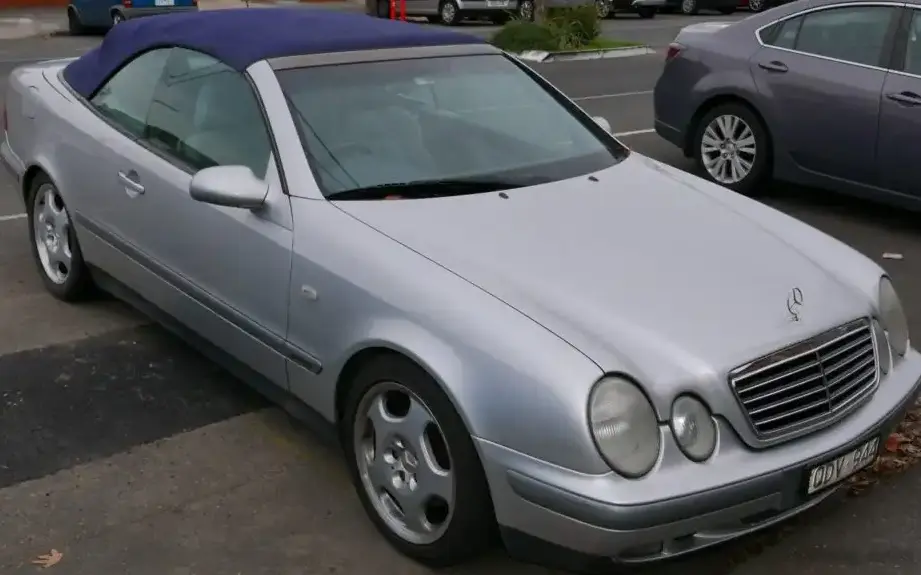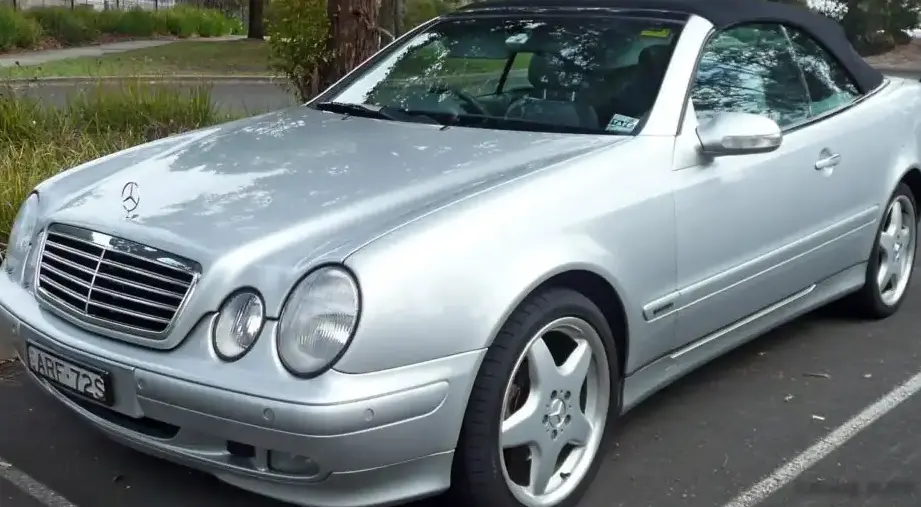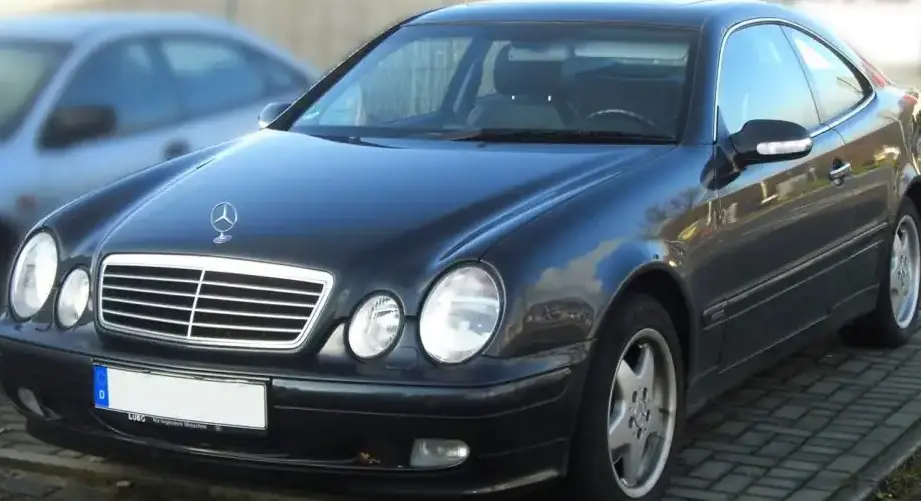
The Mercedes-Benz CLK 55 AMG, produced from 1999 to 2002 as part of the C208 facelift generation, represented the high-performance variant of the CLK coupe and convertible range. Positioned as the flagship model, it offered a significant step up in power and prestige compared to the more common four and six-cylinder CLK models. This variant aimed to deliver a blend of grand touring comfort and exhilarating performance, appealing to buyers seeking a sporty yet refined luxury coupe. It was a key offering in the North American market, where Mercedes-Benz sought to establish a stronger presence in the performance coupe segment.
Technical Specifications
| Brand | Mercedes-Benz |
| Model | CLK |
| Generation | CLK (C208, facelift 1999) |
| Type | AMG CLK 55 V8 (347 Hp) 5G-TRONIC |
| Start of production | 1999 |
| End of production | 2002 |
| Powertrain Architecture | Internal Combustion engine |
| Body type | Coupe |
| Seats | 4 |
| Doors | 2 |
| Fuel consumption (urban) | 17.1 l/100 km (13.8 US mpg, 16.5 UK mpg, 5.8 km/l) |
| Fuel consumption (extra urban) | 8.5 l/100 km (27.7 US mpg, 33.2 UK mpg, 11.8 km/l) |
| Fuel consumption (combined) | 11.7 l/100 km (20.1 US mpg, 24.1 UK mpg, 8.5 km/l) |
| CO2 emissions | 289 g/km |
| Fuel Type | Petrol (Gasoline) |
| Acceleration 0-100 km/h | 5.4 sec |
| Acceleration 0-62 mph | 5.4 sec |
| Acceleration 0-60 mph | 5.1 sec |
| Maximum speed | 250 km/h (155.34 mph) – Electronically limited |
| Emission standard | Euro 3 |
| Weight-to-power ratio | 4.5 kg/Hp, 224.6 Hp/tonne |
| Weight-to-torque ratio | 3 kg/Nm, 330.1 Nm/tonne |
| Power | 347 Hp @ 5500 rpm |
| Power per litre | 63.8 Hp/l |
| Torque | 510 Nm @ 3000-4300 rpm (376.16 lb.-ft. @ 3000-4300 rpm) |
| Engine layout | Front, Longitudinal |
| Engine Model/Code | M 113.984 |
| Engine displacement | 5439 cm3 (331.91 cu. in.) |
| Number of cylinders | 8 |
| Engine configuration | V-engine |
| Cylinder Bore | 97 mm (3.82 in.) |
| Piston Stroke | 92 mm (3.62 in.) |
| Compression ratio | 10.5:1 |
| Number of valves per cylinder | 3 |
| Fuel injection system | Multi-port manifold injection |
| Engine aspiration | Naturally aspirated engine |
| Valvetrain | SOHC |
| Engine oil capacity | 9.5 l (10.04 US qt | 8.36 UK qt) |
| Coolant capacity | 11 l (11.62 US qt | 9.68 UK qt) |
| Kerb Weight | 1545 kg (3406.14 lbs.) |
| Max. weight | 1960 kg (4321.06 lbs.) |
| Max load | 415 kg (914.92 lbs.) |
| Trunk (boot) space (minimum) | 420 l (14.83 cu. ft.) |
| Fuel tank capacity | 62 l (16.38 US gal | 13.64 UK gal) |
| Max. roof load | 100 kg (220.46 lbs.) |
| Length | 4567 mm (179.8 in.) |
| Width | 1722 mm (67.8 in.) |
| Height | 1371 mm (53.98 in.) |
| Wheelbase | 2690 mm (105.91 in.) |
| Front track | 1505 mm (59.25 in.) |
| Rear track | 1488 mm (58.58 in.) |
| Front overhang | 860 mm (33.86 in.) |
| Rear overhang | 1017 mm (40.04 in.) |
| Minimum turning circle | 10.7 m (35.1 ft.) |
| Drivetrain Architecture | Rear wheel drive |
| Number of gears | 5 |
| Gearbox type | Automatic transmission 5G-TRONIC |
| Front suspension | Coil spring, Double wishbone, Transverse stabilizer |
| Rear suspension | Independent multi-link suspension, Transverse stabilizer, Coil spring |
| Front brakes | Ventilated discs |
| Rear brakes | Ventilated discs |
| Assisting systems | ABS (Anti-lock braking system) |
| Steering type | Cone worm with recirculation balls |
| Power steering | Hydraulic Steering |
| Front tires | 225/45 R17 |
| Rear tires | 245/40 R17 |
| Front wheel rims | 7.5J x 17 |
| Rear wheel rims | 8.5J x 17 |
INTRODUCTION
The CLK 55 AMG, launched in 1999 as part of the C208 facelift, was a significant upgrade over the pre-facelift models. Built on the W202-derived 1HX0/A3 platform, it aimed to provide a more compelling alternative to rivals like the BMW 3 Series Coupe and Audi TT. The facelift brought revised styling, improved interior materials, and, crucially, the introduction of the potent 5.4-liter V8 engine. This model year marked a shift towards a more aggressive AMG aesthetic and a focus on delivering a truly high-performance driving experience within the luxury coupe segment.
Powertrain & Engine Architecture
The heart of the CLK 55 AMG is the M113.984 5.4-liter naturally aspirated V8 engine. This engine, a cornerstone of AMG’s early 2000s lineup, featured all-aluminum construction, three valves per cylinder, and a sophisticated multi-port fuel injection system. The engine code ‘M113’ signifies its place in Mercedes-Benz’s V8 engine family. The 5G-TRONIC automatic transmission, a five-speed unit, was specifically tuned to handle the engine’s substantial torque output. Unlike some contemporary transmissions, the 5G-TRONIC lacked a manual shift mode, relying instead on intelligent electronic control to optimize gear selection. The engine’s design prioritized smooth power delivery and a characteristic AMG exhaust note, rather than outright peak horsepower figures.
Driving Characteristics
The CLK 55 AMG offered a distinctly different driving experience compared to the four and six-cylinder CLK variants. The 5.4-liter V8 provided ample torque throughout the rev range, resulting in strong acceleration in everyday driving situations. While the 5.4-second 0-60 mph time was competitive for the era, the car’s substantial weight (around 3400 lbs) meant it didn’t feel as nimble as some lighter sports coupes. The 5G-TRONIC transmission, while smooth, could sometimes feel hesitant during quick downshifts. Compared to a manual transmission equipped CLK, the automatic prioritized comfort and ease of use over outright driver engagement. The gear ratios were optimized for cruising and effortless highway passing.
Equipment & Trim Levels
The CLK 55 AMG came generously equipped as standard. Interior features included leather upholstery, wood trim, automatic climate control, and a premium sound system. Optional extras included a sunroof, heated seats, and upgraded audio options. The exterior styling was distinguished by AMG-specific body kit, including unique front and rear bumpers, side skirts, and a rear spoiler. Wheels were larger diameter AMG alloys, typically 17 or 18 inches. The interior color schemes were generally conservative, reflecting the car’s luxury positioning, with options for black, grey, and beige leather.
Chassis & Braking
The CLK 55 AMG featured a modified chassis compared to the standard CLK models, with stiffer springs and dampers to improve handling. Both front and rear brakes were upgraded to ventilated discs to cope with the increased performance. Anti-lock braking system (ABS) was standard. The suspension geometry was tuned to minimize body roll and provide a more stable platform during cornering. While the rear suspension was independent, it utilized a multi-link setup rather than a more sophisticated double wishbone arrangement found in some higher-end sports cars. Stabilizer bars were thicker than those found on lower-spec CLK models.
Market Reception & Comparison
The CLK 55 AMG was generally well-received by automotive critics, who praised its powerful engine, comfortable ride, and luxurious interior. However, some reviewers noted the car’s weight and the lack of a manual transmission option as drawbacks. Compared to the CLK 320, the 55 AMG offered a significant performance advantage, but at a higher price point and with increased running costs. The CLK 55 AMG’s fuel economy was considerably lower than that of the four and six-cylinder models, reflecting the V8 engine’s larger displacement and increased power output. Reliability was generally good, although preventative maintenance was crucial to avoid potential issues with the engine’s cooling system.
Legacy
The CLK 55 AMG has become a sought-after classic among Mercedes-Benz enthusiasts. The M113 V8 engine is known for its durability and relatively straightforward maintenance. While not as collectible as some of the more limited-edition AMG models, the CLK 55 AMG offers a compelling combination of performance, luxury, and affordability in the used car market. Parts availability remains good, and a thriving community of owners provides support and expertise. The car represents a pivotal moment in AMG’s history, marking a transition towards more powerful and sophisticated performance vehicles.