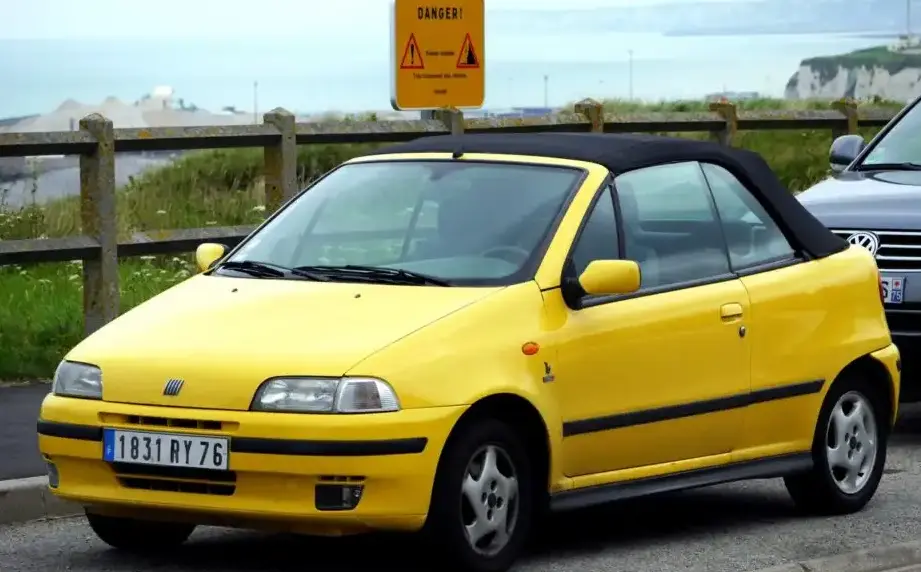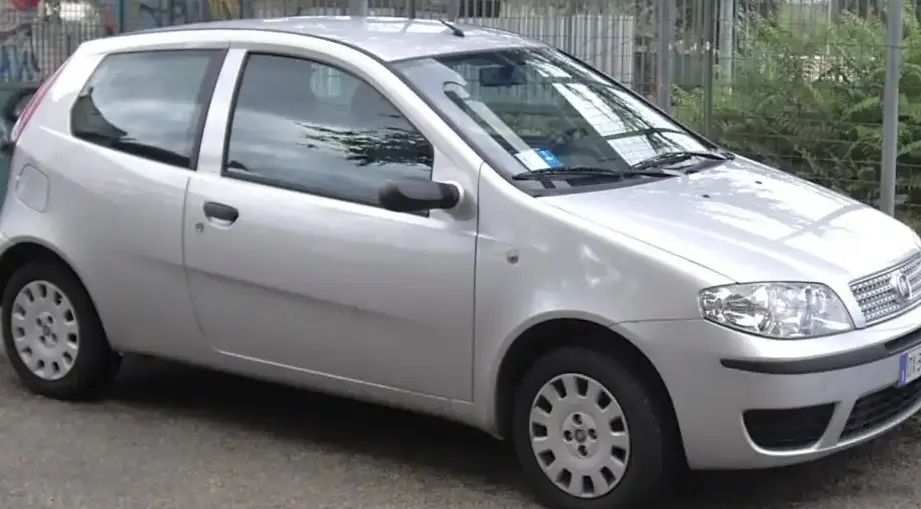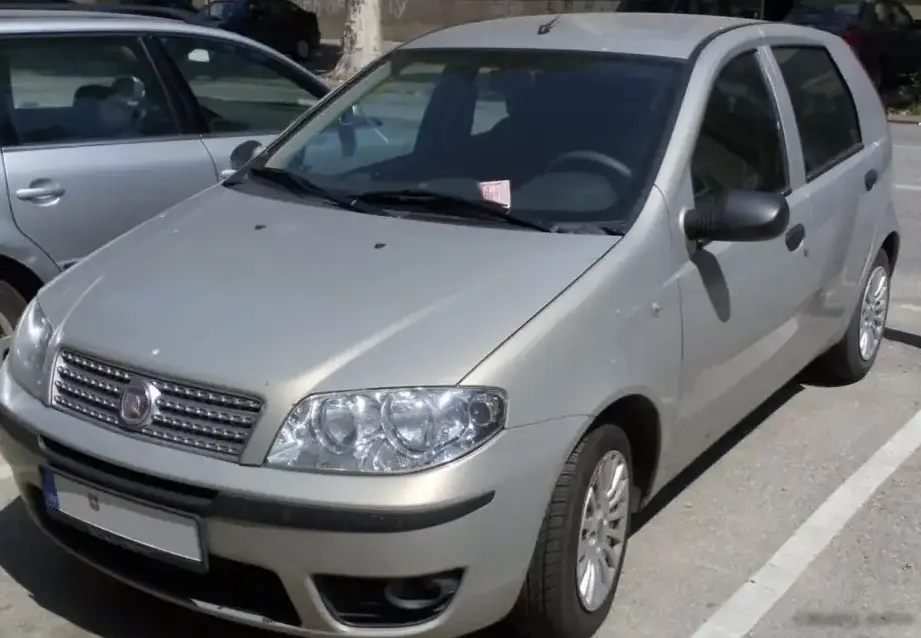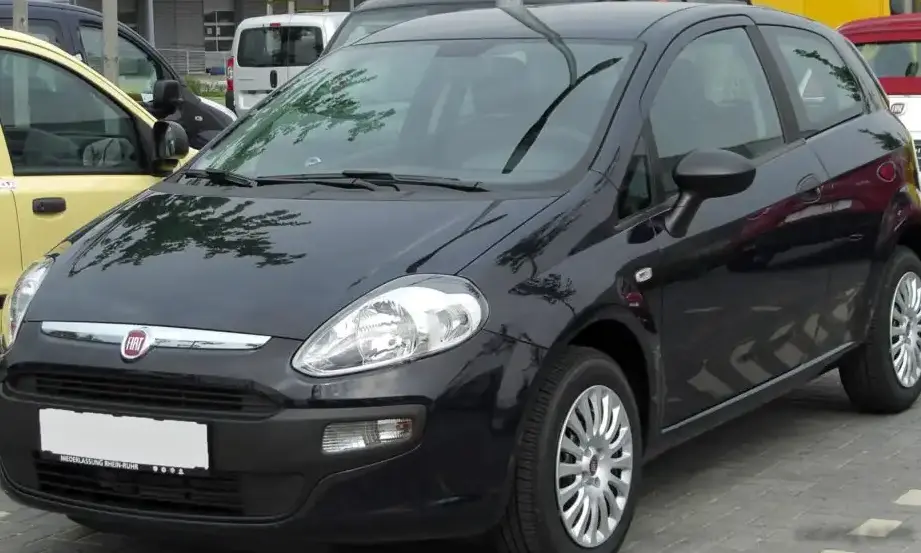
The Fiat Punto Evo 1.3 16V Multijet (90 hp) Dualogic, produced from 2009, represented a significant update to Fiat’s popular supermini. Part of the 199 series, the Evo aimed to modernize the Punto range with revised styling, improved interior quality, and updated engine technology. This particular variant, combining the fuel-efficient 1.3 Multijet diesel engine with Fiat’s Dualogic automated manual transmission, was positioned as a practical and economical choice within the Punto Evo lineup, appealing to buyers seeking low running costs and ease of use. It was primarily sold in European markets, where small, fuel-efficient diesels were highly sought after.
Technical Specifications
| Brand | Fiat |
| Model | Punto |
| Generation | Punto Evo (199) |
| Type (Engine) | 1.3 16V Multijet (90 Hp) Dualogic |
| Start of production | 2009 |
| End of production | 2009 |
| Powertrain Architecture | Internal Combustion engine |
| Body type | Hatchback |
| Seats | 5 |
| Doors | 3-5 |
| Fuel consumption (urban) | 5.5 l/100 km (42.8 US mpg, 51.4 UK mpg, 18.2 km/l) |
| Fuel consumption (extra urban) | 3.7 l/100 km (63.6 US mpg, 76.3 UK mpg, 27 km/l) |
| Fuel consumption (combined) | 4.4 l/100 km (53.5 US mpg, 64.2 UK mpg, 22.7 km/l) |
| CO2 emissions | 115 g/km |
| Fuel Type | Diesel |
| Acceleration 0 – 100 km/h | 11.9 sec |
| Acceleration 0 – 62 mph | 11.9 sec |
| Acceleration 0 – 60 mph | 11.3 sec |
| Maximum speed | 175 km/h (108.74 mph) |
| Emission standard | Euro 4 |
| Weight-to-power ratio | 12.6 kg/Hp, 79.6 Hp/tonne |
| Weight-to-torque ratio | 5.7 kg/Nm, 177 Nm/tonne |
| Power | 90 Hp @ 4000 rpm |
| Power per litre | 72.1 Hp/l |
| Torque | 200 Nm @ 1750 rpm (147.51 lb.-ft. @ 1750 rpm) |
| Engine layout | Front, Transverse |
| Engine Model/Code | 199A3000 |
| Engine displacement | 1248 cm3 (76.16 cu. in.) |
| Number of cylinders | 4 |
| Engine configuration | Inline |
| Cylinder Bore | 69.6 mm (2.74 in.) |
| Piston Stroke | 82 mm (3.23 in.) |
| Compression ratio | 17.6:1 |
| Number of valves per cylinder | 4 |
| Fuel injection system | Diesel Commonrail |
| Engine aspiration | Turbocharger, Intercooler |
| Valvetrain | DOHC |
| Engine oil capacity | 3.2 l (3.38 US qt | 2.82 UK qt) |
| Coolant | 6.7 l (7.08 US qt | 5.9 UK qt) |
| Kerb Weight | 1130 kg (2491.22 lbs.) |
| Max. weight | 1690 kg (3725.81 lbs.) |
| Max load | 560 kg (1234.59 lbs.) |
| Trunk (boot) space – minimum | 275 l (9.71 cu. ft.) |
| Trunk (boot) space – maximum | 1030 l (36.37 cu. ft.) |
| Fuel tank capacity | 45 l (11.89 US gal | 9.9 UK gal) |
| Permitted trailer load with brakes (12%) | 1000 kg (2204.62 lbs.) |
| Permitted trailer load without brakes | 400 kg (881.85 lbs.) |
| Length | 4065 mm (160.04 in.) |
| Width | 1687 mm (66.42 in.) |
| Height | 1490 mm (58.66 in.) |
| Wheelbase | 2510 mm (98.82 in.) |
| Front track | 1473 mm (57.99 in.) |
| Rear (Back) track | 1466 mm (57.72 in.) |
| Drag coefficient (Cd) | 0.34 |
| Minimum turning circle | 10.9 m (35.76 ft.) |
| Drivetrain Architecture | The Internal combustion engine (ICE) drives the front wheels of the vehicle. |
| Drive wheel | Front wheel drive |
| Number of gears and type of gearbox | 6 gears, automatic transmission Dualogic |
| Front suspension | Independent, type McPherson with coil spring and anti-roll bar |
| Rear suspension | Semi-independent, coil spring |
| Front brakes | Ventilated discs |
| Rear brakes | Drum |
| Assisting systems | ABS (Anti-lock braking system) |
| Steering type | Steering rack and pinion |
| Power steering | Electric Steering |
| Tires size | 185/65 R15; 195/55 R16; 205/45 R17 |
| Wheel rims size | 15; 16; 17 |
Powertrain & Engine Architecture
The heart of this Punto Evo variant is the 1.3 16V Multijet diesel engine, identified by the code 199A3000. This engine is a four-cylinder, inline configuration, displacing 1248 cc. It features a common rail direct injection system, delivering fuel at extremely high pressure for optimized combustion. A turbocharger with an intercooler further enhances performance and efficiency. The engine utilizes a double overhead camshaft (DOHC) valvetrain with four valves per cylinder, contributing to its relatively high specific output. The 17.6:1 compression ratio is typical for a diesel engine, maximizing thermal efficiency. The Dualogic transmission is a five-speed automated manual gearbox. It’s essentially a conventional manual transmission with electronically controlled actuators that handle clutch operation and gear changes. While offering some of the convenience of a traditional automatic, it can sometimes exhibit slower and less smooth shifts compared to a torque converter automatic.
Driving Characteristics
The 90 hp output and 200 Nm (147.5 lb-ft) of torque provide adequate, though not exhilarating, performance. Acceleration from 0-60 mph takes around 11.3 seconds, and the top speed is 175 km/h (108.74 mph). The Dualogic transmission, while improving convenience, doesn’t fully exploit the engine’s torque. Shifts can be noticeable, and the transmission sometimes hesitates during quick acceleration. Compared to the manual version, the Dualogic feels slightly less responsive. Higher output versions, like those with more powerful engines, offered significantly quicker acceleration and a more engaging driving experience. However, the 1.3 Multijet Dualogic prioritizes fuel economy and ease of driving, making it well-suited for urban commutes and longer journeys where outright speed isn’t a priority.
Equipment & Trim Levels
The 1.3 Multijet Dualogic typically came equipped with air conditioning, power steering, electric front windows, and a basic audio system. Safety features included ABS brakes and driver/passenger airbags. Higher trim levels, such as the Dynamic or Sport, added features like alloy wheels, rear electric windows, a more sophisticated audio system, and climate control. Interior upholstery was typically cloth, with a functional and durable design. Optional extras included parking sensors, a sunroof, and upgraded audio systems.
Chassis & Braking
The Punto Evo utilizes a McPherson strut suspension setup at the front and a semi-independent twist beam suspension at the rear. This configuration provides a reasonable balance between ride comfort and handling. The front brakes are ventilated discs, offering good stopping power, while the rear brakes are drums, a cost-saving measure common in this class of vehicle. Electric power steering provides light and easy steering, making it ideal for city driving. Stabilizer bars were fitted to both the front and rear axles to reduce body roll during cornering.
Market Reception & Comparison
The Punto Evo 1.3 Multijet Dualogic was generally well-received for its fuel efficiency and low running costs. Critics praised its practicality and comfortable ride. However, the Dualogic transmission received mixed reviews, with some finding it jerky and slow compared to traditional automatics or manual gearboxes. Compared to other Punto Evo trims, such as the 1.4-liter petrol versions, the 1.3 Multijet offered significantly better fuel economy but less outright performance. Against competitors like the Renault Clio and Peugeot 207, the Punto Evo offered a competitive package in terms of price, fuel economy, and practicality.
Legacy
The 1.3 Multijet engine proved to be a reliable and durable unit, and many examples are still on the road today. The Dualogic transmission, however, is known to require more frequent maintenance and can be prone to issues with the actuators and control unit. In the used car market, the Punto Evo 1.3 Multijet Dualogic remains an affordable and economical option for buyers seeking a small, fuel-efficient hatchback. However, potential buyers should be aware of the potential maintenance costs associated with the Dualogic transmission and ensure it has been properly serviced.