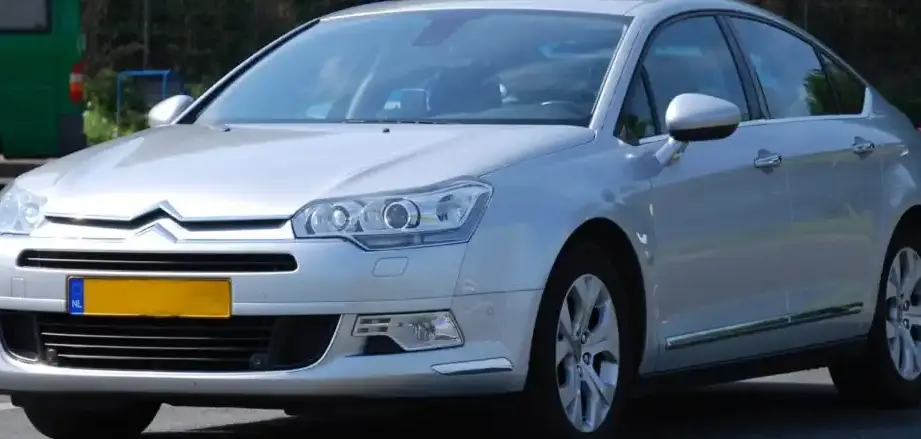
The Citroën C5 II, specifically the 1.6 THP (156 hp) variant produced between 2009 and 2010, represents a significant iteration of Citroën’s large family car. Falling within the first phase (Phase I) of the second-generation C5 (introduced in 2008), this model aimed to blend comfort, technology, and reasonable performance within the D-segment. Positioned as a mid-range offering, it slotted between the base 1.8-liter petrol engine and the more powerful 2.0-liter HDi diesel options. The C5 II was designed to compete with vehicles like the Ford Mondeo, Volkswagen Passat, and Peugeot 407, offering a distinctly French approach to ride quality and interior design.
Technical Specifications
| Brand | Citroen |
| Model | C5 |
| Generation | C5 II (Phase I, 2008) |
| Type (Engine) | 1.6 THP (156 Hp) |
| Start of production | 2009 |
| End of production | 2010 |
| Powertrain Architecture | Internal Combustion engine |
| Body type | Sedan |
| Seats | 5 |
| Doors | 4 |
| Fuel consumption (urban) | 9.8 l/100 km (24 US mpg, 28.8 UK mpg, 10.2 km/l) |
| Fuel consumption (extra urban) | 5.5 l/100 km (42.8 US mpg, 51.4 UK mpg, 18.2 km/l) |
| Fuel consumption (combined) | 7.1 l/100 km (33.1 US mpg, 39.8 UK mpg, 14.1 km/l) |
| CO2 emissions | 167 g/km |
| Fuel Type | Petrol (Gasoline) |
| Acceleration 0 – 100 km/h | 8.6 sec |
| Acceleration 0 – 62 mph | 8.6 sec |
| Acceleration 0 – 60 mph | 8.2 sec |
| Maximum speed | 210 km/h (130.49 mph) |
| Emission standard | Euro 5 |
| Weight-to-power ratio | 9.4 kg/Hp, 106.1 Hp/tonne |
| Weight-to-torque ratio | 6.1 kg/Nm, 163.2 Nm/tonne |
| Power | 156 Hp @ 6000 rpm |
| Power per litre | 97.6 Hp/l |
| Torque | 240 Nm @ 1400 rpm (177.01 lb.-ft. @ 1400 rpm) |
| Engine layout | Front, Transverse |
| Engine Model/Code | 5FV EP6DT |
| Engine displacement | 1598 cm3 (97.52 cu. in.) |
| Number of cylinders | 4 |
| Engine configuration | Inline |
| Cylinder Bore | 77 mm (3.03 in.) |
| Piston Stroke | 85.8 mm (3.38 in.) |
| Compression ratio | 10.5:1 |
| Number of valves per cylinder | 4 |
| Fuel injection system | Direct injection |
| Engine aspiration | Turbocharger, Intercooler |
| Valvetrain | DOHC |
| Engine oil capacity | 4.25 l (4.49 US qt | 3.74 UK qt) |
| Kerb Weight | 1471 kg (3243 lbs.) |
| Max. weight | 2065 kg (4552.55 lbs.) |
| Max load | 594 kg (1309.55 lbs.) |
| Trunk (boot) space – minimum | 439 l (15.5 cu. ft.) |
| Fuel tank capacity | 71 l (18.76 US gal | 15.62 UK gal) |
| Max. roof load | 80 kg (176.37 lbs.) |
| Permitted trailer load with brakes (12%) | 1500 kg (3306.93 lbs.) |
| Permitted trailer load without brakes | 750 kg (1653.47 lbs.) |
| Permitted towbar download | 70 kg (154.32 lbs.) |
| Length | 4779 mm (188.15 in.) |
| Width | 1860 mm (73.23 in.) |
| Width including mirrors | 2096 mm (82.52 in.) |
| Height | 1451-1458 mm (57.13 – 57.4 in.) |
| Wheelbase | 2815 mm (110.83 in.) |
| Front track | 1586 mm (62.44 in.) |
| Rear (Back) track | 1557 mm (61.3 in.) |
| Front overhang | 1054 mm (41.5 in.) |
| Rear overhang | 910 mm (35.83 in.) |
| Minimum turning circle | 11.7 m (38.39 ft.) |
| Drivetrain Architecture | Front wheel drive |
| Drive wheel | Front wheel drive |
| Number of gears and type of gearbox | 6 gears, manual transmission |
| Front suspension | Double wishbone |
| Rear suspension | Independent multi-link suspension |
| Front brakes | Ventilated discs |
| Rear brakes | Disc |
| Assisting systems | ABS (Anti-lock braking system) |
| Steering type | Steering rack and pinion |
| Power steering | Hydraulic Steering |
| Tires size | 225/60 R16 |
| Wheel rims size | 16 |
Powertrain & Engine Architecture
The heart of this C5 variant is the 1.6 THP engine, a product of the Prince engine family jointly developed by PSA Peugeot Citroën and BMW. The ‘THP’ designation stands for Turbo High Pressure, indicating the engine’s forced induction and direct fuel injection system. Specifically, the 5FV EP6DT engine code denotes a 1.6-liter inline-four cylinder engine. This engine utilizes direct injection, delivering fuel directly into the combustion chamber for improved efficiency and power. The engine also features a twin-scroll turbocharger, which helps to reduce turbo lag and improve responsiveness. The valvetrain is a Double Overhead Camshaft (DOHC) design with four valves per cylinder, optimizing airflow for increased performance. The engine is transversely mounted at the front of the vehicle. The 1.6 THP was paired with a 6-speed manual transmission, delivering power to the front wheels. While an automatic transmission was offered on other C5 II models, the 156 hp version was exclusively available with the manual gearbox.
Driving Characteristics
The 1.6 THP engine provided a noticeable step up in performance compared to the base 1.8-liter petrol engine. With 156 horsepower and 240 Nm (177 lb-ft) of torque, the C5 II 1.6 THP offered brisk acceleration, achieving 0-60 mph in approximately 8.2 seconds. The turbocharger provided a good amount of low-end torque, making it relatively easy to drive in urban environments. However, the power delivery wasn’t as linear as some naturally aspirated engines, with a slight surge of power as the turbo spooled up. Compared to the higher-output 2.0-liter HDi diesel, the 1.6 THP felt less effortless at highway speeds, requiring more downshifting for overtaking maneuvers. The 6-speed manual transmission was well-matched to the engine, offering precise shifts and a reasonable gear ratio spread. The C5 II’s renowned hydropneumatic suspension (depending on trim level) contributed to a comfortable and composed ride, even on uneven surfaces.
Equipment & Trim Levels
The 1.6 THP variant of the C5 II typically came equipped with a respectable level of standard features. These included air conditioning, power windows, central locking, a CD stereo system, and alloy wheels. Higher trim levels, such as Exclusive, added features like automatic climate control, rain-sensing wipers, parking sensors, and a more luxurious interior trim. Interior upholstery was typically cloth, with leather options available as an upgrade. The dashboard layout was modern for its time, featuring a centrally mounted infotainment screen and a driver-focused instrument cluster. Optional extras included a navigation system, a panoramic sunroof, and xenon headlights.
Chassis & Braking
The C5 II featured a robust chassis designed for comfort and safety. The front suspension utilized a double wishbone setup, while the rear suspension employed an independent multi-link system. This configuration provided a good balance between ride comfort and handling. Depending on the trim level, some models were equipped with Citroën’s Hydractive III+ suspension system, which automatically adjusted the damping characteristics based on road conditions and driving style. Braking duties were handled by ventilated discs at the front and solid discs at the rear. Anti-lock Braking System (ABS) was standard, providing enhanced braking performance and stability. The steering was a hydraulic power-assisted rack and pinion system, offering precise and responsive steering feel.
Market Reception & Comparison
The Citroën C5 II 1.6 THP was generally well-received by automotive critics. It was praised for its comfortable ride, refined engine, and stylish interior. However, some critics noted that the engine could be a bit noisy under hard acceleration and that the fuel economy wasn’t quite as good as some of its diesel rivals. Compared to the 2.0-liter HDi diesel, the 1.6 THP offered a more engaging driving experience but lacked the diesel’s superior fuel efficiency and low-end torque. In terms of reliability, the 1.6 THP engine has been known to experience issues with carbon buildup on the intake valves, requiring periodic cleaning. However, with regular maintenance, it is generally a reliable engine.
Legacy
The Citroën C5 II 1.6 THP remains a popular choice in the used car market, particularly for those seeking a comfortable and stylish family car. While the 1.6 THP engine requires diligent maintenance to prevent carbon buildup, it offers a good balance of performance and fuel economy. The C5 II’s comfortable ride and spacious interior continue to appeal to buyers looking for a refined and practical vehicle. The model represents a high point in Citroën’s commitment to comfort and innovation, and it remains a distinctive and appealing option in the D-segment.