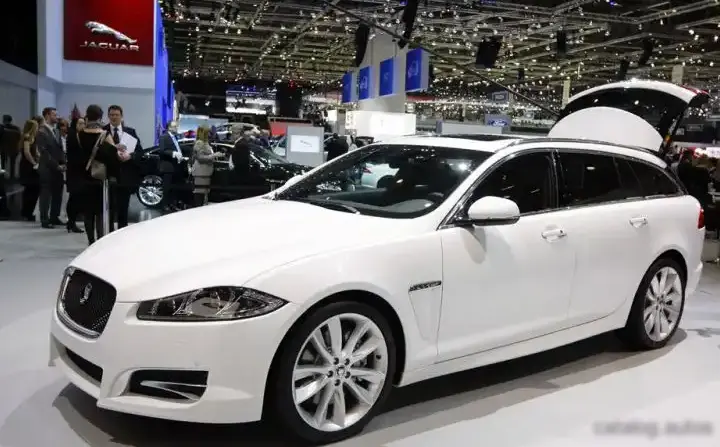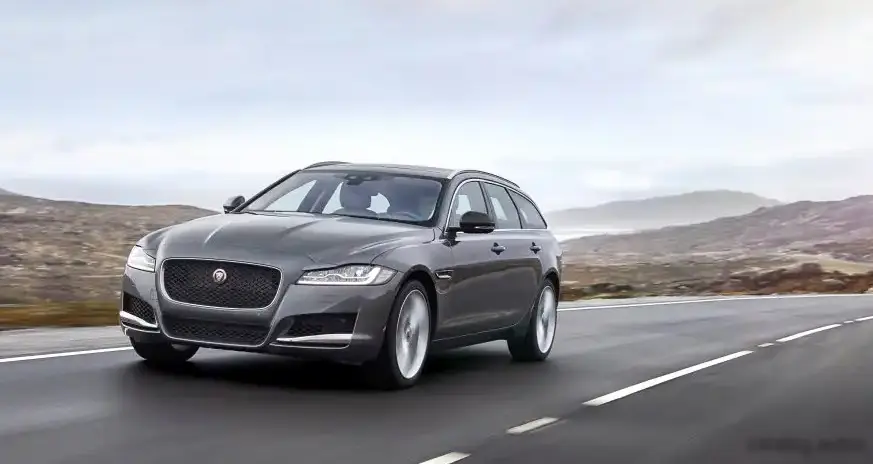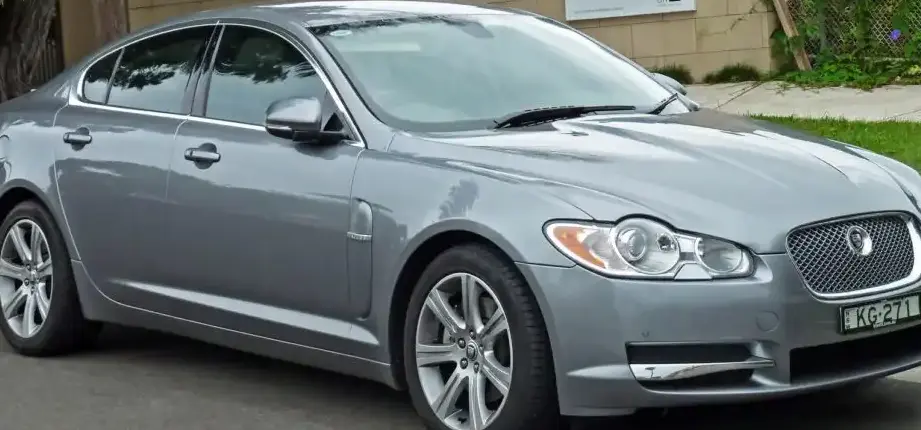
The Jaguar XF (X250) 5.0 V8, producing 470 horsepower, represented the flagship performance variant of the first-generation XF sedan, produced between 2009 and 2011. Introduced as a direct competitor to the BMW 5 Series and Mercedes-Benz E-Class, the XF aimed to blend British luxury with sporting dynamics. This high-output model, paired exclusively with a six-speed automatic transmission and rear-wheel drive, positioned itself as the ultimate expression of the XF’s potential, offering a significant performance upgrade over the more common naturally aspirated and supercharged V6 options.
Technical Specifications
| Brand | Jaguar |
| Model | XF |
| Generation | XF (X250) |
| Type (Engine) | 5.0 V8 (470 Hp) Automatic |
| Start of production | 2009 |
| End of production | 2011 |
| Powertrain Architecture | Internal Combustion engine |
| Body type | Sedan |
| Seats | 5 |
| Doors | 4 |
| Fuel consumption (economy) – urban (EPA) | 15.7 l/100 km (15 US mpg, 18 UK mpg, 6.4 km/l) |
| Fuel consumption (economy) – extra urban (EPA) | 11.2 l/100 km (21 US mpg, 25.2 UK mpg, 8.9 km/l) |
| Fuel consumption (economy) – combined (EPA) | 13.8 l/100 km (17 US mpg, 20.5 UK mpg, 7.2 km/l) |
| Fuel Type | Petrol (Gasoline) |
| Acceleration 0 – 60 mph | 4.9 sec |
| Maximum speed | 250 km/h (155.34 mph), Electronically limited |
| Weight-to-power ratio | 4.2 kg/Hp, 240.7 Hp/tonne |
| Weight-to-torque ratio | 3.4 kg/Nm, 294.4 Nm/tonne |
| Power | 470 Hp @ 6000-6500 rpm |
| Power per litre | 94 Hp/l |
| Torque | 575 Nm @ 2500-5500 rpm (424.1 lb.-ft. @ 2500-5500 rpm) |
| Engine layout | Front, Longitudinal |
| Engine Model/Code | AJ133S, 508PS |
| Engine displacement | 5000 cm3 (305.12 cu. in.) |
| Number of cylinders | 8 |
| Engine configuration | V-engine |
| Cylinder Bore | 92.5 mm (3.64 in.) |
| Piston Stroke | 93 mm (3.66 in.) |
| Compression ratio | 9.5:1 |
| Number of valves per cylinder | 4 |
| Fuel injection system | Direct injection |
| Engine aspiration | Supercharger, Intercooler |
| Valvetrain | DOHC |
| Engine oil capacity | 7.25 l (7.66 US qt | 6.38 UK qt) |
| Coolant | 12.3 l (13 US qt | 10.82 UK qt) |
| Kerb Weight | 1953 kg (4305.63 lbs.) |
| Max. weight | 2370 kg (5224.96 lbs.) |
| Max load | 417 kg (919.33 lbs.) |
| Trunk (boot) space – minimum | 500 l (17.66 cu. ft.) |
| Trunk (boot) space – maximum | 923 l (32.6 cu. ft.) |
| Fuel tank capacity | 70 l (18.49 US gal | 15.4 UK gal) |
| Length | 4961 mm (195.31 in.) |
| Width | 1877 mm (73.9 in.) |
| Width including mirrors | 2053 mm (80.83 in.) |
| Height | 1460 mm (57.48 in.) |
| Wheelbase | 2909 mm (114.53 in.) |
| Front track | 1559 mm (61.38 in.) |
| Rear (Back) track | 1571 mm (61.85 in.) |
| Drag coefficient (Cd) | 0.29 |
| Minimum turning circle (turning diameter) | 11.48 m (37.66 ft.) |
| Drivetrain Architecture | The Internal combustion engine (ICE) drives the rear wheels of the vehicle. |
| Drive wheel | Rear wheel drive |
| Number of gears and type of gearbox | 6 gears, automatic transmission |
| Front suspension | Coil spring, Double wishbone, Transverse stabilizer |
| Rear suspension | Independent multi-link spring suspension with stabilizer |
| Front brakes | Ventilated discs |
| Rear brakes | Ventilated discs |
| Assisting systems | ABS (Anti-lock braking system) |
| Steering type | Steering rack and pinion |
| Power steering | Hydraulic Steering |
| Tires size | Front wheel tires: 255/35 R20Rear wheel tires: 285/30 R20 |
| Wheel rims size | Front wheel rims: 8.5J x 20Rear wheel rims: 9.5J x 20 |
INTRODUCTION
The Jaguar XF 5.0 V8 Automatic, launched in 2009, was the performance halo of the X250 generation. Built on Jaguar’s XF platform (a significant departure from the previous XJ series), it aimed to deliver a more dynamic and contemporary driving experience. The X250 XF represented a bold new direction for Jaguar, moving away from traditional styling cues and embracing a more modern, sporty aesthetic. This top-tier variant was positioned above the 4.2-liter naturally aspirated V8 and the various V6 models, offering a substantial increase in power and performance. It was sold primarily in North America, Europe, and select Asian markets.
Powertrain & Engine Architecture
At the heart of the XF 5.0 V8 lies the AJ133S engine, a 5.0-liter supercharged V8. This engine, a descendant of Jaguar’s long-standing V8 lineage, utilizes a Roots-type supercharger for forced induction, providing instant throttle response and a broad torque curve. The engine features direct fuel injection, optimizing combustion efficiency and power output. The valvetrain employs double overhead camshafts (DOHC) with four valves per cylinder, further enhancing breathing and performance. The six-speed automatic transmission, sourced from ZF, was specifically calibrated to handle the engine’s substantial torque output. This transmission featured a manual shift mode, allowing drivers to exert more control over gear selection. The engine code 508PS refers to the metric horsepower rating.
Driving Characteristics
The XF 5.0 V8 Automatic delivered exhilarating performance. The supercharger eliminated turbo lag, providing immediate power delivery across the rev range. Acceleration from 0 to 60 mph was achieved in just 4.9 seconds, and the electronically limited top speed of 155 mph provided ample performance for highway driving. The ZF six-speed automatic transmission, while smooth and responsive, wasn’t as quick-shifting as some contemporary dual-clutch transmissions. However, its robustness and reliability were highly regarded. Compared to the naturally aspirated V8, the supercharged version offered a significantly more potent driving experience, while the V6 models prioritized fuel economy and affordability. The rear-wheel-drive configuration contributed to a balanced chassis and engaging handling characteristics.
Equipment & Trim Levels
The 5.0 V8 Automatic typically came standard with a high level of equipment. Luxury features included leather upholstery, heated and ventilated front seats, a premium audio system, and a navigation system. Standard exterior features included 20-inch alloy wheels, a rear spoiler, and chrome exterior trim. Optional extras included adaptive cruise control, blind-spot monitoring, and a panoramic sunroof. Interior trim options included various wood veneers and aluminum accents. The XF 5.0 V8 was generally offered as a single, well-equipped trim level, with options allowing for personalization.
Chassis & Braking
The XF 5.0 V8 featured a sophisticated chassis designed to handle the increased power. The front suspension utilized a double wishbone configuration with coil springs and a transverse stabilizer bar, while the rear suspension employed an independent multi-link setup, also with a stabilizer bar. This suspension setup provided a comfortable ride while maintaining excellent handling characteristics. Braking duties were handled by ventilated discs on all four wheels, providing ample stopping power. An anti-lock braking system (ABS) was standard, enhancing safety and control. The larger wheels and tires contributed to improved grip and handling.
Market Reception & Comparison
The Jaguar XF 5.0 V8 Automatic was generally well-received by automotive critics. It was praised for its powerful engine, luxurious interior, and engaging driving dynamics. However, some critics noted that the fuel economy was relatively poor, and the infotainment system was somewhat dated. Compared to its rivals, such as the BMW 550i and Mercedes-Benz E550, the XF offered a unique blend of British luxury and sporting performance. The XF’s styling was also a point of differentiation, with its more contemporary and aggressive design appealing to a younger demographic. Reliability was generally good, although the complex supercharged engine required more diligent maintenance than the naturally aspirated V6 models.
Legacy
The Jaguar XF 5.0 V8 Automatic remains a desirable used car today, particularly among enthusiasts who appreciate its performance and luxury. The AJ133S engine is known for its robustness, but regular maintenance is crucial to ensure its longevity. Common issues include oil leaks and occasional supercharger pulley failures. Despite its age, the XF 5.0 V8 continues to offer a compelling driving experience and represents a significant milestone in Jaguar’s history, marking a successful transition towards a more modern and dynamic brand identity. The car’s blend of power, luxury, and distinctive styling has ensured its continued appeal in the used car market.