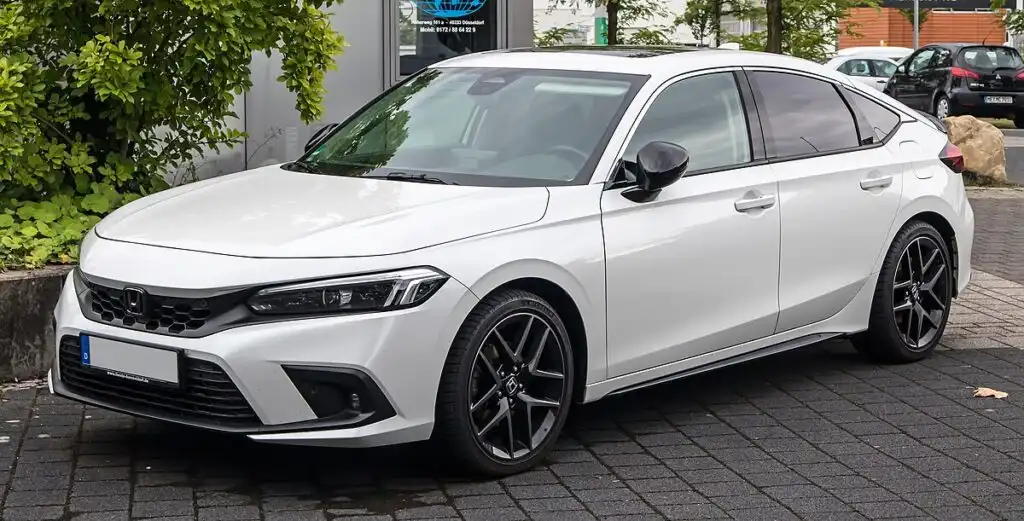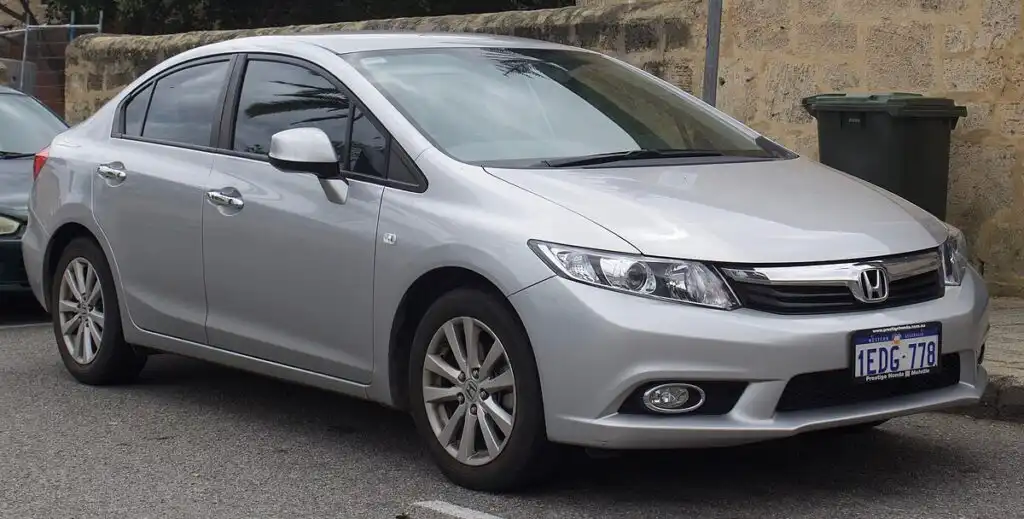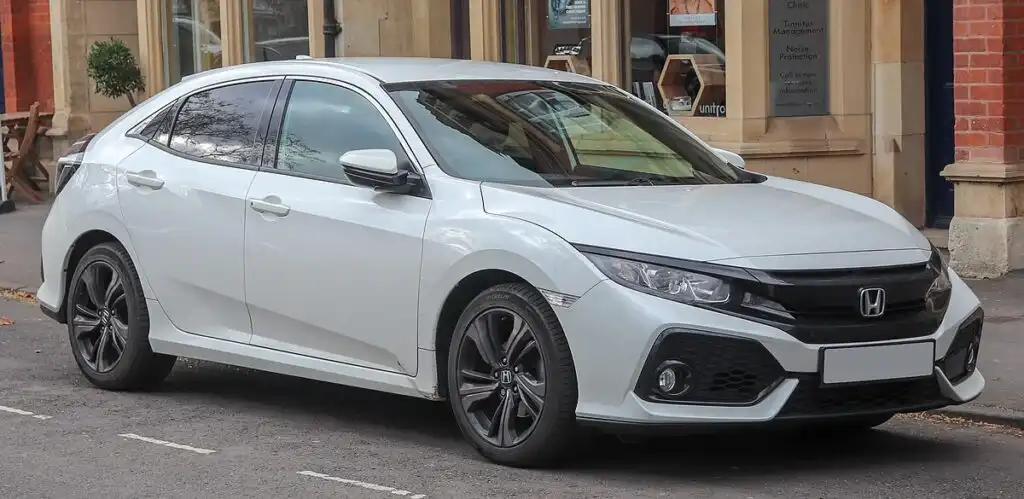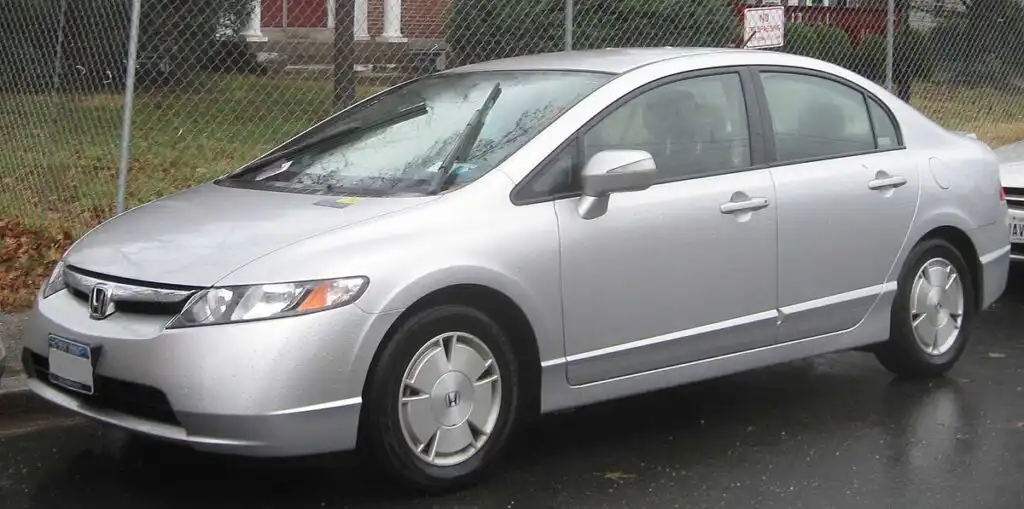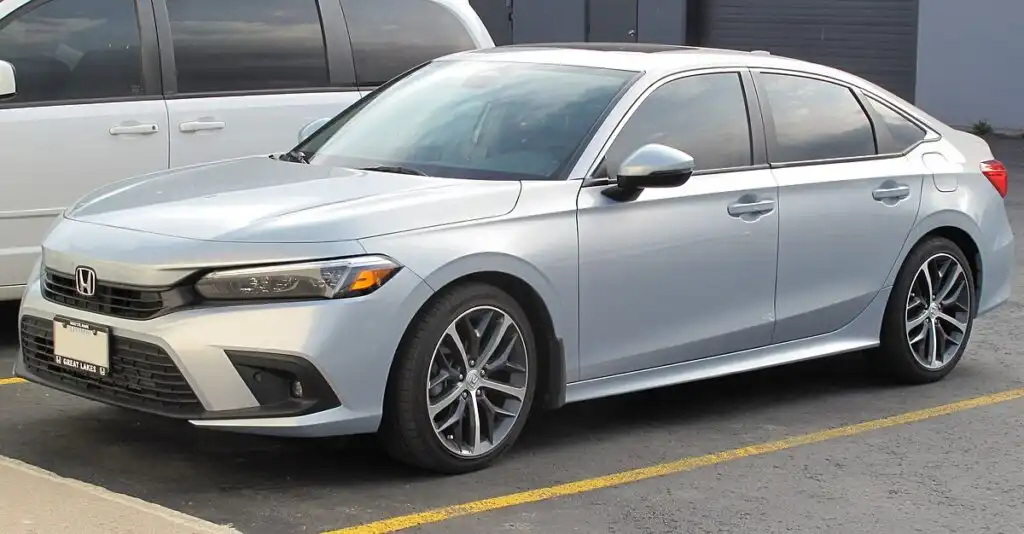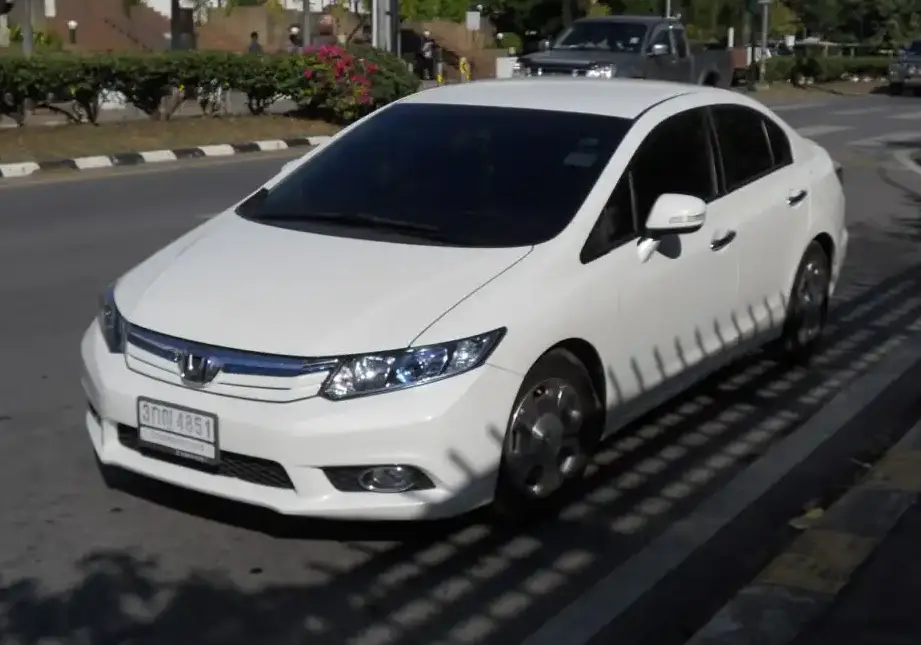
The Honda Civic IX Sedan 1.5 Hybrid, produced from 2012 to 2014, represented Honda’s continued push into fuel efficiency within the highly competitive compact sedan segment. This variant, utilizing Honda’s Integrated Motor Assist (IMA) hybrid technology, was positioned as an eco-conscious option within the ninth-generation Civic lineup, appealing to buyers prioritizing fuel economy over outright performance. It served as a bridge between the more conventional gasoline-powered Civics and the eventual introduction of more advanced hybrid systems in later models. The 1.5 Hybrid utilized Honda’s e-CVT transmission, a key component of its fuel-saving strategy.
Technical Specifications
| Brand | Honda |
| Model | Civic |
| Generation | Civic IX Sedan |
| Type (Engine) | 1.5 (110 Hp) Hybrid e-CVT |
| Start of production | 2012 |
| End of production | 2014 |
| Powertrain Architecture | FHEV (Full Hybrid Electric Vehicle) |
| Body type | Sedan |
| Seats | 5 |
| Doors | 4 |
| Fuel consumption (combined) | 5.3 l/100 km (44.4 US mpg, 53.3 UK mpg, 18.9 km/l) |
| Fuel Type | Petrol (Gasoline) |
| Emission standard | AT-PZEV |
| Weight-to-power ratio | 11.8 kg/Hp, 85 Hp/tonne |
| Weight-to-torque ratio | 7.5 kg/Nm, 132.9 Nm/tonne |
| Gross battery capacity | 0.64 kWh |
| Battery voltage | 144 V |
| Battery technology | Lithium-ion (Li-Ion) |
| Battery weight | 22 kg (48.5 lbs) |
| Electric motor power | 27 Hp @ 1546-3000 rpm |
| Electric motor Torque | 106 Nm @ 500-1546 rpm (78.18 lb.-ft. @ 500-1546 rpm) |
| Electric motor location | Between the combustion engine and the transmission |
| Power | 110 Hp @ 5500 rpm |
| Power per litre | 73.5 Hp/l |
| Torque | 172 Nm @ 1000-3500 rpm (126.86 lb.-ft. @ 1000-3500 rpm) |
| Maximum engine speed | 6000 rpm |
| Engine layout | Front, Transverse |
| Engine displacement | 1497 cm3 (91.35 cu. in) |
| Number of cylinders | 4 |
| Engine configuration | Inline |
| Cylinder Bore | 73 mm (2.87 in) |
| Piston Stroke | 89.4 mm (3.52 in) |
| Compression ratio | 10.8:1 |
| Number of valves per cylinder | 2 |
| Fuel injection system | Multi-port manifold injection |
| Engine aspiration | Naturally aspirated engine |
| Valvetrain | SOHC i-VTEC |
| Engine oil capacity | 3.6 l (3.8 US qt | 3.17 UK qt) |
| Coolant | 5.18 l (5.47 US qt | 4.56 UK qt) |
| Kerb Weight | 1294-1304 kg (2852.78 – 2874.83 lbs) |
| Trunk (boot) space (minimum) | 303 l (10.7 cu. ft) |
| Fuel tank capacity | 50 l (13.21 US gal | 11 UK gal) |
| Length | 4503 mm (177.28 in) |
| Width | 1753 mm (69.02 in) |
| Height | 1430 mm (56.3 in) |
| Wheelbase | 2670 mm (105.12 in) |
| Front track | 1501 mm (59.09 in) |
| Rear (Back) track | 1529 mm (60.2 in) |
| Minimum turning circle | 10.8 m (35.43 ft) |
| Drivetrain Architecture | The Internal combustion engine (ICE) and electric motor drive the front wheels of the car with the ability to work in full electric or mixed mode. |
| Drive wheel | Front wheel drive |
| Number of gears and type of gearbox | automatic transmission e-CVT |
| Front suspension | Independent type McPherson |
| Rear suspension | Independent multi-link suspension |
| Front brakes | Ventilated discs, 261.62 mm |
| Rear brakes | Drum, 200.66 mm |
| Assisting systems | ABS (Anti-lock braking system) |
| Steering type | Steering rack and pinion |
| Power steering | Electric Steering |
| Tires size | 195/65 R15 |
| Wheel rims size | 6J x 15 |
Powertrain & Engine Architecture
At the heart of the Civic IX Hybrid lies a 1.5-liter, inline-four cylinder gasoline engine (internal code R15A1) paired with Honda’s Integrated Motor Assist (IMA) hybrid system. This engine produced 110 horsepower at 5500 rpm and 126.86 lb-ft of torque between 1000 and 3500 rpm. The engine featured Honda’s Single Overhead Cam (SOHC) i-VTEC variable valve timing system, optimizing efficiency and power delivery. Fuel delivery was handled by a multi-port fuel injection system. The electric motor, positioned between the engine and the e-CVT, contributed an additional 27 horsepower and 78.18 lb-ft of torque. The e-CVT (electronic Continuously Variable Transmission) wasn’t a traditional CVT with belts and pulleys; instead, it utilized a planetary gearset and two electric motor/generators to seamlessly blend power from the gasoline engine and electric motor. This system allowed for smooth, stepless acceleration and maximized fuel efficiency. The lithium-ion battery pack, with a capacity of 0.64 kWh and a voltage of 144V, was located under the rear seats.
Driving Characteristics
The 1.5L Hybrid e-CVT offered a distinctly different driving experience compared to the standard gasoline-powered Civic models. Acceleration was adequate for everyday driving, but not particularly sporty. The e-CVT prioritized fuel efficiency over responsiveness, resulting in a smooth, but sometimes less engaging, driving experience. The electric motor provided instant torque at low speeds, aiding in city driving and providing a quiet, almost silent, operation in electric-only mode at lower speeds. The combined output of the engine and motor allowed for reasonable highway cruising, although passing maneuvers required more planning. Compared to the 1.8L gasoline engine with a manual transmission, the Hybrid offered less overall power but significantly better fuel economy. The e-CVT’s programming focused on keeping the engine operating in its most efficient range, sometimes resulting in the engine droning under heavy acceleration.
Equipment & Trim Levels
The Civic IX Hybrid typically came well-equipped, reflecting its position as a more technologically advanced and environmentally friendly option. Standard features generally included air conditioning, power windows and locks, a basic audio system with MP3 connectivity, and ABS brakes. Higher trim levels added features like alloy wheels, a more advanced audio system, a rearview camera, and automatic climate control. Interior upholstery was typically cloth, with options for upgraded materials. The dashboard layout was similar to other Civic IX models, with a focus on functionality and ease of use. The hybrid-specific instrumentation included displays showing energy flow and fuel economy information.
Chassis & Braking
The Civic IX Hybrid utilized a MacPherson strut front suspension and a multi-link rear suspension, providing a comfortable and controlled ride. The suspension was tuned to balance ride comfort with handling stability. The front brakes were ventilated discs, while the rear brakes were drum brakes – a cost-saving measure common in this class of vehicle. ABS (Anti-lock Braking System) was standard. The steering was electric power-assisted, providing light and precise steering feel. The weight of the hybrid components, particularly the battery pack, did slightly impact the car’s handling, making it feel a bit heavier than the standard Civic models.
Market Reception & Comparison
The Civic IX Hybrid was generally well-received by critics for its exceptional fuel economy and smooth driving experience. However, some reviewers noted its lack of sporty performance and the somewhat uninspiring driving dynamics of the e-CVT. Compared to other hybrid options available at the time, such as the Toyota Prius, the Civic Hybrid offered a more conventional driving experience and a more traditional sedan body style. Fuel economy was a key selling point, consistently achieving around 44-45 mpg in real-world driving. Reliability was generally good, although some owners reported issues with the hybrid battery pack over the long term.
Legacy
The Honda Civic IX Hybrid played a significant role in popularizing hybrid technology among mainstream car buyers. While the first-generation IMA system wasn’t without its drawbacks, it demonstrated Honda’s commitment to fuel efficiency and laid the groundwork for more advanced hybrid systems in later Civic models. Today, used Civic IX Hybrids are relatively affordable and can offer a cost-effective way to achieve excellent fuel economy. However, potential buyers should be aware of the potential for battery replacement costs, as the hybrid battery pack has a limited lifespan. The 1.5L Hybrid e-CVT remains a testament to Honda’s engineering prowess and its dedication to creating environmentally responsible vehicles.