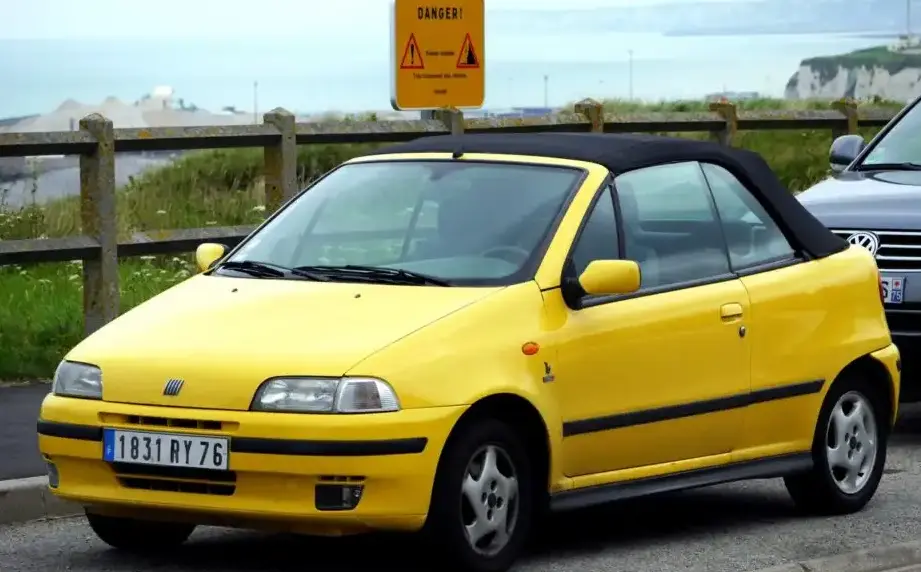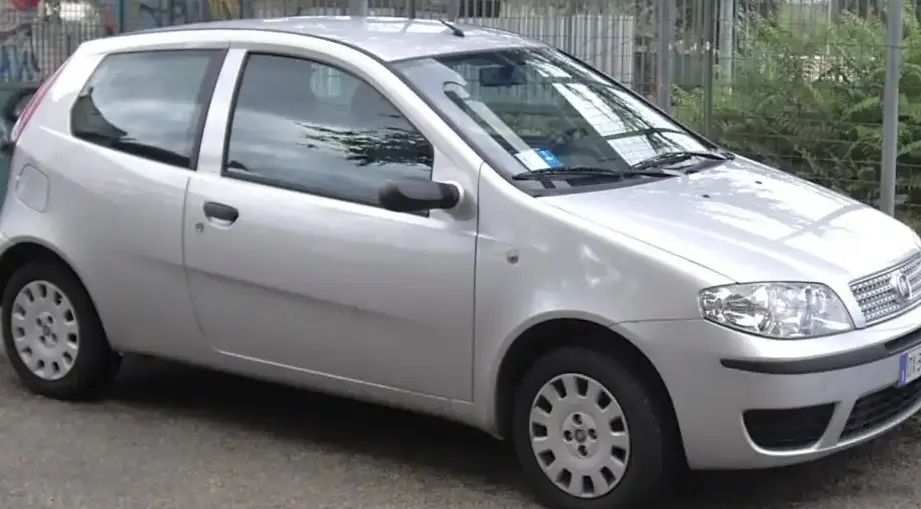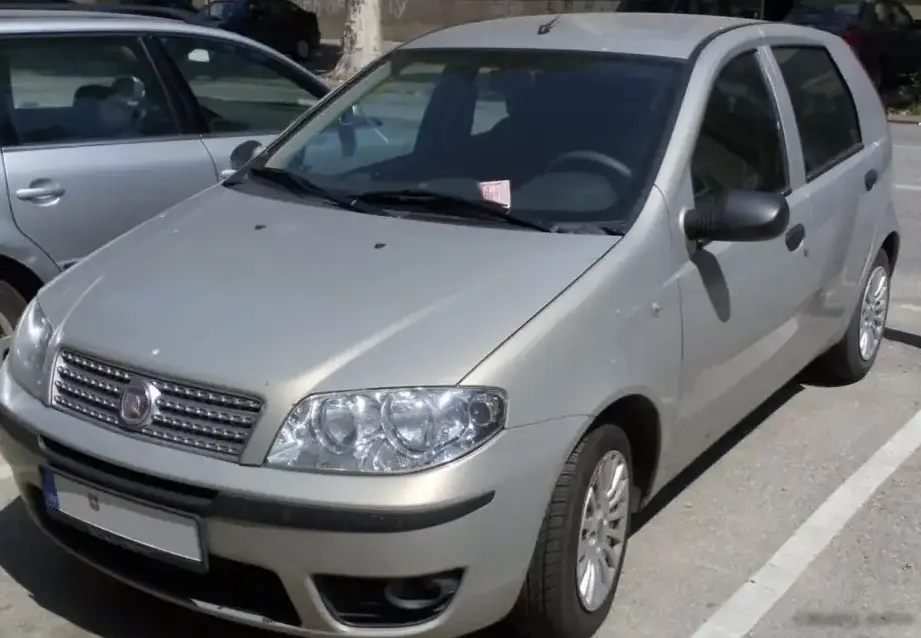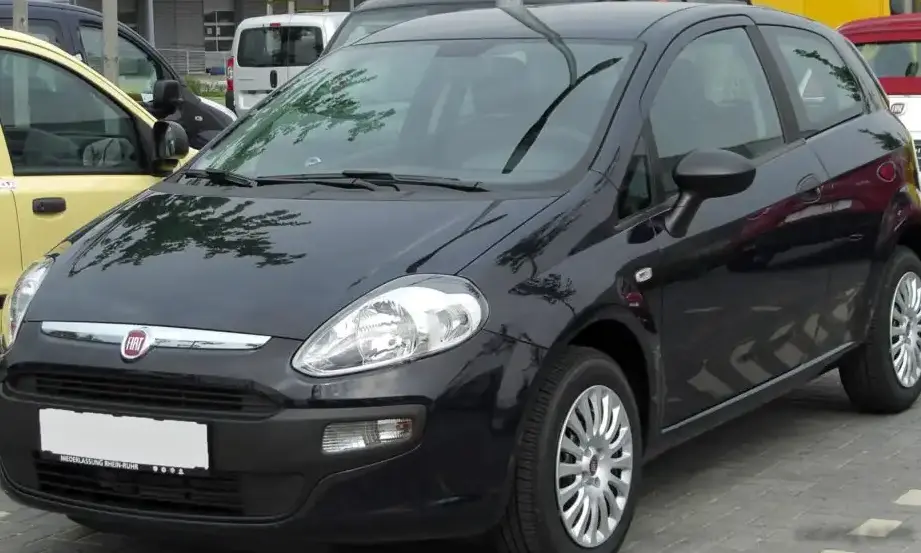
The Fiat Punto Evo 1.4 16V MultiAir (105 hp) Start&Stop, produced from 2010 to 2011, represents a mid-cycle refresh of the Fiat Punto (199 series). Positioned as a mainstream offering within the Punto Evo range, this variant aimed to balance fuel efficiency with reasonable performance, appealing to buyers seeking a practical and economical hatchback. It was a key model in Fiat’s European lineup during a period focused on improving fuel economy and reducing emissions, incorporating the innovative MultiAir technology. The Punto Evo itself was a significant update to the original Punto, featuring revised styling, improved interior quality, and updated mechanical components.
Technical Specifications
| Brand | Fiat |
| Model | Punto |
| Generation | Punto Evo (199) |
| Type (Engine) | 1.4 16V MultiAir (105 Hp) Start&Stop |
| Start of production | 2010 |
| End of production | 2011 |
| Powertrain Architecture | Internal Combustion engine |
| Body type | Hatchback |
| Seats | 5 |
| Doors | 3-5 |
| Fuel consumption (urban) | 7.5 l/100 km (31.4 US mpg, 37.7 UK mpg, 13.3 km/l) |
| Fuel consumption (extra urban) | 4.7 l/100 km (50 US mpg, 60.1 UK mpg, 21.3 km/l) |
| Fuel consumption (combined) | 5.7 l/100 km (41.3 US mpg, 49.6 UK mpg, 17.5 km/l) |
| Fuel Type | Petrol (Gasoline) |
| Acceleration 0 – 100 km/h | 10.8 sec |
| Acceleration 0 – 62 mph | 10.8 sec |
| Acceleration 0 – 60 mph | 10.3 sec |
| Maximum speed | 185 km/h (114.95 mph) |
| Emission standard | Euro 5 |
| Weight-to-power ratio | 10.1 kg/Hp, 99.1 Hp/tonne |
| Weight-to-torque ratio | 8.2 kg/Nm, 122.6 Nm/tonne |
| Power | 105 Hp @ 6500 rpm |
| Power per litre | 76.8 Hp/l |
| Torque | 130 Nm @ 4000 rpm (95.88 lb.-ft. @ 4000 rpm) |
| Engine layout | Front, Transverse |
| Engine Model/Code | 955A6000 |
| Engine displacement | 1368 cm3 (83.48 cu. in.) |
| Number of cylinders | 4 |
| Engine configuration | Inline |
| Cylinder Bore | 72 mm (2.83 in.) |
| Piston Stroke | 84 mm (3.31 in.) |
| Compression ratio | 10.8:1 |
| Number of valves per cylinder | 4 |
| Fuel injection system | Multi-port manifold injection |
| Engine aspiration | Naturally aspirated engine |
| Valvetrain | SOHC |
| Engine oil capacity | 3.4 l (3.59 US qt | 2.99 UK qt) |
| Coolant | 5.3 l (5.6 US qt | 4.66 UK qt) |
| Kerb Weight | 1060 kg (2336.9 lbs.) |
| Max. weight | 1620 kg (3571.49 lbs.) |
| Max load | 560 kg (1234.59 lbs.) |
| Trunk (boot) space – minimum | 275 l (9.71 cu. ft.) |
| Trunk (boot) space – maximum | 1030 l (36.37 cu. ft.) |
| Fuel tank capacity | 45 l (11.89 US gal | 9.9 UK gal) |
| Permitted trailer load with brakes (12%) | 1000 kg (2204.62 lbs.) |
| Permitted trailer load without brakes | 400 kg (881.85 lbs.) |
| Length | 4065 mm (160.04 in.) |
| Width | 1687 mm (66.42 in.) |
| Height | 1490 mm (58.66 in.) |
| Wheelbase | 2510 mm (98.82 in.) |
| Front track | 1473 mm (57.99 in.) |
| Rear (Back) track | 1466 mm (57.72 in.) |
| Drag coefficient (Cd) | 0.34 |
| Minimum turning circle | 10.9 m (35.76 ft.) |
| Drivetrain Architecture | The Internal combustion engine (ICE) drives the front wheels of the vehicle. |
| Drive wheel | Front wheel drive |
| Number of gears and type of gearbox | 6 gears, manual transmission |
| Front suspension | Independent, type McPherson with coil spring and anti-roll bar |
| Rear suspension | Semi-independent, coil spring |
| Front brakes | Ventilated discs |
| Rear brakes | Drum |
| Assisting systems | ABS (Anti-lock braking system) |
| Steering type | Steering rack and pinion |
| Power steering | Electric Steering |
| Tires size | 185/65 R15 |
| Wheel rims size | 15 |
Powertrain & Engine Architecture
The heart of this Punto Evo variant is the 1.4-liter 16V MultiAir engine, designated with the code 955A6000. This engine is a key example of Fiat’s innovative MultiAir technology, a fully variable valve actuation system. Unlike traditional valve timing systems that adjust camshaft timing, MultiAir directly controls the opening and closing of the intake valves, allowing for precise control of air intake and improved combustion efficiency. This is achieved through a hydraulic system that acts on the valve lifters, effectively decoupling the valve timing from the camshaft. The engine utilizes a single overhead camshaft (SOHC) design and multi-port fuel injection. The 1.4 MultiAir produces 105 horsepower at 6500 rpm and 130 Nm (96 lb-ft) of torque at 4000 rpm. The engine is transversely mounted and drives the front wheels. The transmission is a 6-speed manual gearbox, chosen for its balance of efficiency and driver engagement. The Start&Stop system automatically shuts off the engine when the vehicle is stationary (e.g., at traffic lights) to further reduce fuel consumption and emissions.
Driving Characteristics
The 1.4 16V MultiAir with the 6-speed manual transmission offers a reasonably engaging driving experience for a small hatchback. While not a performance-oriented model, the engine provides adequate power for everyday driving. Acceleration from 0-60 mph takes around 10.3 seconds, and the top speed is 185 km/h (115 mph). The MultiAir system contributes to a responsive engine feel, particularly at lower and mid-range revs. The 6-speed gearbox allows for efficient cruising on the highway, while the relatively short gear ratios provide decent acceleration in urban environments. Compared to the lower-powered 1.2-liter Punto Evo, the 1.4 MultiAir offers a noticeable improvement in performance. However, it doesn’t match the punch of the more powerful (and more expensive) Abarth models. The steering is light and precise, making it easy to maneuver in city traffic. The suspension provides a comfortable ride, although it can feel a bit firm on rough roads.
Equipment & Trim Levels
The 1.4 16V MultiAir typically came equipped with a reasonable level of standard features. These included air conditioning, power steering, electric front windows, a radio with CD player, and ABS brakes. Higher trim levels offered additional features such as alloy wheels, fog lights, a multi-function steering wheel, and a more sophisticated audio system. Interior upholstery was typically cloth, with a choice of colors and patterns. Optional extras included a sunroof, parking sensors, and a navigation system. The Punto Evo generally offered a more modern and refined interior compared to its predecessor, with improved materials and a more ergonomic dashboard layout.
Chassis & Braking
The Punto Evo 1.4 16V MultiAir utilizes a McPherson strut suspension setup at the front, providing good handling and stability. The rear suspension is a semi-independent twist beam configuration, which is a cost-effective solution for compact hatchbacks. The front brakes are ventilated discs, offering good stopping power, while the rear brakes are drums. This combination is typical for vehicles in this weight class. ABS (Anti-lock Braking System) is standard, enhancing safety by preventing wheel lock-up during hard braking. The electric power steering provides a light and responsive feel, making it easy to maneuver in tight spaces.
Market Reception & Comparison
The Fiat Punto Evo 1.4 16V MultiAir was generally well-received by automotive critics. The MultiAir engine was praised for its fuel efficiency and responsive performance. However, some reviewers noted that the engine could feel a bit strained at higher revs. The Punto Evo was considered a competitive offering in the small hatchback segment, offering a good balance of practicality, economy, and style. Compared to other trims in the Punto Evo lineup, the 1.4 MultiAir offered a sweet spot between performance and fuel economy. It was more economical than the higher-powered Abarth models but offered more performance than the base 1.2-liter engine. Fuel economy figures of around 41.3 US mpg combined were competitive for its class.
Legacy
The 1.4 16V MultiAir engine proved to be generally reliable, although the MultiAir system itself can be prone to issues if not properly maintained. Regular oil changes and the use of high-quality oil are crucial for ensuring the longevity of the system. On the used car market, the Punto Evo 1.4 MultiAir represents a relatively affordable and economical option. However, potential buyers should be aware of the potential maintenance requirements of the MultiAir system and ensure that the vehicle has been properly serviced. The Punto Evo, as a whole, helped to establish Fiat as a leader in fuel-efficient and environmentally friendly automotive technology.