Technical Specifications
| Brand | Audi |
| Model | A7 |
| Generation | A7 Sportback (C7, facelift 2014) |
| Type (Engine) | 2.0 TFSI (252 Hp) S tronic |
| Start of production | 2014 |
| End of production | 2016 |
| Powertrain Architecture | Internal Combustion engine |
| Body type | Liftback |
| Seats | 5 |
| Doors | 5 |
| Fuel consumption (urban) | 7.4 l/100 km (31.8 US mpg) |
| Fuel consumption (extra urban) | 5.2 l/100 km (45.2 US mpg) |
| Fuel consumption (combined) | 6 l/100 km (39.2 US mpg) |
| CO2 emissions | 139 g/km |
| Fuel Type | Petrol (Gasoline) |
| Acceleration 0 – 100 km/h | 6.9 sec |
| Acceleration 0 – 62 mph | 6.9 sec |
| Acceleration 0 – 60 mph | 6.6 sec |
| Maximum speed | 250 km/h (155.34 mph) |
| Emission standard | Euro 6 |
| Weight-to-power ratio | 6.6 kg/Hp |
| Weight-to-torque ratio | 4.5 kg/Nm |
| Power | 252 Hp @ 5000-6000 rpm |
| Torque | 370 Nm @ 1600-4500 rpm (272.9 lb.-ft.) |
| Engine layout | Front, Longitudinal |
| Engine Model/Code | EA888 / CYPA |
| Engine displacement | 1984 cm3 (121.07 cu. in.) |
| Number of cylinders | 4 |
| Engine configuration | Inline |
| Cylinder Bore | 82.5 mm (3.25 in.) |
| Piston Stroke | 92.8 mm (3.65 in.) |
| Compression ratio | 9.6:1 |
| Number of valves per cylinder | 4 |
| Fuel injection system | Direct injection and Multi-port manifold injection |
| Engine aspiration | Turbocharger, Intercooler |
| Valvetrain | DOHC |
| Engine oil capacity | 4.7 l (4.97 US qt | 4.14 UK qt) |
| Kerb Weight | 1655 kg (3648.65 lbs.) |
| Max. weight | 2265 kg (4993.47 lbs.) |
| Max load | 610 kg (1344.82 lbs.) |
| Trunk (boot) space – minimum | 535 l (18.89 cu. ft.) |
| Trunk (boot) space – maximum | 1390 l (49.09 cu. ft.) |
| Fuel tank capacity | 65 l (17.17 US gal | 14.3 UK gal) |
| Length | 4974 mm (195.83 in.) |
| Width | 1911 mm (75.24 in.) |
| Height | 1420 mm (55.91 in.) |
| Wheelbase | 2914 mm (114.72 in.) |
| Drivetrain | Front wheel drive |
| Number of gears and type of gearbox | 7 gears, automatic transmission S tronic |
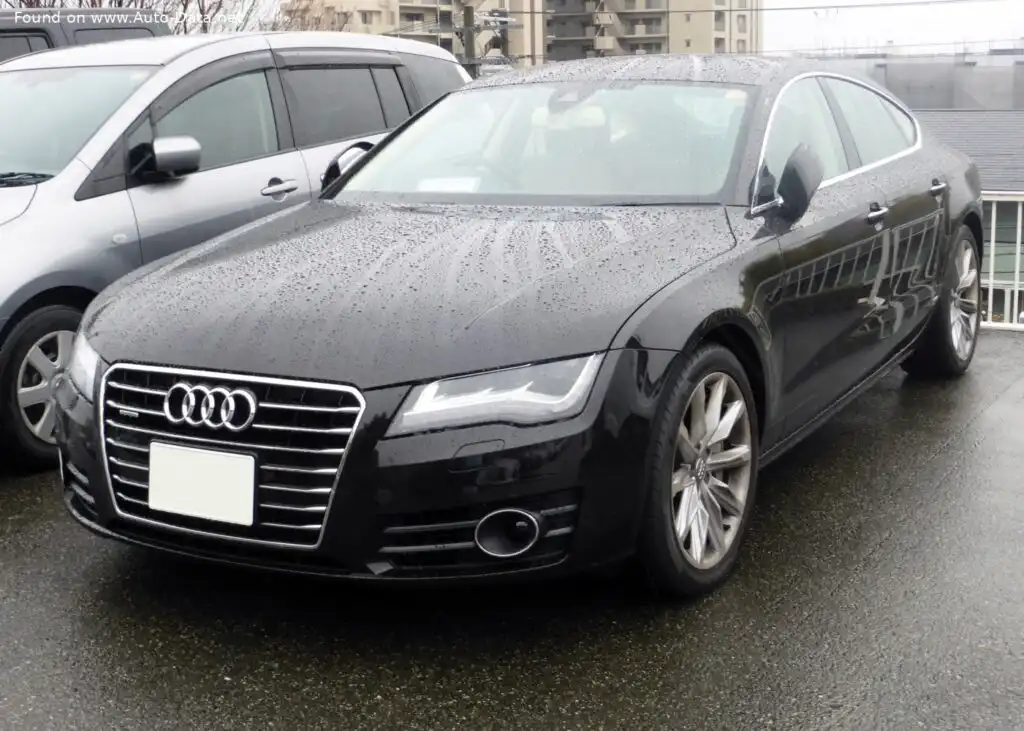
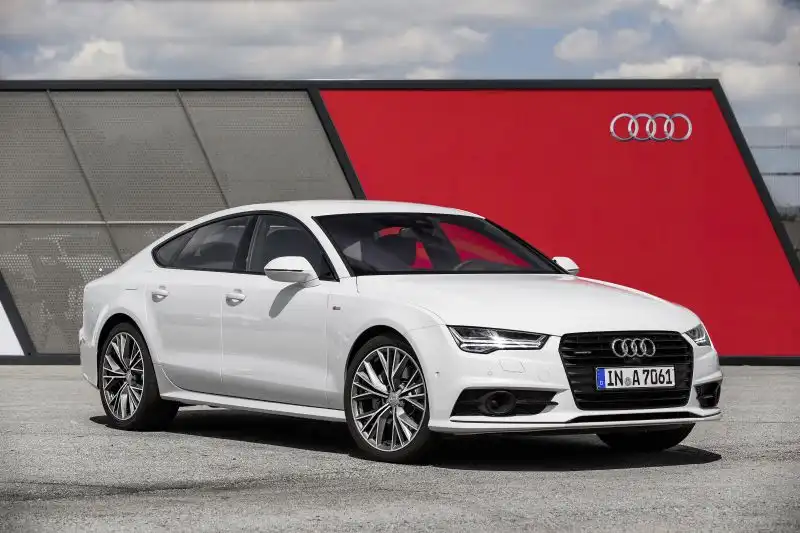
The Audi A7 Sportback (C7 facelift) 2.0 TFSI with the S tronic dual-clutch transmission, produced from 2014 to 2016, represents a compelling entry point into Audi’s luxury four-door coupe segment. This variant occupied a mid-range position within the A7 lineup, offering a balance of performance, efficiency, and sophisticated styling. Marketed primarily in Europe and North America, it appealed to buyers seeking a grand tourer suitable for both daily commutes and longer journeys. It slotted below the more powerful 3.0-liter supercharged V6 and the performance-oriented S7 and RS 7 models.
Powertrain & Engine Architecture
The 2.0 TFSI A7 Sportback utilizes the EA888 engine family, specifically the CYPA engine code. This 1.984-liter (121.07 cubic inches) inline-four cylinder engine employs a combination of direct and multi-point fuel injection, optimizing both power output and fuel economy. A single twin-scroll turbocharger, coupled with an intercooler, provides forced induction, resulting in 252 horsepower and 370 Nm (272.9 lb-ft) of torque. The engine features a dual overhead camshaft (DOHC) valvetrain with four valves per cylinder, contributing to its responsive character. The S tronic transmission is a seven-speed dual-clutch unit, renowned for its quick and seamless gear changes. Drivers can choose between fully automatic operation or manual gear selection using steering wheel-mounted paddle shifters, providing a degree of driver engagement.
Driving Characteristics
The A7 2.0 TFSI S tronic delivers a refined and comfortable driving experience. While not as aggressively sporty as its higher-performance siblings, it provides ample power for everyday driving and confident highway cruising. Acceleration from 0 to 60 mph is achieved in approximately 6.6 seconds. The S tronic transmission contributes to a smooth and consistent power delivery, and the engine’s torque curve offers strong pull throughout the majority of the rev range. Compared to the available six-speed manual transmission on some A7 models, the S tronic provides quicker shifts and a more relaxed experience, especially in congested urban environments. It doesn’t match the outright acceleration of the 3.0-liter V6, but offers a noticeable advantage in fuel efficiency. The front-wheel drive configuration contributes to predictable handling, although it lacks the all-weather capability of Audi’s quattro all-wheel drive system.
Equipment & Trim Levels
The 2.0 TFSI S tronic A7 Sportback generally came well-equipped as standard. Typical features included leather upholstery, tri-zone automatic climate control, a 6.5-inch infotainment screen with Audi’s MMI interface, front and rear parking sensors, and xenon headlights. A wide range of optional extras were available, including a larger infotainment screen with navigation, a premium Bang & Olufsen sound system, adaptive cruise control, a panoramic sunroof, and various driver assistance systems such as blind spot monitoring and lane departure warning. Trim levels varied depending on the market, but generally offered packages that added cosmetic enhancements, upgraded interior materials, and additional technology features. Premium packages often included features like heated and ventilated front seats, and upgraded wood or carbon fiber trim.
Chassis & Braking
The A7 Sportback boasts a sophisticated chassis designed to strike a balance between ride comfort and handling precision. The front suspension utilizes an independent multi-link setup with a transverse stabilizer bar, while the rear employs an independent trapezoidal link suspension, also with a stabilizer bar. This configuration minimizes body roll during cornering while providing a comfortable ride quality. Braking is handled by ventilated discs on all four wheels, offering ample stopping power. The Anti-lock Braking System (ABS) is standard, along with Electronic Stability Control (ESC). The steering is an electric power-assisted rack and pinion system, providing precise and responsive control with a comfortable level of assistance.
Market Reception & Comparison
The A7 2.0 TFSI S tronic was generally well-received by automotive journalists and consumers alike. It was praised for its elegant design, comfortable and well-appointed interior, and refined driving experience. Fuel economy was a significant strength, with combined figures averaging around 39.2 US mpg. Compared to the 3.0-liter V6 models, the 2.0 TFSI offered a more accessible price point, although with a corresponding reduction in performance. Reliability was generally considered good, although some owners reported occasional issues with the MMI infotainment system. The A7 2.0 TFSI provided a compelling alternative to competitors such as the BMW 5 Series Gran Turismo and the Mercedes-Benz CLS-Class, offering a unique blend of style, comfort, and efficiency.
Legacy
The Audi A7 Sportback (C7) 2.0 TFSI S tronic has proven to be a relatively reliable vehicle in the used car market. The EA888 engine is known for its durability, and the S tronic transmission, while requiring periodic maintenance – particularly fluid changes – is generally robust. These models continue to be sought after by buyers looking for a stylish and well-equipped grand tourer. The combination of luxury, performance, and efficiency makes it a desirable option for those seeking a premium vehicle without the higher price tag of the more powerful variants. When considering a used example, it’s crucial to review maintenance records, especially those pertaining to the transmission, to ensure it has been properly serviced. The A7’s timeless design and comfortable interior continue to make it a competitive choice in the used luxury car segment.