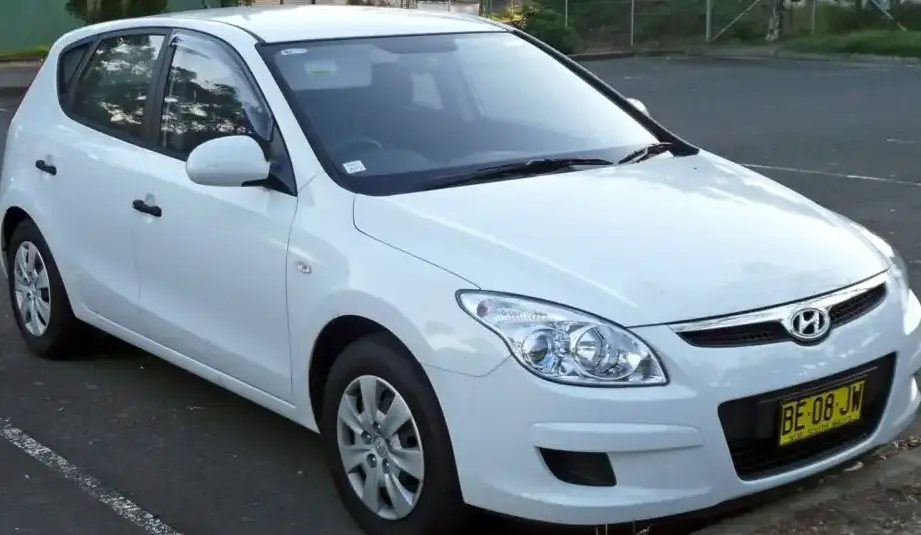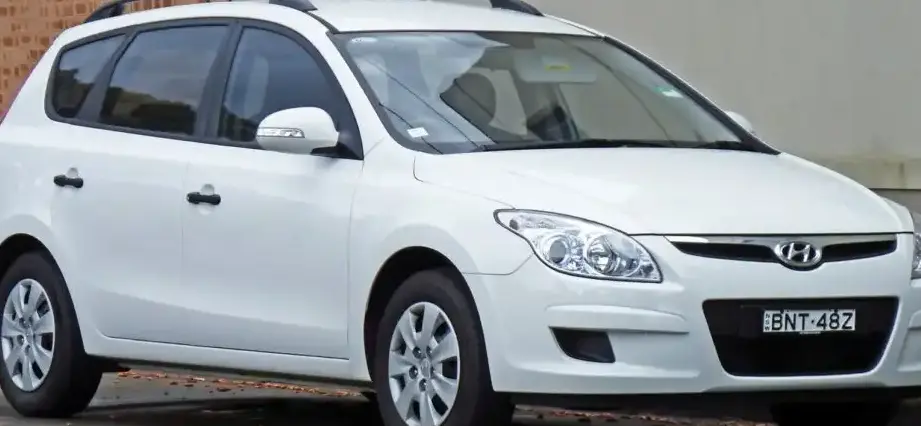
The Hyundai i30 I CW 1.6 CRDi Automatic, produced between 2008 and 2010, represents a key variant within the first generation (CW) of Hyundai’s i30 compact wagon. Positioned as a fuel-efficient and practical option, this model aimed to broaden the i30’s appeal, particularly in European markets where station wagons (or estates, as they are often called) held significant popularity. It utilized the 1HX0 platform, shared with the Kia Cee’d, and offered a blend of affordability, space, and diesel economy. This specific configuration – the 1.6-liter CRDi engine paired with a four-speed automatic transmission – was designed to provide a comfortable and convenient driving experience, albeit with a slight compromise in performance compared to its manual counterparts.
Technical Specifications
| Brand | Hyundai |
| Model | i30 |
| Generation | i30 I CW |
| Type (Engine) | 1.6 CRDi (116 Hp) Automatic |
| Start of production | 2008 |
| End of production | 2010 |
| Powertrain Architecture | Internal Combustion engine |
| Body type | Station wagon (estate) |
| Seats | 5 |
| Doors | 5 |
| Fuel consumption (urban) | 7.4 l/100 km (31.8 US mpg) |
| Fuel consumption (extra urban) | 4.9 l/100 km (48 US mpg) |
| Fuel consumption (combined) | 5.8 l/100 km (40.6 US mpg) |
| Fuel Type | Diesel |
| Acceleration 0 – 100 km/h | 13.4 sec |
| Acceleration 0 – 62 mph | 13.4 sec |
| Acceleration 0 – 60 mph | 12.7 sec |
| Maximum speed | 180 km/h (111.85 mph) |
| Emission standard | Euro 4 |
| Weight-to-power ratio | 11.6 kg/Hp |
| Weight-to-torque ratio | 5.3 kg/Nm |
| Power | 116 Hp @ 4000 rpm |
| Torque | 255 Nm @ 1900-2750 rpm (188.08 lb.-ft.) |
| Engine layout | Front, Transverse |
| Engine Model/Code | D4FB |
| Engine displacement | 1582 cm3 (96.54 cu. in.) |
| Number of cylinders | 4 |
| Engine configuration | Inline |
| Cylinder Bore | 77.2 mm (3.04 in.) |
| Piston Stroke | 84.5 mm (3.33 in.) |
| Compression ratio | 17.3:1 |
| Number of valves per cylinder | 4 |
| Fuel injection system | Diesel Commonrail |
| Engine aspiration | Turbocharger, Intercooler |
| Valvetrain | DOHC |
| Engine oil capacity | 5.3 l (5.6 US qt | 4.66 UK qt) |
| Coolant capacity | 6.8 l (7.19 US qt | 5.98 UK qt) |
| Kerb Weight | 1341 kg (2956.4 lbs.) |
| Max. weight | 1940 kg (4276.97 lbs.) |
| Max load | 599 kg (1320.57 lbs.) |
| Trunk (boot) space – minimum | 415 l (14.66 cu. ft.) |
| Trunk (boot) space – maximum | 1395 l (49.26 cu. ft.) |
| Fuel tank capacity | 53 l (14 US gal | 11.66 UK gal) |
| Length | 4475 mm (176.18 in.) |
| Width | 1775 mm (69.88 in.) |
| Height | 1565 mm (61.61 in.) |
| Wheelbase | 2700 mm (106.3 in.) |
| Front track | 1546 mm (60.87 in.) |
| Rear track | 1544 mm (60.79 in.) |
| Drag coefficient (Cd) | 0.31 |
| Minimum turning circle | 10.4 m (34.12 ft.) |
| Drivetrain | Front wheel drive |
| Number of gears | 4 |
| Gearbox type | Automatic transmission |
| Front suspension | Independent, McPherson with coil spring and anti-roll bar |
| Rear suspension | Independent multi-link with stabilizer |
| Front brakes | Ventilated discs |
| Rear brakes | Disc |
| Assisting systems | ABS |
| Steering type | Steering rack and pinion |
| Tires size | 185/65 R15 |
| Wheel rims size | 5.5J x 15 |
Powertrain & Engine Architecture
The heart of this i30 variant is the Hyundai D4FB 1.6-liter inline-four cylinder diesel engine. This engine, a member of Hyundai’s ‘U’ engine family, utilizes a second-generation common-rail direct injection system, delivering fuel at extremely high pressure for optimized combustion. The D4FB is a turbocharged engine, employing a variable geometry turbocharger (VGT) and an intercooler to enhance power and efficiency. The engine features a double overhead camshaft (DOHC) valvetrain with four valves per cylinder, contributing to its relatively high specific output. The four-speed automatic transmission, while providing convenience, is a somewhat dated unit compared to more modern automatics with six or more gears. It’s a conventional hydraulic automatic, known for its reliability but less so for its responsiveness or fuel efficiency. The transmission’s gear ratios are tuned for comfortable cruising and adequate acceleration, but it lacks the close ratios found in manual transmissions or more advanced automatics.
Driving Characteristics
The 1.6 CRDi Automatic i30 CW delivers a comfortable, if not particularly exhilarating, driving experience. With 116 horsepower and 255 Nm (188 lb-ft) of torque, acceleration is adequate for everyday driving, but overtaking maneuvers require planning. The automatic transmission contributes to a smooth ride, but it can feel sluggish when downshifting, and the lack of manual control options limits driver engagement. Compared to the six-speed manual version of the same engine, the automatic suffers a slight performance penalty and reduced fuel economy. The torque curve is relatively flat, providing usable power across a wide rev range, which helps compensate for the transmission’s limitations. The wagon body style adds weight compared to the hatchback version, further impacting acceleration.
Equipment & Trim Levels
The 1.6 CRDi Automatic typically fell into the mid-range of the i30 CW lineup. Standard equipment generally included air conditioning, power windows, central locking, a CD stereo, and ABS brakes. Higher trim levels added features such as alloy wheels, a multi-function steering wheel, and upgraded interior trim. Interior upholstery was typically cloth, with a relatively simple and functional dashboard layout. Optional extras included a sunroof, parking sensors, and a more advanced audio system. Safety features were generally good for its class, with dual front airbags and side airbags available.
Chassis & Braking
The i30 CW utilizes a McPherson strut front suspension and a multi-link rear suspension, providing a comfortable and controlled ride. The suspension is tuned for everyday use, prioritizing comfort over sporty handling. The front brakes are ventilated discs, while the rear brakes are solid discs. ABS (Anti-lock Braking System) is standard, enhancing braking performance and stability. Stabilizer bars are fitted to both the front and rear axles to reduce body roll during cornering. The steering is a rack and pinion system, providing reasonably precise steering feel.
Market Reception & Comparison
The Hyundai i30 CW 1.6 CRDi Automatic was generally well-received by automotive critics as a practical and affordable family car. Its fuel economy was a major selling point, particularly in Europe where diesel fuel was often cheaper than gasoline. However, the four-speed automatic transmission was often criticized for its lack of responsiveness and refinement. Compared to rivals such as the Ford Focus Estate and Volkswagen Golf Estate, the i30 offered a competitive price point and a generous warranty, but lacked the brand prestige and driving dynamics of some of its competitors. The 1.6 CRDi engine offered a good balance of performance and economy, but the higher-powered 2.0-liter CRDi engine provided significantly more performance at the expense of fuel efficiency.
Legacy
The Hyundai i30 I CW 1.6 CRDi Automatic has proven to be a relatively reliable vehicle, with the D4FB engine generally considered durable. Common issues include wear and tear on the turbocharger and potential problems with the diesel particulate filter (DPF) if the vehicle is primarily used for short trips. The four-speed automatic transmission is generally reliable, but may require servicing or replacement at higher mileages. In the used car market, these i30s represent a good value proposition for buyers seeking an affordable and practical family wagon. Their fuel efficiency and relatively low maintenance costs make them an attractive option for budget-conscious buyers.