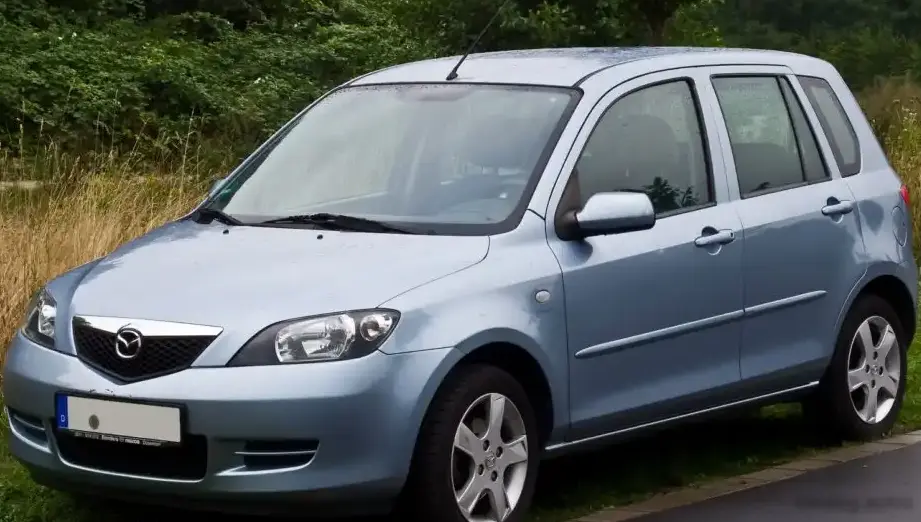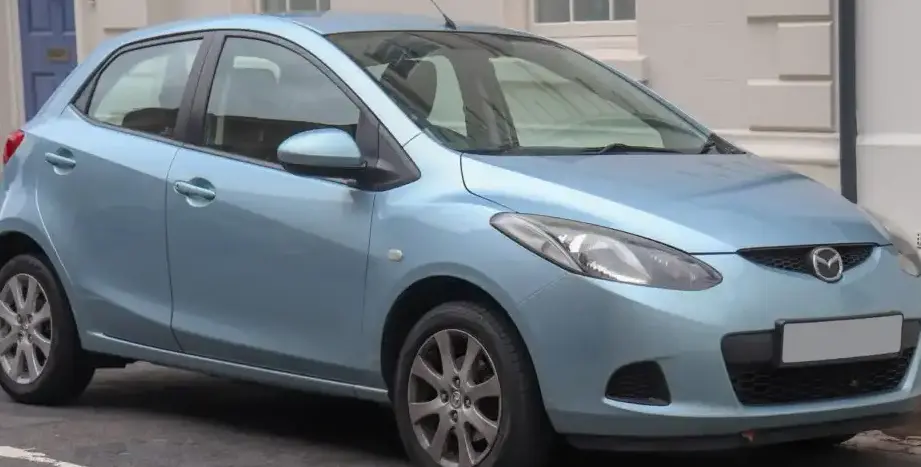
The Mazda2 II (DE) 1.3i, producing 75 horsepower, was a key entry point into the second-generation Mazda2 (DE) lineup, manufactured between 2007 and 2010. Positioned as the most economical and accessible variant, it played a significant role in attracting budget-conscious buyers, particularly in European and Asian markets where smaller, fuel-efficient vehicles were highly sought after. This model represented Mazda’s commitment to offering a practical and reliable supermini, competing directly with vehicles like the Toyota Yaris, Volkswagen Polo, and Ford Fiesta. The DE generation Mazda2 was a significant departure from its predecessor, offering improved styling, interior space, and driving dynamics.
Technical Specifications
| Brand | Mazda |
| Model | 2 |
| Generation | 2 II (DE) |
| Type (Engine) | 1.3i (75 Hp) |
| Start of production | 2007 |
| End of production | 2010 |
| Powertrain Architecture | Internal Combustion engine |
| Body type | Hatchback |
| Seats | 5 |
| Doors | 5 |
| Fuel consumption (urban) | 6.9 l/100 km (34.1 US mpg, 40.9 UK mpg, 14.5 km/l) |
| Fuel consumption (extra urban) | 4.6 l/100 km (51.1 US mpg, 61.4 UK mpg, 21.7 km/l) |
| Fuel consumption (combined) | 5.4 l/100 km (43.6 US mpg, 52.3 UK mpg, 18.5 km/l) |
| CO2 emissions | 129 g/km |
| Fuel Type | Petrol (Gasoline) |
| Acceleration 0 – 100 km/h | 14 sec |
| Acceleration 0 – 62 mph | 14 sec |
| Acceleration 0 – 60 mph | 13.3 sec |
| Maximum speed | 168 km/h (104.39 mph) |
| Emission standard | Euro 4 |
| Weight-to-power ratio | 12.7 kg/Hp, 78.5 Hp/tonne |
| Weight-to-torque ratio | 7.9 kg/Nm, 126.7 Nm/tonne |
| Power | 75 Hp @ 6000 rpm |
| Power per litre | 55.6 Hp/l |
| Torque | 121 Nm @ 3500 rpm (89.25 lb.-ft. @ 3500 rpm) |
| Engine layout | Front, Transverse |
| Engine Model/Code | ZJ46 |
| Engine displacement | 1349 cm3 (82.32 cu. in.) |
| Number of cylinders | 4 |
| Engine configuration | Inline |
| Cylinder Bore | 74 mm (2.91 in.) |
| Piston Stroke | 78.4 mm (3.09 in.) |
| Compression ratio | 10:1 |
| Number of valves per cylinder | 4 |
| Fuel injection system | Multi-port manifold injection |
| Engine aspiration | Naturally aspirated engine |
| Valvetrain | DOHC |
| Engine oil capacity | 3.9 l (4.12 US qt | 3.43 UK qt) |
| Coolant | 5.2 l (5.49 US qt | 4.58 UK qt) |
| Kerb Weight | 955 kg (2105.41 lbs.) |
| Max. weight | 1480 kg (3262.84 lbs.) |
| Max load | 525 kg (1157.43 lbs.) |
| Trunk (boot) space – minimum | 250 l (8.83 cu. ft.) |
| Trunk (boot) space – maximum | 787 l (27.79 cu. ft.) |
| Fuel tank capacity | 43 l (11.36 US gal | 9.46 UK gal) |
| Permitted trailer load with brakes (12%) | 900 kg (1984.16 lbs.) |
| Permitted trailer load without brakes | 500 kg (1102.31 lbs.) |
| Length | 3900 mm (153.54 in.) |
| Width | 1695 mm (66.73 in.) |
| Height | 1475 mm (58.07 in.) |
| Wheelbase | 2490 mm (98.03 in.) |
| Front track | 1475 mm (58.07 in.) |
| Rear (Back) track | 1465 mm (57.68 in.) |
| Ride height (ground clearance) | 150 mm (5.91 in.) |
| Drag coefficient (Cd) | 0.31 |
| Minimum turning circle (turning diameter) | 9.8 m (32.15 ft.) |
| Drivetrain Architecture | The Internal combustion engine (ICE) drives the front wheels of the vehicle. |
| Drive wheel | Front wheel drive |
| Number of gears and type of gearbox | 5 gears, manual transmission |
| Front suspension | Spring Strut |
| Rear suspension | Coil spring |
| Front brakes | Ventilated discs |
| Rear brakes | Drum |
| Assisting systems | ABS (Anti-lock braking system) |
| Steering type | Steering rack and pinion |
| Tires size | 175/65 R14 |
| Wheel rims size | 14 |
Powertrain & Engine Architecture
The heart of the Mazda2 1.3i was the ZJ46 engine, a 1.3-liter inline-four cylinder petrol engine. This engine utilized a multi-port fuel injection system, delivering fuel directly into the intake ports, and a double overhead camshaft (DOHC) valvetrain for optimized engine breathing. The engine produced 75 horsepower at 6000 rpm and 121 Nm (89.25 lb-ft) of torque at 3500 rpm. The engine’s relatively simple design prioritized reliability and fuel efficiency over outright performance. The 1.3L engine was paired with a five-speed manual transmission as standard, offering a direct and engaging driving experience. The engine’s compression ratio was 10:1, a common figure for naturally aspirated gasoline engines of this era.
Driving Characteristics
The 1.3i variant of the Mazda2 offered a practical and economical driving experience. Acceleration was modest, taking approximately 14 seconds to reach 62 mph (100 km/h). The engine felt somewhat strained when pushed hard, particularly when fully loaded or tackling steep inclines. However, in typical urban driving conditions, the engine provided sufficient power for everyday commuting and errands. The five-speed manual transmission allowed drivers to keep the engine in its optimal power band, maximizing efficiency. Compared to the higher-output 1.5-liter engine offered in some markets, the 1.3i prioritized fuel economy and affordability over sporty performance. The lighter weight of the 1.3i model, compared to some of its siblings, did contribute to a slightly more nimble feel.
Equipment & Trim Levels
The 1.3i trim level typically served as the base model, offering a functional but well-equipped package. Standard features generally included power steering, central locking, electric front windows, and an audio system with CD player. Safety features included ABS (Anti-lock Braking System) and driver and passenger airbags. Higher trim levels, such as the Sport or Luxury variants, added features like alloy wheels, air conditioning, and upgraded interior trim. Optional extras available for the 1.3i included metallic paint, a sunroof, and a more advanced audio system.
Chassis & Braking
The Mazda2 II (DE) utilized a front-wheel-drive layout with a MacPherson strut front suspension and a coil spring rear suspension. This setup provided a good balance between ride comfort and handling. The front brakes were ventilated discs, offering adequate stopping power, while the rear brakes were drums, a cost-saving measure common in this segment. The chassis was relatively lightweight, contributing to the car’s agility. The steering was a rack and pinion system, providing precise and responsive control.
Market Reception & Comparison
The Mazda2 1.3i was generally well-received by automotive critics as a practical and affordable supermini. It was praised for its fuel efficiency, reliability, and surprisingly spacious interior for its size. However, some critics noted the engine’s lack of power, particularly when compared to competitors offering larger displacement engines. In terms of fuel economy, the 1.3i consistently outperformed many of its rivals, making it an attractive option for budget-conscious buyers. Compared to the higher-spec Mazda2 variants, the 1.3i offered a more accessible price point, appealing to a different segment of the market.
Legacy
The ZJ46 engine, while not known for its high performance, proved to be a reliable and durable unit. The Mazda2 II (DE) 1.3i remains a popular choice in the used car market, particularly for first-time drivers or those seeking an economical and dependable city car. Maintenance costs are generally low, and parts availability is good. While not a performance icon, the 1.3i variant of the Mazda2 II (DE) represents a well-engineered and practical supermini that continues to provide reliable transportation for many years.