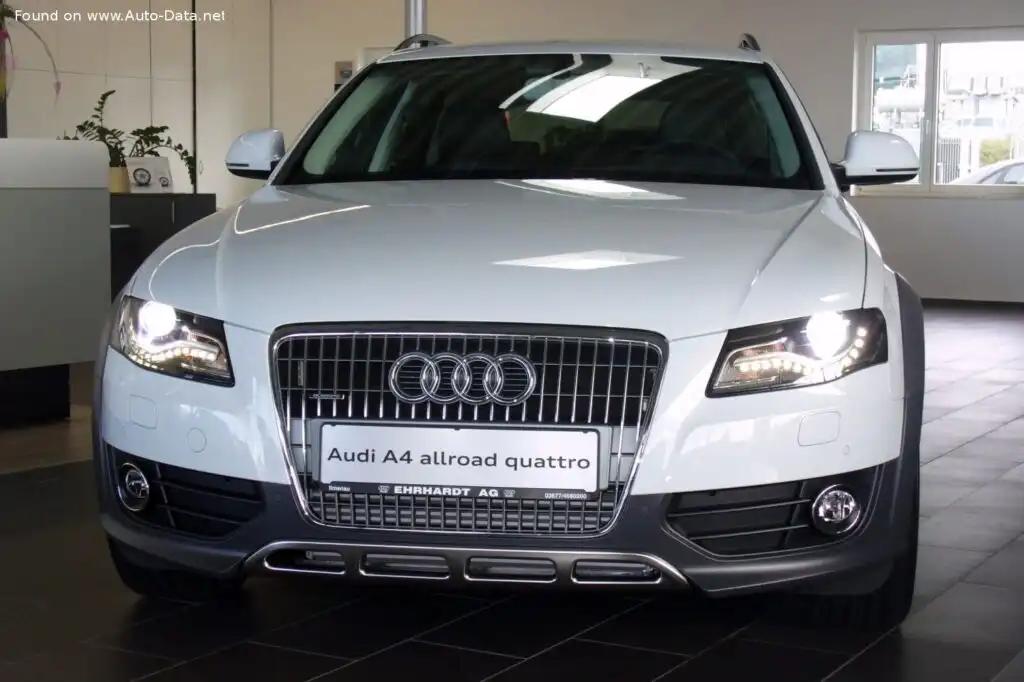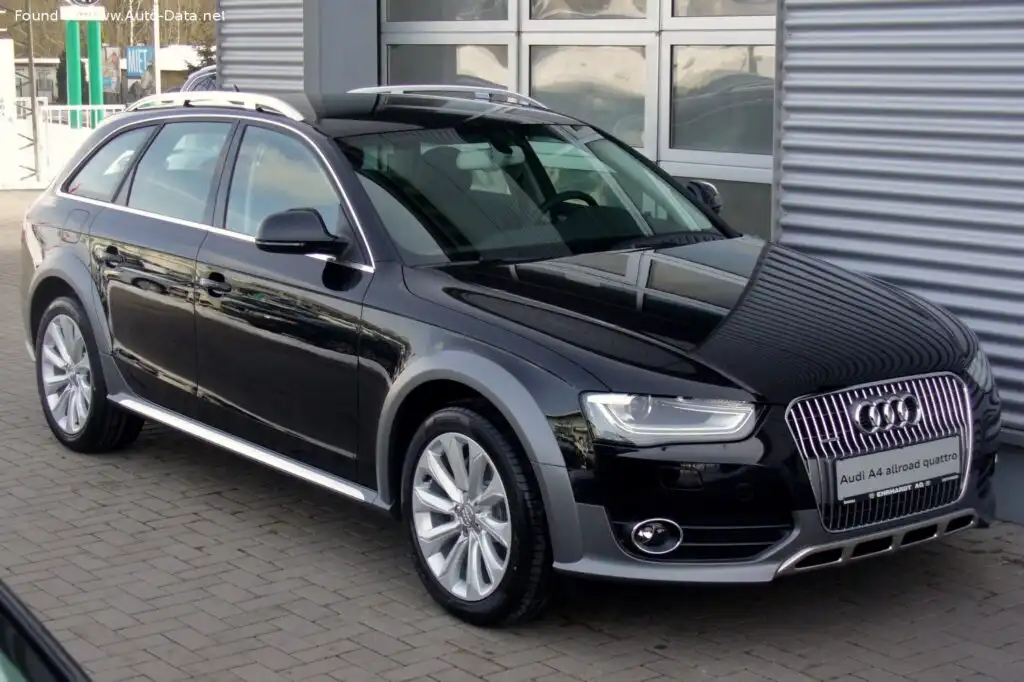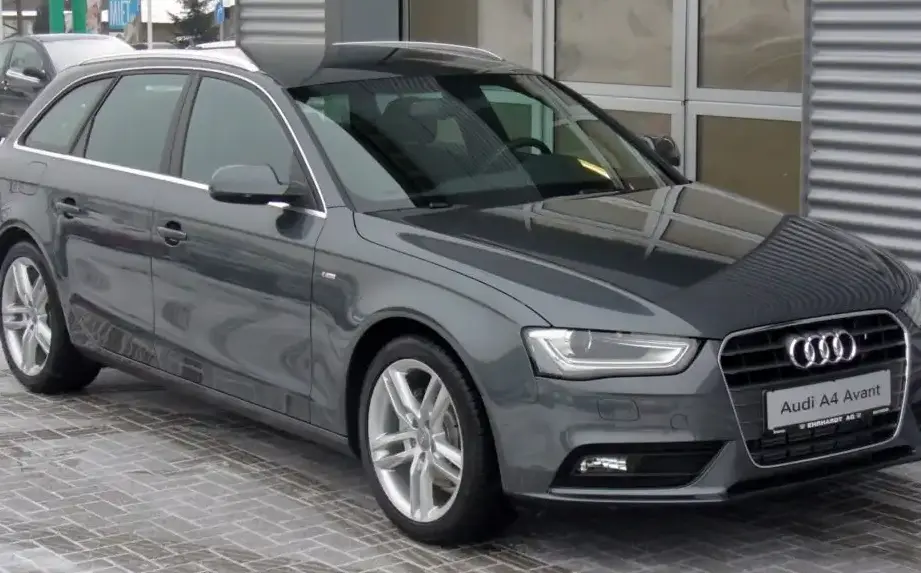
The Audi A4 Avant (B8 8K) facelift, specifically the 1.8 TFSI variant producing 120 horsepower, was a key model in Audi’s lineup from 2011 to 2015. Positioned as an entry-level offering within the B8 Avant range, it provided a balance of practicality, fuel efficiency, and Audi’s signature refinement. This variant catered to buyers seeking a premium wagon experience without the higher price tag associated with the more powerful engine options. It was primarily sold in the European market, where the demand for wagons remained strong, and represented a significant portion of A4 Avant sales during its production run.
Technical Specifications
| Brand | Audi |
| Model | A4 |
| Generation | A4 Avant (B8 8K, facelift 2011) |
| Type (Engine) | 1.8 TFSI (120 Hp) |
| Start of production | 2011 |
| End of production | 2015 |
| Powertrain Architecture | Internal Combustion engine |
| Body type | Station wagon (estate) |
| Seats | 5 |
| Doors | 5 |
| Fuel consumption (urban) | 8.6 l/100 km (27.4 US mpg, 32.8 UK mpg, 11.6 km/l) |
| Fuel consumption (extra urban) | 5.5 l/100 km (42.8 US mpg, 51.4 UK mpg, 18.2 km/l) |
| Fuel consumption (combined) | 6.6 l/100 km (35.6 US mpg, 42.8 UK mpg, 15.2 km/l) |
| CO2 emissions | 154 g/km |
| Fuel Type | Petrol (Gasoline) |
| Acceleration 0 – 100 km/h | 10.8 sec |
| Acceleration 0 – 62 mph | 10.8 sec |
| Acceleration 0 – 60 mph | 10.3 sec |
| Maximum speed | 200 km/h (124.27 mph) |
| Emission standard | Euro 5 |
| Weight-to-power ratio | 12.4 kg/Hp, 80.5 Hp/tonne |
| Weight-to-torque ratio | 6.5 kg/Nm, 154.4 Nm/tonne |
| Power | 120 Hp @ 3650-6200 rpm |
| Power per litre | 66.7 Hp/l |
| Torque | 230 Nm @ 1500-3650 rpm (169.64 lb.-ft. @ 1500-3650 rpm) |
| Engine layout | Front, Longitudinal |
| Engine Model/Code | CDHA |
| Engine displacement | 1798 cm3 (109.72 cu. in.) |
| Number of cylinders | 4 |
| Engine configuration | Inline |
| Cylinder Bore | 82.5 mm (3.25 in.) |
| Piston Stroke | 84.1 mm (3.31 in.) |
| Compression ratio | 9.6:1 |
| Number of valves per cylinder | 4 |
| Fuel injection system | Direct injection |
| Engine aspiration | Turbocharger, Intercooler |
| Valvetrain | DOHC |
| Engine oil capacity | 4.6 l (4.86 US qt | 4.05 UK qt) |
| Kerb Weight | 1490 kg (3284.89 lbs.) |
| Max. weight | 2060 kg (4541.52 lbs.) |
| Max load | 570 kg (1256.63 lbs.) |
| Trunk (boot) space – minimum | 490 l (17.3 cu. ft.) |
| Trunk (boot) space – maximum | 1430 l (50.5 cu. ft.) |
| Fuel tank capacity | 63 l (16.64 US gal | 13.86 UK gal) |
| Max. roof load | 90 kg (198.42 lbs.) |
| Permitted trailer load with brakes (8%) | 1500 kg (3306.93 lbs.) |
| Permitted trailer load with brakes (12%) | 1300 kg (2866.01 lbs.) |
| Permitted trailer load without brakes | 750 kg (1653.47 lbs.) |
| Permitted towbar download | 80 kg (176.37 lbs.) |
| Length | 4699 mm (185 in.) |
| Width | 1826 mm (71.89 in.) |
| Width including mirrors | 2040 mm (80.31 in.) |
| Height | 1436 mm (56.54 in.) |
| Wheelbase | 2808 mm (110.55 in.) |
| Front track | 1564 mm (61.57 in.) |
| Rear (Back) track | 1551 mm (61.06 in.) |
| Front overhang | 862 mm (33.94 in.) |
| Rear overhang | 1029 mm (40.51 in.) |
| Minimum turning circle (turning diameter) | 11.5 m (37.73 ft.) |
| Drivetrain Architecture | The Internal combustion engine (ICE) drives the front wheels of the vehicle. |
| Drive wheel | Front wheel drive |
| Number of gears and type of gearbox | 6 gears, manual transmission |
| Front suspension | Independent multi-link suspension |
| Rear suspension | Independent on trapezoidal lever |
| Front brakes | Ventilated discs |
| Rear brakes | Disc |
| Assisting systems | ABS (Anti-lock braking system) |
| Steering type | Steering rack and pinion |
| Power steering | Electric Steering |
| Tires size | 205/60 R16 |
| Wheel rims size | 7J x 16 |
INTRODUCTION
The Audi A4 Avant (B8 8K) facelift, introduced in 2011, represented a mid-cycle refresh of the highly successful B8 generation A4. The Avant, Audi’s designation for a station wagon, continued to offer a practical and stylish alternative to the sedan. The 1.8 TFSI 120 hp variant was a key component of the facelifted range, designed to appeal to buyers prioritizing fuel economy and affordability. This engine, coupled with a manual transmission, provided a balance between performance and running costs. It sat below the more powerful 2.0 TFSI models and the diesel options in the A4 Avant lineup.
Powertrain & Engine Architecture
The heart of this A4 Avant is the 1.8-liter, four-cylinder turbocharged gasoline engine, internally designated CDHA. This engine is a member of Audi’s EA888 family, known for its robust design and tunability. The CDHA features direct fuel injection (FSI) and a single turbocharger with an intercooler, delivering 120 horsepower and 230 Nm (169.64 lb-ft) of torque. The engine utilizes a double overhead camshaft (DOHC) valvetrain with four valves per cylinder. The 6-speed manual transmission was standard, providing precise gear changes and contributing to the car’s overall efficiency. The engine’s longitudinal mounting allowed for front-wheel drive configuration, common in European A4 models.
Driving Characteristics
The 1.8 TFSI 120 hp A4 Avant offered a comfortable and refined driving experience, albeit not a particularly sporty one. Acceleration from 0-60 mph took around 10.3 seconds, and top speed was limited to 124.27 mph. The turbocharger provided a noticeable boost in power during acceleration, but the engine lacked the outright punch of the higher-output 2.0 TFSI variants. The manual transmission’s gear ratios were well-matched to the engine’s torque curve, providing adequate performance for everyday driving. Compared to the 2.0 TFSI, the 1.8 felt less eager to rev, but offered better fuel economy. The suspension provided a good balance between comfort and handling, making it suitable for both city driving and longer journeys.
Equipment & Trim Levels
The 1.8 TFSI A4 Avant typically came with a respectable level of standard equipment. This included air conditioning, a multi-function steering wheel, electric windows, and an audio system with CD player. Higher trim levels, such as SE or Sport, added features like alloy wheels, upgraded upholstery, parking sensors, and a more advanced infotainment system. Optional extras included a sunroof, leather seats, and a navigation system. Interior upholstery was typically cloth, although leather was available as an upgrade. The dashboard layout was typical of the B8 A4, with a clean and functional design.
Chassis & Braking
The A4 Avant’s chassis featured independent suspension all around, with a multi-link setup at the front and a trapezoidal link arrangement at the rear. This provided a comfortable ride and good handling characteristics. The braking system consisted of ventilated discs at the front and solid discs at the rear, providing adequate stopping power for the car’s weight and performance. Anti-lock braking system (ABS) was standard. The car’s weight distribution was relatively balanced, contributing to its stable handling.
Market Reception & Comparison
The 1.8 TFSI A4 Avant was generally well-received by automotive critics. It was praised for its fuel efficiency, comfortable ride, and refined interior. However, some reviewers noted that the engine lacked the performance of its rivals and the higher-output A4 variants. Compared to the 2.0 TFSI, the 1.8 offered significantly better fuel economy, but at the expense of performance. Against diesel-powered A4 Avants, the 1.8 TFSI offered a smoother and quieter driving experience, but typically had higher running costs due to the higher price of gasoline.
Legacy
The 1.8 TFSI engine, in its various iterations, proved to be a reliable and durable powerplant. While not without its potential issues (such as carbon buildup on the intake valves, a common issue with direct-injection engines), the CDHA engine generally held up well over time with proper maintenance. Today, used examples of the 1.8 TFSI A4 Avant are readily available and represent a relatively affordable entry point into Audi ownership. They continue to be appreciated for their practicality, comfort, and the prestige associated with the Audi brand. The B8 A4 Avant, including this 1.8 TFSI variant, remains a popular choice for buyers seeking a well-rounded and reliable family wagon.