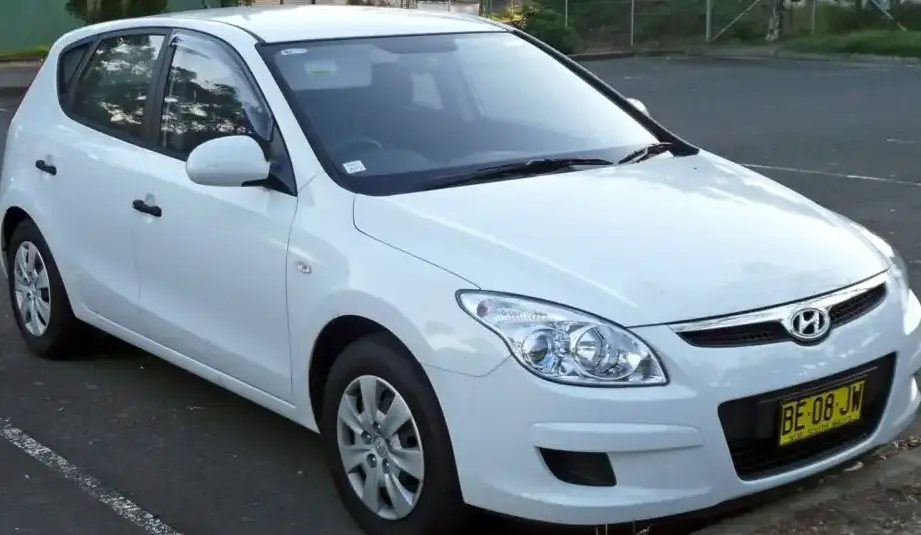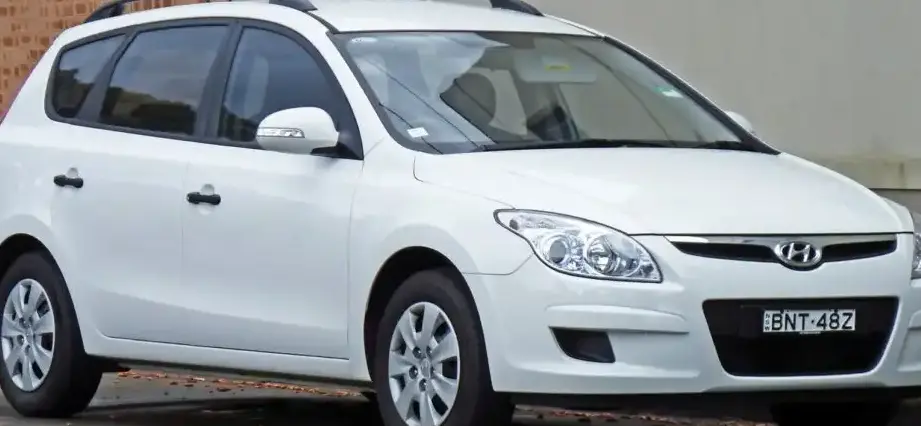
The Hyundai i30 I CW 1.6 CRDi (90 hp) is a compact station wagon that was produced from 2008 to 2010. Part of the first generation (i30 I, internally designated CW) of the i30 model, this variant occupied the entry-level position in the lineup, offering a fuel-efficient and practical option for buyers prioritizing economy over outright performance. It was primarily marketed in Europe, where the station wagon body style remained popular, and represented Hyundai’s increasing competitiveness in the compact segment.
Technical Specifications
| Brand | Hyundai |
| Model | i30 |
| Generation | i30 I CW |
| Type (Engine) | 1.6 CRDi (90 Hp) |
| Start of production | 2008 |
| End of production | 2010 |
| Powertrain Architecture | Internal Combustion engine |
| Body type | Station wagon (estate) |
| Seats | 5 |
| Doors | 5 |
| Fuel consumption (urban) | 5.9 l/100 km (39.9 US mpg, 47.9 UK mpg, 16.9 km/l) |
| Fuel consumption (extra urban) | 4.3 l/100 km (54.7 US mpg, 65.7 UK mpg, 23.3 km/l) |
| Fuel consumption (combined) | 4.9 l/100 km (48 US mpg, 57.6 UK mpg, 20.4 km/l) |
| Fuel Type | Diesel |
| Acceleration 0 – 100 km/h | 14.4 sec |
| Acceleration 0 – 62 mph | 14.4 sec |
| Acceleration 0 – 60 mph | 13.7 sec |
| Maximum speed | 172 km/h (106.88 mph) |
| Emission standard | Euro 4 |
| Weight-to-power ratio | 14.8 kg/Hp, 67.5 Hp/tonne |
| Weight-to-torque ratio | 5.7 kg/Nm, 176.2 Nm/tonne |
| Power | 90 Hp @ 4000 rpm |
| Power per litre | 56.9 Hp/l |
| Torque | 235 Nm @ 1750-2500 rpm (173.33 lb.-ft. @ 1750-2500 rpm) |
| Engine layout | Front, Transverse |
| Engine Model/Code | D4FB |
| Engine displacement | 1582 cm3 (96.54 cu. in.) |
| Number of cylinders | 4 |
| Engine configuration | Inline |
| Cylinder Bore | 77.2 mm (3.04 in.) |
| Piston Stroke | 84.5 mm (3.33 in.) |
| Compression ratio | 17.3:1 |
| Number of valves per cylinder | 4 |
| Fuel injection system | Diesel Commonrail |
| Engine aspiration | Turbocharger, Intercooler |
| Valvetrain | DOHC |
| Engine oil capacity | 5.3 l (5.6 US qt | 4.66 UK qt) |
| Coolant | 6.8 l (7.19 US qt | 5.98 UK qt) |
| Kerb Weight | 1334 kg (2940.97 lbs.) |
| Max. weight | 1920 kg (4232.88 lbs.) |
| Max load | 586 kg (1291.91 lbs.) |
| Trunk (boot) space – minimum | 415 l (14.66 cu. ft.) |
| Trunk (boot) space – maximum | 1395 l (49.26 cu. ft.) |
| Fuel tank capacity | 53 l (14 US gal | 11.66 UK gal) |
| Length | 4475 mm (176.18 in.) |
| Width | 1775 mm (69.88 in.) |
| Height | 1565 mm (61.61 in.) |
| Wheelbase | 2700 mm (106.3 in.) |
| Front track | 1546 mm (60.87 in.) |
| Rear (Back) track | 1544 mm (60.79 in.) |
| Drag coefficient (Cd) | 0.31 |
| Minimum turning circle | 10.4 m (34.12 ft.) |
| Drivetrain Architecture | The Internal combustion engine (ICE) drives the front wheels of the vehicle. |
| Drive wheel | Front wheel drive |
| Number of gears | 5 gears, manual transmission |
| Front suspension | Independent, type McPherson with coil spring and anti-roll bar |
| Rear suspension | Independent multi-link spring suspension with stabilizer |
| Front brakes | Ventilated discs |
| Rear brakes | Disc |
| Assisting systems | ABS (Anti-lock braking system) |
| Steering type | Steering rack and pinion |
| Tires size | 185/65 R15 H |
| Wheel rims size | 15 |
Powertrain & Engine Architecture
The i30 CW 1.6 CRDi utilized the Hyundai D4FB engine, a 1.6-liter inline-four cylinder diesel engine. This engine was a key component of Hyundai’s efforts to offer competitive diesel options in Europe. The D4FB featured a second-generation common rail direct injection system, delivering fuel at extremely high pressures for improved combustion efficiency and reduced emissions. A turbocharger with an intercooler was employed to boost power output, providing 90 horsepower at 4000 rpm and 235 Nm (173 lb-ft) of torque between 1750 and 2500 rpm. The engine incorporated a double overhead camshaft (DOHC) valvetrain with four valves per cylinder, optimizing gas flow for enhanced performance. The engine was transversely mounted in the front of the vehicle. The 5-speed manual transmission was the only transmission option available with this engine.
Driving Characteristics
The 1.6 CRDi 90 hp engine in the i30 CW provided adequate, but not exhilarating, performance. Acceleration from 0 to 100 km/h (0-62 mph) took approximately 14.4 seconds, and top speed was limited to 172 km/h (107 mph). The engine’s strength lay in its low-end torque, making it suitable for everyday driving and providing reasonable pulling power for a loaded vehicle. Compared to the more powerful 1.6 CRDi variants (typically offering 115 hp or more), this version felt noticeably slower, particularly during overtaking maneuvers. The manual transmission, while precise, required frequent shifting to maintain optimal engine speed. The gear ratios were tuned for fuel efficiency rather than outright acceleration.
Equipment & Trim Levels
The 1.6 CRDi 90 hp i30 CW typically came with a base level of equipment, focusing on practicality and value. Standard features generally included air conditioning, power steering, electric front windows, central locking, and an audio system with CD player. Safety features such as ABS (Anti-lock Braking System) and front airbags were also standard. Higher trim levels, available at an additional cost, offered features like alloy wheels, rear electric windows, a trip computer, and upgraded interior trim. Interior upholstery was typically cloth, with a functional and durable design. The dashboard layout was straightforward and user-friendly.
Chassis & Braking
The i30 CW featured a McPherson strut front suspension and a multi-link rear suspension, providing a comfortable ride and decent handling characteristics. The suspension was tuned for a balance between comfort and stability, making it suitable for a variety of road conditions. Braking duties were handled by ventilated discs at the front and solid discs at the rear. The ABS system helped to maintain steering control during emergency braking situations. The steering was a rack and pinion system, offering precise and responsive handling. The car’s weight of approximately 1334 kg (2941 lbs) contributed to its stable feel on the road.
Market Reception & Comparison
The Hyundai i30 CW 1.6 CRDi (90 hp) was generally well-received as an affordable and economical station wagon. Critics praised its fuel efficiency, spacious interior, and comfortable ride. However, some reviewers noted its lack of outright performance compared to competitors with more powerful engines. Compared to other trims in the i30 lineup, such as the 1.6 gasoline or higher-powered diesel variants, this version offered the lowest price point but also the slowest acceleration. Its fuel economy of around 4.9 l/100 km (48 US mpg) was a significant selling point, making it an attractive option for drivers covering long distances.
Legacy
The Hyundai i30 I CW 1.6 CRDi (90 hp) has proven to be a relatively reliable vehicle in the used car market. The D4FB engine, while not known for being exceptionally powerful, is generally durable and capable of high mileage with proper maintenance. Common issues include wear and tear on suspension components and potential problems with the turbocharger over time. Today, these vehicles are often found as affordable and practical transportation options, particularly for those seeking a fuel-efficient station wagon. The i30 CW helped establish Hyundai as a serious contender in the European compact car market, paving the way for future generations of the i30.