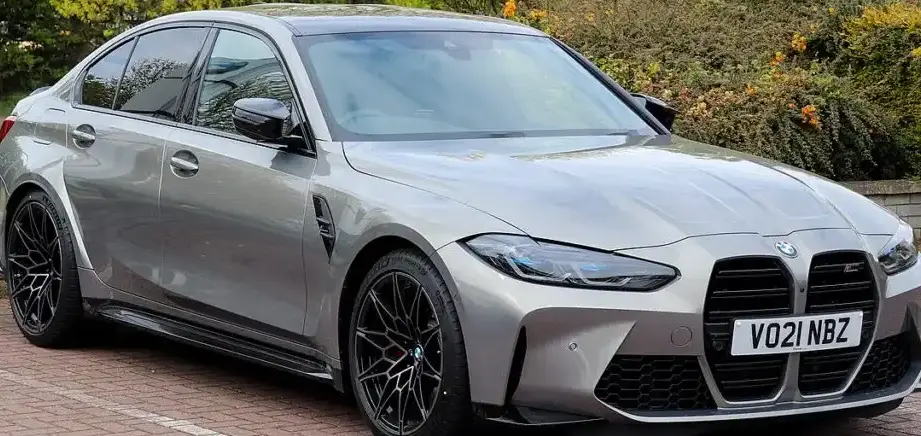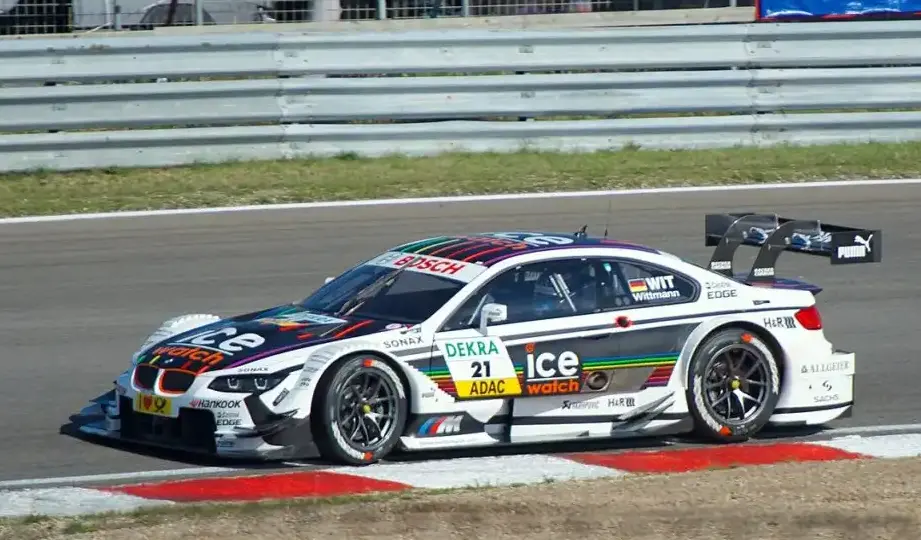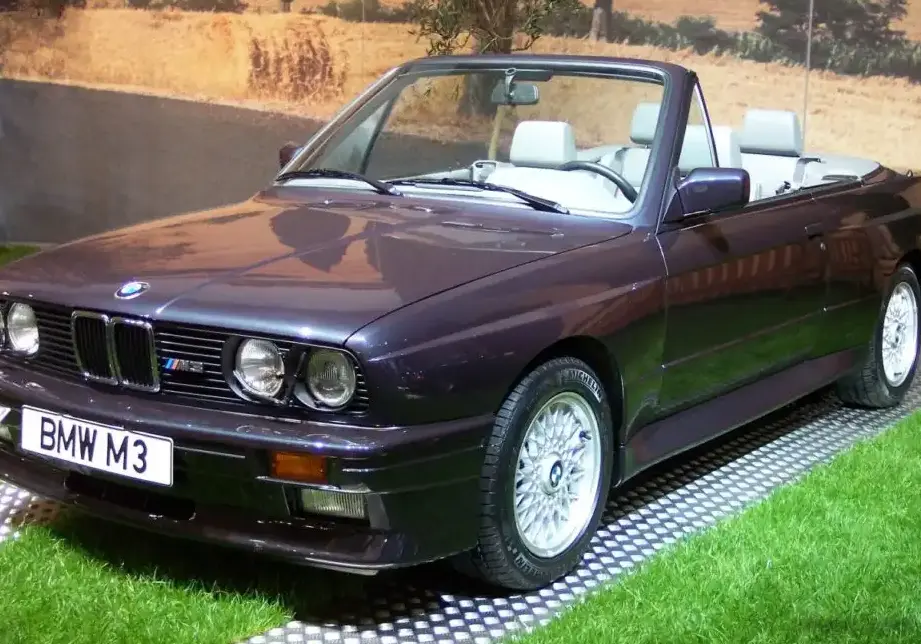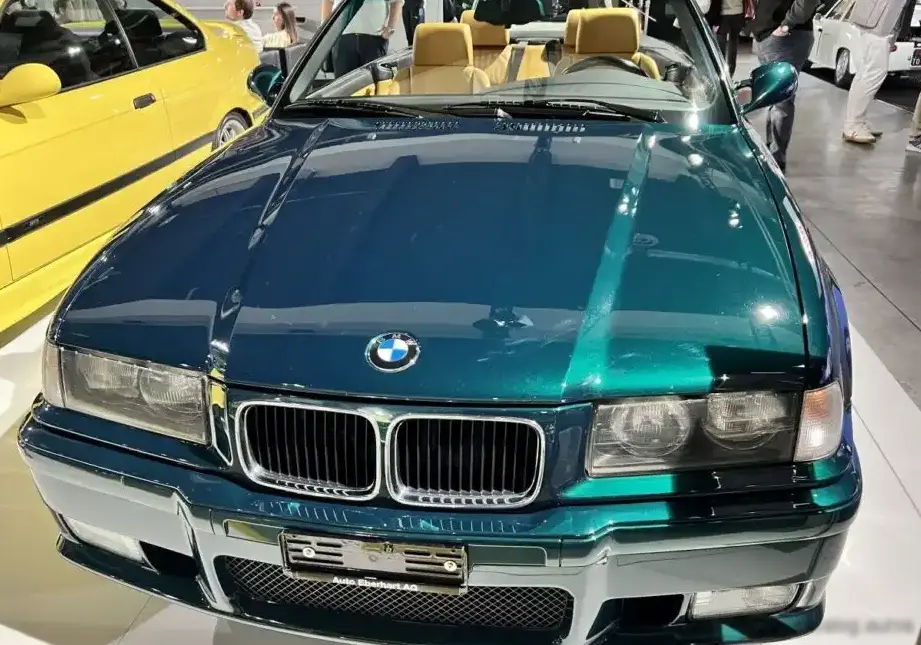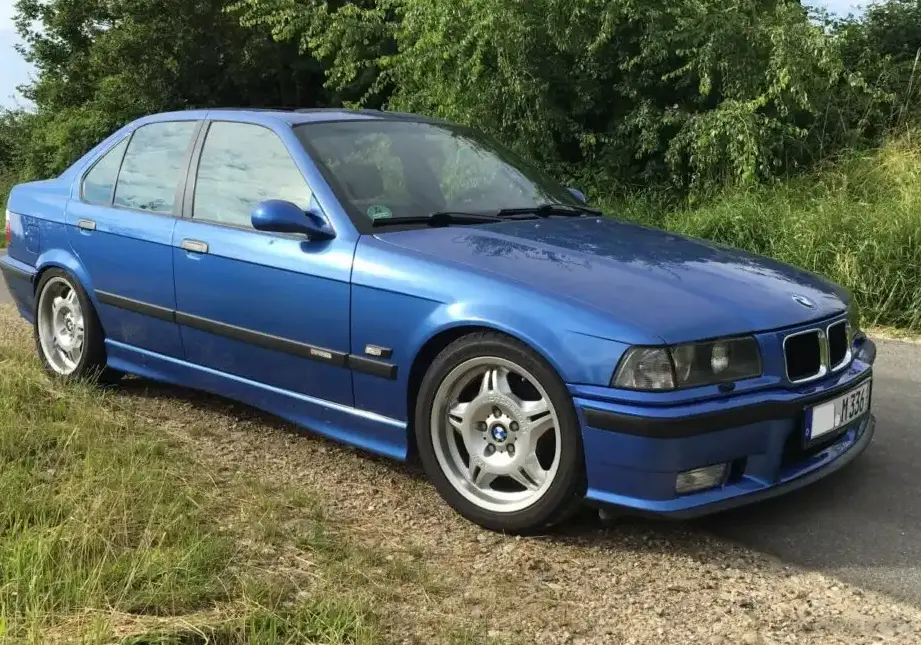
The BMW M3 (E36) 3.0, produced between 1994 and 1996, represents a pivotal iteration of BMW’s iconic performance sedan. Positioned as the successor to the E30 M3, the E36 M3 aimed to blend track-focused performance with a degree of everyday usability. This particular 3.0-liter variant, designated the S50B30US for the North American market, was a significant departure from the four-cylinder roots of its predecessor, offering a substantial increase in power and torque. It served as the primary M3 offering during its production run, bridging the gap between the earlier, more raw E30 and the later, more technologically advanced E46 generations. The E36 M3 quickly became a benchmark for sport sedans, influencing a generation of performance vehicles.
Technical Specifications
| Brand | BMW |
| Model | M3 |
| Generation | M3 (E36) |
| Type (Engine) | 3.0 (240 Hp) |
| Start of production | 1994 |
| End of production | 1996 |
| Powertrain Architecture | Internal Combustion engine |
| Body type | Sedan |
| Seats | 5 |
| Doors | 4 |
| Fuel Type | Petrol (Gasoline) |
| Power | 240 Hp @ 6000 rpm |
| Power per litre | 80.3 Hp/l |
| Torque | 305 Nm @ 4250 rpm |
| Torque (lb-ft) | 224.96 lb.-ft. @ 4250 rpm |
| Maximum engine speed | 6500 rpm |
| Engine layout | Front, Longitudinal |
| Engine Model/Code | S50B30US |
| Engine displacement | 2990 cm3 |
| Engine displacement (cu. in.) | 182.46 cu. in. |
| Number of cylinders | 6 |
| Engine configuration | Inline |
| Cylinder Bore | 86 mm |
| Cylinder Bore (in.) | 3.39 in. |
| Piston Stroke | 85.8 mm |
| Piston Stroke (in.) | 3.38 in. |
| Compression ratio | 10.5:1 |
| Number of valves per cylinder | 4 |
| Fuel injection system | Multi-port manifold injection |
| Engine aspiration | Naturally aspirated engine |
| Valvetrain | DOHC, VANOS |
| Engine oil capacity | 6.5 l |
| Engine oil capacity (US qt) | 6.87 US qt |
| Engine oil capacity (UK qt) | 5.72 UK qt |
| Coolant | 10.75 l |
| Coolant (US qt) | 11.36 US qt |
| Coolant (UK qt) | 9.46 UK qt |
| Fuel tank capacity | 62 l |
| Fuel tank capacity (US gal) | 16.38 US gal |
| Fuel tank capacity (UK gal) | 13.64 UK gal |
| Length | 4432 mm |
| Length (in.) | 174.49 in. |
| Width | 1699 mm |
| Width (in.) | 66.89 in. |
| Height | 1364 mm |
| Height (in.) | 53.7 in. |
| Wheelbase | 2710 mm |
| Wheelbase (in.) | 106.69 in. |
| Front track | 1422 mm |
| Front track (in.) | 55.98 in. |
| Rear track | 1438 mm |
| Rear track (in.) | 56.61 in. |
| Front overhang | 747 mm |
| Front overhang (in.) | 29.41 in. |
| Rear overhang | 986 mm |
| Rear overhang (in.) | 38.82 in. |
| Drivetrain Architecture | Rear wheel drive |
| Drive wheel | Rear wheel drive |
| Number of gears | 5 |
| Gearbox type | Manual transmission |
| Front suspension | Spring Strut, Transverse stabilizer |
| Rear suspension | Independent multi-link suspension, Transverse stabilizer |
| Front brakes | Ventilated discs, 315×28 mm |
| Rear brakes | Ventilated discs, 312×20 mm |
| Assisting systems | ABS (Anti-lock braking system) |
| Steering type | Steering rack and pinion |
| Power steering | Hydraulic Steering |
| Tires size | 235/40 R17 |
| Wheel rims size | 7.5J x 17 |
Powertrain & Engine Architecture
The heart of the E36 M3 3.0 is the S50B30US inline-six engine. This engine, a derivative of the European S50B30, was specifically tuned for the North American market to meet emissions regulations. It featured a cast iron block, aluminum cylinder head, and dual overhead camshafts (DOHC) with BMW’s VANOS variable valve timing system. VANOS, operating on both intake and exhaust camshafts, optimized valve timing for improved low-end torque and high-end power. Fuel delivery was handled by a Bosch Motronic 3.1 multi-port fuel injection system. The engine’s 86mm bore and 85.8mm stroke contributed to its 2990cc displacement. The five-speed manual transmission (Getrag 285) was the standard offering, providing precise shifts and a direct connection to the rear wheels. The engine’s longitudinal mounting and rear-wheel-drive configuration were hallmarks of BMW’s performance philosophy.
Driving Characteristics
The 240 horsepower and 229 lb-ft of torque delivered by the S50B30US engine provided a compelling driving experience. While not as brutally powerful as some contemporary sports cars, the M3 3.0 offered a balanced and engaging feel. Acceleration from 0 to 60 mph typically took around 5.5 to 6 seconds. The manual transmission’s gear ratios were well-matched to the engine’s powerband, allowing for spirited acceleration in each gear. The VANOS system contributed to a broad torque curve, making the engine responsive at various engine speeds. Compared to the later E46 M3, the E36 felt more raw and direct, requiring more driver involvement. The chassis, while not as stiff as modern counterparts, provided a good balance between comfort and handling precision.
Equipment & Trim Levels
The E36 M3 3.0 was relatively well-equipped, even by 1990s standards. Standard features included power windows, power locks, air conditioning, and a sunroof. The interior typically featured sport seats upholstered in either cloth or leather. A three-spoke steering wheel and aluminum trim added to the sporty ambiance. Optional extras included a premium sound system, heated front seats, and a limited-slip differential, which significantly enhanced handling performance. The M3 was offered in a variety of exterior colors, with Alpine White, Laguna Red, and Mystic Blue being particularly popular choices.
Chassis & Braking
The E36 M3 featured a reinforced chassis compared to the standard 3 Series, with additional bracing to improve rigidity. The front suspension utilized MacPherson struts with a transverse stabilizer bar, while the rear suspension employed an independent multi-link setup, also with a stabilizer bar. This suspension configuration provided a good balance between ride comfort and handling performance. Braking duties were handled by ventilated disc brakes on all four wheels, providing ample stopping power. The ABS anti-lock braking system was standard, enhancing safety and control. The M3’s suspension was tuned to provide a firm but compliant ride, allowing for confident handling on both the street and the track.
Market Reception & Comparison
The E36 M3 3.0 was widely praised by automotive critics for its performance, handling, and overall driving experience. It was often compared favorably to rivals such as the Porsche 968 and the Mercedes-Benz C36 AMG. While the M3 offered a more accessible price point than the Porsche, it provided a similar level of driving enjoyment. Compared to the standard 3 Series, the M3 offered a significant upgrade in performance and handling. The E36 M3’s reliability was generally good, although VANOS issues could occasionally arise. Fuel economy was reasonable for a performance car of its era, averaging around 19 mpg city and 26 mpg highway.
Legacy
The E36 M3 3.0 has become a highly sought-after classic among BMW enthusiasts. Its combination of performance, handling, and relative affordability has made it a popular choice for track days, autocross events, and spirited road driving. Well-maintained examples command premium prices in the used car market. The S50B30US engine is known for its durability and tunability, making it a popular platform for modifications. The E36 M3’s influence can be seen in subsequent generations of M3s, as well as in other performance sedans. It remains a benchmark for the sport sedan segment, and a testament to BMW’s engineering prowess.