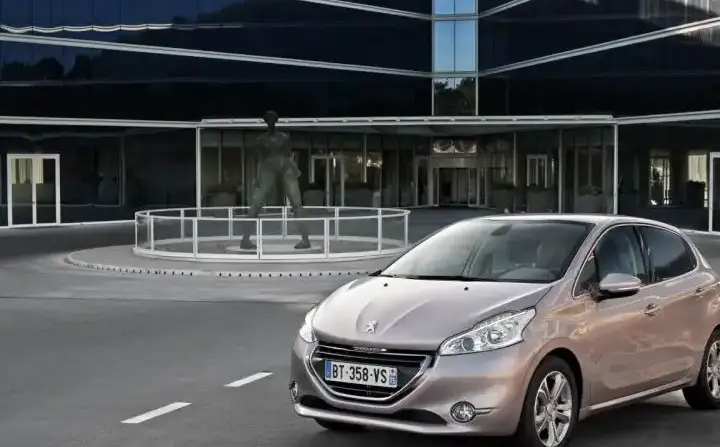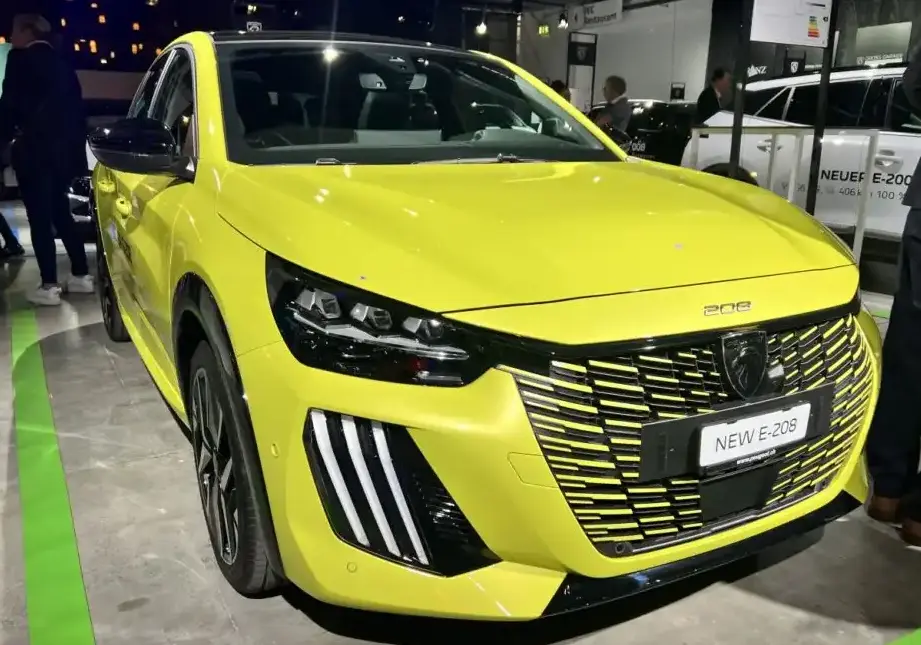
The Peugeot e-208 51 kWh, introduced in its Phase II iteration starting in September 2023, represents a significant step in the evolution of Peugeot’s all-electric hatchback. This variant builds upon the foundation of the second-generation 208 (launched in 2019), specifically within the 1HX0/A3 platform, offering a compelling blend of efficiency, technology, and style. Positioned as a mainstream electric vehicle, the e-208 51 kWh aims to provide a practical and accessible entry point into the world of electric mobility for European and increasingly, global markets. It serves as a key model in Peugeot’s commitment to electrification, offering a direct alternative to gasoline-powered counterparts while appealing to environmentally conscious consumers.
Technical Specifications
| Brand | Peugeot |
| Model | 208 |
| Generation | 208 II (Phase II, 2023) |
| Type (Engine) | e-208 51 kWh (156 Hp) |
| Start of production | September, 2023 |
| Powertrain Architecture | BEV (Electric Vehicle) |
| Body type | Hatchback |
| Seats | 5 |
| Doors | 5 |
| Fuel Type | Electricity |
| Acceleration 0 – 100 km/h | 8.2 sec |
| Acceleration 0 – 62 mph | 8.2 sec |
| Acceleration 0 – 60 mph | 7.8 sec |
| Maximum speed | 150 km/h (93.21 mph) |
| Gross battery capacity | 51 kWh |
| Net (usable) battery capacity | 48.1 kWh |
| Battery technology | Lithium-ion (Li-Ion) |
| Battery location | Below the floor, under the rear seats / Below the floor, under the front seats |
| All-electric range (WLTP) | 398 km (247.31 mi) |
| Average Energy consumption (WLTP) | 14.5 kWh/100 km (23.34 kWh/100 mi) |
| MPGe | 144 |
| km/kWh | 6.9 |
| mi/kWh | 4.3 |
| Electric motor power | 156 Hp |
| Electric motor Torque | 260 Nm (191.77 lb.-ft.) |
| Electric motor model/code | ZK02 |
| Electric motor location | Front axle, Transverse |
| Electric motor type | Synchronous |
| System power | 156 Hp |
| System torque | 260 Nm (191.77 lb.-ft.) |
| Trunk (boot) space – minimum | 309 l (10.91 cu. ft.) |
| Length | 4055 mm (159.65 in.) |
| Width | 1745 mm (68.7 in.) |
| Width with mirrors folded | 1765 mm (69.49 in.) |
| Width including mirrors | 1960 mm (77.17 in.) |
| Height | 1430 mm (56.3 in.) |
| Wheelbase | 2540 mm (100 in.) |
| Front track | 1500 mm (59.06 in.) |
| Rear (Back) track | 1500 mm (59.06 in.) |
| Front overhang | 825 mm (32.48 in.) |
| Rear overhang | 690 mm (27.17 in.) |
| Drivetrain Architecture | One electric motor drives the front wheels. |
| Drive wheel | Front wheel drive |
| Number of gears and type of gearbox | 1 gears, automatic transmission |
| Front suspension | Independent type McPherson |
| Rear suspension | Torsion |
| Front brakes | Ventilated discs, 283×26 mm |
| Rear brakes | Disc, 249×10 mm |
| Assisting systems | ABS (Anti-lock braking system) |
| Steering type | Steering rack and pinion |
| Power steering | Electric Steering |
| Tires size | 195/55 R16; 205/45 R17 |
| Wheel rims size | 16; 17 |
Powertrain & Engine Architecture
The e-208 51 kWh utilizes a fully electric powertrain centered around a synchronous electric motor, designated ZK02. This motor, positioned transversely at the front axle, delivers 156 horsepower and 260 Nm (191.77 lb.-ft.) of torque. Power is drawn from a 51 kWh gross (48.1 kWh net/usable) lithium-ion battery pack strategically located under the vehicle floor, contributing to a low center of gravity and optimized weight distribution. The single-speed automatic transmission provides seamless acceleration, characteristic of electric vehicles. The Phase II update included refinements to the battery management system and motor control unit, resulting in improved efficiency and range compared to the original e-208. The car doesn’t have a traditional engine, so there’s no fuel injection or valvetrain to discuss. Instead, the focus is on the inverter and the efficiency of converting DC battery power to AC for the motor.
Driving Characteristics
The e-208 51 kWh offers a responsive and engaging driving experience. Acceleration from 0 to 60 mph takes approximately 7.8 seconds, making it adequately quick for everyday driving. The instant torque delivery of the electric motor provides brisk acceleration at lower speeds. The single-speed transmission simplifies operation, while the regenerative braking system allows for one-pedal driving in certain conditions, enhancing efficiency and convenience. Compared to the gasoline-powered 208 variants, the e-208 provides a quieter and smoother ride. While not as overtly sporty as some performance-oriented hatchbacks, the e-208’s nimble handling and well-tuned suspension make it enjoyable to drive on winding roads. The weight of the battery pack does impact handling slightly, but the low center of gravity mitigates this effect.
Equipment & Trim Levels
The e-208 51 kWh is typically offered in several trim levels, varying by market. Standard equipment generally includes a touchscreen infotainment system with Apple CarPlay and Android Auto compatibility, a digital instrument cluster, automatic climate control, and a suite of advanced driver-assistance systems (ADAS) such as lane departure warning, automatic emergency braking, and speed limit recognition. Higher trim levels add features like a larger touchscreen, premium upholstery, a panoramic sunroof, and adaptive cruise control. Interior upholstery options typically include cloth and leatherette combinations. The Phase II update brought subtle interior refinements, including improved materials and updated graphics for the infotainment system.
Chassis & Braking
The e-208 utilizes a McPherson strut independent suspension at the front and a torsion beam suspension at the rear. This setup provides a good balance between ride comfort and handling. The front brakes are ventilated discs measuring 283×26 mm, while the rear brakes are solid discs measuring 249×10 mm. The car is equipped with an anti-lock braking system (ABS) and electronic stability control (ESC) as standard. Electric power steering provides light and precise steering feel. Tire sizes vary depending on the trim level, with options ranging from 195/55 R16 to 205/45 R17.
Market Reception & Comparison
The Peugeot e-208 has been well-received by critics and consumers alike. It is praised for its stylish design, engaging driving dynamics, and competitive range. Compared to other electric hatchbacks in its class, such as the Renault Zoe and Volkswagen ID.3, the e-208 offers a more premium interior and a more engaging driving experience. Fuel economy, expressed as energy consumption, is rated at 14.5 kWh/100 km (23.34 kWh/100 mi), translating to approximately 144 MPGe. Reliability has been generally good, although some owners have reported minor issues with the infotainment system.
Legacy
The Peugeot e-208 51 kWh represents a significant step forward in Peugeot’s electrification strategy. Its combination of style, efficiency, and technology has made it a popular choice among consumers looking for a practical and affordable electric vehicle. The powertrain, while not without its minor quirks, has proven to be relatively reliable. On the used car market, well-maintained e-208 models hold their value reasonably well, reflecting the growing demand for electric vehicles and the Peugeot brand’s reputation for quality and design. As battery technology continues to improve, the e-208 is likely to remain a relevant and desirable option for years to come.