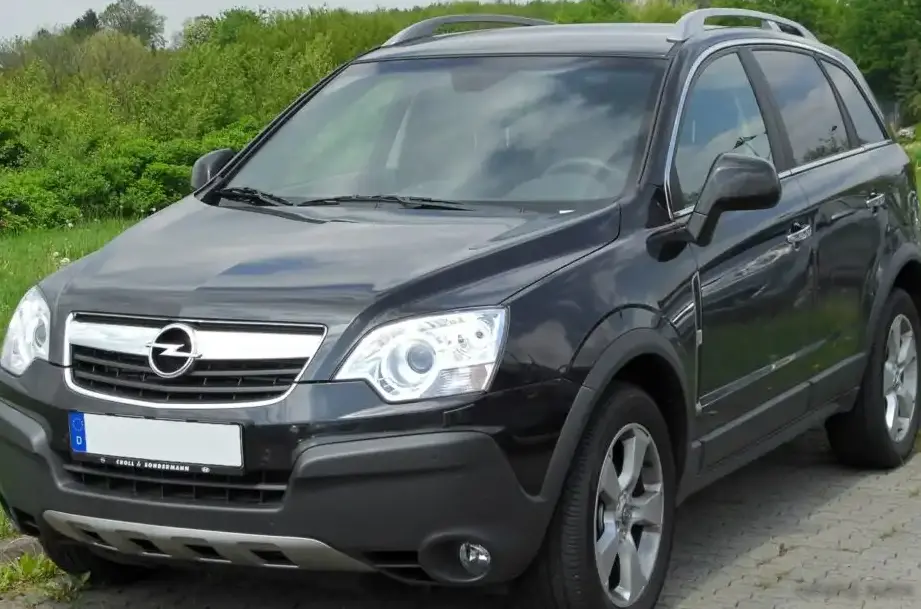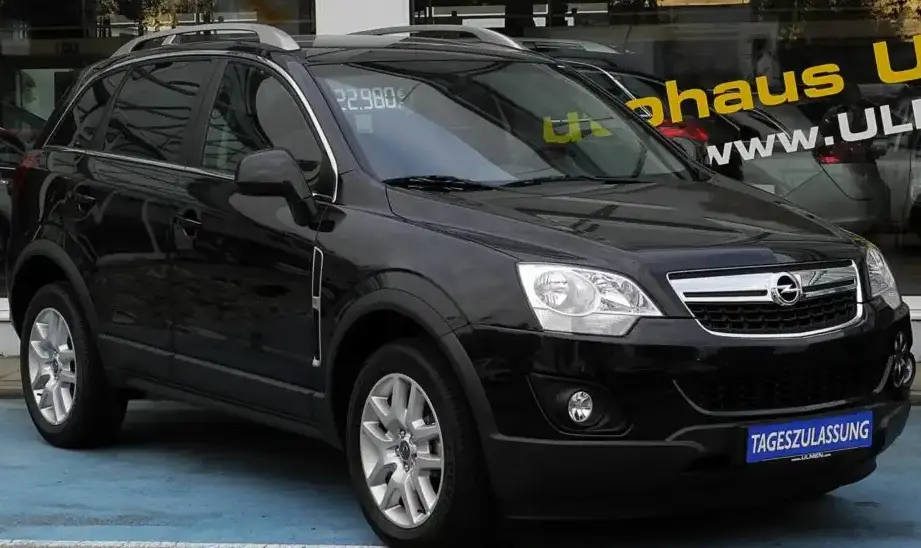
The Opel Antara, particularly the facelifted version introduced in 2010, represented Opel’s entry into the increasingly popular compact SUV segment in Europe. Produced from 2010 through 2016, the Antara aimed to provide a practical and stylish option for families and individuals seeking a versatile vehicle. This article focuses specifically on the 2.2 CDTI variant, producing 184 horsepower, and its position within the Antara lineup. The facelift brought revised styling, improved interior materials, and updated engine options, enhancing the Antara’s appeal in a competitive market.
Technical Specifications
| Brand | Opel |
| Model | Antara |
| Generation | Antara (facelift 2010) |
| Type (Engine) | 2.2 CDTI (184 Hp) |
| Start of production | 2010 |
| End of production | 2016 |
| Powertrain Architecture | Internal Combustion engine |
| Body type | SUV |
| Seats | 5 |
| Doors | 5 |
| Fuel Type | Diesel |
| Emission standard | Euro 5 |
| Weight-to-power ratio | 10.7 kg/Hp, 93.5 Hp/tonne |
| Power | 184 Hp |
| Power per litre | 82.5 Hp/l |
| Engine layout | Front, Transverse |
| Engine Model/Code | A22DMH |
| Engine displacement | 2231 cm3 (136.14 cu. in.) |
| Number of cylinders | 4 |
| Engine configuration | Inline |
| Compression ratio | 9.6:1 |
| Number of valves per cylinder | 4 |
| Fuel injection system | Diesel Commonrail |
| Engine aspiration | Turbocharger, Intercooler |
| Engine oil capacity | 5.6 l (5.92 US qt | 4.93 UK qt) |
| Coolant | 7.5 l (7.93 US qt | 6.6 UK qt) |
| Kerb Weight | 1967 kg (4336.49 lbs.) |
| Max. weight | 2505 kg (5522.58 lbs.) |
| Max load | 538 kg (1186.09 lbs.) |
| Trunk (boot) space – minimum | 420 l (14.83 cu. ft.) |
| Trunk (boot) space – maximum | 1420 l (50.15 cu. ft.) |
| Fuel tank capacity | 65 l (17.17 US gal | 14.3 UK gal) |
| Length | 4575 mm (180.12 in.) |
| Width | 1850 mm (72.83 in.) |
| Height | 1704 mm (67.09 in.) |
| Wheelbase | 2707 mm (106.57 in.) |
| Front track | 1569 mm (61.77 in.) |
| Rear (Back) track | 1576 mm (62.05 in.) |
| Minimum turning circle (turning diameter) | 12.8 m (41.99 ft.) |
| Drivetrain Architecture | The Internal combustion engine (ICE) drives the front wheels of the vehicle. |
| Drive wheel | Front wheel drive |
| Number of gears and type of gearbox | 6 gears, manual transmission |
| Assisting systems | ABS (Anti-lock braking system) |
| Steering type | Steering rack and pinion |
Introduction
The 2010 Opel Antara facelift, powered by the 2.2 CDTI engine producing 184 horsepower, was positioned as a mid-range offering within the Antara lineup. It sat above the lower-powered diesel variants and below any potential higher-performance or more luxurious trims. The Antara itself was based on the GM Theta platform, shared with vehicles like the Chevrolet Captiva and Suzuki Grand Vitara. The facelift aimed to address criticisms of the original Antara’s somewhat bland styling and interior, making it more competitive against rivals like the Nissan Qashqai and Kia Sportage. The 2.2 CDTI engine was a key component of the Antara’s appeal, offering a balance of performance and fuel efficiency for European drivers.
Powertrain & Engine Architecture
The heart of the Antara 2.2 CDTI is the A22DMH engine, a four-cylinder diesel utilizing common rail direct injection. This engine is a member of Opel’s family of diesel engines, known for its relatively robust construction. The 2.2-liter displacement provides a good compromise between power and fuel economy. The engine features a turbocharger with an intercooler, boosting power output and improving torque delivery. The common rail system, operating at high pressure, ensures precise fuel metering and efficient combustion. The engine also incorporates a diesel particulate filter (DPF) to meet stringent Euro 5 emission standards. The Antara 2.2 CDTI was typically paired with a six-speed manual transmission, although an automatic transmission was also available as an option. The manual gearbox provides precise shifts and allows the driver to fully utilize the engine’s power band.
Driving Characteristics
The Antara 2.2 CDTI with the manual transmission offers a reasonably engaging driving experience. While not a sports SUV, the 184 horsepower and 295 lb-ft of torque provide adequate acceleration for everyday driving and highway cruising. The turbocharger delivers a noticeable boost in power, particularly in the mid-range. The six-speed gearbox is well-matched to the engine, allowing for comfortable cruising at highway speeds. Compared to lower-powered Antara variants, the 2.2 CDTI feels significantly more responsive. However, it doesn’t offer the same level of performance as some of its competitors with larger displacement engines. The front-wheel-drive configuration provides decent handling, but it lacks the all-weather capability of all-wheel-drive systems found in some rival SUVs. The suspension is tuned for comfort, providing a relatively smooth ride over uneven surfaces.
Equipment & Trim Levels
The Antara 2.2 CDTI typically came equipped with a respectable level of standard features. These included air conditioning, power windows, power mirrors, a CD/radio system, and ABS brakes. Higher trim levels added features such as alloy wheels, fog lights, a leather-wrapped steering wheel, and a more advanced audio system. Optional extras included a sunroof, parking sensors, and a navigation system. Interior upholstery was typically cloth, with leather options available on higher trims. The dashboard layout was functional and straightforward, with easy-to-read gauges and controls. The Antara’s interior space was competitive for its class, offering comfortable seating for five adults and a reasonably sized cargo area.
Chassis & Braking
The Antara’s chassis utilizes a MacPherson strut suspension in the front and a multi-link suspension in the rear. This setup provides a good balance of ride comfort and handling. The front-wheel-drive configuration contributes to a relatively lightweight vehicle, which aids in fuel efficiency and agility. Braking duties are handled by disc brakes on the front wheels and drum brakes on the rear wheels. ABS (Anti-lock Braking System) is standard, providing enhanced braking performance in emergency situations. The steering is rack and pinion, offering precise and responsive steering feel. Stabilizer bars are fitted to both the front and rear axles to reduce body roll during cornering.
Market Reception & Comparison
The Opel Antara 2.2 CDTI was generally well-received by automotive critics. It was praised for its comfortable ride, spacious interior, and fuel-efficient engine. However, some critics noted that its styling was somewhat conservative and that its handling wasn’t as sharp as some of its rivals. Compared to the lower-powered Antara diesel variants, the 2.2 CDTI offered a significant improvement in performance. It also provided better fuel economy than the gasoline-powered Antara models. Against competitors like the Nissan Qashqai and Kia Sportage, the Antara 2.2 CDTI offered a competitive package, but it often lagged behind in terms of brand prestige and overall driving dynamics.
Legacy
The Opel Antara, and specifically the 2.2 CDTI variant, has proven to be a relatively reliable vehicle in the used car market. The A22DMH engine is known for its durability, although regular maintenance is essential to ensure its longevity. Common issues include DPF clogging and potential problems with the turbocharger. However, these issues are typically manageable with proper care. The Antara’s relatively simple mechanical design makes it relatively affordable to maintain and repair. Today, the Antara 2.2 CDTI represents a practical and affordable option for buyers seeking a used SUV with a good balance of performance, fuel efficiency, and reliability. It remains a common sight on European roads, a testament to its enduring appeal.